






Plot Explained Spoilers guaranteed!
Plot Explained

Browse by genre

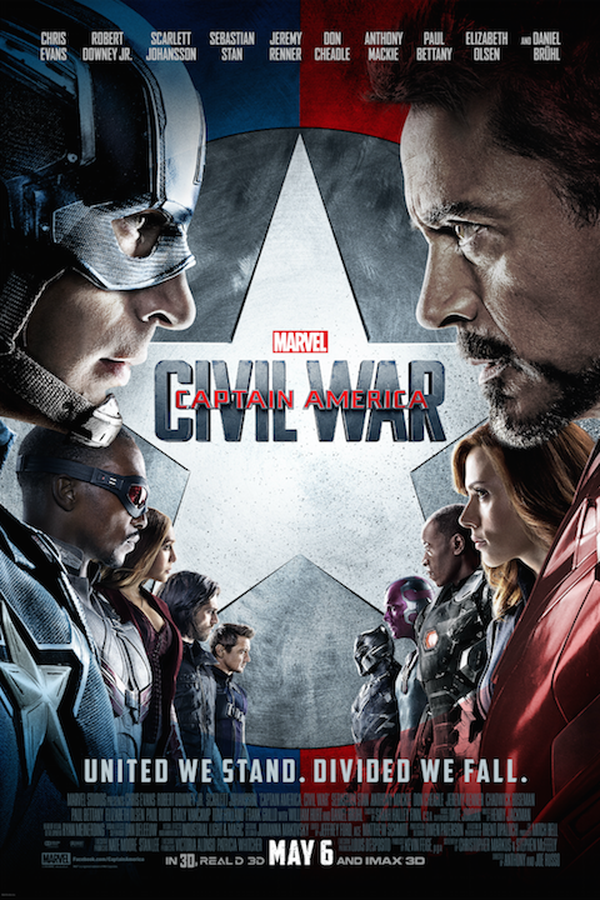
Captain America: Civil War (2016) movie poster

Ending Explained

Captain America: Civil War (2016) Ending Explained – Final Scene & Meaning

Release, runtime and language
2016 · 147 min · English
JustWatch #8,100 11
Directed by
Anthony RussoJoe Russo
Starring
Robert Downey Jr., Don Cheadle, Chadwick Boseman, Chris Evans, Scarlett Johansson, Sebastian Stan
Budget
$250M

Following a catastrophic event, world leaders insist the Avengers submit to oversight. This demand fractures the team, pitting Captain America against Iron Man as close allies choose sides. The conflict escalates, forcing them to confront not only each other but also a mysterious adversary who exploits their division, endangering the world and testing the very foundation of the Avengers.

On this page (8)
  1. 1 Where to watch
  2. 2 What happens at the end
  3. 3 Final events in order
  4. 4 Ending questions answered
  5. 5 The book behind the movie
  6. 6 Movie threads
  7. 7 Movies like Captain America: Civil War
  8. 8 Every angle

Where to watch

Where to Watch Captain America: Civil War (2016)

Where can you watch Captain America: Civil War? Stream, rent or buy it in the US, including on Disney Plus, Amazon Video and Apple TV Store: current JustWatch availability with up-to-date prices.

Streaming availability powered by JustWatch

Ending explained · contains spoilers

What Happens at the End of Captain America: Civil War?

How Captain America: Civil War (2016) ends, what the final scene means, which earlier moments set it up and how to read the ending if the film leaves it open. The full ending explained, with every spoiler.

At the end of "Black Widow," Natasha Romanoff makes the decision to return to the United States to reconnect with her "family," rather than continuing her mission to free other Black Widows. This choice demonstrates her desire to mend personal relationships and face her past. It is in this context that she encourages Captain America to reach out to Tony Stark, which explains the somewhat surprising message Steve sends to Tony. It shows that Natasha's influence was pivotal in rekindling their communication.

In "Captain America: Civil War," the sharp division between Steve Rogers and Tony Stark stems from their conflicting views on the Sokovia Accords—Steve's belief in individual freedom versus Tony's concern about unchecked power. Their falling out leads to a lengthy separation, during which they fight on opposite sides, and the Avengers are fractured. Despite this, Steve’s decision to send a message to Tony, including a letter of apology and a communication device, symbolizes a willingness to reconnect and mend their friendship.

Their reunification is finally facilitated by external help—particularly Captain Marvel—who rescues Tony from space in "Avengers: Endgame," allowing the two heroes to reunite during the pivotal final battle against Thanos. The ending emphasizes that, despite the personal and ideological conflicts, their shared history and mutual respect remain strong. Natasha's influence hints that her act of bridging the gap between Steve and Tony marked a step toward healing a fractured team, setting the stage for the eventual unity and cooperation seen in the culmination of the Infinity Saga. This ending underscores the importance of reconciliation, friendship, and understanding in the face of enormous conflict.

Last updated: June 25, 2025 at 08:57

Was this helpful?

The last 4 events

How Captain America: Civil War Ends: The Final Events in Order

The last events of Captain America: Civil War (2016) in chronological order, the run-up to the ending explained above. The complete timeline has all 14 events, scene by scene.

Open the full timeline
  1. Zemo's Arrest and Rhodes' Recovery

    After Zemo's plans collapse, he is apprehended by the authorities. Stark aids Rhodes in regaining the ability to walk through advanced technology, highlighting a moment of camaraderie amidst the chaos.

  2. Rogers' Daring Prison Break

    Rogers orchestrates a daring breakout to rescue his captured allies from prison. This moment underscores the lengths he is willing to go for his friends and showcases the growing divide between the Avengers.

    Where
    Prison
  3. Barnes in Wakanda

    In a significant mid-credits scene, Barnes is granted asylum in Wakanda as he agrees to enter cryogenic stasis to rid himself of his conditioning. This choice marks a pivotal moment for his character and future collaboration.

    Where
    Wakanda
  4. Parker's New Gadgets

    In a post-credits tease, Peter Parker experiments with a new gadget, hinting at his evolving role in the larger narrative. This moment sets the stage for his future adventures alongside the Avengers.

Ending questions answered

Captain America: Civil War Ending: Your Questions Answered

The questions people ask most about the ending of Captain America: Civil War (2016): what the final scene means, how the twist works, what happens to each character and how to read the ending. Each answer contains spoilers.

Q1

Why does Bucky Barnes return to cryo-sleep at the end of Civil War?

Bucky returns to cryo-sleep because he cannot control the trigger phrases that turn him back into the Winter Soldier. Even though he has regained some of his memories and humanity, the threat of being brainwashed again by anyone who knows the activation words is too dangerous. Wakanda's technology offers him a safe place to remain frozen until a cure for his programming is found.

Foreshadowing: Earlier scenes show Bucky struggling with violent flashbacks and nearly attacking Shuri, demonstrating he cannot yet trust his own mind.

  • bucky barnes
  • winter soldier
  • cryo-sleep
  • wakanda
  • brainwashing
Q2

Why does Captain America send Tony Stark a letter at the end of the movie?

Steve sends Tony a letter and a phone as a gesture of reconciliation after their brutal fight. The letter contains an apology and serves as an olive branch, acknowledging that while they fundamentally disagreed about the Accords, Steve still values their friendship. The phone is a way for Tony to reach him if he ever needs help.

Foreshadowing: Their earlier confrontation in the Siberian bunker reveals deep-seated resentment, making this peace offering more significant.

  • steve rogers
  • tony stark
  • letter
  • apology
  • reconciliation
Q3

What happens to the Avengers after Captain America and Iron Man split up?

The Avengers permanently fracture into two factions. Tony leads the pro-Accords team with Vision, War Machine, and Black Widow. Steve leads the underground resistance with Falcon, Scarlet Witch, and Hawkeye, who was broken out of the Raft. The team does not reunite until Thanos threatens Earth in Infinity War.

Foreshadowing: The film repeatedly shows the personal cost of their division, with each member forced to choose between loyalty to Steve or Tony.

  • avengers
  • team split
  • factions
  • sokovia accords
Q4

Why is Tony so angry at Bucky if he was brainwashed?

Tony's rage stems from discovering that Bucky, the man who killed his parents, was alive the whole time and Steve kept this secret from him. While Tony intellectually understands Bucky was not in control as the Winter Soldier, the emotional betrayal of learning Steve knew and hid the truth is what drives him to attack both Bucky and Steve. The revelation that Steve's letter confirmed the truth about his mother's death is the final straw.

Foreshadowing: Tony's reaction to seeing the footage of his mother's death is foreshadowed earlier when he glimpses a photo of his parents.

  • tony stark
  • bucky barnes
  • parents death
  • betrayal
  • winter soldier
Q5

What are the Sokovia Accords and why do they matter in the ending?

The Sokovia Accords are a set of international regulations requiring the Avengers to operate under government oversight. Steve refuses to sign because he believes it strips heroes of their ability to act freely, while Tony supports it as accountability. This ideological split is what causes the Avengers to fracture and drives the entire conflict of the film.

Foreshadowing: The Accords are introduced after the incident in Lagos where Scarlet Witch accidentally kills Wakandan aid workers.

  • sokovia accords
  • government oversight
  • accountability
  • superhero regulation
Q6

Why does Helmut Zemo want to destroy the Avengers?

Zemo's family was killed during the Battle of Sokovia when the Avengers fought Ultron. He orchestrates the entire plot not to kill the Avengers himself, but to turn them against each other so they destroy each other from within. His plan succeeds, the Avengers fracture permanently, and he is satisfied with this outcome even after being captured.

Foreshadowing: Zemo's calm demeanor and methodical manipulation throughout the film reveal someone playing a long game rather than seeking immediate revenge.

  • helmut zemo
  • sokovia
  • revenge
  • manipulation
  • avengers
Q7

Does Tony Stark ever forgive Steve Rogers for the events of Civil War?

Their friendship remains broken at the end of Civil War, but the ending sets up their eventual reconciliation. Steve's letter and phone represent an open door, though Tony does not reach out. They are eventually reunited during the final battle in Avengers: Endgame when Captain Marvel rescues Tony from space, allowing them to fight together one last time.

Foreshadowing: The post-credits scene shows Bucky in Wakanda, hinting at storylines that would bring the characters back together.

  • tony stark
  • steve rogers
  • forgiveness
  • reunion
  • endgame
Q8

What happens to Scarlet Witch after the Avengers split up?

Scarlet Witch sides with Captain America and goes into hiding with him, Falcon, and Hawkeye. She becomes a fugitive because she defied the Sokovia Accords and refused to be detained. Her powers make her a valuable asset to Steve's underground team, but she lives as a nomad without a safe home.

Foreshadowing: Her conflict with Vision earlier in the film shows her isolation from the team even before the split.

  • scarlet witch
  • wanda maximoff
  • fugitive
  • underground team
Q9

Why does Bucky become the White Wolf in Wakanda?

In the post-credits scene, Bucky emerges from cryo-sleep as the White Wolf, a title given to him by the Wakandans. This is not a transformation into a villain but rather a new identity, Wakanda accepts him despite his past as the Winter Soldier and offers him protection and community. The White Wolf title symbolically represents his redemption and new beginning.

Foreshadowing: Shuri's earlier work trying to help Bucky recover his memories demonstrates Wakanda's willingness to help him.

  • bucky barnes
  • white wolf
  • wakanda
  • redemption
  • post-credits
Q10

Is Captain America a fugitive at the end of Civil War?

Yes, Steve Rogers becomes a fugitive. He refuses to sign the Sokovia Accords and breaks several laws to rescue his teammates from the Raft. He goes underground with Falcon and Scarlet Witch, operating outside both government oversight and the law. However, he maintains his moral compass and continues to help people in secret.

Foreshadowing: Steve's defiance of authority figures like Thunderbolt Ross shows his willingness to accept the consequences of his choices.

  • steve rogers
  • captain america
  • fugitive
  • underground
  • sokovia accords
Q11

Why can't Bucky's brainwashing be reversed immediately?

The Winter Soldier programming is deeply embedded in Bucky's mind through years of Hydra conditioning. While Shuri's technology in Wakanda is advanced, the psychological triggers and conditioning are too complex to remove safely in a short time. Cryo-sleep halts the programming's effectiveness and keeps Bucky stable until a proper cure can be developed.

Foreshadowing: Shuri's attempt to help Bucky in the lab shows the complexity of removing his conditioning, with visible difficulty in separating his memories.

  • bucky
  • winter soldier programming
  • hydra
  • brainwashing
  • wakanda technology

Movie threads

More Movies Like Captain America: Civil War, by Mood & Story

Curated lists built around what makes Captain America: Civil War tick: the same mood, the same kind of story or the same emotional payoff. Each list explains why these movies belong together.

Movies About Ideological Rifts Like Captain America: Civil War

When profound disagreements tear apart the closest of allies and teams. If you liked the intense conflict between Captain America and Iron Man, these movies feature similar stories where deep ideological divides fracture a found family or team. Explore other films with heavy emotional weight, tense standoffs, and the tragic cost of choosing principles over personal bonds.

  • divided
  • conflicted
  • urgent
  • melancholic
  • ideological
  • somber
  • Tone: tense, somber, conflicted
  • Pacing: fast, driven by escalating conflict
Why these movies?

The story pattern: Narratives in this thread typically begin with a united group, whose harmony is shattered by an event that exposes fundamentally different worldviews. The plot follows the escalation of this internal conflict, leading to confrontations where characters are forced to choose sides, resulting in the breakdown of the group and lasting emotional scars.

Why they belong together: Movies are grouped here for their shared focus on internal ideological conflict as the primary driver of drama, the high emotional stakes of breaking familial or team bonds, and a tone that balances large-scale action with intimate personal tragedy.
Somber Superhero Movies Like Captain America: Civil War

Heroic actions that leave deep scars and bittersweet resolutions. Find movies similar to Captain America: Civil War that explore the darker, more consequential side of being a hero. These films share a tense, urgent vibe, heavy emotional weight, and bittersweet endings where the world is saved but the heroes are left broken or divided.

  • somber
  • urgent
  • anxious
  • heavy
  • consequential
  • melancholic
  • Tone: somber, tense, bittersweet
  • Pacing: fast, urgent
Why these movies?

The story pattern: The narrative pattern involves heroes facing a crisis that challenges their moral code and unity. The story emphasizes the real-world consequences of their powers and actions, often involving political oversight and public accountability. The journey is fraught with personal loss and moral dilemmas, culminating in an ending where safety is achieved but at the expense of the heroes' well-being or relationships.

Why they belong together: These films are grouped by their shared somber mood, high stakes that carry heavy emotional consequences, a focus on accountability and responsibility, and a tone that refuses a simple, happy ending, instead opting for a more complex and bittersweet resolution.

If you liked this

Movies Like Captain America: Civil War

Similar movies to Captain America: Civil War: the same genre, themes or kind of story. Each one comes with its own plot summary, timeline and ending explained.

Browse all movie summaries

Every angle

Captain America: Civil War (2016) Explained: Plot, Ending, Timeline & Characters

Everything about Captain America: Civil War in one place: what happens in the plot summary, the timeline in chronological order, the characters and meaning, the ending explained and a spoiler-free summary. What's After the Movie adds the cast, box office and post-credit scenes.

Coming soon on iOS and Android

The Plot Explained Movie Summary App

Plot summaries, endings explained and timelines on your phone. Catch up on any movie in minutes, save your favorites and never miss a twist again.

Be the first to know when we launch. Your email stays private, always.

Learn more about the app