Plot Explained Spoilers guaranteed!
Plot Explained

Browse by genre

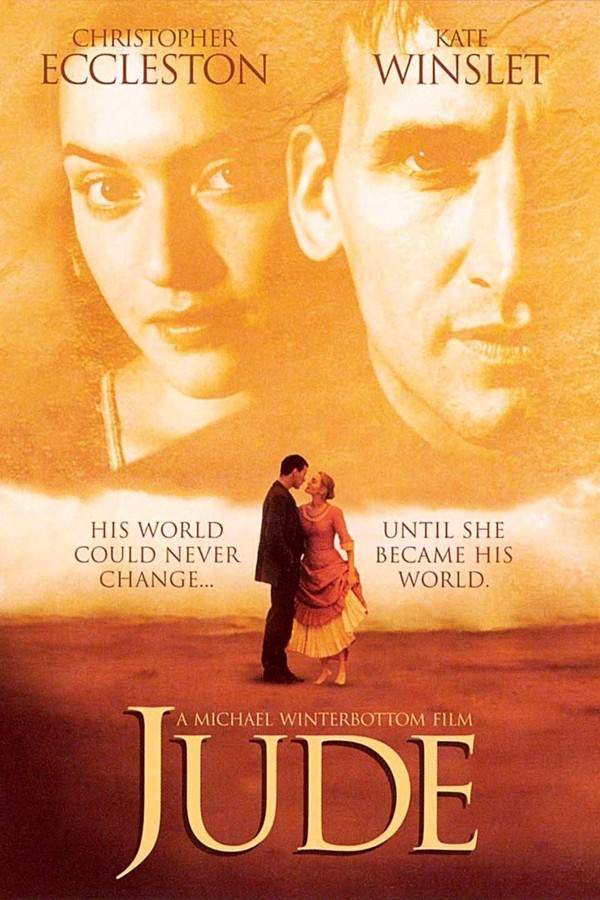
Jude (1996) movie poster

Timeline

Jude (1996) Timeline Explained – Every Event in Order

Release, runtime and language
1996 · 123 min · English
Loading streaming availability…
Directed by
Michael Winterbottom
Starring
Christopher Eccleston, Kate Winslet

In Victorian England, Jude yearns for academic success but is held back by his working-class background. After a loveless marriage ends, he moves to the city seeking a new life. There, he begins a passionate but complicated affair with his cousin, Sue, who is already married. Their relationship triggers a series of devastating events, leading to heartbreak and significant turmoil for Jude and those around him.

On this page (7)
  1. 1 Where to watch
  2. 2 Events in order (11)
  3. 3 Timeline questions answered
  4. 4 The book behind the movie
  5. 5 Movie threads
  6. 6 Movies like Jude
  7. 7 Every angle
Loading streaming availability…

11 events in order · contains spoilers

Jude Timeline: Events in Chronological Order

Every key event of Jude (1996) in order, scene by scene, with when and where it takes place. Use it to untangle flashbacks, time jumps and parallel storylines, to refresh your memory before the sequel or to find the exact scene you are thinking of.

  1. Jude Fawley's dream vs. reality

    In the Victorian countryside, Jude Fawley is a bright, working-class youth who dreams of a university education. Circumstances push him into a stonemason's trade and toward an arranged marriage with Arabella. He holds on to the belief that education should be accessible to any hardworking man, despite his class.

    When
    Early life
    Where
    England (Victorian countryside)
  2. Arabella's departure and university rejection

    Months after marriage, Arabella leaves, and Jude heads toward the city to pursue education. He is blocked from the university, rejected largely because of his lower-class status. The setback hardens his resolve to seek a path through work and perseverance.

    When
    Few months later
    Where
    England; city
  3. Meeting Sue Bridehead

    Jude encounters his cousin Sue Bridehead, a woman of beauty and intellect who shuns convention. The two quickly connect over shared ideals and mutual disillusionment with social norms. Jude becomes enraptured by Sue’s spirit and intellect.

    When
    Early in their acquaintance
    Where
    In and around the city
  4. Sue's marriage to Phillotson

    Sue marries Jude’s former schoolteacher, Phillotson, after Jude tells her he is already married to Arabella. The union is arranged but emotionally empty, with Sue refusing to give herself sexually or romantically. The marriage begins to fracture almost immediately.

    When
    Shortly after meeting Jude
    Where
    City, England
  5. The broken marriage leads to separation

    The marriage fails to fulfill Sue; she leaves Phillotson to join Jude. They begin a nomadic, precarious life moving from place to place as Jude works sporadically as a stonemason. Their unorthodox arrangement tests their loyalty and resilience.

    When
    After marriage
    Where
    Various towns in England
  6. Juey is born

    Jude learns that Arabella bore a son named Jude, soon after she left him. The boy comes to live with Jude and Sue, increasing the pressures and complexity of their living arrangement. The new family dynamic is fraught with secrecy and hardship.

    When
    After Arabella's departure
    Where
    England
  7. Sue's two children and scandal

    Sue gives birth to two children while living with Jude, yet their relationship remains un-married and scandalous in the eyes of society. She remains agnostic and fiercely independent, refusing to legalize their arrangement by marriage. The couple's housing becomes precarious due to societal judgment.

    When
    During their years together
    Where
    Various lodgings in England
  8. Lodging denied and Juey's tragedy

    Because they live together without marriage, they cannot secure permanent lodging. Sue warns Juey that they must move on soon, as there are too many of them. The next day, Juey murders his half-siblings and hangs himself, leaving a suicide note blaming the situation: Becos we were to menny.

    When
    The next day
    Where
    Their lodging
  9. Depression and religion

    The deaths plunge both Jude and Sue into deep depression. Sue, who had rejected religion, turns back to faith, believing God punished them for their un-married relationship. She resolves to return to Phillotson, despite finding him sexually repugnant, because he is the true husband in the eyes of God.

    When
    After Juey's death
    Where
    England
  10. A year later by the tomb

    A year after the children's deaths, Jude and Sue meet by the tombstones of their children. They are worn and wrung by sorrow as Jude presses her to declare if she still loves him. She answers, You've always known, revealing unresolved feelings between them.

    When
    A year later
    Where
    Tomb of their children
  11. The kiss and the departure

    After the moment by the tomb, Jude and Sue share a passionate kiss as she walks away to rejoin Phillotson. Jude shouts to her that they are still bound as man and wife, a declaration of their bond that cannot be erased by social norms. Sue walks away toward her husband, leaving their future unresolved.

    When
    Immediately after the kiss
    Where
    Tomb site

Last updated: November 22, 2025 at 15:58

Was this helpful?

Timeline questions answered

Jude Timeline Explained: Your Questions Answered

When does it happen, and why in that order? The questions people ask about the chronology of Jude (1996): time jumps, flashbacks, cause and effect between scenes and the correct order of events, each answered with spoilers.

Q1

Why is Jude rejected from the university?

Jude is rejected primarily because of his working-class background, not his intellectual ability. Despite his brightness and hard work, the Victorian university system views his lower-class status as disqualifying, regardless of his potential. This rejection shatters his dreams of academic advancement and sets the tone for his perpetual struggle against societal class barriers.

Foreshadowing: Earlier scenes establish Jude's exceptional intelligence and his belief that education should be accessible to any hardworking man, making the rejection feel like a personal betrayal by the system.

  • university rejection
  • class prejudice
  • victorian education
  • social class
  • jude dreams
Q2

Why does Sue marry Phillotson instead of Jude?

Sue marries Phillotson because she learns from Jude himself that he is already married to Arabella. Feeling that a relationship with her married cousin is impossible, Sue accepts Phillotson's proposal as a practical arrangement. However, the marriage is emotionally empty from the start, as Sue refuses to give herself physically or romantically to him.

Foreshadowing: The brief mention of Jude's existing marriage creates the initial barrier that drives Sue toward this doomed union.

  • sue marriage
  • phillotson
  • jude betrayal
  • unhappy marriage
  • victorian women
Q3

Why does Sue leave Phillotson to be with Jude?

Sue leaves Phillotson because their marriage provides neither emotional connection nor intellectual companionship. Despite Phillotson's decent nature, Sue finds him sexually repugnant and cannot force herself to fulfill the marital duties expected of her. Her growing love for Jude and shared rejection of social conventions draw her to leave her husband and join Jude, despite the scandal it will cause.

Foreshadowing: Throughout her marriage to Phillotson, Sue openly resists physical intimacy and expresses disillusionment with the institution of marriage itself.

  • sue leaves phillotson
  • forbidden love
  • relationship breakdown
  • independent woman
Q4

Why can't Jude and Sue find permanent housing?

Jude and Sue cannot secure permanent lodging because they live together without being married, which society views as scandalous. Their unconventional arrangement violates Victorian moral standards, and landlords consistently refuse to house them due to their perceived immoral lifestyle. This forces them into a precarious, nomadic existence moving from place to place.

Foreshadowing: Sue explicitly warns Juey that they cannot stay long because there are too many of them to be discreetly accommodated, highlighting the ever-present threat of social rejection.

  • housing denial
  • unmarried couple
  • social scandal
  • victorian society
  • homelessness
Q5

What causes Juey to kill his half-siblings and himself?

Juey murders his half-siblings and then hangs himself because the family is forced to move again due to their inability to find lodging. The note Juey leaves reads "Becos we were to menny" (because we were too many), indicating that the constant displacement and precarious living situation, compounded by being an illegitimate child in a scandalous household, drove him to desperate action. The psychological toll of their transience and social ostracism manifests in this horrifying tragedy.

Foreshadowing: Sue's warning to Juey about having to move because they cannot be accommodated plants the seed of his desperation.

  • juey death
  • child murder
  • suicide note
  • family tragedy
  • becos we were to menny
Q6

Why does Sue return to Phillotson after the children's deaths?

Sue returns to Phillotson because she becomes convinced that God has punished her and Jude for living in sin without marriage. After rejecting religion throughout her life, she experiences a spiritual crisis following the tragedy and believes God judged them for their un-married relationship. Despite finding Phillotson sexually repugnant, she resolves to return to him as her "true husband" in God's eyes, seeking absolution through religious obedience.

Foreshadowing: The devastating loss of the children breaks both characters psychologically, with Sue's return to faith representing her desperate attempt to find meaning in the incomprehensible tragedy.

  • sue returns phillotson
  • religious guilt
  • punishment
  • spiritual crisis
  • atonement
Q7

What does Juey's suicide note mean?

Juey's note "Becos we were to menny" means "Because we were too many." Written in a child's phonetic spelling, it reflects his belief that the family's inability to stay in one place and the constant pressure of their precarious situation resulted from having too many children and living illegally without marriage. His suicide is a tragic expression of a child overwhelmed by instability and societal rejection.

Foreshadowing: The note directly connects to earlier scenes where Sue explains they must move because they cannot be discreetly accommodated.

  • juey note
  • suicide message
  • child tragedy
  • family size
  • societal pressure
Q8

Why does Jude shout "We are man and wife" at the end?

Jude shouts "We are man and wife, if ever two people were on this earth!" as he watches Sue walk away to rejoin Phillotson. This defiant declaration asserts that their bond, formed through shared love, children, and mutual suffering, represents a true marriage far more real than any legal or religious ceremony. It is Jude's final assertion that societal conventions cannot invalidate the genuine connection between him and Sue.

Foreshadowing: Throughout the film, Jude and Sue maintain that their relationship transcends conventional marriage, making this final declaration the culmination of their philosophical stance.

  • final scene
  • defiant declaration
  • true marriage
  • love vs society
  • jude sue bond
Q9

Why do Jude and Sue never officially marry?

Jude and Sue never marry because Sue refuses to formalize their arrangement through marriage. She remains staunchly agnostic and believes marriage to be a constraining social construct that diminishes individual freedom. Despite having children together and building a life as partners, Sue's principled opposition to the institution keeps them legally unmarried, which also exposes them to continued social condemnation and housing difficulties.

Foreshadowing: Sue's independent philosophy and rejection of conventional marriage are established early in her character, as she criticizes the institution even while married to Phillotson.

  • unmarried relationship
  • sue principles
  • marriage opposition
  • free union
  • victorian values
Q10

How does societal judgment contribute to the tragedy?

Victorian society's rigid class system and moral standards directly drive the tragedy by rejecting Jude's educational aspirations, refusing them housing due to their unmarried status, and condemning their relationship as scandalous. This constant social pressure forces them into precarious living situations, contributes to Juey's psychological breakdown, and ultimately pushes Sue toward religious guilt and a return to Phillotson. The film portrays social condemnation as an inescapable force that poisons every aspect of their lives.

Foreshadowing: From the university rejection onward, systemic social barriers consistently thwart Jude's ambitions and punish both characters for defying Victorian norms.

  • social condemnation
  • victorian society
  • class system
  • moral standards
  • structural oppression

Movie threads

More Movies Like Jude, by Mood & Story

Curated lists built around what makes Jude tick: the same mood, the same kind of story or the same emotional payoff. Each list explains why these movies belong together.

Tragic Victorian Romances like Jude

Passionate but forbidden love stories crushed by rigid societal conventions. If you were moved by the passionate but doomed love story in Jude, explore more movies like it. This collection features historical dramas where forbidden romance clashes with strict societal rules, often set in the Victorian era or similar periods, leading to profound heartbreak and tragedy.

  • tragic
  • passionate
  • melancholic
  • oppressive
  • grieving
  • defiant
  • Tone: bleak, tragic, passionate
  • Pacing: steady, deliberate
Why these movies?

The story pattern: The narrative follows two characters who form a deep, often illicit, bond in a restrictive historical setting. Their happiness is short-lived as societal pressure, family duty, or religious condemnation relentlessly bears down on them. The story arc is typically one of downfall, where love becomes a source of suffering rather than salvation, culminating in separation, death, or a life of grief.

Why they belong together: These films are grouped by their shared setting of historical repression, their focus on a central, passionate romance as the catalyst for conflict, and their inevitable trajectory towards tragedy. The emotional core is the tension between personal desire and impersonal social law.

Bleak Character Studies of Downfall like Jude

Stories where characters are trapped by fate and their own circumstances. For viewers who appreciated the deep character tragedy in Jude, this selection features movies with similar bleak character arcs. These films focus on protagonists whose dreams are thwarted and lives unravel due to a combination of social injustice, personal passion, or simple bad luck, resulting in a powerful and somber narrative.

  • bleak
  • tragic
  • oppressive
  • grieving
  • unsettling
  • melancholic
  • Tone: bleak, tragic, oppressive
  • Pacing: steady, cumulative
Why these movies?

The story pattern: The narrative pattern is a linear accumulation of misfortune and hardship for a central character. Hope is presented only to be systematically dismantled by forces beyond their control, such as class, fate, or flawed decisions. The story structure builds a sense of dreadful inevitability, where every attempt to improve their situation only deepens their despair, leading to a finale of profound loss or destruction.

Why they belong together: These movies share a relentlessly bleak tone and a narrative engine driven by the protagonist's inevitable suffering. They are united by their heavy emotional weight, steady pacing that allows tragedy to build, and a conclusion that offers little to no redemption, focusing instead on the devastating impact of life's cruelties.

If you liked this

Movies Like Jude

Similar movies to Jude: the same genre, themes or kind of story. Each one comes with its own plot summary, timeline and ending explained.

Browse all movie summaries

Every angle

Jude (1996) Explained: Plot, Timeline & Characters

Everything about Jude in one place: what happens in the plot summary, the timeline in chronological order, the characters and meaning and a spoiler-free summary. What's After the Movie adds the cast, box office and post-credit scenes.

Coming soon on iOS and Android

The Plot Explained Movie Summary App

Plot summaries, endings explained and timelines on your phone. Catch up on any movie in minutes, save your favorites and never miss a twist again.

Be the first to know when we launch. Your email stays private, always.

Learn more about the app