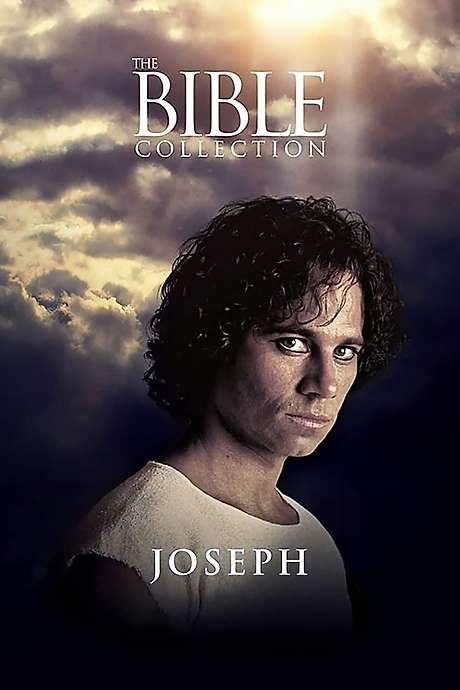
From the moment Joseph, the youngest son of Jacob and Rachel, is celebrated as a miracle child, his parents’ devoted attention stirs a growing vanity that unsettles his eleven brothers. The family’s dynamics are defined by favoritism and overheard dreams, and Joseph’s bold visions only fuel their unease. A nighttime dream of wolves pouncing on the flock, followed by another where his brothers bow before him, sets in motion a long shadow of jealousy. In a cruel turn led by the eldest brother, Judah, the brothers sell Joseph to a slave trader for twenty pieces of silver, bringing back his torn coat to their parents and convincing them that wolves killed their son.
In Egypt, Joseph is bought by Potiphar, the captain of Pharaoh’s guards, and quickly earns trust as a capable and faithful servant. He wins the heart of Potiphar’s niece, Asenath, whose bond with him grows amid the pressures of palace life. But trouble follows when Potiphar’s wife, Zuleika, tries to seduce him; when he refuses, she falsely accuses him of assault. Potiphar, torn between his duty and his doubts, consigns Joseph to prison to preserve appearances, yet even there his talents begin to illuminate the darkness.
Inside the jail, Joseph encounters the Pharaoh’s Butler and Baker and uses his gift to interpret their dreams, dreams that soon come true. The butler’s chance to vouch for him never arrives at the right moment, as he forgets to mention Joseph to the Pharaoh. Back in their cells, Asenath quietly helps by slipping food to Joseph, a generosity that is almost uncovered when a guard nearly spots the act and the food is dropped, only to be devoured by rats. In this harsh season, Joseph’s faith is tested; he experiences a restless moment of anger toward God, yet is steadied again as he tends to a dying tree and rediscovers trust in a plan larger than himself.
A turning point comes when the Pharaoh is troubled by unsettling dreams that no adviser can explain. The memory of Joseph’s gift is rekindled by the butler, who advises bringing him from prison. Potiphar releases his guilt, and Joseph interprets the dreams as a forecast of seven years of abundance followed by seven years of famine, with a practical plan: store one-fifth of each year’s harvest to ration the people wisely. Impressed, the Pharaoh elevates him to minister and second-in-command, appointing him under the name “Zaphnath-Paaneah.” During the years of plenty and planning, Joseph marries Asenath and becomes the father of two sons, Manasseh and Ephraim, establishing a new household in a land that has shifted beneath his feet.
The years of plenty give way to scarcity, and Joseph’s brothers travel to Egypt to buy grain, unaware that the powerful official they must plead with is the very brother they betrayed. They arrive with Benjamin, Jacob’s beloved twelfth son, and Joseph tests their loyalty by holding Simeon, the guards’ capture, until they return with Benjamin to prove their story. The family’s reunion hinges on the fragile trust that comes from the past’s pain, and when Benjamin is accused of a crime involving a golden chalice hidden in his bag, the brothers offer themselves in his place to spare him. Judah’s confession—that they once sold Joseph and risk their father’s heartbreak again—touches Joseph deeply and compels him to reveal his true identity to his brothers.
The moment of revelation leads to a heartfelt reconciliation. Joseph forgives and welcomes his brothers, inviting them to live in Egypt and to reunite their families there, where their people will begin a new chapter. The film closes with the Hebrews entering Egypt, a moment of cautious hope as they step toward a future rich with possibility, yet shadowed by the knowledge of the trials that lie ahead.