












Plot Explained Spoilers guaranteed!
Plot Explained

Browse by genre

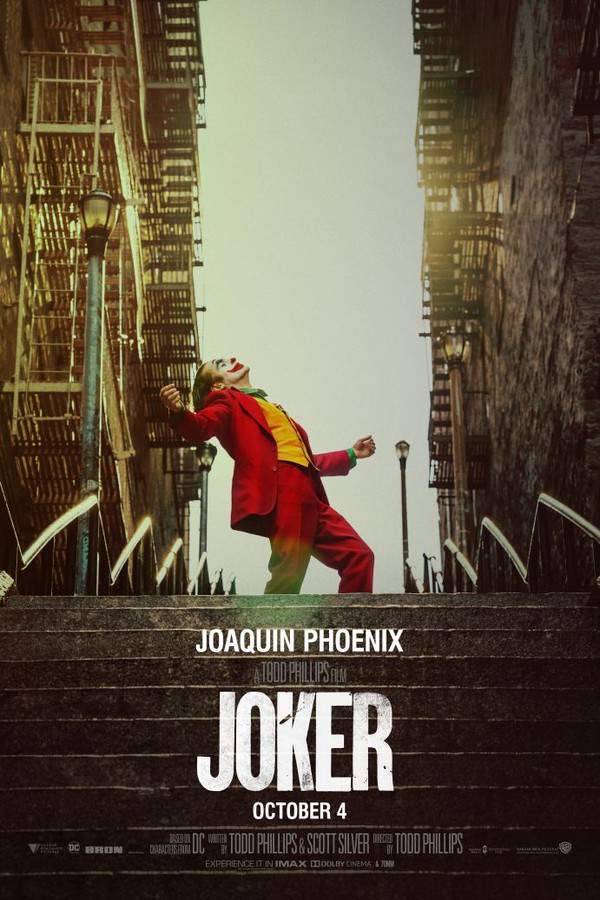
Joker (2019) movie poster

Timeline

Joker (2019) Timeline Explained – Every Event in Order

Release, runtime and language
2019 · 122 min · English
Echo score 82
JustWatch #2,140 44
Directed by
Todd Phillips
Starring
Robert De Niro, Brian Tyree Henry, Zazie Beetz, Shea Whigham, Alec Baldwin, Bill Camp
Budget
$55M

In a decaying Gotham City, Arthur Fleck, portrayed by Joaquin Phoenix, struggles with poverty and isolation while aspiring to be a successful comedian. Working as a party clown to make ends meet, he dreams of bringing laughter to others but finds himself facing constant rejection and despair. A series of tragic events and a pivotal decision trigger a downward spiral, ultimately leading to a shocking transformation and unleashing chaos upon the city.

On this page (7)
  1. 1 Where to watch
  2. 2 Events in order (15)
  3. 3 Timeline questions answered
  4. 4 The book behind the movie
  5. 5 Movie threads
  6. 6 Movies like Joker
  7. 7 Every angle

Where to watch

Where to Watch Joker (2019)

Where can you watch Joker? Stream, rent or buy it in the US, including on HBO Max, TBS and TNT: current JustWatch availability with up-to-date prices.

Streaming availability powered by JustWatch

15 events in order · contains spoilers

Joker Timeline: Events in Chronological Order

Every key event of Joker (2019) in order, scene by scene, with when and where it takes place. Use it to untangle flashbacks, time jumps and parallel storylines, to refresh your memory before the sequel or to find the exact scene you are thinking of.

  1. Arthur Fleck's Struggles Begin

    In Gotham City during 1981, Arthur Fleck works at Ha-Ha's as a clown-for-hire. Despite this, he suffers from deep depression, seeking solace through laughter and attempting to connect with others around him.

    When
    1981
    Where
    Gotham City
  2. Assault in the Alley

    Arthur is tasked with promoting a store by dancing with a sign but faces humiliation when a group of punk teenagers steals it. In his attempt to retrieve the sign, he is violently assaulted in a dark alley, marking a turning point in his struggles.

    Where
    Gotham City
  3. Reliance on a Social Worker

    Amidst Gotham's rampant crime and poverty, Arthur relies on a social worker for his medication. This dependency highlights his struggles in a society that increasingly marginalizes those suffering from mental illness.

    Where
    Gotham City
  4. Embarrassing Moment on the Bus

    Arthur tries to entertain a child on a bus, hoping for a moment of connection. However, he is rebuffed by the child's mother, emphasizing his profound loneliness and the misunderstandings surrounding his laughter.

    Where
    Gotham City
  5. Living with His Mother

    Arthur shares a small apartment with his ailing mother, Penny, where they often watch Murray Franklin's talk show together. During these moments, Arthur imagines a different life filled with acceptance and love, contrasting his harsh reality.

    Where
    Gotham City
  6. A Gift of a Gun

    After being frightened by a mugging, Arthur's co-worker Randall gifts him a gun for protection. Initially apprehensive, Arthur finds a strange sense of empowerment in the weapon, which starkly contrasts with his boss's disdain.

    Where
    Gotham City
  7. Connection with Sophie

    Arthur develops a romantic interest in his neighbor Sophie Dumond, who seems to understand him like no one else. Their relationship, however, is complicated by Arthur's deep insecurities and struggles with social interaction.

    Where
    Gotham City
  8. Accident at the Hospital

    During a visit to cheer up sick children at a hospital, Arthur's mental state worsens as his gun slips from his pocket. This incident results in grave repercussions from his boss, further stressing his fragile psyche.

    Where
    Gotham City
  9. The Subway Incident

    Arthur is attacked on the subway by three Wall Street men, triggering a primal response within him. In a moment of self-defense, he kills them, a shocking act that marks a significant shift in his mental state and identity.

    Where
    Gotham City Subway
  10. Embracing the Clown

    After the subway incident, Arthur feels a strange liberation and begins to fully embrace his identity as a clown. This transformation symbolizes his acceptance of madness and the chaotic nature of his existence.

    Where
    Gotham City
  11. Discovering His Past

    Arthur uncovers unsettling truths about his past, including a potential connection to Thomas Wayne. This information leads him to confront Wayne, igniting feelings of betrayal and deepening his emotional turmoil.

    Where
    Gotham City
  12. Tragic Confrontation with His Mother

    Faced with revelations about his mother's abusive history, Arthur experiences a profound sense of betrayal. This culminates in a drastic and tragic confrontation with her, marking a critical point in his descent into madness.

    Where
    Gotham City
  13. Murray's Show Appearance

    Arthur prepares for his appearance on Murray Franklin's show, painting his face as a symbolic gesture of his full transformation into the Joker. His on-stage appearance escalates into violence, shocking both the audience and the city.

    Where
    Murray's Show
  14. Gotham in Chaos

    Following Arthur's explosive confession on the show, Gotham descends into chaos as his violent actions inspire rebellion. The city becomes a battleground of conflicting ideologies and symbols of hope and despair.

    Where
    Gotham City
  15. Final Moments in Arkham

    The film concludes with Arthur in an Arkham Asylum office, sharing a dark laugh with a new social worker. This moment underscores the cyclical nature of his existence and the chaos he leaves in his wake.

    Where
    Arkham Asylum

Last updated: November 16, 2024 at 16:43

Was this helpful?

Timeline questions answered

Joker Timeline Explained: Your Questions Answered

When does it happen, and why in that order? The questions people ask about the chronology of Joker (2019): time jumps, flashbacks, cause and effect between scenes and the correct order of events, each answered with spoilers.

Q1

Why does Arthur Fleck transform into the Joker?

Arthur's transformation into the Joker is triggered by a series of brutalizing experiences that erode his fragile mental state. After being assaulted in the alley, attacked on the subway, and discovering the traumatic truth about his mother's abuse, Arthur decides to stop fighting his impulses. The subway killings mark a turning point where he embraces his identity as a clown, viewing the violence as liberation rather than crime.

Foreshadowing: Earlier moments of Arthur daydreaming about Murray Franklin and dancing alone foreshadow his desire to be seen and his eventual performance on the talk show.

  • arthur fleck transformation
  • joker origin
  • mental breakdown
Q2

Why does Arthur kill the three Wall Street men on the subway?

Arthur is attacked by the three men on the subway while wearing his clown costume. They harass a woman and then turn their violence on Arthur, beating him. In a moment of primal self-defense, Arthur shoots all three of them. This act marks his first intentional killing and represents the moment he stops being a victim.

Foreshadowing: Randall gifting Arthur the gun earlier establishes the weapon that enables this killing.

  • subway shooting
  • wall street men
  • first kill
Q3

Is Arthur's relationship with Sophie Dumond real or imagined?

Arthur's relationship with Sophie exists only in his imagination. The film reveals this during a scene where Arthur enters Sophie's apartment, and she appears frightened rather than welcoming, showing the audience that their entire romance was a delusion driven by his mental illness.

Foreshadowing: Their interactions always show Sophie from Arthur's perspective, and her responses seem oddly perfectly timed to his needs.

  • sophie dumond
  • imagined relationship
  • delusion
Q4

Is Arthur really Thomas Wayne's son?

The film deliberately keeps this ambiguous. Arthur's mother Penny claimed Thomas Wayne was his father, and Arthur pursues this connection desperately. However, Thomas Wayne denies this and reveals that Penny was delusional and abusive. A locket containing a photo of Thomas Wayne is found, but its authenticity is never confirmed, the film suggests Arthur may never know the truth.

Foreshadowing: Penny's letter to Thomas Wayne and her obsessive interest in his political campaign hint at this claimed connection.

  • thomas wayne
  • paternity
  • penny fleck
Q5

Why does Arthur kill his mother Penny?

After discovering that his mother Penny previously allowed her boyfriend to abuse him as a child, Arthur feels betrayed by her lies about his happy childhood. The revelation that she knew about and enabled the abuse, combined with his broader feeling that everyone has betrayed him, leads Arthur to smother Penny with a pillow.

Foreshadowing: Penny's claim that Thomas Wayne was Arthur's father sets up the eventual discovery of her history of mental illness and abuse.

  • penny fleck
  • mother death
  • childhood abuse
Q6

What happens on Murray Franklin's talk show?

Arthur is invited onto Murray's show after sending his audition tape. Before the taping, Arthur learns his mother has died and decides to make a statement. On air, he reveals his identity as the subway killer, criticizes society for abandoning people like him, and then shoots himself in the head, killing himself on live television to complete his performance as the Joker.

Foreshadowing: Arthur's persistent daydreams about Murray and his fantasy of being embraced by the talk show host establish his obsession with this moment.

  • murray franklin
  • talk show
  • live shooting
Q7

Why does Arthur Fleck laugh uncontrollably?

Arthur has a neurological condition called pseudobulbar affect (PBA), which causes involuntary episodes of laughing or crying. This is symbolized by his pathological laughter that erupts at inappropriate moments. He carries a card explaining this to others, but most people, including the mother on the bus, misinterpret his laughter as mockery or insanity.

Foreshadowing: The opening scene establishes Arthur's laughter as a symptom, and his condition is referenced multiple times throughout the film.

  • pseudobulbar affect
  • involuntary laughter
  • mental illness
Q8

What does the ending in Arkham Asylum mean?

The ending shows Arthur in Arkham Asylum, indicating that despite his chaotic revolution, he was eventually caught. He laughs with a new social worker, suggesting his cycle of mental instability continues. The bloody footprints he leaves behind symbolize the chaos he unleashed on Gotham. The ending is ambiguous, Arthur may be the same person who caused the riots, or his laughter could indicate he's still trapped in delusion.

Foreshadowing: Arthur's consistent pattern of mental breaks and inability to function in society foreshadows his return to institutional care.

  • arkham asylum ending
  • joker arrested
  • final scene
Q9

Why does Arthur feel empowered after getting the gun?

After being mugged and assaulted, Arthur receives a gun from his coworker Randall. The gun represents power in a world where Arthur is constantly victimized. Initially fearful, he begins carrying it and eventually uses it on the subway. The weapon becomes a symbol of his rejection of victimhood and his embrace of violence as a solution.

Foreshadowing: The mugging incident directly precedes Randall giving Arthur the gun, establishing the cause-effect relationship.

  • gun power
  • weapon
  • empowerment
Q10

What triggers Arthur's overall mental decline in the film?

Arthur's decline is caused by accumulated trauma rather than a single event. Key triggers include the alley assault, losing his job, the subway killings, and discovering his mother's abuse history. Combined with being denied medication when the social worker program is cut, these events compound until Arthur can no longer suppress his violent impulses.

Foreshadowing: The film establishes early that Arthur is on seven medications and relies on his social worker, making the loss of this support particularly devastating.

  • mental decline
  • trauma
  • society neglect

Movie threads

More Movies Like Joker, by Mood & Story

Curated lists built around what makes Joker tick: the same mood, the same kind of story or the same emotional payoff. Each list explains why these movies belong together.

Descent into Villainy Movies like Joker

Psychological portraits exploring the tragic circumstances that create a monster. If you were fascinated by the tragic origin story in Joker, explore more movies about the creation of a villain. These films are intense character studies that examine societal decay, personal trauma, and the psychological breaking point that leads to a dark rebirth.

  • tragic
  • unsettling
  • despairing
  • psychological
  • dark
  • oppressive
  • Tone: dark, bleak, tragic
  • Pacing: steady, methodical
Why these movies?

The story pattern: The narrative follows a linear or cause-and-effect structure where the protagonist, often suffering from mental illness or extreme social alienation, endures a series of humiliations and tragedies. These events systematically break down their humanity, leading to a pivotal moment where they embrace a new, violent identity, resulting in a bleak or chaotic conclusion.

Why they belong together: Movies are grouped here for their shared focus on the 'villain's' perspective, heavy emotional weight from themes of neglect and madness, and a consistently dark tone that makes the descent feel both inevitable and disturbing.

Movies about Urban Decay like Joker

Stories set in decaying metropolises where social tension boils over into chaos. For viewers who appreciated the gritty backdrop of Gotham City in Joker, this collection highlights movies where a decaying urban environment is central to the story. These films share a tense, anxious mood and explore themes of class struggle and social collapse in a dystopian cityscape.

  • oppressive
  • anxious
  • chaotic
  • gritty
  • dystopian
  • unsettling
  • Tone: oppressive, anxious, chaotic
  • Pacing: steady, building tension
Why these movies?

The story pattern: The narrative unfolds within a visually and socially crumbling urban landscape. The city's decay mirrors the protagonist's internal state and fuels a broader narrative of class resentment. Personal rebellion often ignites a spark that leads to widespread societal chaos, intertwining the individual's fate with the city's collapse.

Why they belong together: These movies are connected by their quintessential 'crumbling city' aesthetic, the use of the setting to create an oppressive mood, and the thematic exploration of how social neglect and inequality lead to inevitable violence and anarchy.

If you liked this

Movies Like Joker

Similar movies to Joker: the same genre, themes or kind of story. Each one comes with its own plot summary, timeline and ending explained.

Browse all movie summaries

Every angle

Joker (2019) Explained: Plot, Ending, Timeline & Characters

Everything about Joker in one place: what happens in the plot summary, the timeline in chronological order, the characters and meaning, the ending explained and a spoiler-free summary. What's After the Movie adds the cast, box office and post-credit scenes.

Coming soon on iOS and Android

The Plot Explained Movie Summary App

Plot summaries, endings explained and timelines on your phone. Catch up on any movie in minutes, save your favorites and never miss a twist again.

Be the first to know when we launch. Your email stays private, always.

Learn more about the app