Plot Explained Spoilers guaranteed!
Plot Explained

Browse by genre

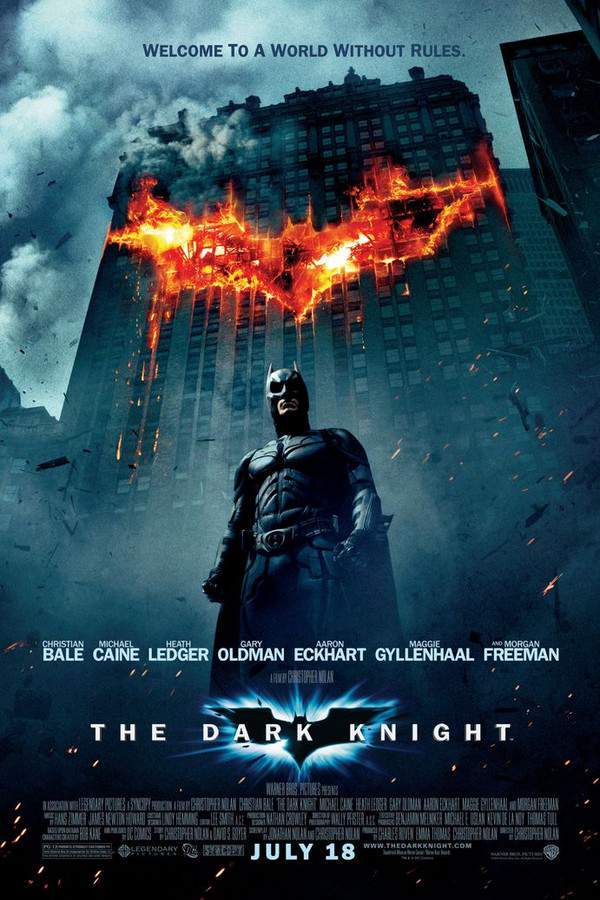
The Dark Knight (2008) movie poster

Plot Summary

The Dark Knight (2008) Plot Summary Explained

Release, runtime and language
2008 · 152 min · English
JustWatch #580 69
Directed by
Christopher Nolan
Starring
Christian Bale, Aaron Eckhart, Heath Ledger
Budget
$185M

As darkness engulfs Gotham City, Batman works with Lieutenant Gordon and District Attorney Dent to dismantle the criminal underworld. Their efforts are disrupted by the arrival of the Joker, a chaotic mastermind who unleashes a wave of violence and throws the city into turmoil. Faced with the Joker's unpredictable attacks, Batman must confront his ultimate challenge and fight to restore order while battling for the soul of Gotham.

On this page (7)
  1. 1 Where to watch
  2. 2 What happens: full plot
  3. 3 Plot questions answered
  4. 4 The book behind the movie
  5. 5 Movie threads
  6. 6 Movies like The Dark Knight
  7. 7 Every angle

Where to watch

Where to Watch The Dark Knight (2008)

Where can you watch The Dark Knight? Stream, rent or buy it in the US, including on HBO Max, TBS and TNT: current JustWatch availability with up-to-date prices.

Streaming availability powered by JustWatch

Full plot summary · contains spoilers

What Happens in The Dark Knight: Full Plot Summary

The whole story of The Dark Knight (2008) explained, from the opening scene to the final frame: every key event, every twist and what it all adds up to. Read it as a quick recap before the sequel, to check a scene you missed, or to finally understand what really happened.

The film opens with a daring bank heist orchestrated by a crew clad in clown masks, all of whom are there to steal the mob's substantial cash reserves. As the robbery unfolds, a conflict arises among the clowns over their share, leading to chaos where they begin turning on each other. In a shocking moment, a school bus crashes through the bank wall, causing more mayhem and leaving one clown dead. In a tense confrontation, one surviving clown, a mob bank manager, realizes the clowns are far more dangerous than they appear. The clown kneels in front of him and chillingly states, > "I believe whatever doesn't kill you simply makes you... stranger..." before revealing his identity as The Joker. Without hesitation, he places a grenade in the banker's mouth before escaping on the bus, which is cleverly rigged with a gas grenade instead of a conventional bomb. The Joker seamlessly joins a convoy of school buses just as the police arrive.

As night falls in Gotham, a palpable fear has gripped the underworld due to the looming silhouette of the batsignal in the sky. We see Lt. James Gordon manning the signal alongside Det. Anna Ramirez, who wonders if Batman will show up. Gordon reassures her that it’s fine if he doesn’t come, subtly hoping Batman is busy taking down Gotham's rampant crime. Meanwhile, the Scarecrow, having escaped Arkham Asylum, finds himself in a precarious deal with Russian mobsters, when just as they negotiate, phony Batmen crash the scene aiming to enact their own form of justice. The Batmobile crashes in, and after a destructive display, Batman arrives to turn the tides, fighting off both enemies and misguided vigilantes.

After the intense altercation, Gordon and Ramirez investigate the aftermath of the bank heist while Batman analyzes the situation for leads on the Joker, who is quickly becoming a significant threat amidst the chaos created by Gotham's mob. Meanwhile, Bruce Wayne grapples with the fallout of his double life as he watches the new district attorney, Harvey Dent, pursue justice. Alfred cautions Bruce to tread carefully, sensing a potential conflict brewing over Harvey's growing closeness with Rachel Dawes, Bruce’s former love.

The tension mounts in court as Harvey and Rachel attempt to bring mob leader Salvatore Maroni to justice. However, their efforts face setbacks, reinforcing the chaos within Gotham's judicial system. Through it all, Dent’s resolve only strengthens, sparking a precarious alliance with Gordon against corruption. As Bruce Wayne prepares for a gala fundraiser in support of Harvey, the Joker's plans begin to unfold, revealing his twisted vendetta against Gotham’s vigilante and its heroes.

As the narrative intensifies, the Joker instigates deadly games involving Harvey, Rachel, and Batman, each of whom must confront their values in the face of moral ambiguity. The stakes escalate when Harvey, in a harrowing transformation into Two-Face after Rachel's tragic fate, seeks vengeance against those he deems responsible for the city's chaos. This sets off a series of confrontations that question the very fabric of justice in Gotham.

In a heart-stopping climax, Batman is tasked with making an impossible choice: save the love of his life or protect Gotham’s remaining hope in Harvey Dent. The fate of the city hangs in balance as the Joker's master plan comes to fruition, leading to devastating losses that force Bruce to take on the mantle of a true Dark Knight. As the dust settles, Batman must now bear the burden of blame for crimes he did not commit to uphold Dent's legacy and preserve hope in a city on the brink of collapse. In a poignant conclusion, Gordon reflects on Batman's silent sacrifice, declaring him a "silent Guardian. A watchful protector. A Dark Knight."
Last updated: November 16, 2024 at 16:47

Was this helpful?

Plot questions answered

The Dark Knight Plot Explained: Your Questions Answered

The questions people ask most about The Dark Knight (2008): what happens in the confusing scenes, why the characters do what they do, the twists, hidden details and what the ending means. Each answer contains spoilers.

Q1

Why does the Joker reveal himself at the bank instead of staying hidden?

The Joker reveals his identity to demonstrate his philosophy that chaos is the ultimate equalizer. By unmasking himself in front of the bank manager, he shows that he has no fear of being caught or identified. His line about becoming 'stranger' after surviving implies he views the experience as transformative rather than threatening. Additionally, revealing himself serves his larger plan to introduce himself to Gotham as a new force of chaos, drawing attention away from the mob and positioning himself as Batman's primary adversary.

Foreshadowing: Earlier in the heist, the Joker kills his own men without hesitation, showing he values chaos over loyalty or self-preservation.

  • joker identity reveal
  • bank heist
  • chaos philosophy
  • joker motivation
Q2

Why does Harvey Dent become Two-Face?

Harvey transforms into Two-Face after Rachel Dawes is killed in the Joker's explosion. The trauma of losing the woman he loved, combined with his own severe burns, shatters his belief in justice and due process. Throughout the film, Harvey operated under the principle that 'you die a hero or live long enough to see yourself become the villain.' When Rachel dies, he concludes that the universe is fundamentally random and unfair, so he adopts a coin flip to make decisions, seeking vengeance against those he blames for the chaos, including Gordon's officers and the mob.

Foreshadowing: Harvey's obsession with binary outcomes and his willingness to use aggressive, unconventional methods against criminals foreshadow his later reliance on a coin flip.

  • harvey dent two-face
  • two-face transformation
  • rachel dawes death
  • harvey revenge
Q3

Why does Batman save Harvey instead of Rachel when given the choice?

Batman chooses to save Harvey because he represents Gotham's hope for a lawful, just future without needing to resort to vigilantism. While Rachel is the woman he loves, Harvey is the White Knight, the symbol that proves Gotham can be saved through the legal system rather than violence. The Joker deliberately gave Batman the address to Harvey's location, knowing Batman would make this impossible choice. By saving the man who embodied hope for the city over his personal love, Batman sacrifices his own happiness to preserve Gotham's faith in justice.

Foreshadowing: Earlier scenes establish Bruce's internal conflict between his desire for a normal life with Rachel and his commitment to being Gotham's protector.

  • batman choice
  • save harvey or rachel
  • batman sacrifice
  • gotham hope
Q4

Why does Batman take the blame for Harvey Dent's crimes?

Batman accepts responsibility for Harvey's murders to preserve Gotham's hope. Harvey had become the city's symbol of justice, a district attorney who proved the system could work. If the public learned their White Knight had become a vengeful killer, all faith in lawful justice would collapse, and Gotham would surrender to despair. By allowing himself to be blamed, Batman sacrifices his own reputation to ensure the city retains its belief that good can triumph. This is the central sacrifice that defines him as the Dark Knight.

Foreshadowing: Gordon's earlier statement that Batman is 'the hero Gotham deserves but not the one it needs right now' foreshadows this selfless act.

  • batman blamed
  • harvey dent crimes
  • gotham hope
  • batman sacrifice
  • dark knight meaning
Q5

What is the Joker's goal in The Dark Knight?

The Joker's ultimate goal is to prove that anyone can be broken and that morality is simply a mask people wear until chaos reveals their true nature. He doesn't want money or power, he wants to demonstrate that under enough pressure, people will abandon their principles. His experiments with Harvey Dent, the ferry passengers, and Batman are all tests designed to show that idealism is fragile. He believes that when faced with death, 'all it takes is a bad day' for someone to become like him.

Foreshadowing: The opening bank heist, where the criminals turn on each other, demonstrates his belief that people are inherently selfish and will betray each other.

  • joker motivation
  • joker plan
  • chaos
  • prove morality
  • joker philosophy
Q6

Why does the Joker specifically target Harvey Dent and Rachel Dawes?

The Joker targets Harvey because he represents the embodiment of hope and lawful justice in Gotham. Destroying the city's White Knight would prove that even the most principled people can be corrupted. He targets Rachel because she represents Batman's one vulnerability, his personal stake in the world. By forcing Batman to choose between the city's hope and his love, the Joker tests whether the hero will prioritize himself or others. Targeting both characters simultaneously allows the Joker to attack Gotham's future and Batman's emotional core at once.

Foreshadowing: Earlier scenes show the Joker attending Bruce Wayne's fundraiser, demonstrating he knows who these people are and has infiltrated their world.

  • joker targets
  • rachel dawes
  • harvey dent
  • joker plan
  • batman vulnerability
Q7

Why does the Joker spare the bank manager during the heist?

The Joker doesn't actually spare the bank manager, he places a grenade in his mouth, which could be detonated at any time. This is a psychological torture more cruel than murder. By leaving the manager alive in a state of constant terror, the Joker demonstrates his philosophy that survival itself can break a person. The manager is forced to live with the knowledge that the Joker could return at any moment. This is more valuable to the Joker than a simple killing, as it proves his ability to instill lasting psychological damage.

Foreshadowing: This mirrors the Joker's later statement about not killing people being 'more fun', he prefers psychological warfare over straightforward murder.

  • bank manager
  • joker grenade
  • joker cruelty
  • psychological torture
Q8

What happens to the Joker at the end of The Dark Knight?

The Joker is arrested by Batman at the end of the film. After his ferry experiment fails, when neither ferry detonates their bomb, the Joker is left hanging from a building. Batman saves Gordon's son and captures the Joker, who laughs maniacally as he's taken into custody. He is never killed or imprisoned on-screen, setting up his return in future films. His capture is intentional on Batman's part, as keeping the Joker alive serves the larger purpose of maintaining Gotham's hope, the city needs to see that evil can be contained.

Foreshadowing: The Joker's earlier statement that he is 'an unstoppable force' and his escape from police custody foreshadow his continued threat.

  • joker arrested
  • joker captured
  • joker ending
  • batman catches joker
Q9

Why does Gordon call Batman the Dark Knight at the end?

Gordon calls Batman the 'Dark Knight' because he now understands the true nature of Batman's sacrifice. Earlier in the film, Gordon uses 'White Knight' to describe Harvey Dent, the ideal hero who operates within the law. Batman, by contrast, must operate in shadows, take blame for crimes he didn't commit, and sacrifice his personal happiness and reputation to protect Gotham. The title 'Dark Knight' acknowledges that true heroism sometimes requires becoming the villain in the public's eyes. Gordon's final speech recognizes Batman as 'a silent Guardian, a watchful protector', the hero Gotham needs rather than deserves.

Foreshadowing: The film's repeated contrast between Harvey's public heroism and Batman's hidden sacrifice builds toward this revelation.

  • dark knight meaning
  • gordon speech
  • batman sacrifice
  • dark knight title
Q10

Why does the Joker put bombs on both ferries?

The Joker places bombs on both the civilian ferry and the prison ferry to conduct his ultimate social experiment. He gives each ferry the detonator for the other's bomb, reasoning that if either group detonates the bomb, he wins his bet that people are inherently selfish and will sacrifice strangers to save themselves. When both ferries fail to push the button, the Joker's philosophy is proven wrong, this is his only true defeat. The moment represents the film's central theme: ordinary people can choose heroism even when tempted by survival.

Foreshadowing: The earlier hospital scene where the Joker manipulates Harvey into making a deadly game demonstrates his obsession with testing people's morality.

  • ferry experiment
  • joker bomb
  • joker test
  • people corruption
  • ferry choice

Movie threads

More Movies Like The Dark Knight, by Mood & Story

Curated lists built around what makes The Dark Knight tick: the same mood, the same kind of story or the same emotional payoff. Each list explains why these movies belong together.

Chaotic Villain Thrillers like The Dark Knight

Stories where a chaotic villain forces heroes to confront their darkest limits. If you enjoyed the psychological battle between Batman and the Joker in The Dark Knight, this list features movies with similar mastermind villains. These films explore themes of chaos versus order and feature intense, high-stakes confrontations that challenge the hero's moral code. Find more thrilling crime and action movies with complex, chaotic antagonists.

  • chaotic
  • tense
  • psychological warfare
  • morally ambiguous
  • high-stakes
  • unsettling
  • Tone: dark, tense, morally ambiguous
  • Pacing: fast, urgent
Why these movies?

The story pattern: Narratives in this thread typically involve a systematic antagonist who introduces chaos to expose the fragility of society. The hero is forced into a reactive position, making increasingly difficult choices that blur the line between right and wrong. The plot is driven by a series of escalating challenges set by the villain, leading to a climax that often redefines the hero's purpose at a great personal cost.

Why they belong together: Movies are grouped here based on the central dynamic of a chaotic force challenging a structured one. They share a high-intensity, fast-paced tone, a focus on psychological manipulation, and a dark, morally ambiguous atmosphere where the victory is often philosophically complicated rather than clear-cut.

Movies about Heroic Sacrifice like The Dark Knight

Stories where saving the day comes with a profound and tragic personal cost. Fans of The Dark Knight's bittersweet ending and exploration of Batman's sacrifice will find similar films here. These movies feature protagonists who bear a heavy burden to save others, often ending with a poignant cost. Discover more dramatic action and thriller films with deep emotional weight and complex endings.

  • tragic
  • heavy
  • sacrificial
  • solemn
  • morally complex
  • grim
  • Tone: dark, tragic, bittersweet
  • Pacing: steady, character-driven
Why these movies?

The story pattern: The narrative pattern follows a protagonist who accepts a great responsibility, only to find that fulfilling it requires them to sacrifice their reputation, relationships, or peace of mind. The story arc is often tragic, culminating in a bittersweet or bleak ending where the world is saved, but the hero is left isolated, misunderstood, or broken by the experience. The focus is on the internal cost of external victory.

Why they belong together: These films are united by their heavy emotional weight, complex character arcs centered on sacrifice, and bittersweet or tragic conclusions. They share a dark, serious tone and prioritize the psychological consequences of heroism over simplistic tales of triumph.

If you liked this

Movies Like The Dark Knight

Similar movies to The Dark Knight: the same genre, themes or kind of story. Each one comes with its own plot summary, timeline and ending explained.

Browse all movie summaries

Every angle

The Dark Knight (2008) Explained: Plot, Timeline & Characters

Everything about The Dark Knight in one place: what happens in the plot summary, the timeline in chronological order, the characters and meaning and a spoiler-free summary. What's After the Movie adds the cast, box office and post-credit scenes.

Coming soon on iOS and Android

The Plot Explained Movie Summary App

Plot summaries, endings explained and timelines on your phone. Catch up on any movie in minutes, save your favorites and never miss a twist again.

Be the first to know when we launch. Your email stays private, always.

Learn more about the app