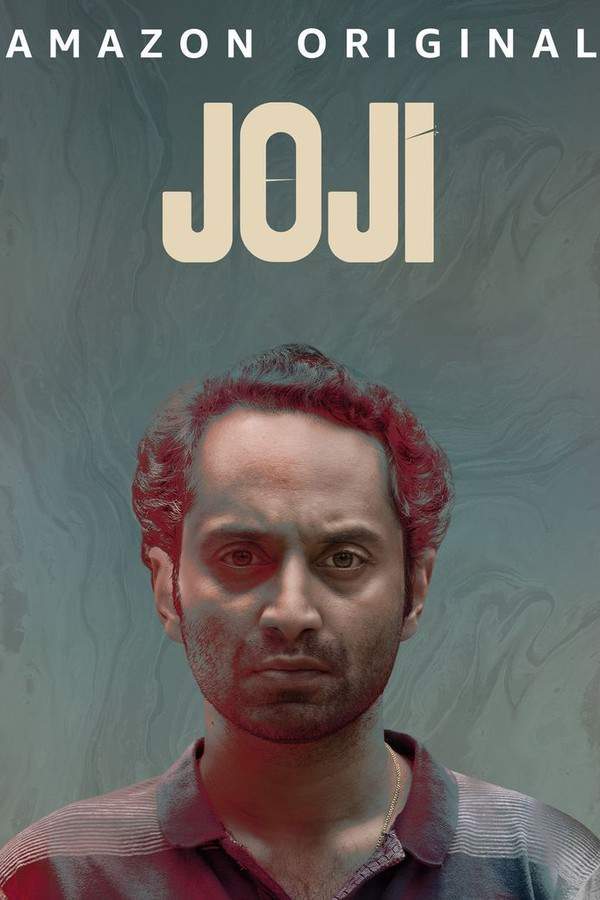
Joji, an engineering dropout, drifts through a tense, tightly controlled life with his elder brothers Jomon and Jaison, under the stern thumb of their father, Kuttappan. The family circle also includes Jaison’s wife, Bincy, and Jomon’s teenage son, Popy. They inhabit a sprawling house set amid a vast plantation in the high ranges of Kerala, a place shadowed by the persistent storm of a COVID-era world. Joji often presents a milder appearance than his imposing father and brothers, yet there are quiet, almost uneasy connections with Bincy and Popy that hint at something more underneath the surface.
Kuttappan, a physically imposing man at 74, remains the undisputed head of the family, while Jomon, a divorcee, tends to the agricultural side of the estate, and Jaison runs their town ventures. Joji’s own attempts at business have mostly failed, leaving him financially dependent on his father, who does not hesitate to use harsh discipline to maintain control. Bincy keeps the household running, forever busy in the kitchen, and the family’s yard features a pond tended by workers, including Gireesh and Sudhi. A crucial moment arrives when Kuttappan manages to free a heavy valve stuck in the mud, only to suffer a stroke and be hospitalized. In a discussion with the close circle, Dr. Felix reveals that Kuttappan is paralyzed and the prognosis is grim, while Joji briefly glimpses a glimmer of hope when he manages to sell his horse to buyers in the yard.
As Kuttappan returns home bedridden and unable to speak, the household’s dynamics tighten around fear, resentment, and whispered hopes. Jomon’s anger at the collapse of the old order grows clear, while others quietly entertain the notion that Kuttappan’s time may be running out. Joji, ever the quiet observer, visits his father and provocatively mocks the paralyzed hand that had once wielded abuse. When Kuttappan’s condition worsens, Jomon pushes for a risky surgery, which, against the odds, proves successful. The old man comes home again, this time confined to a wheelchair, and life at the house seems to fall back into familiar patterns of control and fear.
The family faces new strains when Jaison asks for funds to buy a house in town, only to be scornfully rejected by Kuttappan. The elder patriarch regains enough strength to sign a cheque, signaling an unsettling recovery, and Bincy vents her frustrations to Joji. Seizing the moment, Joji resolves to challenge his father’s dominance, but a brutal moment follows as Kuttappan chokes Joji with his left hand and jeers at him. In a desperate bid to reclaim control, Joji initiates a plan to end his father’s life by secretly replacing his daily medications with look-alike pills. Bincy witnesses something that chills her: a conspiracy that could end in murder, yet she keeps quiet because she and Jaison both fear losing what little leverage they have left. Joji’s gambit succeeds by the time Kuttappan dies, leaving the house in shocked silence.
The funeral processional becomes a volatile scene, with Jomon’s impulsive act of setting off firecrackers to honor his father’s memory clashing with the church’s priest, Father Kevin. Dr. Felix and the attending doctors convene again to discuss the estate’s partition, while Jomon argues over what would be respectful to Kuttappan’s spirit. Joji steps forward with a proposal that tries to balance competing loyalties, and the family agrees to his plan, though the air remains thick with suspicion and unspoken guilt. Rumors swirl about Kuttappan’s death, and Joji wrestles with nightmares of his father, even attempting to burn all the medicine strips used in the act to erase the evidence. A fire near the pond becomes a telltale sign, and Jomon, who notices the glow, grows more suspicious of Joji’s involvement.
When Sudhi is confronted, he bolts, spilling clues that Nudge Jomon toward Joji’s possible guilt. Realizing that Joji is hiding something, Jomon confronts him; Joji defuses the moment with a sudden, violent exchange—using an air gun borrowed from Popy’s stash to subdue Jomon, then hurling Sudhi’s explosives at him, killing Jomon in a brutal instant. Joji then goes to the police to frame Sudhi for the murder, while Jaison notices the strange changes in Joji’s conduct: he becomes conspicuously religious and distant, and Bincy begins to question the possibility that Joji could have killed Jomon as well. During the autopsy, pellets from the gun turn up in Jomon’s body, revealing Joji as the unlikely wielder of the weapon—and the only one who knew about the gun, purchased with money stolen from Kuttappan.
Confronted with mounting evidence, Joji insists he is innocent, but the truth feels inescapable. He tries to blackmail Jaison, threatening to implicate him as a co-conspirator if he does not stand with Joji, while Bincy finally confesses that she knew something was wrong. With no viable escape, Joji makes a final, desperate bid for control and attempts suicide by shooting himself with the air gun, leaving behind a suicide note that blames society for his acts. The mid-credits scene reveals a harsher truth: Joji survives, waking in a hospital bed paralyzed, and when a police officer asks him to blink to confess, he deliberately refuses to blink, a chilling, unresolved note to the consequences of his choices.