Plot Explained Spoilers guaranteed!
Plot Explained

Browse by genre

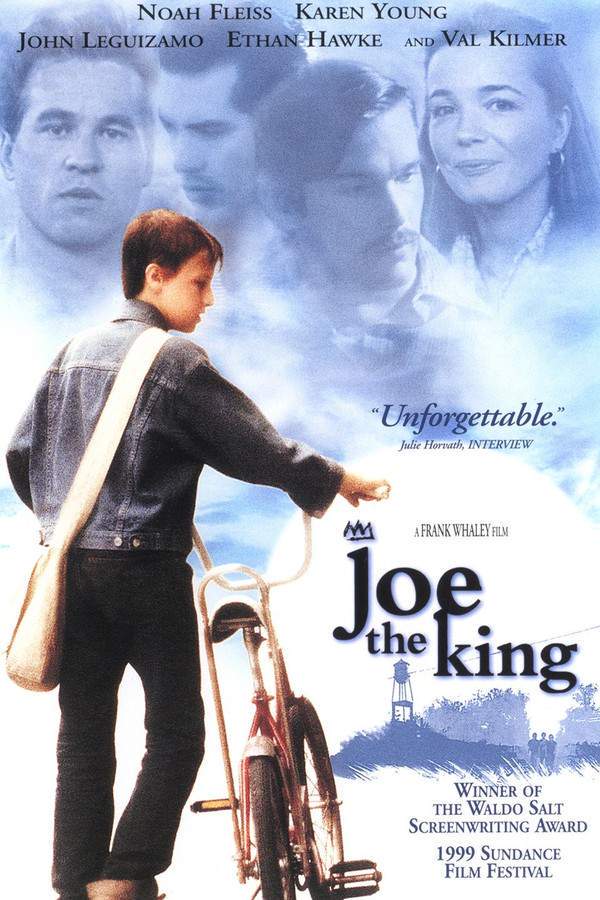
Joe the King (1999) movie poster

Plot Summary

Joe the King (1999) Plot Summary Explained

Release, runtime and language
1999 · 93 min · English
JustWatch #30,937 2

Driven by frustration and anger stemming from a difficult home life, a teenager named Joe embarks on a journey of self-discovery and rebellion. Noah Fleiss portrays Joe in this story of broken dreams and shattered hopes, as he takes matters into his own hands and confronts the turmoil surrounding him.

On this page (6)
  1. 1 Where to watch
  2. 2 What happens: full plot
  3. 3 Plot questions answered
  4. 4 Movie threads
  5. 5 Movies like Joe the King
  6. 6 Every angle

Where to watch

Where to Watch Joe the King (1999)

Where can you watch Joe the King? Stream, rent or buy it in the US, including on Amazon Prime Video, Amazon Video and Apple TV Store: current JustWatch availability with up-to-date prices.

Streaming availability powered by JustWatch

Full plot summary · contains spoilers

What Happens in Joe the King: Full Plot Summary

The whole story of Joe the King (1999) explained, from the opening scene to the final frame: every key event, every twist and what it all adds up to. Read it as a quick recap before the sequel, to check a scene you missed, or to finally understand what really happened.

In the mysterious hills of Upstate New York during the unsettling 1970s, the Henry household is engulfed in turmoil. Fourteen-year-old Joe Henry has become all too familiar with a life steeped in anxiety, constantly navigating the toxic environment created by his father, Bob (a figure consumed by anger), and his mother, Theresa (a woman paralyzed by her own fears). Joe’s older brother, Mike, finds himself at a crossroads, torn between being a protective sibling and pursuing his own social goals, leading him to maintain a distance from Joe, concerned that association with him might tarnish his reputation. Adding to Joe's struggles are the harsh taunts from his classmates and the unwelcome pressure from those to whom his father owes money.

The family’s situation worsens dramatically when Bob’s repressed rage surfaces one fateful evening, resulting in chaos that leaves shattered records in its wake. Upon returning from work, Joe is confronted with the wreckage of his family's tenuous stability, discovering that Bob's explosion of rage ignited from an unsettling discovery in Theresa's purse—condoms—which not only dismantled any remaining fabric of family unity but also hinted at her secretive life as a prostitute, driven to desperate measures to support the family. This tangled web of secrets, shame, and financial hardship pushes Joe to consider drastic actions.

In an effort to relieve the overwhelming burden on his shoulders, Joe accepts a full-time position at a local diner after school, a choice that demands the sacrifice of both his education and personal well-being for mere survival. Working under the radar due to his age, he finds himself exploited by callous employers who show him little respect and offer scant wages. However, amidst this strife, Jorge, one of his coworkers, emerges as a ray of hope, tirelessly standing up for Joe against his adversaries.

As Joe battles to keep afloat, he is assigned a guidance counselor, Leonard Coles, whose well-meaning demeanor ultimately proves to be inadequate. During their initial meeting, Coles’ careless interruptions and lack of sensitivity only serve to intensify Joe’s feelings of isolation, leaving him feeling overlooked in the eye of a storm.

As the story continues to unfold, Joe embarks on a series of desperation-driven thefts—picking locks to loot from stores and vehicles, or rifling through mailboxes—all in an effort to ease Bob’s mounting financial woes and restore the items Theresa has lost. His family’s ongoing poverty forces him into outright stealing food from the diner, often neglecting his own meals just to ensure his brother is fed. This desperate cycle spirals out of control when Joe seizes an opportunity following Jorge's early departure, realizing that their bosses, Jerry and Mary, are away for the weekend, leaving their apartment, situated directly above the diner, unguarded.

Under the veil of night, Joe stealthily enters through an upstairs window to ransack the apartment in search of a locked box rumored to contain a significant amount of cash. Just as he lays his hands on the prized possession, he catches a glimpse of his reflection in a mirror, prompting an introspective moment filled with self-disgust. Despite his injured leg, he manages to escape before Roy, their infatuated boss, returns to the apartment, blissfully unaware of the intruder’s presence.

The following day, as Joe arrives for another shift at the diner, he is met outside by Jorge's piercing gaze, who offers a grave warning: “I know you’re the one who broke in and stole from us.” True to his loyal nature, Jorge decides not to betray Joe, instead urging him to stay low and avoid drawing attention. As Joe departs, Jorge’s parting wisdom lingers in his mind: “Don’t worry about getting caught; Jerry and Mary think it was Mary’s ex-husband who did it, while Roy thought you were just a giant rat scurrying down the stairs.” With these cautions weighing heavily on him, Joe grapples with the dangers of returning to the diner versus the potential repercussions of staying away altogether.

Having reaped the rewards of his illicit actions, Joe indulges in a spending spree, acquiring pristine copies of Theresa’s lost music that Bob had destroyed. He stashes these precious tokens of his wrongdoing under the floorboards in his home, accompanied by a cryptic note meant solely for his mother. However, his elaborate scheme begins to unravel after confiding in his dear friend Ray, who carelessly divulges this sensitive information to Coles. Concerned for Joe, Coles takes it upon himself to notify Jerry at the diner, where he threatens to expose their illegal practices should they fail to reform their ways.

Initially compliant, Jerry soon becomes alarmed when Coles unwittingly reveals that Joe had sustained a significant injury while working at the diner—a deep cut to his leg. This crucial insight allows Jerry to piece together the connection between Joe’s misfortune and the audacious theft, prompting him to contact the authorities. The fallout is swift and unforgiving: Joe is arrested and sentenced to six months in a juvenile detention facility.

In the wake of this dramatic turn, Bob, ever the pragmatist, surprisingly displays a moment of compassion as he drives Joe to the bus that will take him to his new life. This rare instance of empathy is accompanied by cautionary advice, urging Joe not to repeat the mistakes that led him to this dark chapter of despair and self-destruction. As Joe steps off the vehicle and boards the bus, the film concludes with a poignant scene: Joe traversing the dimly lit hallway of his new environment, his face reflecting a mixture of uncertainty and dread.
Last updated: November 22, 2024 at 14:22

Was this helpful?

Plot questions answered

Joe the King Plot Explained: Your Questions Answered

The questions people ask most about Joe the King (1999): what happens in the confusing scenes, why the characters do what they do, the twists, hidden details and what the ending means. Each answer contains spoilers.

Q1

Why did Bob explode and destroy the records?

Bob's violent outburst was triggered by discovering condoms in Theresa's purse. This revelation exposed that Theresa had been working as a prostitute to support the family financially. The discovery shattered the fragile family unity and sent Bob into a rage, leading him to destroy his records in a fit of anger and humiliation.

  • bob's rage
  • theresa's secret
  • prostitute
  • family secrets
Q2

Why did Joe turn to stealing?

Joe began stealing because his family was trapped in extreme poverty. After his father's rage destroyed the family's stability and his mother lost her money, Joe felt compelled to take action. He stole food from the diner to feed his brother and stole from stores and vehicles to help pay off the money his father owed and replace items his family had lost.

  • joe's thefts
  • poverty
  • family hardship
  • desperation
Q3

How did Joe get caught after the apartment heist?

Joe was caught because his guidance counselor Leonard Coles unintentionally revealed crucial information. After Joe confided in his friend Ray, Ray told Coles about Joe's plans. Concerned for Joe, Coles visited the diner and told Jerry about an injury Joe had sustained while working, a deep cut to his leg. Jerry connected this injury to the theft and contacted the police.

  • joe's arrest
  • leonard coles
  • juve ile detection
  • caught stealing
Q4

Why was Theresa working as a prostitute?

Theresa turned to prostitution out of desperate necessity to provide for her family. The family was陷入极端贫困 (in extreme poverty), and with Bob unable to manage finances and unable to hold down regular work, Theresa felt compelled to take desperate measures to keep the family afloat.

  • theresa
  • poverty
  • desperation
  • family support
Q5

Why didn't Jorge turn Joe in for the theft?

Jorge chose not to betray Joe because of their strong friendship and loyalty. Despite knowing Joe was the one who broke into the apartment, Jorge warned him to stay low and avoid attention. He told Joe that the bosses suspected Mary's ex-husband and that Roy thought it was just a rat, giving Joe time to escape consequences.

  • jorge
  • loyalty
  • protection
  • workplace friendship
Q6

Why did Joe spend the stolen money on music records?

Joe used the stolen money to buy copies of the music records his father had destroyed during his rage episode. These records belonged to his mother Theresa. Joe hid them under the floorboards in their home and left a cryptic note for her, attempting to restore something precious that was lost and reconnect with his mother.

  • music records
  • theresa
  • joe's mother
  • restoration
Q7

Why was Joe working at the diner despite being underage?

Joe took a full-time job at the diner after school to help support his struggling family. He was only fourteen years old, but the family desperately needed income. The diner owners, Jerry and Mary, exploited his age by paying him scant wages and keeping him working under the radar to avoid legal issues.

  • child labor
  • diner
  • exploitation
  • underage work
Q8

Why did Leonard Coles tell the diner owner about Joe's injury?

Coles told Jerry about Joe's leg injury because he was genuinely concerned for Joe's well-being. After learning about Joe's theft from Ray, Coles visited the diner intending to warn them about their illegal labor practices. However, his careless mention of Joe's deep cut inadvertently gave Jerry the key clue needed to connect Joe to the apartment robbery.

Foreshadowing: Coles had already proven ineffective as a counselor earlier in the film, showing poor judgment and lack of sensitivity.

  • leonard coles
  • counselor
  • betrayal
  • injury revelation
Q9

Why did Joe quit school to work at the diner?

Joe dropped out of school to take the diner job because the family's financial situation had become unbearable. With his father in debt and his mother having lost her money, Joe felt he had no choice but to sacrifice his education to help keep the family afloat. The job required him to work full-time after school, making attending school impossible.

  • school dropout
  • education sacrifice
  • family responsibility
Q10

What did Joe see in the mirror during the heist?

While ransacking the apartment, Joe caught his reflection in a mirror and experienced a moment of intense self-disgust. This introspective moment represented his awareness that he had become something he despised, a thief and a criminal. Despite his injured leg, this self-reproach didn't stop him from completing the theft.

  • mirror
  • self-reflection
  • guilt
  • moral conflict
Q11

Why did Bob show compassion when driving Joe to juvie?

Bob displayed a rare moment of compassion while driving Joe to the bus that would take him to juvenile detention. This unexpected tenderness came from seeing his son face serious consequences for actions that stemmed from the family's dysfunction. Bob advised Joe not to repeat the same mistakes, showing a glimpse of the care he was otherwise unable to express.

Foreshadowing: Bob's anger and violence dominated throughout the film, making this moment of empathy particularly striking and significant.

  • bob
  • father
  • compassion
  • ending
  • juve ile detention
Q12

Why did Mike, Joe's older brother, distance himself from Joe?

Mike struggled to balance his protective instincts toward his younger brother with his desire to fit in socially. He feared that being associated with Joe, who was constantly bullied and struggling, would damage his own reputation among peers. This internal conflict led him to maintain distance from Joe during a time when his brother needed him most.

  • mike
  • brother
  • social pressure
  • isolation

Movie threads

More Movies Like Joe the King, by Mood & Story

Curated lists built around what makes Joe the King tick: the same mood, the same kind of story or the same emotional payoff. Each list explains why these movies belong together.

Grim Coming-of-Age Dramas like Joe the King

Stories of young people navigating oppressive home lives and desperate paths. If you were moved by the desperate struggles of the teenager in Joe the King, this collection features movies with similar stories of youth grappling with broken homes, poverty, and delinquency. These films share a dark tone and heavy emotional impact, exploring the harsh realities of growing up in difficult circumstances.

  • oppressive
  • desperate
  • grim
  • melancholic
  • isolated
  • anxious
  • Tone: dark, somber, desperate
  • Pacing: steady, character-driven
Why these movies?

The story pattern: Stories in this thread typically follow a young protagonist as they confront the daily pressures of a toxic or neglectful home environment. The narrative often involves a slide into minor crime or rebellion as a coping mechanism, leading to moments of crisis that force a painful, premature maturity.

Why they belong together: These films are grouped together because they share a specific focus on the adolescent experience under duress. They consistently feature a dark, somber tone, a steady pacing that builds desperation, and a thematic core centered on family dysfunction and the loss of innocence.

Crimes of Desperation Movies like Joe the King

Character-driven dramas where systemic pressure leads to a slow-burn moral collapse. Viewers who appreciated the steady pacing and moral complexity of Joe the King will find similar films here. These movies explore how characters are pushed into criminal acts by poverty and desperation, focusing on the emotional weight of their decisions rather than the action.

  • desperate
  • anxious
  • grim
  • somber
  • tense
  • oppressive
  • Tone: dark, grim, tense
  • Pacing: steady, linear progression
Why these movies?

The story pattern: The narrative pattern is a linear, steady progression where a character's worsening situation—often economic and emotional—compels them to cross ethical lines. The crimes are typically small-scale, like theft, and are portrayed as sad necessities rather than glamorous exploits, culminating in a bittersweet or bleak reckoning.

Why they belong together: These movies share a cohesive vibe defined by a steady pacing that builds tension gradually, a medium but consistent intensity, and a dark tone. They are united by the theme of crime as a symptom of deeper social and personal despair, not as a primary plot driver.

If you liked this

Movies Like Joe the King

Similar movies to Joe the King: the same genre, themes or kind of story. Each one comes with its own plot summary, timeline and ending explained.

Browse all movie summaries

Every angle

Joe the King (1999) Explained: Plot, Timeline & Characters

Everything about Joe the King in one place: what happens in the plot summary, the timeline in chronological order, the characters and meaning and a spoiler-free summary. What's After the Movie adds the cast, box office and post-credit scenes.

Coming soon on iOS and Android

The Plot Explained Movie Summary App

Plot summaries, endings explained and timelines on your phone. Catch up on any movie in minutes, save your favorites and never miss a twist again.

Be the first to know when we launch. Your email stays private, always.

Learn more about the app