Plot Explained Spoilers guaranteed!
Plot Explained

Browse by genre

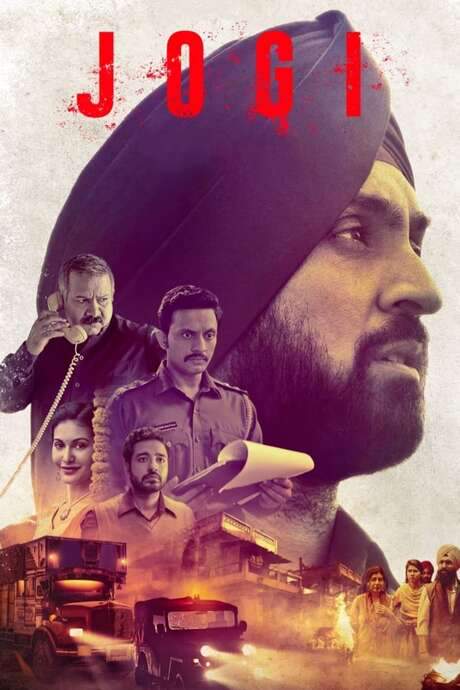
Jogi (2022) movie poster

Plot Summary

Jogi (2022) Plot Summary & Ending Explained

Release, runtime and language
2022 · 116 mins · Hindi
Echo score 78
Directed by
Ali Abbas Zafar
Starring
Mohammed Zeeshan Ayyub, Kumud Mishra, Paresh Pahuja, Diljit Dosanjh, Hiten Tejwani, Neelu Kohli

The biggest human heist Amid tension in 1980s India, three friends of different faiths unite in a noble yet dangerous effort to save hundreds in their town.

On this page (5)
  1. 1 What happens: full plot
  2. 2 Plot questions answered
  3. 3 How it ends
  4. 4 Movie threads
  5. 5 Every angle

Full plot summary · contains spoilers

What Happens in Jogi: Full Plot Summary

The whole story of Jogi (2022) explained, from the opening scene to the final frame: every key event, every twist and what it all adds up to. Read it as a quick recap before the sequel, to check a scene you missed, or to finally understand what really happened.

Set in Delhi’s eastside Trilokpuri, this film traces a three-day window in the immediate aftermath of Indira Gandhi’s assassination on 31 October 1984, four months after Operation Blue Star. At its core are the stories of a traditional, working‑class Sikh family spanning three generations, who begin their day with the familiar rhythms: the kids headed for school, the women frying parathas, and the elders sharing quiet jokes around the breakfast table. They have no idea the world is about to transform around them.

As the morning progresses and news of the assassination spreads, the family’s ordinary routine is shattered. On a bus ride to work, they become targets as tensions flare; a questions of fate becomes a cruel chant: “what is our fault?”—to which the cruel reply is simply, “you are a sardar.” > “you are a sardar.” The film moves through a harrowing three days of escalating violence, where Sikhs are scapegoated and identified by their distinct appearances and the names on electoral registers, a dangerous incitement amplified by Tejpal Arora.

The upheaval does not spare Jogi’s family. Sukhi, Jogi’s elder brother, is beaten as he opens his shop and is burned alive along with others, leaving Heer and the rest of the family to navigate shock and grief. Mobs pour through the streets, buildings burn, and a tormented scene shows a man in a turban running on fire, while a Sikh family is enveloped in flames inside a car. When Jogi returns home, he finds an emptied house; neighbors are even cutting their children’s hair in a desperate bid to disappear from sight. At his sister Heer’s home, he finds Sukhi and other relatives gathered around her sewing machine, stitching a shirt for her dead husband, a moment that tightens the family’s resolve. Jogi consoles his sister, and Sukhi, already overwhelmed by grief, breaks down.

In the midst of this crisis, Rawinder Chautala, Rawinder Chautala, a friend and police officer, spots Jogi’s family name on a target list and urges him to flee to Punjab. Yet Jogi makes a vow that extends beyond his own kin: he intends to stand with his entire Sikh community. After a deeply emotional moment in which he cuts his hair, Rawinder and [Kareem] helps him begin a plan. The group works to relocate Sikhs by transporting them in a truck masked as a weapon- and alcohol‑haul vehicle, guiding them toward safety in Punjab.

A brief flashback sheds light on Laali’s vendetta with Jogi, centering on Kammo’s suicide and the unresolved ties that fuel old wounds. The film closes with a poignant, if contradictory, arc: the community seems saved when the Indian Army arrives—courtesy of Laali’s intervention—but Jogi is fatally shot by Tejpal Arora in a final, heartrending moment that underscores the costs of violence and the fragility of peace.

The narrative is anchored by intimate, human scenes—between father and son on the bus, siblings sharing grief, neighbors wondering how to survive—and expanded by the sweeping, turbulent backdrop of a city under siege. The characters feel vividly real as their personal losses intersect with political and communal forces, and the film never loses sight of the everyday courage it takes to endure, persevere, and hope amid catastrophe. The story lingers on the moral choices people make when fear, loyalty, and justice collide, inviting viewers to witness not just tragedy, but the stubborn human drive toward resilience and unity.
Last updated: October 09, 2025 at 14:17

Was this helpful?

Plot questions answered

Jogi Plot Explained: Your Questions Answered

The questions people ask most about Jogi (2022): what happens in the confusing scenes, why the characters do what they do, the twists, hidden details and what the ending means. Each answer contains spoilers.

Q1

Why did the violence against Sikhs begin after Indira Gandhi's assassination?

The violence erupted as retaliation for Indira Gandhi's assassination on October 31, 1984. Sikhs were scapegoated and targeted because of their distinct appearances and were identified through names on electoral registers. Local MLA Tejpal Arora amplified the hostility by inciting mobs, framing Sikhs as responsible for the Prime Minister's death despite the riots being orchestrated political violence.

  • anti-sikh riots
  • indira gandhi assassination
  • 1984
  • sikhs targeted
  • tejpal arora
Q2

Why was Jogi's family specifically targeted by the mobs?

Jogi's family was targeted simply because they were Sikh. Mobs identified Sikhs by their appearance, particularly turbans and beards, and used electoral registers to find Sikh names. On the bus ride to work, Jogi and his father were beaten when a crowd turned hostile, with the father being asked 'what is our fault?' and the cruel reply being 'you are a sardar'.

  • sikh family targeted
  • turbans
  • mobs
  • trilokpuri discrimination
Q3

Why did Jogi decide to protect the entire Sikh community rather than just flee with his family?

After seeing the horrific violence unfold, his brother-in-law burned alive, families attacked, and neighbors cutting their children's hair to hide their identities, Jogi made a moral choice to stand with his entire Sikh community. Despite Rawinder urging him to flee to Punjab for safety, Jogi declared he would not abandon fellow Sikhs who were being slaughtered. This vow represented a shift from personal survival to communal responsibility.

  • jogi vow
  • protect sikh community
  • solidarity
  • community rescue
Q4

What did cutting his hair symbolize for Jogi?

Cutting his long hair was a deeply symbolic act representing Jogi's willingness to risk his life and identity to save others. By cutting his hair, a sacred symbol in Sikhism, he demonstrated his commitment to the dangerous mission of evacuating Sikhs from Delhi. It marked his transformation from someone seeking safety to a leader willing to sacrifice everything for his community.

  • cut hair
  • sikh hair
  • symbolism
  • sacrifice
  • jogi haircut
Q5

How did Jogi and his friends manage to evacuate Sikhs from Delhi?

Rawinder Chautala, a police officer and friend, used his position to obtain a target list and warned Jogi. Together with Kareem, they organized a covert operation: loading Sikhs into a truck disguised as a weapon and alcohol transport vehicle. This allowed them to slip past mobs and transport people safely toward Punjab over the three-day period. The operation required splitting families into groups and moving them under cover of darkness.

  • evacuation
  • truck
  • punjab
  • rawinder
  • disguised vehicle
  • escape
Q6

Why did Rawinder, a police officer, help Jogi during the riots?

Rawinder Chautala was Jogi's friend and a police officer who spotted Jogi's family name on the target list. Despite being part of the police force, he chose to warn Jogi and help his family escape. This friendship transcended institutional loyalty during the crisis, and Rawinder used his position to facilitate the evacuation operation, providing both information and resources needed to save lives.

  • rawinder
  • police officer
  • friend help
  • jogi friend
  • loyalty
Q7

What was Laali's vendetta against Jogi about?

A flashback reveals Laali harbored a personal vendetta against Jogi stemming from Kammo's suicide. The unresolved trauma from Kammo's death created old wounds that persisted into the present crisis. This personal grievance intersected with the larger communal violence, adding another layer of tension to the already volatile situation.

  • laali
  • vendetta
  • kammo suicide
  • flashback
  • personal grievance
Q8

What brought the Indian Army to Trilokpuri?

The Indian Army arrived due to Laali's intervention. After the three days of escalating violence, destruction, and mass casualties, Laali contacted authorities to bring in the army. Their arrival marked the end of the worst violence and saved the remaining Sikh community members who had not yet escaped or been killed.

  • indian army
  • trilokpuri
  • laali
  • army intervention
  • rescue
Q9

Why was Jogi shot and killed at the end?

Jogi was fatally shot by Tejpal Arora in the final moments of the rescue operation. Despite the Indian Army arriving and the community being saved from further violence, Arora shot Jogi as the evacuation was completing. This tragic death underscored the cost of violence and the fragility of peace, even as hope emerged through the army's arrival, Jogi's sacrifice highlighted the human price paid during those three horrifying days.

  • jogi death
  • tejpal arora
  • killed
  • shot
  • sacrifice
  • ending
Q10

What happened to Jogi's brother-in-law Sukhi during the riots?

Sukhi, Jogi's elder brother, was beaten as he opened his shop and was burned alive along with others. His death was one of many brutal killings during the violence. At his sister Heer's home, the family found Sukhi and other relatives grieving, with Heer stitching a shirt for her dead husband, a heartbreaking moment that hardened the family's resolve to survive.

  • sukhi
  • burned alive
  • brother killed
  • heer husband death
Q11

How were Sikhs specifically targeted using electoral registers?

Mobs used electoral registers to identify Sikh families by their names, creating targeted hit lists. This made the violence more organized and efficient, families could not simply hide or blend in. Combined with the visual identification of turbans and beards, the electoral data allowed rioters to systematically hunt down Sikhs in Trilokpuri, making the violence particularly targeted and devastating for the community.

  • electoral registers
  • target list
  • sikh names
  • organized violence
Q12

Why were neighbors cutting their children's hair during the riots?

When Jogi returned home to an emptied house, he found neighbors desperately cutting their children's hair to hide their Sikh identity. This horrifying act was an attempt to make children look less visibly Sikh and avoid being targeted by mobs. It demonstrated the extreme fear and the drastic measures families took to survive the violence, even sacrificing religious symbols and identity.

  • cut hair children
  • hide identity
  • desperate measures
  • survival

Ending explained

What Happens at the End of Jogi?

How Jogi (2022) ends, in short: the final scene, the last twist and what it means for the characters. The full ending explained, with every spoiler, lives on its own page.

Read the full ending explained

In the final moments of Jogi, the city’s flames have finally begun to subside, but the true battle is still about to be settled. Jogi, bruised and blood‑stained, tracks down the corrupt Inspector Lali Katiyal, who has been hunting him and orchestrating the slaughter of anyone wearing a turban. The two clash in a cramped police depot, the only place left where Lali can command his men.

During the struggle, Jogi’s determination to protect his sister and the few remaining members of his community fuels his strength. He overpowers Lali, and the inspector meets his end – a stark reversal of the power he once wielded over the frightened Sikhs. With Lali’s death the immediate threat collapses, and the remaining officers either flee or stand down.

Continue reading the ending (1 more paragraphs)

Emerging from the wreckage, Jogi cradles his younger sister and looks toward a dimming skyline. The camera lingers on his face, scarred but resolute, as the first hints of sunrise break over Delhi. The ending does not promise an easy future, but it shows that Jogi—and the survivors he fought for—have lived through the nightmare and can now try to rebuild. The final shot leaves us with the sense that, while the wounds of the 1984 riots remain, the spirit of those who endured it endures.

Jogi ending explained in full

Movie threads

More Movies Like Jogi, by Mood & Story

Curated lists built around what makes Jogi tick: the same mood, the same kind of story or the same emotional payoff. Each list explains why these movies belong together.

Movies about courageous friendship like Jogi

Where ordinary people find extraordinary courage through deep friendship. If you liked the powerful bond between Jogi and his friends, explore these movies where deep friendship is the central pillar. These films feature ordinary individuals performing extraordinary acts of courage and sacrifice for those they love, often set against harrowing backdrops.

  • courageous
  • desperate
  • resilient
  • intimate
  • tense
  • grieving
  • Tone: dark, resilient
  • Pacing: fast, urgent
Why these movies?

The story pattern: Stories in this thread follow characters whose friendship becomes their greatest weapon and shelter during times of crisis. The narrative typically involves a collective goal—often survival or rescue—where each member's unique strengths are crucial to overcoming seemingly insurmountable challenges, with the emotional core resting on their unwavering loyalty.

Why they belong together: Movies are grouped here based on their central theme of friendship as a source of resilience and moral courage. They share a focus on interpersonal bonds that provide light in dark settings, creating emotionally heavy yet inspiring narratives about what people will do for those they care about.

Personal stories during political chaos like Jogi

Intimate human dramas unfolding within large-scale political violence. For viewers who appreciated how Jogi told a small, intimate story within the larger 1984 riots, these movies similarly focus on individual lives caught in historical upheaval. They blend intense political thrillers with deeply human dramas about survival and moral courage.

  • harrowing
  • oppressive
  • tense
  • intimate
  • desperate
  • grieving
  • Tone: harrowing, intimate
  • Pacing: fast, tense
Why these movies?

The story pattern: The narrative pattern involves placing a small group of characters at the center of a sweeping historical tragedy. While the larger event provides constant tension and danger, the story remains tightly focused on the protagonists' immediate struggle—often to protect family or community—creating a microcosm that reflects the macro conflict's human cost.

Why they belong together: These films are connected by their approach to storytelling: using intimate, character-driven perspectives to explore large-scale historical trauma. They balance high-stakes political violence with deeply personal emotional journeys, making vast tragedies feel immediate and visceral through individual experiences.

Every angle

Jogi (2022) Explained: Plot, Ending, Timeline & Characters

Everything about Jogi in one place: what happens in the plot summary, the timeline in chronological order, the characters and meaning, the ending explained and a spoiler-free summary. What's After the Movie adds the cast, box office and post-credit scenes.

Coming soon on iOS and Android

The Plot Explained Movie Summary App

Plot summaries, endings explained and timelines on your phone. Catch up on any movie in minutes, save your favorites and never miss a twist again.

Be the first to know when we launch. Your email stays private, always.

Learn more about the app