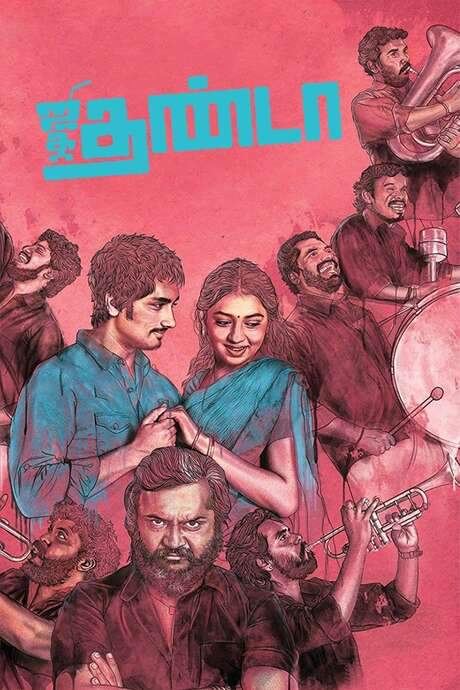
Short film director Karthik Subramani enters a televised talent show hoping to launch his first feature. He makes it to the semifinals, where a stern, highbrow director and a profit-minded producer, Sundar, judge his pitch. Although Karthik doesn’t win, Sundar sees potential and offers to back a project with him at the helm, laying the groundwork for a collision between artistic ambitions and commercial expectations.
The next day, Sundar does not warm to Karthik’s ideas for a traditional film and instead pitches a gangster story. That spark pushes Karthik to pivot and to document the life of Sethu — the Madurai-based gangster whose notoriety begins to fascinate him as a cinematic subject. This decision marks the turning point of the movie, as the line between reporter and prisoner, between observer and participant, starts to blur in Karthik’s mind.
With Madurai as his backdrop, Karthik travels south and enlists the help of a college friend, but his real strategic move is to win the trust of Kayalvizhi, a woman whose mother cooks for [Sethu]. The dramatic tension thickens as Kayalvizhi unwittingly becomes a catalyst for Karthik’s deeper involvement in the gangster’s world. The risk escalates when Sethu’s right-hand man, [Rasu], notices the growing proximity and assigns Sounder to keep an eye on them. The web of surveillance tightens around Karthik, Kayalvizhi, and their fragile alliance.
To gather usable material, Karthik engineers a plan that involves a wireless microphone hidden in a music player, then lends the device to Sounder. That move backfires when Sounder is exposed as a mole for an opposing gang and is killed. Sethu discovers the hidden microphone and tracks down Karthik and Oorani, forcing a dangerous confrontation that tests everyone’s nerve. Despite the danger, Sethu is unexpectedly drawn to the idea of being the center of a film, and he invites Karthik and Oorani deeper into his gang so they can capture authentic moments of his life on camera.
As the line between documentary and fiction dissolves, Karthik’s camera begins to document every criminal detail, every boast, and every negotiated risk. Yet when Karthik plans to leave Madurai to finalize the screenplay, Kayal reveals she was used as a pawn to uncover Sethu’s operations. At a send-off party, Kayal’s words land with a hard truth: perhaps Sethu himself should play the lead in the film. The gangster agrees, and the project pivots toward having Sethu star in his own story under Karthik’s direction.
Despair and fear push Karthik toward flight, but he is soon captured by Sethu’s gang. They kidnap Sundar as well and force both men to finish production. The film’s production turns chaotic, and Karthik even brings in acting coach Muthu to shape the performances, though the experimental approach keeps failing to yield the right on-screen presence.
After the wrap, the film is readied for release with a grand show and much fanfare. Yet when the first screening begins, Sethu is stunned by what he sees. Karthik has covertly transformed the material into a comedy, with the initial “A” in the title standing for Azhuguni — Crybaby — turning the feared gangster into a figure who makes audiences laugh. The result is startling: rather than inspiring fear, the film earns the gangster a strange, enduring respect through comedy. The crowd roars, but the impact also reveals a deeper truth: true admiration can grow from even the most unlikely places, including the moment a mother, who had not spoken to her son in years, finally speaks to him again.
The two men cross paths again after the premiere, when Karthik is on his way to deliver the raw recordings to the police. Sethu, having tasted a new kind of influence and audience affection, forgives Karthik and agrees to leave the past behind, seeking a new life away from the old crimes. What follows is a quiet time-jump: years later, Karthik has matured into a seasoned director who sometimes uses Sethu’s gang to tease Vijay Sethupathi for acting in his films, while Kayal — now his wife — remains a devoted admirer of the gangster-turned-artist.
Meanwhile, Sethu becomes a full-time actor in his own right, having married Ganga Vinodhini Vaidyanathan and cherishing the daughter they share. The arc closes with an uneasy, hopeful balance: art has captured a life of crime, but life continues to evolve, with both men finding new paths that reflect the film’s ultimate mood — transformation through storytelling and the uneasy, enduring appeal of a man who can make people laugh even when his past was built on fear. For those who watch closely, the lines between documentary, fiction, and redemption blur, leaving a resonant impression about the power of cinema to reshape reputations and futures alike.