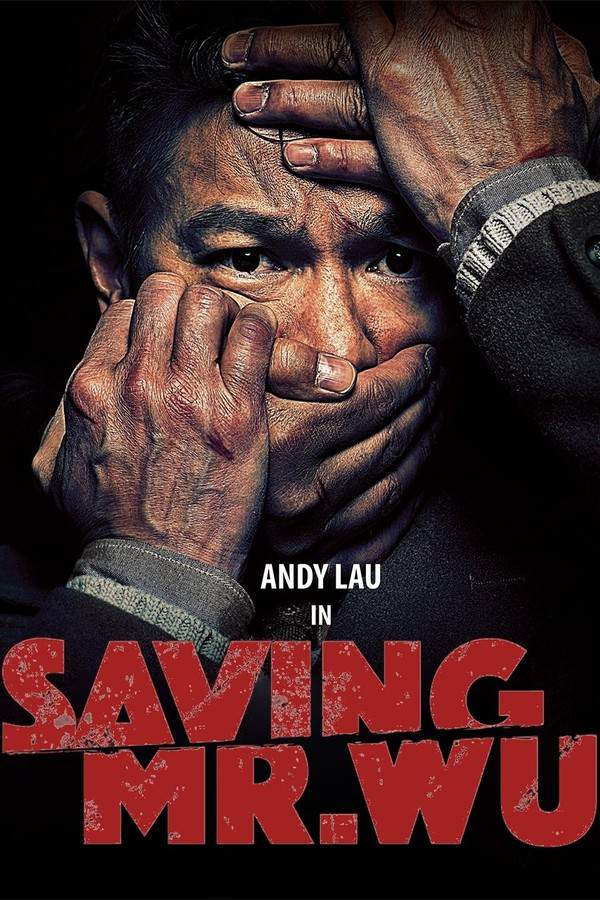
Saving Mr. Wu

Saving Mr. Wu

JustWatch#15,81411

Year: 2015

Runtime: 105 min

Language: Chinese

Director: Sheng Ding

ActionDramaThrillerCrime

A celebrated Hong Kong movie star is abducted from the streets by criminals posing as police officers. The police force launches a race against time to locate and rescue the celebrity before it’s too late. As the situation escalates, a desperate game of cat and mouse ensues, testing the skills of both the police and the cunning kidnappers.

Warning: spoilers below!

Haven’t seen Saving Mr. Wu yet? This summary contains major spoilers. Bookmark the page, watch the movie, and come back for the full breakdown. If you're ready, scroll on and relive the story!

Timeline – Saving Mr. Wu (2015)

Trace every key event in Saving Mr. Wu (2015) with our detailed, chronological timeline. Perfect for unpacking nonlinear stories, spotting hidden connections, and understanding how each scene builds toward the film’s climax. Whether you're revisiting or decoding for the first time, this timeline gives you the full picture.

1

P. L. Travers' Struggles

In 1961 London, struggling author Pamela 'P. L.' Travers finds herself in a challenging situation. Her agent, Diarmuid Russell, convinces her to travel to Los Angeles, setting the stage for a significant meeting.

1961 London
2

Walt Disney's Pursuit

Walt Disney has been pursuing the film rights to Travers' beloved *Mary Poppins* stories for twenty years. His motivation comes from a desire to create a film that his daughters would enjoy, making the stakes much higher for Travers.

Los Angeles
3

Flashbacks to Allora

The narrative flashes back to Travers' formative years in Allora, Queensland in 1906. Her childhood experiences, especially her close bond with her father, play a crucial role in shaping her writing and the character of Mary Poppins.

1906 Allora, Queensland
4

Father's Tragic Downfall

Travers suffers from the tragic loss of her father, Travers Robert Goff, to alcoholism. This personal history profoundly impacts her views and character portrayals in her stories, especially concerning father figures.

Allora, Queensland
5

Arrival in Los Angeles

Upon arriving in Los Angeles, Travers experiences a culture shock, feeling disillusioned by the city's overt optimism. She encounters Ralph, her overly friendly chauffeur, who represents the very ethos that irks her.

Los Angeles
6

Collaboration at Disney Studios

At Walt Disney Studios in Burbank, Travers meets with the creative team, including screenwriter Don DaGradi and the Sherman brothers. However, her challenging nature and insistence on pragmatism over sentimentality create friction during their discussions.

Walt Disney Studios, Burbank
7

Misunderstanding Mr. Banks

Travers expresses deep concern about how the character of Mr. Banks is being portrayed. Her personal connection to Mr. Banks, drawn from her father's flaws, clashes with the Disney team's interpretation of him as a villain.

8

Haunting Memories

As Travers continues working, she becomes increasingly plagued by painful memories from her childhood. These memories create a barrier to her connection with the world around her and impact her involvement in the film's production.

9

Invitation to Disneyland

In an effort to ease tensions, Disney invites Travers to Disneyland. While there, her interactions with Ralph and the adjustments made to George Banks' character begin to soften her rigid views, allowing for a gradual emotional thaw.

Disneyland
10

Confrontation Over Animation

Travers' progress is derailed when she discovers plans to incorporate animation into *Mary Poppins*. Outraged, she confronts Disney and storms back to London, declaring she will not allow her beloved character to be altered.

Los Angeles
11

Disney's Determination

Walt Disney, learning of Travers' true identity as Helen Goff, decides to follow her back to London. His determination reflects his commitment to understanding her creative vision and mending their fractured relationship.

London
12

A Heartfelt Encounter

Disney arrives unexpectedly at Travers' home, sharing stories of his own flawed childhood. His heartfelt reflections resonate with Travers, enabling her to confront aspects of her disillusionment regarding her work and life.

London
13

Granting the Film Rights

Moved by Disney's honesty and the healing potential of storytelling, Travers finally agrees to grant him the film rights to *Mary Poppins*. This pivotal decision marks a turning point for both her personal journey and the film's development.

London
14

Mary Poppins Premiere

In 1964, as the world premiere of *Mary Poppins* approaches at Grauman's Chinese Theatre, Travers initially feels unwelcome. However, driven by her agent's encouragement, she crashes Disney's office and secures an invitation to the screening.

1964 Grauman's Chinese Theatre
15

Rediscovery of Emotion

At the premiere, Travers starts with skepticism but gradually finds herself emotionally moved by the film. The portrayal of George Banks' redemptive arc resonates deeply, prompting her to reflect on her own life and the complexities she has faced.

Grauman's Chinese Theatre

Last updated: October 25, 2024 at 10:50

Was this helpful?

Saving Mr. Wu (2015) Timeline Questions Answered – Chronology FAQ

Find frequently asked questions about the Saving Mr. Wu (2015) timeline, including chronological order, nonlinear jumps, cause-and-effect links, and scene sequence clarifications. This timeline FAQ helps explain when key events happen, how moments connect, and why the story unfolds in that specific order.

Q1

Why was P.L. Travers so resistant to Disney's Mary Poppins movie?

A.

Travers resisted because she viewed Disney's approach as overly sentimental and feared her beloved character would be reduced to a shallow Disney fantasy. More deeply, she had profound personal connections to the story, George Banks was based on her own father, and she felt the Disney team misunderstood and misrepresented this emotional core. She also opposed incorporating animation, which she saw as a betrayal of the pragmatic nature she believed Mary Poppins embodied.

Earlier scenes show Travers' flashback memories of her father's decline, revealing why the Banks character carries such personal weight.

p.l. traversmary poppinswalt disneyfilm rightsresistance
Q2

What is the connection between Mr. Banks and P.L. Travers' father?

A.

George Banks in Mary Poppins is directly modeled after Travers' own father, Travers Robert Goff. Like Mr. Banks, her father worked at a bank but struggled with alcoholism, which led to his downfall and eventual death. The Disney team initially misinterpreted Mr. Banks as a simple villain seeking profit, which deeply offended Travers because it reduced her father's tragic complexity to a one-dimensional caricature.

The flashbacks to 1906 Allora show her father's charming personality before his decline, establishing the emotional foundation for the character.

george banksfatheralcoholismtravers robert goffcharacter inspiration
Q3

Why did P.L. Travers oppose animation in Mary Poppins?

A.

Travers opposed animation because she believed Mary Poppins represented pragmatic realism, not fantasy. She felt that adding animated sequences would transform her story into the very kind of whimsical Disney product she despised. This confrontation became the breaking point that sent her back to London, as she saw it as a fundamental violation of everything she believed the character should be.

Travers' earlier insistence on 'pragmatism over sentimentality' foreshadows her categorical rejection of any fantastical elements.

animationoppositioncreative conflictpragmatism
Q4

How did Walt Disney convince P.L. Travers to grant the film rights?

A.

Disney traveled to London unannounced after learning Travers' real name was Helen Goff. He personally shared stories of his own difficult childhood and flawed father, creating an emotional connection through shared trauma. His honesty about understanding loss and the healing power of storytelling moved Travers to reconsider. Rather than continuing to fight for his vision, he demonstrated genuine understanding of her pain, which ultimately led her to grant the rights.

Disney's earlier invitation to Disneyland showed his willingness to compromise, but his personal confession in London proved decisive.

walt disneyhelen gofffilm rightslondonpersuasionchildhood
Q5

Why was P.L. Travers emotional at the Mary Poppins premiere?

A.

Travers was moved because the film portrayed George Banks' redemption arc, a narrative where the father figure is saved through his family's love. This directly mirrored her own unspoken wish: that her father could have been redeemed from alcoholism. Watching the film, she saw her personal tragedy transformed into something beautiful and redemptive, which overwhelmed her with emotions she had suppressed throughout the production.

The entire film traces Travers' resistance gradually softening, building toward this emotional release at the premiere.

premiereemotionredemptiongeorge bankstears
Q6

What happened to P.L. Travers' father in 1906?

A.

In 1906 in Allora, Queensland, Travers' father Travers Robert Goff was a charming and handsome man who tragically succumbed to alcoholism. His decline devastated the family and profoundly shaped Travers' writing, particularly her complex portrayals of father figures. This trauma directly influenced her creation of Mary Poppins and her insistence that the character represents strictness and order amid chaos, traits she associated with a nanny her family hired after her father's death.

The opening scenes establish her father's charm before the flashbacks reveal his tragic end.

fatheralcoholism1906queenslanddeath
Q7

Why did P.L. Travers storm out of Disney Studios?

A.

Travers stormed out when she discovered Disney planned to include animation in Mary Poppins. This wasn't just a creative disagreement, it represented everything she feared about Hollywood distorting her work. She declared she would not relinquish the film rights and returned to London, believing the collaboration was irreparably broken. This moment represented the climax of her resistance to the entire Hollywood process.

Her earlier complaints about the team's 'casual attitude' and misunderstanding of her work built tension toward this breaking point.

animationstorm outdisney studiosconfrontationhollywood
Q8

What did Disney learn about P.L. Travers' identity?

A.

Disney discovered that P.L. Travers' real name was Helen Goff. When he learned this, he realized she had been hiding behind a pen name throughout their negotiations. This revelation prompted him to follow her to London and approach her as Helen rather than as the professional author he'd been dealing with. Understanding her personal identity became key to connecting with her on a human level rather than a business level.

The use of a pen name itself signals her desire to maintain distance and protect her private self.

p.l. travershelen goffreal namepen nameidentity
Q9

Why was P.L. Travers uninvited from the Mary Poppins premiere?

A.

Disney uninvited Travers from the premiere because he feared her known negativity would dampen the celebratory atmosphere. Having witnessed her persistent criticism and resistance throughout production, he worried she'd react poorly to the finished film or make负面 comments that would spoil the event. However, Travers' agent encouraged her to assert herself, leading her to crash Disney's office and demand an invitation.

Her history of criticism throughout production created tension that led to this exclusion.

premiereuninvitedgraumans chinese theatredisneyexclusion
Q10

What role did Ralph play in P.L. Travers' change of heart?

A.

Ralph, Travers' overly optimistic chauffeur in Los Angeles, initially represented everything she disliked about Hollywood's superficial positivity. However, her interactions with him at Disneyland became unexpectedly meaningful. Through casual conversations, he helped bridge her cynicism with the possibility of genuine emotion. His simple humanity and persistence in being kind despite her coldness gradually wore down her defenses.

Her initial annoyance with Ralph's optimism contrasts with her later warmth toward him.

ralphchauffeurdisneylandoptimismconnection
Q11

Why did Walt Disney want the Mary Poppins film rights for 20 years?

A.

Disney pursued the rights for twenty years at the behest of his own daughters, who loved the Mary Poppins books and repeatedly asked him to make a film adaptation. This personal motivation, creating something for his children, drove his persistence despite Travers' repeated rejections. The project represented his desire to give his daughters the same magical experience he'd read to them about.

Disney mentions his daughters early in negotiations, establishing the personal stake behind his determination.

walt disneydaughtersfilm rightstwenty yearsmotivation
Mobile App Preview

Coming soon on iOS and Android

The Plot Explained Mobile App

From blockbusters to hidden gems - dive into movie stories anytime, anywhere. Save your favorites, discover plots faster, and never miss a twist again.

Sign up to be the first to know when we launch. Your email stays private, always.

Explore Movie Threads

Discover curated groups of movies connected by mood, themes, and story style. Browse collections built around emotion, atmosphere, and narrative focus to easily find films that match what you feel like watching right now.

Race Against Time Thrillers like Saving Mr. Wu

High-stakes police operations to rescue a hostage before time runs out.If you liked the urgent, high-stakes rescue operation in Saving Mr. Wu, explore these movies. This collection features tense thrillers and procedural dramas where police or heroes must outsmart kidnappers in a desperate race against the clock.

tenseurgentproceduralsuspensefulhigh-stakescat-and-mouse

Narrative Summary

Stories in this thread follow a linear, escalating conflict where a kidnapping or abduction sets a ticking clock in motion. The plot unfolds through a dual perspective, alternating between the captors' cunning maneuvers and the investigators' methodical yet frantic efforts to locate and safely extract the victim before a tragic outcome.

Why These Movies?

These movies are grouped by their core narrative engine: a high-stakes kidnapping that creates immediate, sustained tension. They share a focus on police procedure, strategic interplay between captors and rescuers, and a steady pacing that builds towards a climactic, often bittersweet, resolution.

Cat-and-Mouse Crime Dramas like Saving Mr. Wu

Stories where law enforcement engages in a psychological battle with criminals.For viewers who enjoyed the strategic confrontation in Saving Mr. Wu, this list features similar crime stories. These films explore the complex duel between cops and criminals, where intelligence and perseverance are key, often leading to emotionally heavy and bittersweet conclusions.

strategicpsychologicalconfrontationaltensegrittymoral complexity

Narrative Summary

The narrative pattern involves a direct confrontation between two opposing forces: a lawful institution (like the police) and a criminal element. The story is built on their interactions—be it negotiation, pursuit, or mind games—exploring the moral and psychological dimensions of the conflict rather than relying solely on spectacle.

Why These Movies?

Movies are grouped here based on their core dynamic of a cerebral duel between cop and criminal. They share a medium intensity driven by psychological tension, a steady pace that allows for character depth, and a tone that often acknowledges the gray areas and heavy costs of justice.

Unlock the Full Story of Saving Mr. Wu

Don't stop at just watching - explore Saving Mr. Wu in full detail. From the complete plot summary and scene-by-scene timeline to character breakdowns, thematic analysis, and a deep dive into the ending - every page helps you truly understand what Saving Mr. Wu is all about. Plus, discover what's next after the movie.

Saving Mr. Wu Summary

Read a complete plot summary of Saving Mr. Wu, including all key story points, character arcs, and turning points. This in-depth recap is ideal for understanding the narrative structure or reviewing what happened in the movie.

Saving Mr. Wu Summary

Characters, Settings & Themes in Saving Mr. Wu

Discover the characters, locations, and core themes that shape Saving Mr. Wu. Get insights into symbolic elements, setting significance, and deeper narrative meaning - ideal for thematic analysis and movie breakdowns.

Characters, Settings & Themes in Saving Mr. Wu

Saving Mr. Wu Spoiler-Free Summary

Get a quick, spoiler-free overview of Saving Mr. Wu that covers the main plot points and key details without revealing any major twists or spoilers. Perfect for those who want to know what to expect before diving in.

Saving Mr. Wu Spoiler-Free Summary

More About Saving Mr. Wu

Visit What's After the Movie to explore more about Saving Mr. Wu: box office results, cast and crew info, production details, post-credit scenes, and external links - all in one place for movie fans and researchers.

More About Saving Mr. Wu

Similar Movies to Saving Mr. Wu

Discover movies like Saving Mr. Wu that share similar genres, themes, and storytelling elements. Whether you’re drawn to the atmosphere, character arcs, or plot structure, these curated recommendations will help you explore more films you’ll love.