Plot Explained Spoilers guaranteed!
Plot Explained

Browse by genre

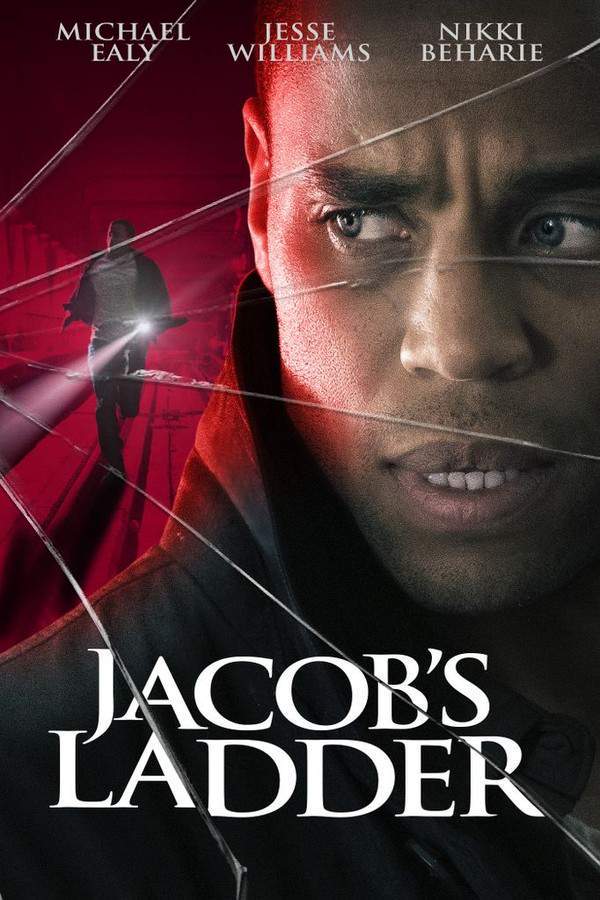
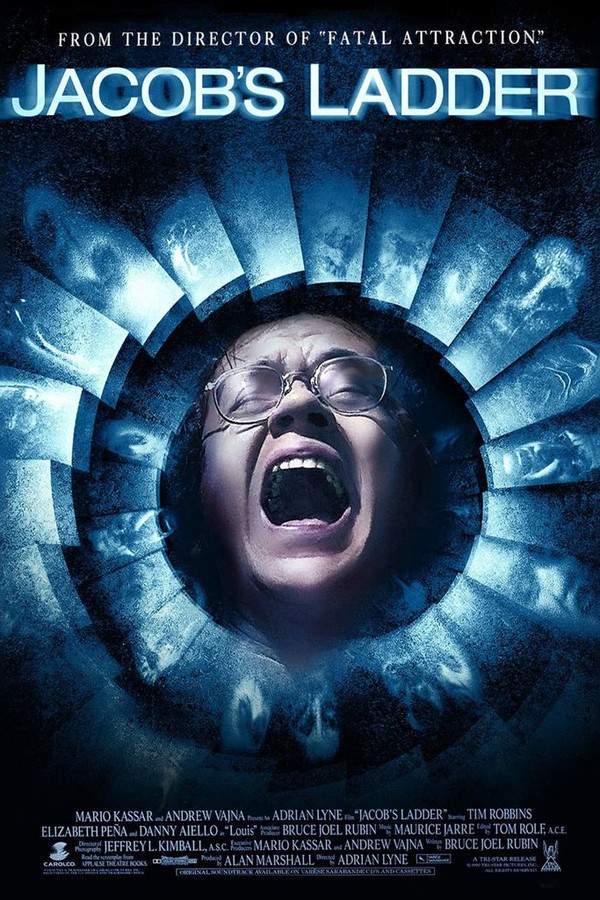
Jacob's Ladder (1990) movie poster

Plot Summary

Jacob's Ladder (1990) Plot Summary Explained

Release, runtime and language
1990 · 113 min · English
Loading streaming availability…
Directed by
Adrian Lyne
Starring
Tim Robbins

Haunted by fragmented memories and unsettling visions, a Vietnam veteran desperately tries to piece together his past while grappling with the loss of his son. As he confronts disturbing imagery and encounters enigmatic figures, he questions the nature of his reality and searches for answers about a tragic event. His quest leads him down a disorienting path, blurring the lines between life, death, and the depths of his own psyche.

On this page (6)
  1. 1 Where to watch
  2. 2 What happens: full plot
  3. 3 Plot questions answered
  4. 4 Movie threads
  5. 5 Movies like Jacob's Ladder
  6. 6 Every angle
Loading streaming availability…

Full plot summary · contains spoilers

What Happens in Jacob's Ladder: Full Plot Summary

The whole story of Jacob's Ladder (1990) explained, from the opening scene to the final frame: every key event, every twist and what it all adds up to. Read it as a quick recap before the sequel, to check a scene you missed, or to finally understand what really happened.

In 1971, amidst the harrowing backdrop of the Mekong Delta, chaos reigns as soldiers are overwhelmed by excruciating headaches, leading to a brutal onslaught. Jacob Singer, portrayed by Tim Robbins, finds himself frozen in horror, an unwilling participant in the mess and savagery of war. Although he narrowly escapes with his life, he is left to flee, injured and alone.

Awakening in a derelict subway car, Jacob realizes he had dozed off while lost in a book. Seeking clarity, he approaches an old woman (Antonia Rey) to inquire if they have reached Bergen Street, only to find that communication fails. As he continues, he encounters a tramp and bizarrely imagines a tail sprouting from the man’s backside. When he attempts to leave the train at his stop, he discovers the doors locked and barricaded. Alone in the station, surrounded by flickering lights and the rushing sounds of an oncoming train, he sees faceless figures peering at him, one even bidding him farewell.

Jacob's home in a bleak New York neighborhood welcomes him when he reaches out to Jezzie, played by Elizabeth Peña, who had been anxiously awaiting his return. They share an intimate moment in the shower, a brief respite in their chaotic lives. Yet, Jacob's mind drifts back to the jungles of Nam, where the haunting sights from the battlefield emerge, bringing his past traumas to the surface.

The following day greets him with memories of his deceased son, Gabe (Macaulay Culkin), as he flips through cherished photographs with Jezzie. Overcome with grief, she suggests destroying the images that bring him pain, tossing them into a fire while Jacob clings to the one of Gabe kept safe in his wallet.

Transitioning into his routine as a postman, Jacob hums tunes at work, charmed by the flirtations of young women, and later visits Louis (Danny Aiello) for a massage. But restless reminders from Nam return to plague him, leading to dark hallucinations of blurry faces and threatening incidents, including an ominous near-miss with a car.

Desperate for answers, he seeks out a psychologist, only to find that Dr. Carlson, a figure from his past, is deceased. Unsettled by this revelation and incredulous to Jezzie's dismissive explanations, he becomes increasingly agitated. At a lively house party, amidst laughter and music, Jacob’s anxiety escalates when visions of disfigurement and violence overwhelm him, culminating in a panic attack that forces him to flee.

As feverish illusions torment him, Jezzie's concern for his well-being becomes palpable. Despite her efforts to cool him down with ice baths, Jacob insists that chaos reigns in his mind, spiraling into memories from Nam and his family's haunting apparitions. A phone call interrupts their solace, provoking more unanswered questions and trailing paranoia about an experiment gone awry.

Following a grave encounter with another soldier, Paul Flanagan (Pruitt Taylor Vince), who shares a shocking tale of a chemical warfare experiment known as "The Ladder," Jacob learns how it intensified aggression among soldiers, shattering their minds. The weight of this revelation nudges him closer to the truth behind the horrific events of that fateful night.

Jacob's journey leads him down a tumultuous path of confrontation with elements of his past—friends, memories, and victimization at the hands of a deceitful system. Each encounter deepens the mystery and expands the tragedy he endured.

Alone with his thoughts, Jacob revisits nostalgic moments with Gabe, yearning for connection even in a brief reunion. The seeming harmony fades as the shadows of betrayal and horror engulf his reality, culminating in the sinister acceptance of a truth buried deep within the ruins of his mind.

As the screen fades to black, poignant captions remind viewers of the real-life implications of war and experimentation, crafting a stark parallel to Jacob's harrowing odyssey through trauma and memory in this psychological kaleidoscope.
Last updated: October 27, 2024 at 17:29

Was this helpful?

Plot questions answered

Jacob's Ladder Plot Explained: Your Questions Answered

The questions people ask most about Jacob's Ladder (1990): what happens in the confusing scenes, why the characters do what they do, the twists, hidden details and what the ending means. Each answer contains spoilers.

Q1

Why does Jacob experience hallucinations and visions throughout the movie?

Jacob's hallucinations stem from his severe PTSD from the Vietnam War combined with the effects of the 'Ladder' chemical experiment. This drug was tested on his unit and intensified aggression while causing severe psychological damage. His mind fragments reality with traumatic memories, creating the disturbing visions he experiences throughout the film.

Foreshadowing: Earlier scenes show Jacob drifting between consciousness and sleep, setting up the blurred line between his perceptions and reality.

  • ptsd
  • hallucinations
  • vietnam war
  • psychological trauma
  • ladder experiment
Q2

What was the 'Ladder' experiment that Paul Flanagan mentions?

The Ladder was a secret chemical warfare experiment conducted by the military during the Vietnam War. Paul Flanagan reveals that the drug was administered to soldiers and intensified their aggression while simultaneously shattering their minds. This experiment explains the extreme violence Jacob witnessed and the lasting psychological damage he and other soldiers suffered.

Foreshadowing: The opening chaos in the Mekong Delta shows soldiers overcome by inexplicable rage and pain, hinting at chemical interference.

  • ladder experiment
  • chemical warfare
  • vietnam
  • secret military
  • project
Q3

What happened to Jacob's son Gabe?

Gabe, Jacob's young son, died prior to the events of the movie. Jacob keeps one photograph of Gabe in his wallet and refuses to let Jezzie burn it, showing his inability to let go of his grief. The trauma of losing his child intertwines with his war trauma, making his psychological state increasingly fragile.

Foreshadowing: Jacob's obsessive attachment to the photograph and his vivid memories of playing with Gabe foreshadow the revelation of his son's death.

  • gabe
  • son
  • death
  • grief
  • loss
Q4

Is Jacob dead or alive at the end of the movie?

The ending suggests Jacob has died, likely from the injuries he sustained during the war or the cumulative psychological trauma. The epilogue's captions about real-life war experiments suggest the entire narrative may represent his dying thoughts or a final processing of trauma. The film leaves this ambiguous but implies a form of peace through acceptance.

Foreshadowing: The dark acceptance Jacob reaches at the end, combined with earlier references to death and the epilogue's serious tone, sets up this interpretation.

  • ending
  • death
  • dying
  • ambiguous
  • afterlife
Q5

Why are the subway scenes so distorted and nightmarish?

The opening subway sequence represents a liminal space between Jacob's conscious and unconscious mind. The locked doors, faceless figures, and bizarre imagery of the tramp with a tail are hallucinations reflecting his fractured psychological state. This surreal sequence establishes the film's unreliable narrative and prepares viewers for the blurring of reality and delusion.

Foreshadowing: Jacob falls asleep reading a book before entering the subway, signaling the transition into his dreamlike perceptions.

  • subway
  • hallucination
  • nightmare
  • distorted
  • surreal
Q6

Why does Jacob try to visit Dr. Carlson and what does his death mean?

Dr. Carlson appears to be a psychologist or military doctor who treated Jacob during or after the war. When Jacob discovers Carlson has died, it deepens his isolation and paranoia, he loses a potential source of answers about his past. This event reinforces Jacob's sense that someone is hiding information from him and that the truth about his experiences may be deliberately concealed.

Foreshadowing: Carlson's name appears in Jacob's fragmented memories, suggesting he played a significant role in Jacob's past.

  • dr carlson
  • psychologist
  • military doctor
  • death
  • truth
Q7

Why does Jacob have a panic attack at the house party?

Jacob's panic attack at the party occurs when overwhelming Vietnam War memories and hallucinations flood his awareness. The normal domestic setting contrasts sharply with his traumatic past, and the sensory input, laughter, music, people's faces, triggers a flashback to violence and disfigurement. His inability to integrate back into civilian life becomes painfully evident.

Foreshadowing: Earlier scenes show Jacob struggling with flashbacks even in mundane situations, building to this public breakdown.

  • panic attack
  • party
  • flashback
  • violence
  • ptsd
Q8

What is Jezzie's role in Jacob's life and is she real?

Jezzie is Jacob's partner in the present-day narrative, providing physical comfort and attempting to help him recover. However, given the film's ambiguous treatment of reality, her characterization raises questions about whether she represents genuine support or a projection of Jacob's need for connection. Her presence contrasts with Jacob's painful memories of his family.

Foreshadowing: Jezzie appears only in Jacob's present-day scenes, never in his memories of Vietnam or his son, creating a subtle distinction.

  • jezzie
  • relationship
  • support
  • partner
  • reality
Q9

Why does Jacob work as a postman and what does his routine represent?

Jacob's job as a postman represents his attempt to return to normal civilian life after the war. The routine of delivering mail symbolizes his desire for stability and purpose. However, his hallucinations intrude even during work, showing that no aspect of his life remains unaffected by his trauma. The job also provides visual contrast between mundane urban life and his violent past.

Foreshadowing: The mundane nature of postal work contrasts sharply with the chaos of his war flashbacks, emphasizing his disconnection.

  • postman
  • job
  • normal life
  • routine
  • civilian
Q10

What is the significance of the near-miss car accident Jacob experiences?

The near-miss with the car represents Jacob's perception that death is pursuing him or that he is somehow cursed or marked for destruction. This hallucination, where the car seems to target him deliberately, reflects his guilt and psychological deterioration. It also creates tension between his desire to live and his traumatic pull toward death.

Foreshadowing: This incident occurs as Jacob becomes increasingly paranoid about people and events around him.

  • car accident
  • near miss
  • death
  • guilt
  • paranoid
Q11

What triggers Jacob's Vietnam War memories throughout the film?

Various sensory and emotional triggers activate Jacob's war memories: the smell of the shower, photographs of his son, conversations about the past, and physical sensations. These triggers demonstrate how PTSD operates, innocent stimuli become portals to traumatic experience. The film shows his inability to separate present reality from past trauma.

Foreshadowing: The very first intimate scene with Jezzie in the shower immediately transitions to a Vietnam flashback.

  • flashback
  • vietnam
  • trigger
  • ptsd
  • memory
Q12

Why do the soldiers suffer unbearable headaches in the Mekong Delta?

The opening scene shows soldiers in the Mekong Delta suffering from excruciating headaches before descending into chaotic violence. This is the first indication that something more than combat stress is affecting the unit, the headaches are an early side effect of the Ladder chemical experiment being tested on them, which heightens aggression and causes psychological breakdown.

Foreshadowing: This opening establishes the chemical experiment as the root cause of both the soldiers' behavior and Jacob's subsequent suffering.

  • headaches
  • mekong delta
  • soldiers
  • ladder
  • experiment onset

Movie threads

More Movies Like Jacob's Ladder, by Mood & Story

Curated lists built around what makes Jacob's Ladder tick: the same mood, the same kind of story or the same emotional payoff. Each list explains why these movies belong together.

Mind-Bending Thrillers About Questioning Reality Like Jacob's Ladder

Stories where a fragile psyche blurs the terrifying line between trauma and truth. For viewers who want more movies like Jacob's Ladder that explore psychological trauma through unreliable realities. This thread collects complex thrillers and horror films where characters grapple with hallucinations, conspiracy, and the disintegration of their own sanity.

  • disorienting
  • paranoid
  • unsettling
  • dreamlike
  • anxious
  • claustrophobic
  • Tone: dark, unsettling, paranoid
  • Pacing: variable, disorienting
Why these movies?

The story pattern: The narrative follows a character, often traumatized, as their perception of reality becomes increasingly unstable. The plot structure is frequently nonlinear, mirroring their confusion, and builds towards a climactic revelation about the true nature of their experiences, whether psychological, supernatural, or existential.

Why they belong together: These movies are grouped by their core focus on a protagonist's psychological unravelling. They share a disorienting, paranoid mood, a complex narrative structure that obscures the truth, and a heavy emotional weight stemming from themes of trauma, memory, and identity.

Horror Films About Trauma and Grief Like Jacob's Ladder

Emotional horror where past tragedies manifest as inescapable specters. If you liked the heavy emotional core of Jacob's Ladder, this thread finds similar movies where horror is a metaphor for processing trauma. These films balance genuine scares with a deep, melancholic exploration of loss, PTSD, and the ghosts of the past.

  • melancholic
  • unsettling
  • heavy
  • grief-stricken
  • sad
  • anxious
  • Tone: dark, melancholic, heavy
  • Pacing: variable, building dread
Why these movies?

The story pattern: The protagonist is burdened by a tragic past event—often the death of a loved one or wartime trauma—that they cannot move beyond. Their grief becomes tangible, haunting them through visions or entities, forcing them on a painful journey to confront and ultimately make peace with their loss, leading to a bittersweet resolution.

Why they belong together: These films are connected by their use of horror as a vehicle to explore heavy themes like grief, loss, and PTSD. They share a melancholic and unsettling mood, a focus on character psychology over simple scares, and endings that are emotionally resonant rather than purely triumphant.

If you liked this

Movies Like Jacob's Ladder

Similar movies to Jacob's Ladder: the same genre, themes or kind of story. Each one comes with its own plot summary, timeline and ending explained.

Browse all movie summaries

Every angle

Jacob's Ladder (1990) Explained: Plot, Timeline & Characters

Everything about Jacob's Ladder in one place: what happens in the plot summary, the timeline in chronological order, the characters and meaning and a spoiler-free summary. What's After the Movie adds the cast, box office and post-credit scenes.

Coming soon on iOS and Android

The Plot Explained Movie Summary App

Plot summaries, endings explained and timelines on your phone. Catch up on any movie in minutes, save your favorites and never miss a twist again.

Be the first to know when we launch. Your email stays private, always.

Learn more about the app