Plot Explained Spoilers guaranteed!
Plot Explained

Browse by genre

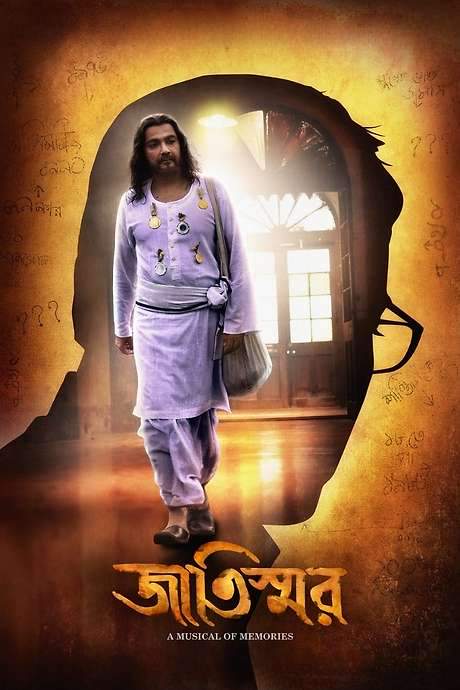
Jaatishwar (2014) movie poster

Characters & Themes

Jaatishwar (2014) Characters, Setting & Themes Explained

Release, runtime and language
2014 · 150 mins · Bengali, Bangla
Loading streaming availability…
Directed by
Srijit Mukherji
Starring
Kharaj Mukherjee, Biswajit Chakraborty, Swastika Mukherjee, Abir Chatterjee, Dwijen Banerjee, Riya Sen

A Musical of Memories Rohit, a Gujarati, studies the life of Anthony Firengee, and in the process meets with a mysterious man Kushawl Hajra.

On this page (7)
  1. 1 Where to watch
  2. 2 Characters explained (9)
  3. 3 Where & when it takes place
  4. 4 Themes & meaning (4)
  5. 5 Character & meaning questions
  6. 6 Movie threads
  7. 7 Every angle
Loading streaming availability…

9 main characters · contains spoilers

Jaatishwar Characters Explained: Who Is Who

The main characters of Jaatishwar (2014), heroes and villains: what drives them, how they change over the course of the story and what each of them reveals about the film's bigger ideas.

  • Rohit Mehta (played by Jisshu Sengupta)

    A Gujarati-born, Calcutta-raised man who loves Mahamaya but struggles with Bengali. He travels to Portugal to study colonial history and slowly refines his Bengali with Bodhi, aiming to sing with authentic lyrics and without an accent. Rohit’s journey blends romantic pursuit with a quest for linguistic and artistic mastery across two eras.

    • ❤️ Romantic lead
    • 🗣️ Language learner
    • 🎵 Music lover
  • Mahamaya Bandhopadhyay

    played by Swastika Mukherjee

    A radio jockey in the present timeline who captivates Rohit with her passion for music. She harbors a profound personal history and is implied to be the reincarnation of Soudamini. Her relationship with Rohit grows as Bandemonium approaches, culminating in a moment of emotional revelation.

    • ❤️ Love interest
    • 🎙️ Radio personality
    • 🎶 Music figure
  • Kushal Hajra (Kushal Hazra)

    played by Prosenjit Chatterjee

    A mysterious figure in the present who claims to be the reincarnation of Anthony and is haunted by visions from a previous life. He is taken to a psychiatrist to address his increasingly intense experiences, and his unraveling becomes central to the film’s twist ending.

    • 🧠 Psychological
    • 👁️ Visionary
    • 🗝️ Mystery
  • Bhola Moyra

    played by Kharaj Mukherjee

    A formidable 19th-century kavigyaal who competes with Anthony in the local folk-poetry battles. He embodies the rivalries and passions of the era’s musical dueling culture and helps define Anthony’s rise as a master of Bengali verse.

    • 🎷 Music rival
    • 🏆 Stage rival
    • 🎭 Historical figure
  • Joggeshwari

    played by Ananya Chatterjee

    The woman kaviyaal who Anthony defeats in early performances, representing the female voice within the traditional kavigaan tradition. She stands as a key figure in the era’s artistic competition and helps illustrate the social dynamics of the time.

    • 🎵 Music
    • 🗺️ Historical figure
    • 👩‍🎤 Performer
  • Soudamini

    A young Bengali widow saved from sati by Anthony; she becomes his wife in the 19th century. Her death under violent village resistance drives Anthony’s heartbreak and fuels the tragedy that echoes across time.

    • 💔 Tragedy
    • 🕊️ Love
  • Ram Basu

    played by Sujan Mukherjee

    A notable 19th-century kaviyaal who competes in the same circles as Anthony, adding to the competitive and collaborative atmosphere of Calcutta’s folk-poetry scene.

    • 🎤 Poet
    • 🏆 Rivalry
  • Thakur Singho (Thakur Singha)

    played by Biswajit Chakraborty

    A senior rival in the 19th-century kavigaan circuit. His clashes with Anthony underscore the era’s social and artistic tensions and help shape the autobiographical arc of Anthony’s character.

    • 🏆 Rival
    • 🎭 Stage presence
  • Hensman Anthony (Anthony Firingee)

    The celebrated 19th-century Bengali poet whose life and work anchor the historical chapters. His pursuit of Bengali language and his dedication to art drive both the era’s music culture and the film’s interwoven narrative about memory and belonging.

    • 🎭 Poet
    • 🔔 Historical figure

Last updated: October 04, 2025 at 07:42

Was this helpful?

Setting

Where and When Does Jaatishwar Take Place?

The setting of Jaatishwar (2014): the year and time period, the places and locations, and how they shape the characters, the mood and the tension of the story.

Time period

Present-day and 19th Century

The narrative alternates between contemporary Calcutta—with radio studios and a band competition—and the 19th-century Calcutta where Anthony’s kavigaan culture thrived. The film uses flashbacks to reveal how language, love, and music cross generations. This dual timeline emphasizes how past and present influence each other through memory, art, and fate.

Location

Calcutta (Kolkata), Chandannagar, Farashdanga, Portugal

The present-day action unfolds in Kolkata, a historic cultural hub known for literature, music, and radio. Chandannagar and Farashdanga anchor the 19th-century segments, offering riverside streets and a colonial-era backdrop that shaped Anthony’s world. The story also briefly travels to Portugal as Rohit pursues a history dissertation, linking local Bengali culture to a broader global context.

  • 🏙️ Kolkata
  • 🗺️ West Bengal
  • 🏝️ Chandannagar
  • 🌍 Colonial-era setting

Last updated: October 04, 2025 at 07:42

Was this helpful?

4 major themes

Jaatishwar Meaning: Themes & Message Explained

What is Jaatishwar (2014) really about? The emotional, social and philosophical themes the film keeps returning to, its symbolism and the message beneath the surface.

  • Romance

    A timeless romance unfolds between Rohit and Mahamaya, transcending language barriers and social expectations. The relationship gains depth as Mahamaya’s feelings grow during Bandemonium and through Rohit’s growing mastery of Bengali. The movie also threads in a larger fate-driven romance spanning generations, culminating in a revelation about reincarnation.

  • Music

    Music is the spine of the story, from Anthony’s kavigaan battles to Rohit’s Bengali song and the Bandemonium contest. The film treats language and melody as vehicles for identity, bridging cultures across time. Kavigaans, lyrical duels, and communal singing illustrate how music binds people and preserves memory.

  • Language Identity

    Rohit’s struggle to learn correct Bengali reflects a search for belonging and authenticity. The plot uses linguistic mastery as a test of love and loyalty, showing how language can unlock connections across generations. The 19th-century sections dramatize how Bengali language and poetry elevate everyday life into art.

  • Reincarnation

    The film builds a thread of fate and rebirth, with Mahamaya revealed as the reincarnation of Soudamini. Visions of the past haunt Kushal, driving the need to resolve a life unfinished in Anthony’s time. The ending tightens the link between lives, memory, and music, suggesting destiny cannot be easily silenced.

Last updated: October 04, 2025 at 07:42

Was this helpful?

Character & theme questions

Jaatishwar Characters & Meaning: Your Questions Answered

The questions people ask about Jaatishwar (2014): who the characters really are, their relationships, what the symbols mean, where it takes place and what the movie is really about. Each answer contains spoilers.

Q1

Where is Jaatishwar set?

The film primarily takes place in Kolkata (formerly Calcutta), a historic cultural hub in West Bengal known for its rich literary and musical heritage. The story also visits Chandannagar and Farasdanga, riverside towns with colonial-era architecture where the 19th-century portions unfold. A brief storyline takes Rohit to Portugal as he researches colonial history.

  • kolkata
  • chandannagar
  • setting
  • west bengal
  • locations
Q2

What time period does the movie cover?

Jaatishwar uses a dual timeline, alternating between present-day Calcutta with its radio studios and band competitions, and 19th-century Bengal where the poet Anthony Firingee's kavigaan culture thrived. The flashbacks reveal how language, love, and music connect across generations.

  • time period
  • 19th century
  • dual timeline
  • flashbacks
  • historical
Q3

What is kavigaan in the film?

Kavigaan is a traditional Bengali form of lyrical folk poetry and competitive musical dueling, central to 19th-century Calcutta's cultural scene. The film depicts kaviyaals (poet-singers) like Anthony Firingee, Bhola Moyra, and Joggeshwari engaging in verbal battles where wit and poetic skill determine winners. This art form serves as the narrative spine connecting past and present.

  • kavigaan
  • kaviyaal
  • folk poetry
  • bangla
  • musical tradition
Q4

How does reincarnation factor into the story?

The film weaves a thread of fate and rebirth throughout its narrative. Kushal Hajra claims to be the reincarnation of Anthony Firingee and is haunted by visions from a previous life. Similarly, Mahamaya is revealed as the reincarnation of Soudamini, Anthony's wife from the 19th century. The ending connects lives, memory, and music across generations, suggesting destiny cannot be easily silenced.

  • reincarnation
  • rebirth
  • fate
  • Soudamini
  • Anthony Firingee
  • Kushal
Q5

Who is Anthony Firingee?

Anthony Firingee (Hensman Anthony) was a celebrated 19th-century Bengali poet who became a master of kavigaan. Originally of Portuguese descent, he adopted Bengali language and culture completely, becoming renowned for his poetic skill. His pursuit of Bengali language and dedication to art drives much of the historical narrative and represents the film's theme of artistic identity across cultures.

  • anthony firingee
  • poet
  • kavigaan
  • 19th century
  • historical character
Q6

What is Kushal Hajra's role in the movie?

Kushal Hajra is a mysterious figure in the present day who claims to be the reincarnation of Anthony Firingee. He experiences intense visions from a previous life and is taken to a psychiatrist to address these experiences. His unraveling becomes central to the film's twist ending, connecting the historical and contemporary storylines.

  • kushal hajra
  • mystery
  • reincarnation
  • visions
  • present day
Q7

Who is Rohit Mehta and what is his journey?

Rohit Mehta is a Gujarati man born and raised in Calcutta who falls in love with Mahamaya, a radio jockey. His central struggle involves mastering Bengali, learning correct pronunciation and cultural nuance, to win her heart and authentically participate in the musical world around him. He travels to Portugal to study colonial history, linking his personal quest to a broader cultural context.

  • rohit mehta
  • gujarati
  • language
  • bengali
  • love story
  • protagonist
Q8

Who is Mahamaya Bandopadhyay?

Mahamaya Bandopadhyay is a radio jockey in the present timeline who is passionate about music. She is implied to be the reincarnation of Soudamini, the 19th-century woman Anthony Firingee saved from sati and married. Her relationship with Rohit develops as he refines his Bengali and prepares for the Bandemonium music competition.

  • mahamaya
  • radio jockey
  • reincarnation
  • soudamini
  • female lead
Q9

What does the language identity theme mean in Jaatishwar?

Rohit's struggle to learn correct Bengali reflects a deeper search for belonging and authenticity in a culture he was raised in but doesn't fully command. The film uses linguistic mastery as a test of love and loyalty, showing how language can unlock connections across generations. In the 19th century, Anthony's dedication to Bengali poetry illustrates how language transforms everyday life into art.

  • language
  • bengali
  • identity
  • belonging
  • linguistic
  • culture
Q10

How does the romance work across time?

The film presents a timeless romance that transcends language barriers and social expectations. Rohit's love for Mahamaya develops alongside his growing mastery of Bengali. This modern romance mirrors the fate-driven love between Anthony and Soudamini in the 19th century. The revelation of reincarnation ties these romance threads together, suggesting soul connections that span generations.

  • romance
  • love
  • reincarnation
  • Soudamini
  • Anthony
  • generations
Q11

Why is music so important to the story?

Music serves as the structural spine of Jaatishwar, from Anthony's kavigaan battles to Rohit's Bengali song and the Bandemonium contest. The film treats language and melody as vehicles for identity, bridging cultures across time. Kavigaans, lyrical duels, and communal singing illustrate how music binds people and preserves memory across generations.

  • music
  • kavigaan
  • bandemonium
  • song
  • melody
  • lyrics
Q12

Why does Rohit travel to Portugal?

Rohit travels to Portugal to pursue his history dissertation on colonial-era connections between India and Europe. This journey links the local Bengali culture to a broader global context and helps him understand Anthony Firingee's background, as the poet was of Portuguese descent. The travel storyline adds depth to the film's themes of cultural exchange and identity.

  • portugal
  • colonial
  • dissertation
  • travel
  • research
  • europe

Movie threads

More Movies Like Jaatishwar, by Mood & Story

Curated lists built around what makes Jaatishwar tick: the same mood, the same kind of story or the same emotional payoff. Each list explains why these movies belong together.

Musical history quests like in Jaatishwar

Melodic investigations that uncover forgotten lives and personal legacies. If you enjoyed the musical investigation in Jaatishwar, you'll find similar movies here. These films feature characters uncovering historical mysteries through music, leading to a reflective and melancholic journey of discovery. Explore other stories where personal identity is shaped by piecing together the past.

  • nostalgic
  • melancholic
  • musical
  • introspective
  • mysterious
  • reflective
  • Tone: melancholic, reflective
  • Pacing: steady, investigative
Why these movies?

The story pattern: These narratives typically follow a protagonist in the present day who becomes fascinated by a historical figure or event. Through research, often involving music, documents, or encounters with enigmatic characters, they slowly peel back layers of time. The journey is as much about self-discovery as it is about solving the central mystery.

Why they belong together: They are grouped by their shared focus on using music as a narrative tool for historical investigation. The tone is consistently melancholic and nostalgic, with a steady pace that allows for introspection. The emotional core revolves around themes of memory, identity, and cultural connection.

Reflective identity mysteries like in Jaatishwar

Introspective puzzles where uncovering the past reveals truths about oneself. Looking for more movies like Jaatishwar that explore identity through a gentle mystery? This list features character-driven stories where researching the past leads to profound self-reflection. Discover films with a similar melancholic tone and moderate complexity, focused on themes of memory and cultural discovery.

  • mysterious
  • introspective
  • reflective
  • nostalgic
  • thought-provoking
  • melancholic
  • Tone: mysterious, introspective
  • Pacing: steady, deliberate
Why these movies?

The story pattern: The plot revolves around a character's intellectual and emotional engagement with a puzzle from the past. The investigation unfolds methodically, encountering clues and enigmatic figures. The primary conflict is internal, as the protagonist grapples with how the discovered history reflects upon or reshapes their own identity.

Why they belong together: These films share a specific mood blend of mystery and introspection. The pacing is deliberately steady to allow for reflection, and the emotional weight is medium, focusing on thoughtful revelation rather than intense drama. The core unifying element is the theme of identity being forged through the act of remembering.

Every angle

Jaatishwar (2014) Explained: Plot, Timeline & Characters

Everything about Jaatishwar in one place: what happens in the plot summary, the timeline in chronological order, the characters and meaning. What's After the Movie adds the cast, box office and post-credit scenes.

Coming soon on iOS and Android

The Plot Explained Movie Summary App

Plot summaries, endings explained and timelines on your phone. Catch up on any movie in minutes, save your favorites and never miss a twist again.

Be the first to know when we launch. Your email stays private, always.

Learn more about the app