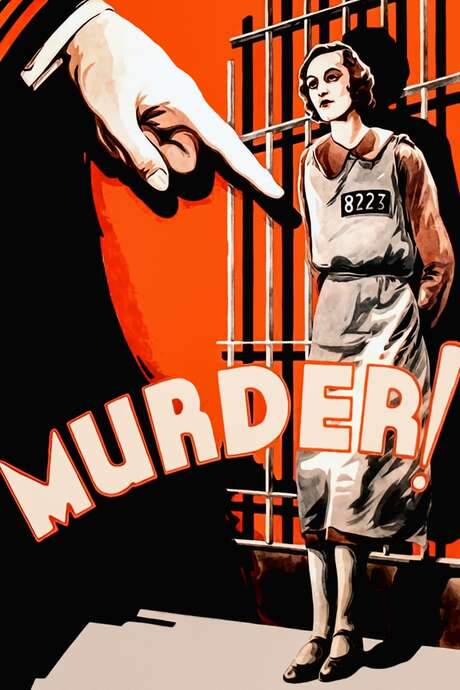
Sidney Lassiter, a local millionaire, dominates the opening sequence with a volley of threats and demands. He menaces that his son, Albert Lassiter, must end his affair or risk being cut from the will. His wife, Martha Lassiter, reveals she knows about his infidelity and makes a clumsy, half-hearted bid to seduce him, exposing the shaky ground of their marriage. Sidney also clashes with his secretary, Kate Faxton, who urges reconciliation with Albert Lassiter. The scene establishes a family divided by money, pride, and fragile loyalties, setting the stage for a murder that will pull everyone into the frame.
That night, a stranger hides in the back seat of Sidney’s car and fatally shoots him, turning private grievances into a public crime. The following day, the lead detective informs Cash Carter that Lassiter’s murder has spawned a long list of suspects, thanks to the victim’s temper and the many people who bore him ill will. Cash, whose background in theater sharpens his powers of observation and psychology, teams up with the detective to interview the principal beneficiaries of the will—the already mentioned Albert Lassiter, Martha Lassiter, and Kate Faxton—placing them at the heart of the investigation and at the top of the suspect roster.
As the questioning unfolds, Cash demonstrates his expertise by dissecting a seemingly ordinary scene for hidden motives. He points out how the lack of calluses on Martha’s hands, the specific wear on her shoes, and the tone of her legs’ muscles might signal a wheelchair need that she uses strategically. This moment underscores his belief that appearances can mask a person’s true intent, and it signals that each of the main players—though they deny complicity—has something to hide. The trio’s interactions become a chess match where everyone appears to be concealing something, and the audience is left to weigh whose deception is most plausible.
Interwoven with the police work are slices of Cash’s personal life. He spends time with Mimi Barnes, dates that bring him into closer contact with the human costs of Lassiter’s world, and navigates the fact that his daughter is preparing to leave for college, bringing the family theme to the foreground. The daughter, Sophie Carter, looms in these scenes as a source of emotional gravity and a reminder of what is riding on every decision Cash makes.
Flashbacks deepen the backstory: Cash and the investigator first met during the unresolved murder of Cash’s wife, a crime that still gnaws at him. In those memories, two thieves accost Cash and his wife, attempting to steal her necklace; the wife is shot, and only one thief is captured. Tony has sworn to capture the other, a vow that continues to haunt him and shape how he reads people in the present. A moment in a restaurant, where Cash mistakes a random man for the second thief, crystallizes this haunting and shows that the wounds of the past can surface in the most ordinary moments.
The film’s structure—alternating between the present-day probe and Cash’s remembered trauma—gives the investigation a textured, human edge. The dialogue moves between sharp observations, tense confrontations, and quiet, revealing exchanges, all while the shadow of the past looms over every interaction. The suspects lie in small and large ways, each concealment adding a layer to the mystery and pushing the audience to consider motives beyond mere greed: a need to protect, a fear of exposure, or a desire to control a narrative that might otherwise unravel.
In the end, what emerges is a portrait of a man caught between two worlds: the stage and the street, the past and the present. Cash’s theatrical instincts enhance his police work, helping him read people with a careful eye, but they cannot dispel the lingering ache of past violence. The film leaves us with a sense that truth in this story is a matter of perspective, and that every character—whether they admit it or not—carries the weight of a wound that shapes what they say, what they hide, and what they finally choose to do.