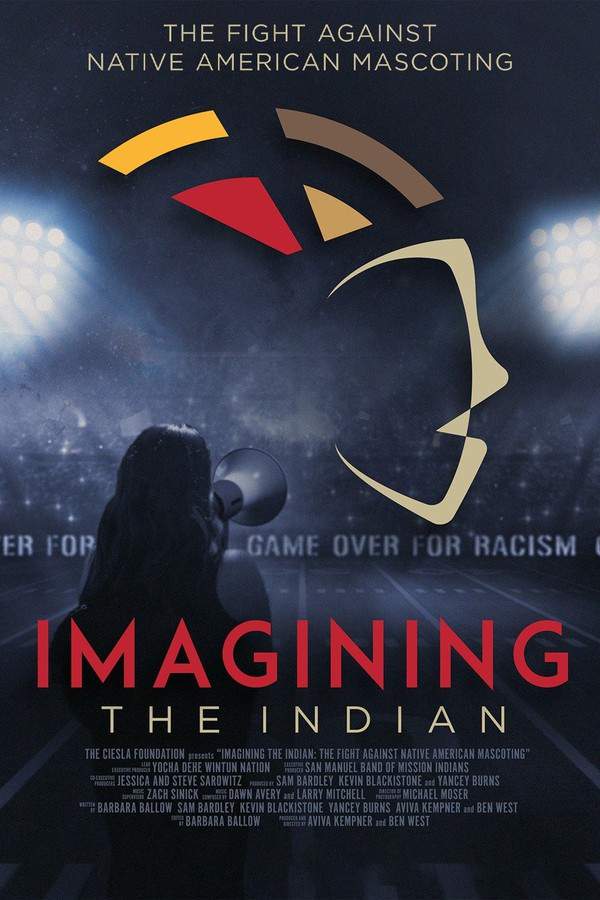
Amidst growing cultural awareness, this documentary examines the movement to end the misuse of Native American imagery in sports and other areas. It explores the historical roots and spread of harmful stereotypes and their profound impact on Native communities. The film follows efforts to dismantle offensive representations, drawing parallels between the removal of Confederate symbols and the rebranding of professional sports teams. Ultimately, it highlights a persistent fight to restore cultural pride and combat marginalization.
Find where to stream, rent, or buy Imagining the Indian: The Fight Against Native American Mascoting (2023) in the US with current JustWatch availability, up-to-date pricing, and platform listings for subscription, rental, and digital purchase options.
Warning: spoilers below!
Haven’t seen Imagining the Indian: The Fight Against Native American Mascoting yet? This summary contains major spoilers. Bookmark the page, watch the movie, and come back for the full breakdown. If you're ready, scroll on and relive the story!
Trace every key event in Imagining the Indian: The Fight Against Native American Mascoting (2023) with our detailed, chronological timeline. Perfect for unpacking nonlinear stories, spotting hidden connections, and understanding how each scene builds toward the film’s climax. Whether you're revisiting or decoding for the first time, this timeline gives you the full picture.
Last updated: May 12, 2025 at 07:03
Find frequently asked questions about the Imagining the Indian: The Fight Against Native American Mascoting (2023) timeline, including chronological order, nonlinear jumps, cause-and-effect links, and scene sequence clarifications. This timeline FAQ helps explain when key events happen, how moments connect, and why the story unfolds in that specific order.
Suzan Shown Harjo is the President of the Morning Star Institute and a Presidential Medal of Freedom recipient who has spent over 50 years fighting against the exploitation of Native American culture in sports. The documentary uses her decades-long activism as the central thread to explore the historical context and legal battles surrounding Native American mascoting.
The film introduces her early as the foundational voice for the entire movement.
The documentary traces 'redskin' to 19th-century newspaper advertisements that offered bounties for Native American lives. The term was adopted by the Washington football franchise in the 1930s after William 'Lone Star' Dietz, who falsely claimed Sioux ancestry, influenced the team's name change from the Boston Braves to the Redskins.
The timeline details this etymology in item 8, connecting historical violence to modern usage.
The documentary examines why the NFL has maintained the Washington team's name despite addressing other social justice issues like domestic violence and LGBTQ rights. It questions the league's inconsistency in condemning racial slurs directed at African Americans while retaining a racial epithet for Native Americans.
The film contrasts the NFL's stances on different social justice issues to highlight this contradiction.
The documentary showcases victories at the high school and collegiate level, including Stanford University, Dartmouth College, and the University of North Dakota, where Native names and mascots have been removed. These successes illustrate that change is possible, though progress remains uneven at the professional level.
The timeline notes these as successful campaigns in item 10, contrasting with ongoing professional-level resistance.
William 'Lone Star' Dietz was a figure who falsely claimed Sioux ancestry and was instrumental in the 1937 name change of the Boston Braves to the Redskins. The documentary presents his story to illustrate how the team's name originated from a person with fabricated Native heritage, undermining any claims of cultural authenticity.
This story is directly connected to the etymology discussion in item 9 of the timeline.
The documentary features academic research, including work from Dr. Amy West, demonstrating the negative psychological effects that offensive imagery has on Native American communities, particularly youth. These studies show how stereotypical representations harm identity development and mental well-being among Native young people.
Item 13 in the timeline identifies this academic perspective as a key issue for the American Indian community.
The documentary draws direct parallels between the movement to remove Confederate symbols and the fight against Native American mascoting, presenting both as efforts to eliminate offensive representations that perpetuate harmful historical narratives. It suggests that cultural awareness around one form of discrimination can inform the other.
The description explicitly mentions this parallel as a key thematic element of the film.
The documentary explores why prominent African American figures in Washington D.C., including actors Jeffrey Wright and Taraji P. Henson, have not joined forces with Native American protesters. It considers how the presence of stereotypical imagery may contribute to broader issues of minority marginalization and questions the lack of coalition-building between these communities.
Item 14 in the timeline specifically addresses this complex relationship.
The documentary examines Dan Snyder's attempts to engage with Native American communities, including initiatives like building playgrounds for economically disadvantaged tribes. These efforts are scrutinized critically, with the documentary questioning whether such gestures adequately address the deeper concerns about the team's name and imagery.
The timeline notes these efforts in item 7 as part of the broader controversy.
The documentary details Harjo's involvement in multiple lawsuits against Native American mascots, with the high-profile 'Redskins' case spanning over three decades being the most prominent. These legal efforts represent a significant part of the activism history covered in the film.
Item 5 in the timeline identifies the legal history as a core component of the movement.
The documentary concludes with hope for younger generations, suggesting that Generation Z's evolving views on social justice issues, including their stances on gun control, climate change, and sports stereotyping, may drive future policy changes. As these young people become decision-makers, the film expresses optimism that the movement to eliminate offensive imagery will gain momentum.
This represents the hopeful ending noted in the meta notes, following the heavy emotional content.
The Honor the Chief Society is a group of University of Illinois alumni and students who advocate for retaining the former mascot 'Chief Illiniwek.' The documentary presents their perspective as an example of resistance to change, showing that some communities feel strongly about preserving what they view as tradition and cultural memory, even when Native communities find such representations offensive.
Item 11 in the timeline introduces this group as an example of ongoing resistance.
Discover curated groups of movies connected by mood, themes, and story style. Browse collections built around emotion, atmosphere, and narrative focus to easily find films that match what you feel like watching right now.
Documentaries that expose social injustice and follow the fight for meaningful change.If you liked the powerful advocacy in Imagining the Indian, explore more movies like it. These documentaries tackle social justice, cultural identity, and systemic inequality, blending sobering truths with hopeful stories of resistance and change.
These documentaries typically start by exposing a deep-seated social problem, tracing its historical roots and present-day impact through interviews and evidence. The narrative then shifts to chronicling the efforts of activists and communities working to dismantle the injustice, building towards a conclusion that, while acknowledging the struggle, offers a sense of hard-won hope and forward momentum.
Movies are grouped here because they share a powerful combination of a serious, educational tone and an activist heart. They aren't just examinations of problems; they are chronicles of solutions in progress, creating a specific emotional arc from heaviness to hopefulness.

Stories that confront painful history to understand its lasting impact on identity.For viewers who appreciated the historical depth of Imagining the Indian, this section features similar movies that explore cultural trauma, identity, and the fight against erasure. These films are serious, thought-provoking, and focus on the long tail of history on modern communities.
The narrative pattern involves delving into a specific historical injustice or period of cultural oppression, using archival material, expert testimony, and personal stories to illustrate its scope. The film then connects this history directly to its contemporary manifestations, showing how the past actively shapes present-day struggles for recognition, dignity, and justice.
These films are grouped together because they prioritize a serious, educational examination of historical trauma and its modern-day repercussions. They share a sobering mood and a commitment to truth-telling, often revolving around themes of memory, identity, and the fight against cultural stereotypes or erasure.
Don't stop at just watching - explore Imagining the Indian: The Fight Against Native American Mascoting in full detail. From the complete plot summary and scene-by-scene timeline to character breakdowns, thematic analysis, and a deep dive into the ending - every page helps you truly understand what Imagining the Indian: The Fight Against Native American Mascoting is all about. Plus, discover what's next after the movie.
Read a complete plot summary of Imagining the Indian: The Fight Against Native American Mascoting, including all key story points, character arcs, and turning points. This in-depth recap is ideal for understanding the narrative structure or reviewing what happened in the movie.
Discover the characters, locations, and core themes that shape Imagining the Indian: The Fight Against Native American Mascoting. Get insights into symbolic elements, setting significance, and deeper narrative meaning - ideal for thematic analysis and movie breakdowns.
Get a quick, spoiler-free overview of Imagining the Indian: The Fight Against Native American Mascoting that covers the main plot points and key details without revealing any major twists or spoilers. Perfect for those who want to know what to expect before diving in.
Visit What's After the Movie to explore more about Imagining the Indian: The Fight Against Native American Mascoting: box office results, cast and crew info, production details, post-credit scenes, and external links - all in one place for movie fans and researchers.
Discover movies like Imagining the Indian: The Fight Against Native American Mascoting that share similar genres, themes, and storytelling elements. Whether you’re drawn to the atmosphere, character arcs, or plot structure, these curated recommendations will help you explore more films you’ll love.
Imagining the Indian: The Fight Against Native American Mascoting (2023) Plot Summary & Movie Recap
Imagining the Indian: The Fight Against Native American Mascoting (2023) Scene-by-Scene Movie Timeline
Imagining the Indian: The Fight Against Native American Mascoting (2023) Spoiler-Free Summary & Key Flow
Movies Like Imagining the Indian: The Fight Against Native American Mascoting – Similar Titles You’ll Enjoy
Lakota Nation vs. United States (2023) Full Movie Breakdown
Rumble: The Indians Who Rocked The World (2017) Spoiler-Packed Plot Recap
America: Imagine a World Without Her (2014) Full Movie Breakdown
Gather (2020) Ending Explained & Film Insights
Spirit Game: Pride of a Nation (2017) Ending Explained & Film Insights
Stamped from the Beginning (2023) Full Movie Breakdown
Bad Press (2023) Film Overview & Timeline
Am I Racist? (2024) Detailed Story Recap
Amá (2018) Spoiler-Packed Plot Recap
Ethnic Notions (1986) Full Summary & Key Details
Battle of Little Bighorn (2020) Full Movie Breakdown
The American Buffalo (1000) Spoiler-Packed Plot Recap
Our Indians (1995) Plot Summary & Ending Explained
500 Nations (1000) Detailed Story Recap
The New Americans: Gaming a Revolution (2023) Film Overview & Timeline