Plot Explained Spoilers guaranteed!
Plot Explained

Browse by genre

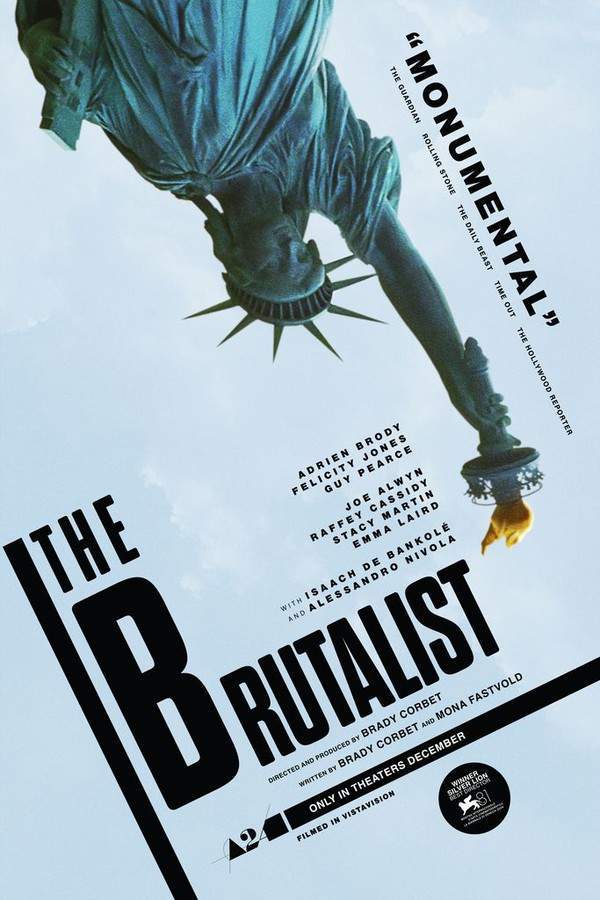
The Brutalist (2024) movie poster

Plot Summary

The Brutalist (2024) Plot Summary & Ending Explained

Release, runtime and language
2024 · 3 h 35 m · English
Echo score 73
JustWatch #655 35
Starring
Guy Pearce, Alessandro Nivola, Felicity Jones, Joe Alwyn, Raffey Cassidy, Adrien Brody
Budget
$10M

Following the devastation of post-war Europe, visionary architect László Toth and his wife Erzsébet relocate to America, hoping to rebuild their lives and careers. Separated during the war due to changing borders and regimes, they face the challenges of adjusting to a new country and reconnecting. László finds work in Pennsylvania, where he encounters the complexities of American society and attempts to forge a future for his family.

On this page (7)
  1. 1 Where to watch
  2. 2 What happens: full plot
  3. 3 Plot questions answered
  4. 4 How it ends
  5. 5 Movie threads
  6. 6 Movies like The Brutalist
  7. 7 Every angle

Where to watch

Where to Watch The Brutalist (2024)

Where can you watch The Brutalist? Stream, rent or buy it in the US, including on HBO Max, Amazon Video and Apple TV Store: current JustWatch availability with up-to-date prices.

Streaming availability powered by JustWatch

Full plot summary · contains spoilers

What Happens in The Brutalist: Full Plot Summary

The whole story of The Brutalist (2024) explained, from the opening scene to the final frame: every key event, every twist and what it all adds up to. Read it as a quick recap before the sequel, to check a scene you missed, or to finally understand what really happened.

After surviving the horrors of the Holocaust, Hungarian-Jewish architect László Tóth embarks on a new life in the United States, having been forcibly ripped apart from his wife, Erzsébet, and his niece, Zsófia, during the tumultuous times of World War II in Budapest. He finds himself in Philadelphia where, with the assistance of his American wife, Audrey, and his immigrant cousin, Attila, he begins the arduous task of searching for employment to secure a stable future.

In 1947, László takes a step towards success by aiding Attila in managing a furniture business, but fate takes a different turn when his son Harry unexpectedly seeks his help in renovating the study and library of the affluent industrialist Harrison Lee Van Buren Sr.. Upon returning home, however, Harrison is infuriated by the state of the renovations, ordering László and Attila to leave without compensation—a disheartening setback. Tensions mount when Audrey accuses László of pursuing her, which leads to Attila asking him to vacate his house in sorrowful disappointment.

As the years roll on, László finds refuge in charitable housing operated by a church, where he forges a friendship with Gordon, an African-American father grappling with the challenges of raising his young son in poverty. Unbeknownst to Gordon, László has developed a hidden dependency on heroin, and their paths intertwine in a dangerous venture at a shipyard. Unexpectedly, Harrison resurfaces, revealing to László that his architectural talents have garnered admiration within the community, thereby commissioning him to construct a community center dedicated to his late mother—a project that encompasses a library, theater, gymnasium, and chapel. Eager to leave a lasting legacy in America, László dives into this new venture, but his addiction pulls him further down a treacherous path, ultimately complicating the immigration of Erzsébet and Zsófia to the United States.

Part 2: The Hard Core of Beauty

The plot thickens in 1953 when László greets Erzsébet and Zsófia at the train station, only to discover that Erzsébet, now wheelchair-bound due to osteoporosis, and Zsófia, rendered mute by trauma, have been irrevocably changed. Frustration mounts as László faces off against developers who alter the design and materials of the center without his consent. Although he intends to fund the necessary materials himself, Harry disparages him, firmly asserting that László is merely “tolerated”—and worse, he makes lewd remarks about Zsófia, whom László warns against due to the potential abuse she has faced.

The narrative takes a dark turn when a train carrying vital supplies for the center derails, leading to significant injuries and forcing Harrison to halt construction. Years pass; László and Erzsébet have relocated to New York City, where Zsófia has recovered her speech and is starting a family of her own. She shares plans to move to Jerusalem with her husband, urging her family to join despite their reluctant attachment to America.

As Harrison reaches out to László with an offer to complete the community center on a tight budget by sacrificing the library, hope mingles with desperation. To procure stones necessary for completion, László turns to an old ally. Unfortunately, this connection leads to a horrifying encounter—Harrison, asserting dominance, rapes László in the quarry, leaving him traumatized and spiraling into chaos. His temper flares as he alienates friends, neglects professional obligations, and lashes out at innocent workers.

With the pain of witnessing Erzsébet's struggles intensifying, László reluctantly injects her with heroin, leading to a near-fatal overdose one harrowing night. Exhausted by the trials of life in America, they consider a new beginning in Jerusalem. In a chilling climax, Erzsébet confronts Harrison about the rape, leading to a brutal altercation that forces her into the care of her sister, Maggie.

Epilogue

The story arrives at a poignant close with Erzsébet’s passing in 1980 and a retrospective exhibition highlighting László’s architectural legacy, including the long-delayed community center, finally completed a decade after its initial halt. As Zsófia delivers a speech, she reflects on how their experiences during the Holocaust shaped László's works, quoting him in the insightful reminder: > "No matter what the others try to sell you, it is the destination, not the journey."
Last updated: January 27, 2025 at 22:39

Was this helpful?

Plot questions answered

The Brutalist Plot Explained: Your Questions Answered

The questions people ask most about The Brutalist (2024): what happens in the confusing scenes, why the characters do what they do, the twists, hidden details and what the ending means. Each answer contains spoilers.

Q1

Why was László separated from his wife Erzsébet during World War II?

László, a Hungarian-Jewish architect, was forcibly separated from his wife Erzsébet and niece Zsófia during the Holocaust in Budapest. The separation occurred when changing borders and Nazi occupation disrupted Budapest, leading to the deportation and persecution of Jewish families. László survived, but Erzsébet and Zsófia were left behind in devastating circumstances that would permanently alter their lives.

  • holocaust
  • budapest
  • separation
  • world war 2
  • hungarian jews
Q2

Who is Audrey and why does she accuse László of pursuing her?

Audrey is László's American wife whom he married after emigrating to the United States in 1945. When tensions rise between them, Audrey accuses László of pursuing her romantically, creating conflict. This accusation leads Attila (László's cousin) to ask László to leave his house, adding to László's growing isolation and instability in America.

  • audrey
  • marriage
  • accusation
  • attila
  • philadelphia
Q3

Why does Harrison Lee Van Buren commission László for the community center after firing him?

After initially firing László and refusing to pay for poor renovation work, Harrison later recognizes László's architectural talent when he sees the quality of the library renovation. Despite their conflict, Harrison approaches László with a commission to build a community center dedicated to his late mother, seeing an opportunity to create something lasting while also acknowledging László's skills.

  • harrison lee van buren
  • community center
  • commission
  • architect
Q4

What happens to the community center project after the train accident?

A train carrying vital building supplies for László's community center derails, causing severe injuries to two workers. This tragedy leads Harrison to halt construction permanently, laying off László and the entire construction team. The accident marks a devastating turning point that effectively ends László's architectural career in Pennsylvania and forces him to relocate.

  • train accident
  • supplies
  • construction
  • derailment
  • injury
Q5

Why does Harrison attack László at the quarry?

Harrison rapes László at a Carrara quarry in a traumatic scene that represents the ultimate assertion of power and dominance over László. This brutal sexual assault occurs when László approaches Harrison seeking help to procure stones needed to complete the community center. The attack leaves László psychologically shattered and accelerates his emotional collapse.

  • harrison
  • quarry
  • assault
  • rape
  • violence
  • power
Q6

Why does László give heroin to Erzsébet?

László, who has developed a secret heroin addiction, reluctantly administers heroin to Erzsébet to ease her chronic pain from osteoporosis. This morally devastating decision leads to a near-fatal overdose one night. László's own addiction and his desperate attempt to help his suffering wife create a tragic spiral that nearly costs Erzsébet her life.

  • heroin
  • overdose
  • osteoporosis
  • addiction
  • erzsébet
Q7

What happened to Zsófia that made her mute?

Zsófia became mute as a result of the traumatic experiences she endured during the Holocaust alongside Erzsébet. When László reunites with them in 1953, he discovers that his niece has not spoken since their ordeal. Years later in New York City, Zsófia eventually recovers her speech and begins a new life, but her muteness represents the deep psychological scars left by the Holocaust.

  • zsófia
  • mute
  • trauma
  • holocausted
  • speech
Q8

Why does Erzsébet confront Harrison at the end?

Erzsébet confronts Harrison about the rape he committed against László at the quarry. This confrontation leads to a brutal altercation that results in Erzsébet requiring care from her sister Maggie. It represents Erzsébet's attempt to seek justice and accountability for the violence done to her husband, though the confrontation comes at a great personal cost.

  • erzsébet
  • harrison
  • confrontation
  • rape
  • justice
Q9

Why does László's architectural career struggle for so long in America?

László faces numerous obstacles to establishing his architectural career in America: he is an immigrant with limited connections, lacks financial resources, and must navigate an unfamiliar society. His conflict with Harrison initially costs him work, his heroin addiction undermines his reliability, and the train accident destroys his major opportunity. These compounding factors keep him from achieving professional success for decades.

  • architecture
  • career
  • immigrant
  • struggle
  • america
  • pennsylvania
Q10

Why does Zsófia want to move to Jerusalem?

Zsófia, having recovered from her muteness and married a devout Jewish man, expresses a desire to move to the newly established state of Israel (Jerusalem) with her husband. She urges her family to join her, viewing Israel as a place of renewal and belonging. This contrasts with László and Erzsébet's reluctant attachment to America, where they have endured so much suffering.

  • zsófia
  • jerusalem
  • israel
  • move
  • family
  • future
Q11

What is the significance of the final quote about the destination, not the journey?

In the epilogue, Zsófia delivers this quote from László during a retrospective exhibition of his work: 'No matter what the others try to sell you, it is the destination, not the journey.' The quote reflects how the Holocaust and subsequent struggles in America shaped László's philosophy, focusing on ultimate outcomes and legacy rather than the suffering endured along the way. The community center was finally completed a decade after being halted, representing his achievement despite everything.

  • quote
  • destination
  • journey
  • legacy
  • architecture
  • retrospective
Q12

How does László's heroin addiction affect his immigration status and family reunion?

László's hidden heroin addiction complicates his life in America and creates additional barriers when trying to bring Erzsébet and Zsófia to the United States. His addiction pulls him into dangerous ventures at a shipyard with Gordon and leads him to neglect professional obligations. These struggles ultimately delay and complicate the family reunion, as László's personal deterioration makes it harder for him to provide the stability needed to bring his wife and niece to America.

  • heroin
  • addiction
  • immigration
  • reunion
  • erzsébet
  • zsófia

Ending explained

What Happens at the End of The Brutalist?

How The Brutalist (2024) ends, in short: the final scene, the last twist and what it means for the characters. The full ending explained, with every spoiler, lives on its own page.

Read the full ending explained

Finally, Erzsebet confronts Harrison Lee Van Buren about his assault on Laszlo, forcing a confrontation that sends shockwaves through his family. Harrison’s reaction is to go into hiding, and although there are hints that he may have taken his own life, the film leaves his fate ambiguous, emphasizing the unresolved chaos caused by his actions. Meanwhile, Harry, Harrison’s son, reveals troubling tendencies, suggesting he may have inherited or learned similar immoral behaviors, especially through his disturbing interactions with Zsofia, Laszlo’s niece. The film’s concluding scenes shift to an exhibition in Venice decades later, where an elderly Laszlo is honored posthumously. His life's work, rooted in the brutalist style of architecture, finally receives the recognition it never truly had during his lifetime, especially as his designs bear the scars of his personal trauma and the history he endured. Zsofia’s impassioned speech underscores the importance of remembering one’s roots and struggles, emphasizing that her journey—marked by trauma, resilience, and artistic expression—has led her to a place of empowerment. The film ends with the notion that true art and architecture reflect not only beauty but also the pain and history of those who create them, leaving behind a legacy that resonates beyond personal achievement. The ambiguity surrounding Harrison’s fate underscores a cycle of injustice and the enduring scars of trauma, while Laszlo’s lasting architectural legacy signifies the power of art to transcend suffering and cement a meaningful, global appreciation of his life's work.

The Brutalist ending explained in full

Movie threads

More Movies Like The Brutalist, by Mood & Story

Curated lists built around what makes The Brutalist tick: the same mood, the same kind of story or the same emotional payoff. Each list explains why these movies belong together.

Movies about traumatic survival like The Brutalist

Characters rebuilding shattered lives while carrying immense psychological trauma. If you were moved by the heavy emotional weight of The Brutalist, explore other films about characters grappling with survival. These movies feature intense, high-stakes personal journeys, dealing with trauma, loss, and the difficult path toward some form of renewal, often with a bittersweet or dark tone.

  • traumatic
  • somber
  • melancholic
  • grim
  • harsh
  • isolating
  • Tone: dark, melancholic, somber
  • Pacing: variable, reflective
Why these movies?

The story pattern: Stories in this thread typically follow characters in the aftermath of a life-shattering event—war, personal tragedy, or systemic violence. The narrative focuses on their daily battle with trauma, addiction, and isolation, often spanning years to show the slow, non-linear process of healing, or the failure to heal.

Why they belong together: These films are grouped by their unflinching focus on the psychological cost of survival. They share a heavy emotional weight, often featuring bleak or bittersweet tones, and prioritize character depth over plot mechanics, creating a profoundly immersive and emotionally draining experience.

Movies about tormented artists like The Brutalist

Visionary creators whose personal demons clash with their grand ambitions. Fans of The Brutalist's focus on an architect's legacy will appreciate these films about brilliant but troubled creators. Discover similar stories where artistic genius is shadowed by personal tragedy, addiction, or historical trauma, resulting in powerful dramas about the cost of ambition.

  • melancholic
  • somber
  • introspective
  • ambitious
  • tragic
  • historical
  • Tone: somber, bittersweet, dramatic
  • Pacing: slow, deliberate
Why these movies?

The story pattern: The narrative pattern follows a gifted individual striving to leave a permanent mark on the world through their art or craft. Their creative journey is persistently undermined by personal failings—such as addiction, trauma, or relationship collapse—or by hostile societal forces, creating a tragic gap between their vision and their reality.

Why they belong together: These films connect through the archetype of the troubled genius and the theme of artistic legacy being inseparable from personal ruin. They blend high-stakes personal drama with a respect for the creative process, often using a slow, deliberate pace to explore the character's internal world.

If you liked this

Movies Like The Brutalist

Similar movies to The Brutalist: the same genre, themes or kind of story. Each one comes with its own plot summary, timeline and ending explained.

Browse all movie summaries

Every angle

The Brutalist (2024) Explained: Plot, Ending, Timeline & Characters

Everything about The Brutalist in one place: what happens in the plot summary, the timeline in chronological order, the characters and meaning, the ending explained and a spoiler-free summary. What's After the Movie adds the cast, box office and post-credit scenes.

Coming soon on iOS and Android

The Plot Explained Movie Summary App

Plot summaries, endings explained and timelines on your phone. Catch up on any movie in minutes, save your favorites and never miss a twist again.

Be the first to know when we launch. Your email stays private, always.

Learn more about the app