Plot Explained Spoilers guaranteed!
Plot Explained

Browse by genre

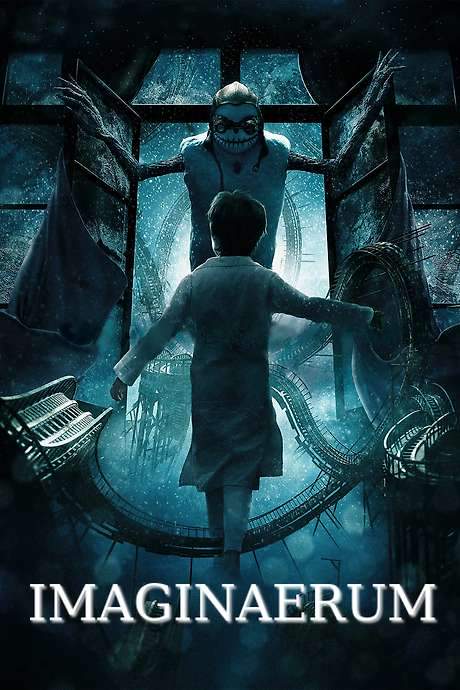
Imaginaerum (2012) movie poster

Plot Summary

Imaginaerum (2012) Plot Summary Explained

Release, runtime and language
2012 · 86 mins · English
JustWatch #8,892 9
Directed by
Stobe Harju
Starring
Francis X. McCarthy, Marianne Farley, Ron Lea, Quinn Lord, Stéphane Demers, Ilkka Villi

An elderly composer named Tom struggles with severe dementia, his memories of adulthood fading as he regresses to a childlike state. He remembers little of his past, including his friends, music, and even his daughter. Lost in a fog, he clings to the imagination of a ten-year-old boy. As he slips into a coma, the possibility of recovering his lost memories seems distant, blurring the lines between reality and fantasy.

On this page (5)
  1. 1 Where to watch
  2. 2 What happens: full plot
  3. 3 Plot questions answered
  4. 4 Movie threads
  5. 5 Every angle

Where to watch

Where to Watch Imaginaerum (2012)

Where can you watch Imaginaerum? Stream, rent or buy it in the US, including on Amazon Prime Video, Fawesome and Hoopla: current JustWatch availability with up-to-date prices.

Streaming availability powered by JustWatch

Full plot summary · contains spoilers

What Happens in Imaginaerum: Full Plot Summary

The whole story of Imaginaerum (2012) explained, from the opening scene to the final frame: every key event, every twist and what it all adds up to. Read it as a quick recap before the sequel, to check a scene you missed, or to finally understand what really happened.

Thomas Whitman, portrayed by Francis X. McCarthy, is a 75-year-old former musician who finds himself in a coma, having battled multi-infarct dementia for years. As he clings to life, his estranged daughter, Gem Whitman, faces a heart-wrenching decision about whether to sign a do not resuscitate order. Meanwhile, in the depths of his mind, Thomas is transported into a vibrant fantasy world where he revisits his childhood as a ten-year-old orphan.

In this dreamscape, young Thomas encounters a girl named Ann at the orphanage and obtains a snow globe featuring a dancing figurine known as "Arabesque." He also becomes friends with a snowman named Mr. White, who flies him through the skies. However, during the exhilarating chase after his father Theodore's airplane, Thomas loses his balance and tumbles into a surreal realm symbolized by a dilapidated roller coaster track, mirroring the fragility of his own memories. As parts of this track disintegrate, a mechanic, mirroring Thomas' real-life doctor Dr. Jansson, expresses frustration about the futility of repairing it.

In a poignant moment, the youthful version of Gem appears, advising they let the track fall apart, paralleling her eventual decision to agree to the DNR order in reality. Thomas soon discovers an even younger iteration of Gem and a 72-year-old Ann, who caution him against Mr. White. Seeking refuge in a "dollhouse," he finds himself and Ann as vibrant members of their band, Whitman, in their 30s. Once more, the elderly Ann warns him of the snowman's malevolent essence, suggesting it contributes to his memory loss.

As Thomas continues his journey through memories, he witnesses both his father and his older self grappling with the loss of their wives, culminating in a tragic scene where Theodore shoots himself. In a parallel moment, the elder Thomas breaks the Arabesque globe, representing his emotional estrangement from his daughter. Throughout this fantastical landscape, he chases after Gem, reflecting their aging progression to modern-day.

In the real world, Gem finds herself at Thomas' home, where she meets Ann, who reveals a painful truth about their shared past. During their time together with their band, Thomas' wife tragically died in a car accident when Gem was just a child. With Thomas often absent, Gem held resentment towards him throughout her life. Ann explains how, on the fateful night of the accident, Thomas had stopped her from overdosing, drawing parallels to the trauma of his father's suicide.

As Gem uncovers incomprehensible notes in a safe, she begins to understand that Thomas became embittered, reflecting the mistakes of his father. This realization leads her to piece together memories that show Thomas did indeed care for her. As she organizes the sheets in his study, an unexpected power failure leads Ann to take Gem to the hospital, further emphasizing the urgency of the situation.

In his dream world, Thomas reconnects with his cherished memories of Gem and confronts Mr. White, who unveils himself as the manifestation of his father. During a thrilling roller coaster ride, Thomas musters the courage to let go of his father's grasp and embarks on a path to cherish his memories with Gem instead. He ultimately completes the ride and awakens from his coma, finding both Gem and Ann by his side. With his final breath, he shares a moment of reconciliation with Gem before passing away.

Upon returning to her father's home, Gem sits at the grand piano. While she plays, a note eludes her, leading her to uncover a brass nameplate wedged within the piano's wires. Its inscription reads "G Em," symbolizing both her name and the chords that Thomas associated with his memories. Notably, Thomas often mentioned that these very chords were fundamental to his recollections and his desire to hear them one last time. Understanding her father's love for her, Gem plays the chords correctly, causing the Arabesque within the globe to spin, marking a heartfelt reconciliation between father and daughter.
Last updated: September 26, 2026 at 05:35

Was this helpful?

Plot questions answered

Imaginaerum Plot Explained: Your Questions Answered

The questions people ask most about Imaginaerum (2012): what happens in the confusing scenes, why the characters do what they do, the twists, hidden details and what the ending means. Each answer contains spoilers.

Q1

Why does Thomas fall into a coma at the start of the story?

Thomas Whitman, a 75-year-old former musician in Imaginaerum, falls into a coma after years of battling multi-infarct dementia, a degenerative condition that causes repeated small strokes and progressive memory loss. The cumulative damage to his brain has become severe enough that his body can no longer sustain consciousness, leaving him teetering between life and death while his estranged daughter Gem faces the decision of whether to sign a do-not-resuscitate order.

  • thomas whitman
  • coma
  • multi-infarct dementia
  • do not resuscitate
Q2

What does the fantasy world inside Thomas's mind actually represent?

The fantasy world in Imaginaerum is a symbolic landscape of Thomas's fragmented consciousness, blending childhood memories, regrets, and unresolved emotions into surreal imagery. The crumbling roller coaster track mirrors his deteriorating mind, while settings like the orphanage, dollhouse, and snow globe each correspond to pivotal memories he is trying to piece together before his consciousness slips away entirely.

Foreshadowing: The mechanic's frustration about the futility of repairing the track directly echoes Dr. Jansson's inability to reverse Thomas's dementia in the real world.

  • fantasy world
  • symbolism
  • memories
  • consciousness
  • roller coaster
Q3

Who is Mr. White really, and why does he chase Thomas through the dreamscape?

Mr. White is ultimately revealed to be a manifestation of Thomas's deceased father Theodore, embodying the generational trauma and self-destructive tendencies Thomas inherited from him. The snowman figure represents the negative legacy Theodore left behind, and his relentless pursuit mirrors how Thomas's unresolved grief and inherited bitterness have haunted him throughout his life, contributing to his emotional estrangement from Gem.

Foreshadowing: The 72-year-old Ann repeatedly warns young Thomas that Mr. White carries a malevolent essence and contributes to his memory loss, hinting at his true identity long before the reveal.

  • mr white
  • theodore
  • generational trauma
  • father
  • snowman
Q4

Why does Thomas break the Arabesque snow globe in the fantasy world?

Thomas smashes the Arabesque globe as a symbolic breaking point that mirrors Theodore's suicide by gunshot. Just as his father took his own life out of despair over losing his wife, Thomas destroys the cherished snow globe out of emotional collapse, representing his estrangement from Gem and his inability to maintain the loving bond represented by the dancing figurine inside.

Foreshadowing: The breaking of the globe is presented in direct parallel with Theodore pulling out a gun, visually linking father and son in their shared moment of self-destruction.

  • arabesque globe
  • theodore
  • suicide
  • estrangement
  • snow globe
Q5

What happened to Thomas's wife, and how did it shape Gem's resentment?

Thomas's wife died in a car accident when Gem was just a child. Following the tragedy, Thomas became emotionally absent, burying himself in his music with Ann while leaving Gem to grow up feeling neglected. This lifelong absence planted deep resentment in Gem, who interpreted her father's withdrawal as abandonment rather than grief, setting the stage for decades of estrangement.

Foreshadowing: Ann's revelation that Thomas stopped her from overdosing on the same night of the accident foreshadows how deeply the tragedy wounded the entire family.

  • thomas wife
  • car accident
  • gem resentment
  • grief
  • abandonment
Q6

Why did Ann stop Thomas from overdosing on the night of the accident?

On the same night Thomas's wife died in the car accident, he attempted to take his own life by overdose. Ann intervened and saved him, recognizing that his despair mirrored the same suicidal trajectory that had claimed his father Theodore. By pulling him back, Ann not only saved his life but also broke the generational cycle of self-destruction, though Thomas carried the weight of that moment for decades afterward.

Foreshadowing: The film draws a direct visual parallel between Theodore's suicide and Thomas's overdose attempt, suggesting Thomas was repeating his father's pattern before Ann intervened.

  • ann
  • overdose
  • suicide
  • theodore
  • generational trauma
Q7

Why does Gem hold resentment toward Thomas for most of her life?

Gem's resentment stems from growing up with an emotionally unavailable father who withdrew into music and his partnership with Ann after her mother's death. She interpreted his absence as a lack of love, never fully understanding that his bitterness and distance were inherited coping mechanisms from his own father Theodore. Only by piecing together his notes and memories does Gem realize Thomas cared deeply for her all along.

Foreshadowing: Ann's explanation that Thomas mirrored his father's emotional withdrawal helps Gem reframe decades of perceived neglect as unprocessed grief.

  • gem resentment
  • emotional absence
  • theodore
  • bitterness
  • estrangement
Q8

What are the incomprehensible notes Gem finds in Thomas's study?

The sheets of seemingly nonsensical writing in Thomas's safe are his attempts to map out his fragmented memories before dementia erased them completely. They contain scattered words, chord notations, and personal references that only make sense once Gem arranges them properly. Piecing the notes together becomes a therapeutic act that allows Gem to see her father clearly for the first time, revealing the depth of his love beneath his emotional numbness.

Foreshadowing: Earlier scenes show Thomas's study in disarray, hinting that he was actively struggling to preserve his memories on paper before they slipped away.

  • incomprehensible notes
  • study
  • memories
  • dementia
  • safe
Q9

Why does Gem ultimately agree to sign the do-not-resuscitate order?

Gem agrees to the DNR order after coming to understand that Thomas's dementia has progressed beyond recovery and that his quality of life has been stripped to near nothing. The decision is influenced by the younger Gem in the fantasy world, who suggests letting the crumbling roller coaster track fall apart, symbolizing acceptance that some things cannot be repaired. Signing the order becomes an act of love rather than abandonment, honoring Thomas's dignity.

Foreshadowing: The surreal mechanic's frustration about futile repairs foreshadows the real-world medical reality that Thomas's condition cannot be reversed.

  • do not resuscitate
  • dnr
  • gem decision
  • dementia
  • acceptance
Q10

What does the brass nameplate 'G Em' hidden in the piano actually mean?

The brass nameplate reading 'G Em' is a dual-layered message: it spells out Gem's name in musical shorthand while simultaneously representing the chords G major and E minor that Thomas associated with his most cherished memories of her. Thomas had hidden it inside the piano's wires as a private keepsake, ensuring that even as his mind deteriorated, a part of his love for Gem remained embedded in the instrument that defined his life.

Foreshadowing: Thomas repeatedly mentions throughout his life that certain chords are fundamental to his memories, setting up the eventual discovery of their literal embodiment.

  • g em nameplate
  • piano
  • chords
  • gem
  • hidden message
Q11

Why does Thomas pass away shortly after waking from his coma?

Thomas awakens from his coma in Imaginaerum because he finally lets go of his father's suffocating grip on the roller coaster, choosing instead to cherish his memories with Gem. However, his body had already deteriorated beyond recovery during the coma, and waking was a brief final gift rather than a true recovery. His death immediately after reconciliation gives him the closure of seeing Gem one last time, completing the emotional arc the dementia had stolen from him.

Foreshadowing: Dr. Jansson's earlier pessimism about Thomas's prognosis suggests that even before the coma, his body was failing beyond what medicine could address.

  • thomas death
  • coma
  • reconciliation
  • body deterioration
  • closure
Q12

How does Thomas confront his father's legacy during the roller coaster ride?

During the climactic roller coaster sequence in Imaginaerum, Thomas rides alongside Mr. White, who has now fully revealed himself as Theodore's manifestation. Theodore's ghost clings to Thomas, pulling him toward the same self-destructive spiral that ended his own life. Thomas musters the courage to let go of his father's grasp, choosing to pursue the path toward Gem and Ann instead, symbolically breaking the cycle of generational suicide and bitterness.

Foreshadowing: Earlier warnings from 72-year-old Ann about Mr. White's true nature prepare Thomas for this final confrontation with his inherited trauma.

  • roller coaster
  • theodore legacy
  • generational cycle
  • letting go
Q13

Why does the Arabesque figurine spin when Gem plays the correct chords?

The Arabesque figurine spins because Gem finally plays the G major and E minor chords that Thomas had embedded into the piano as a coded message of love. The spinning dancer is a physical confirmation that she has unlocked her father's hidden emotional language, bridging the gap between his dementia-stricken present and his lifelong devotion to her. The moment transforms the snow globe from a broken relic into a living symbol of their reconciliation.

Foreshadowing: Thomas's repeated mentions of these chords being fundamental to his memories foreshadow that they hold a deeper significance beyond music.

  • arabesque figurine
  • chords
  • reconciliation
  • gem
  • spinning

Movie threads

More Movies Like Imaginaerum, by Mood & Story

Curated lists built around what makes Imaginaerum tick: the same mood, the same kind of story or the same emotional payoff. Each list explains why these movies belong together.

Surreal memory journeys like in Imaginaerum

Stories where reality dissolves into dreamlike visions of a mind coming undone. Discover more movies like Imaginaerum that blend dreamlike fantasy with a protagonist's fading memories. These surreal dramas use non-linear storytelling, symbolic imagery, and heavy emotional beats to portray a mind unraveling. Perfect for fans of Imaginaerum who want similar visually inventive, memory-driven films about consciousness, dementia, and the fragile boundary between imagination and reality.

  • dreamlike
  • surreal
  • melancholic
  • nostalgic
  • ethereal
  • haunting
  • Tone: bittersweet, melancholic
  • Pacing: variable, dreamlike
Why these movies?

The story pattern: Stories in this thread follow a central figure whose perception cannot be trusted, often because of illness, trauma, grief, or a descent toward death. The narrative braids flashbacks, dreams, and present-day reality into a single surreal tapestry, and the audience is invited to piece together meaning the way the protagonist does. Emotional revelations usually arrive not through dialogue but through symbolic encounters with objects, places, and figures from the past.

Why they belong together: These films are grouped because they share a dreamlike visual language, a willingness to blur real and imagined worlds, and a heavy focus on memory, consciousness, or psychological decline. They tend to be complex, variable in pacing, and emotionally heavy, ending on bittersweet or ambiguous notes rather than clean resolutions. Viewers looking for an experience that feels more like falling into a painting than watching a plot will gravitate here.

Bittersweet family reconciliation like in Imaginaerum

Heavy emotional journeys where estranged family members find closure before the end. Find more movies like Imaginaerum that center on estranged family bonds, parental regret, and reconciliation before loss. These emotionally heavy dramas explore father-daughter relationships, generational trauma, and the difficult choice to let go. If you loved Imaginaerum's bittersweet portrait of a father reconnecting with his daughter across fading memories, these similar films will resonate deeply.

  • wistful
  • reflective
  • grieving
  • nostalgic
  • tender
  • haunting
  • Tone: bittersweet, melancholic
  • Pacing: steady, emotionally driven
Why these movies?

The story pattern: The arc in this thread typically opens with a parent and child already separated by distance, silence, or years of unspoken pain. A triggering event such as a terminal diagnosis, an inherited grief, or a journey back to a childhood home forces them to face each other again. The emotional climax is not a happy reunion but a fragile, often tear-soaked act of understanding, after which one or both characters move on changed. The ending is bittersweet: something is gained, but something is also permanently lost.

Why they belong together: These titles are connected by their focus on inherited pain between parent and child, the weight of unspoken history, and endings that lean toward forgiveness without erasing the loss. They share Imaginaerum's bittersweet tone, heavy emotional weight, and willingness to sit with grief rather than resolve it neatly. Viewers looking for stories about legacy, estrangement, and the long shadow a parent can cast will find a coherent set of films here.

Every angle

Imaginaerum (2012) Explained: Plot, Timeline & Characters

Everything about Imaginaerum in one place: what happens in the plot summary, the timeline in chronological order, the characters and meaning and a spoiler-free summary. What's After the Movie adds the cast, box office and post-credit scenes.

Coming soon on iOS and Android

The Plot Explained Movie Summary App

Plot summaries, endings explained and timelines on your phone. Catch up on any movie in minutes, save your favorites and never miss a twist again.

Be the first to know when we launch. Your email stays private, always.

Learn more about the app