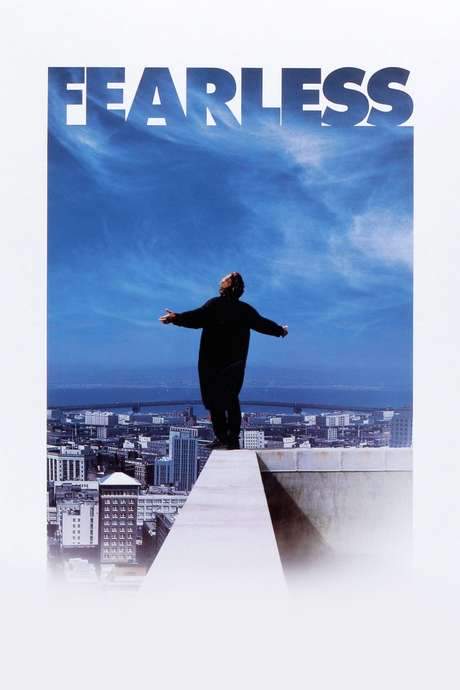
Jack Starks, a Gulf War veteran, returns to Vermont in 1992 with lingering memory gaps and a fragile sense of reality. While wandering along a quiet highway, he crosses paths with a young girl named Jackie and her mother, a situation painted with hardship and care. Jackie asks for his dog tags, and he quietly hands them over, a small act of trust that binds them for a moment. A stranger offers him a ride, and not long after, they are pulled over by a police officer.
Tragedy strikes when Starks is found at the roadside beside the dead policeman, with a bullet lodged in his body and the murder weapon nearby. He insists that someone else was present, but his amnesia leaves him without the crucial details, and the court’s skepticism leads to a verdict of not guilty by reason of insanity. He is sent to a mental institution, where the routine of confinement begins to shape his days.
In December 1992, Starks becomes the subject of an unauthorized and harsh experimental treatment devised by Dr. Thomas Becker. He is injected with potent drugs, bound in a straitjacket, and sealed inside a morgue drawer as a form of sensory deprivation. This extreme procedure triggers something extraordinary: Starks starts to travel through time, slipping fifteen years into the future for brief moments. In this strange detour through years, he encounters an older Jackie at a roadside diner where she works. She doesn’t recognize him, yet offers him shelter for the night. Inside her apartment, he discovers his own dog tags and confronts her, only to be told that he cannot be Jack Starks because, in this timeline, he died on New Year’s Day in 1993. She asks him to leave, and the cycle of time travel and hesitation deepens.
The treatment continues to weave time into reality, as Starks cycles between the past and a distant future. With Jackie gradually earning his trust, they explore whether their unusual connection could be used to alter the course of his life and perhaps free him from the hospital’s grasp.
As the clock edges toward January 1, 1993, Dr. Beth Lorenson offers a chance to take action. She drives Starks to Jackie’s childhood home and together they leave a letter for Jackie’s mother, outlining a bleak forecast if certain fates unfold—specifically, that Jackie may be orphaned should a fatal cigarette incident occur. When Starks returns to the hospital, a vivid flashback to his Iraq head wound punctuates the moment, and he asks the doctors to put him back in the jacket one final time, sealing his fate with a last ascent into the treatment that defies ordinary timelines.
The narrative shifts again to 2007, where the consequences of the letter unfold in a hopeful, visible way. Jackie now leads a different life: she is no longer a waitress but wears a nurse’s uniform, embodying a brighter outlook. Their first 2007 meeting plays out in the snow—she initially drives past, but then stops when she notices the familiar head wound. She offers to take him to the hospital where she works. On the ride, she receives a life-affirming call from her mother, who is alive and well. The journey continues as they drive forward, the screen fading to white while Jackie’s voice asks a poignant question that echoes through time.
> How much time do we have?
The conclusion unfolds with the closing song, a haunting refrain of persistence and possibility. The credits roll to the refrain of “We Have All the Time in the World” performed by Iggy Pop, underscoring a message that time, in this story, is not simply a constraint but a canvas for choice and connection.