


Plot Explained Spoilers guaranteed!
Plot Explained

Browse by genre

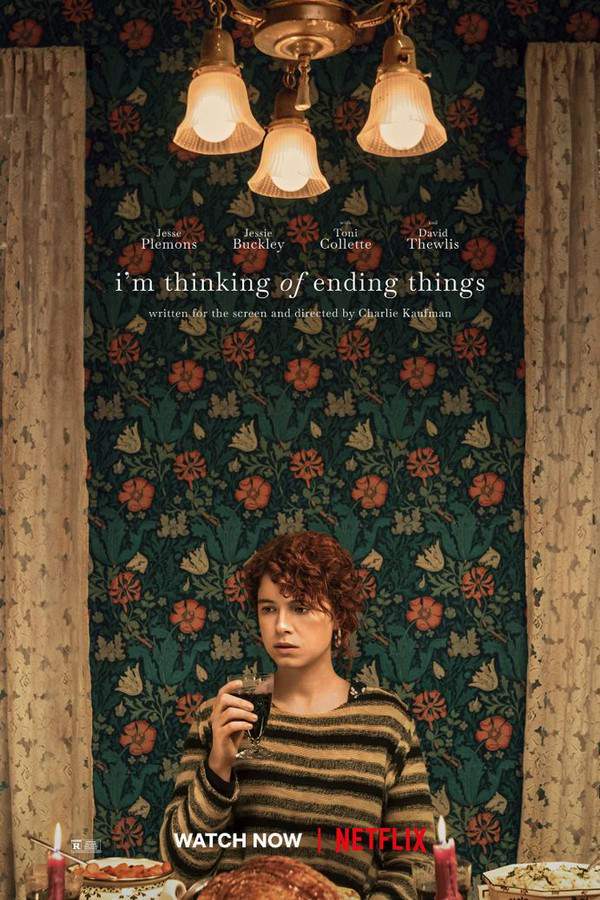
i'm thinking of ending things (2020) movie poster

Characters & Themes

i'm thinking of ending things (2020) Characters, Setting & Themes Explained

Release, runtime and language
2020 · 134 min · English
Echo score 72
JustWatch #1,830 24
Directed by
Charlie Kaufman
Starring
David Thewlis, Jessie Buckley, Jesse Plemons, Hadley Robinson, Toni Collette, Abby Quinn

A young woman accompanies her boyfriend on a trip to his parents' remote farm as their relationship faces doubts. During a severe snowstorm, unsettling events and fragmented memories surface, blurring the lines of their connection and leading her to question the reality of their relationship and Jake's history. She must confront the unsettling truth about their bond and the secrets hidden within the isolated farmhouse.

On this page (9)
  1. 1 Where to watch
  2. 2 Characters explained (5)
  3. 3 Where & when it takes place
  4. 4 Themes & meaning (3)
  5. 5 Character & meaning questions
  6. 6 The book behind the movie
  7. 7 Movie threads
  8. 8 Movies like i'm thinking of ending things
  9. 9 Every angle

Where to watch

Where to Watch i'm thinking of ending things (2020)

Where can you watch i'm thinking of ending things? Stream, rent or buy it in the US, including on Netflix and Netflix Standard: current JustWatch availability with up-to-date prices.

Streaming availability powered by JustWatch

5 main characters · contains spoilers

i'm thinking of ending things Characters Explained: Who Is Who

The main characters of i'm thinking of ending things (2020), heroes and villains: what drives them, how they change over the course of the story and what each of them reveals about the film's bigger ideas.

  • Jake (Jesse Plemons)

    Jake is a complex character, grappling with his emotions and exhibiting a deep connection to his upbringing. Throughout the film, he oscillates between being charming and unsettling, revealing underlying insecurities that impact his relationship with the young woman. His fondness for musical theatre showcases a different side of him, but it also highlights a peculiar disconnect with reality.

    • 🎭 Musical
    • 🧠 Complexity
    • 🔄 Duality
  • Young Woman (Jessie Buckley)

    The young woman serves as the film's introspective voice, navigating her anxieties and feelings of disconnection in her relationship with Jake. Her journey is marked by a strong sense of yearning for understanding and clarity, leading to moments of confusion and revelation about her identity. The shifting nature of her identity, as represented by different names, emphasizes her struggle to define herself in a chaotic environment.

    • 🧩 Self-Discovery
    • 🌌 Existential
    • 💭 Introspection
  • Father (David Thewlis)

    Jake's father embodies an odd blend of warmth and peculiarity, often interpreting situations literally and struggling to connect with the young woman. His character adds a layer of surrealism, often serving as a reminder of the strange familial ties and how they impact one's identity and reality. He oscillates between being intimidating and comical, reflecting the complexities of parent-child dynamics.

    • 👨‍👦 Complexity
    • 🤔 Literal
    • 🏡 Family
  • Mother (Toni Collette)

    Jake's mother is an eccentric character whose behavior, marked by misunderstandings and laughter, represents the difficulties in communication within families. She adds a layer of unsettling normality to the narrative with her humorous yet confusing responses, highlighting how familial dynamics can warp one's perception of reality.

    • 😄 Humor
    • 🏠 Family
    • 🎭 Surrealism
  • Janitor (unknown)

    The janitor serves as a haunting reflection of solitude and regret, existing on the periphery of the narrative. His life experiences echo the film’s broader themes of aging and existential dread, signifying the intertwined fates of the characters. His interactions subtly weave together the personal and abstract ideas of time and identity.

    • 🚶‍♂️ Solitude
    • ⏳ Reflection
    • 🔍 Observation

Last updated: October 23, 2024 at 08:43

Was this helpful?

Setting

Where and When Does i'm thinking of ending things Take Place?

The setting of i'm thinking of ending things (2020): the year and time period, the places and locations, and how they shape the characters, the mood and the tension of the story.

Time period

Present Day

The film unfolds in a contemporary setting, marked by themes that are timeless yet reflective of today's existential crises. Issues such as loneliness, the search for meaning, and the complexities of relationships resonate on multiple levels, mirroring modern societal challenges.

Location

Tulsey Town, rural farmhouse, high school

Tulsey Town is depicted as a quaint and somewhat eerie place, filled with small-town charm. The rural farmhouse symbolizes a connection to family and childhood, where various unsettling events unfold. The high school serves as a nostalgic reminder of youth, highlighting the characters’ pasts and present uncertainties.

  • 🏡 Farmhouse
  • 🌨️ Winter
  • 🍦 Ice Cream Shop

Last updated: October 23, 2024 at 08:43

Was this helpful?

3 major themes

i'm thinking of ending things Meaning: Themes & Message Explained

What is i'm thinking of ending things (2020) really about? The emotional, social and philosophical themes the film keeps returning to, its symbolism and the message beneath the surface.

  • Identity

    The theme of identity permeates throughout the film, as the young woman grapples with her sense of self amid shifting names and perceptions. It highlights the often-confusing nature of relationships and how one's identity can become intertwined with another's, leading to moments of profound doubt and existential reflection.

  • Isolation

    Isolation manifests both physically and emotionally, as characters experience estrangement from each other and from their own realities. The film delves into the solitude of the elderly janitor and the young woman's internal struggle, accentuating the theme of disconnection in a world that can often feel overwhelming.

  • Time

    The passage of time is a crucial element, marked by awkward moments and the characters’ reflections on their histories. The jarring transitions between stages of life challenge the perception of time, prompting both Jake and the young woman to confront their past choices and the inevitability of aging.

Last updated: October 23, 2024 at 08:43

Was this helpful?

Character & theme questions

i'm thinking of ending things Characters & Meaning: Your Questions Answered

The questions people ask about i'm thinking of ending things (2020): who the characters really are, their relationships, what the symbols mean, where it takes place and what the movie is really about. Each answer contains spoilers.

Q1

What is the significance of the remote farmhouse setting?

The rural farmhouse serves as both a literal and metaphorical space where the young woman confronts the reality of her relationship with Jake. The isolated winter setting creates an atmosphere of claustrophobia and vulnerability, amplifying the psychological tension. The house represents Jake's past and family roots, making it a place where buried truths and unresolved family dynamics surface.

  • farmhouse
  • isolation
  • winter
  • setting
  • psychological tension
Q2

What is Tulsey Town and why does it feel eerie?

Tulsey Town is depicted as a small, quaint town that carries an underlying sense of unease. Its eerie quality stems from the contrast between its picturesque, nostalgic appearance and the unsettling events that unfold there. The town serves as a liminal space where reality becomes unstable, reflecting the characters' internal confusion and fractured perceptions.

  • tulsey town
  • small town
  • setting
  • eerie atmosphere
Q3

Why is the film set in the present day rather than a specific era?

The contemporary setting anchors the film in today's world, allowing its exploration of modern existential crises to resonate directly with viewers. By avoiding a specific historical period, the film emphasizes that themes of loneliness, relationship doubt, and identity confusion are timeless human struggles that remain relevant in modern society.

  • present day
  • contemporary
  • time period
  • modern themes
Q4

What does the film say about identity?

The film explores how identity becomes entangled with relationships, particularly through the young woman's experience of having her name constantly shift throughout the story. This fluid identity reflects how one's sense of self can blur when deeply connected to another person, leading to existential doubt about who she truly is independent of Jake.

  • identity
  • self
  • names
  • relationships
  • self-discovery
Q5

How does isolation feature in the film?

Isolation manifests both physically through the remote farmhouse location and emotionally through the characters' profound disconnection from each other and themselves. The elderly janitor embodies this theme as a haunting representation of solitude and regret, while the young woman's internal struggle highlights how one can feel alone even when physically accompanied.

  • isolation
  • loneliness
  • disconnection
  • solitude
  • janitor
Q6

How does the film handle the passage of time?

The film challenges linear time perception through jarring transitions between different stages of life, forcing both Jake and the young woman to confront their past choices and the inevitability of aging. These non-linear moments create a sense of temporal instability that reflects the characters' psychological states and unresolved histories.

  • time
  • aging
  • memory
  • past
  • stages of life
Q7

Who is Jake and what defines his character?

Jake is a emotionally complex man whose charm alternates with unsettling behavior, revealing deep-seated insecurities that affect his relationship. His connection to his upbringing on the family farm is central to his character, and his unexpected fondness for musical theatre contrasts sharply with his more darker, uncertain qualities.

  • jake
  • character
  • psychology
  • insecurity
  • musical theatre
Q8

What is the young woman's role in the story?

The young woman serves as the film's introspective narrator, representing universal feelings of anxiety and disconnection in relationships. Her journey centers on yearning for understanding and clarity while grappling with a shifting identity that makes it difficult to define herself within her relationship with Jake.

  • young woman
  • jessie buckley
  • protagonist
  • anxiety
  • identity
Q9

Why do Jake's parents behave so strangely?

Jake's parents embody surreal family dynamics that reflect the film's theme of distorted reality. His father oscillates between warmth and peculiar literalness, while his mother adds unsettling normality through eccentric behavior and confusing misunderstandings. Their strange mannerisms represent how familial ties can warp one's perception of reality and identity.

  • parents
  • family
  • surrealism
  • father
  • mother
  • david thewlis
  • toni collette
Q10

What does the janitor represent in the film?

The janitor serves as a haunting embodiment of the film's themes of aging, solitude, and existential regret. Existing on the periphery of the narrative, his presence subtly weaves together personal and abstract ideas about time, identity, and the inevitable loneliness that can accompany aging. He functions as a mirror reflecting the characters' own potential futures.

  • janitor
  • aging
  • solitude
  • regret
  • symbolism
  • future
Q11

Why is the film set during a severe snowstorm?

The winter snowstorm creates an isolated, trapped atmosphere that mirrors the characters' emotional states and relationship dynamics. The harsh weather reinforces the sense of being cut off from the outside world, forcing the characters to confront their issues within the claustrophobic space of the farmhouse where unsettling truths can no longer be avoided.

  • winter
  • snowstorm
  • isolation
  • atmosphere
  • weather
Q12

What creates the film's melancholic and unsettling tone?

The film's melancholic tone emerges from its deliberate slow pacing, constant low-level anxiety, and pervasive existential dread. With virtually no moments of levity, the movie explores heavy themes of dementia, loneliness, and suicidal ideation, creating an atmosphere of profound sadness and psychological unease that lingers throughout.

  • tone
  • melancholy
  • atmosphere
  • dread
  • horror
  • psychological

Movie threads

More Movies Like i'm thinking of ending things, by Mood & Story

Curated lists built around what makes i'm thinking of ending things tick: the same mood, the same kind of story or the same emotional payoff. Each list explains why these movies belong together.

Movies with unreliable narrators like i'm thinking of ending things

Psychological explorations where perception and memory become untrustworthy. This collection features films like i'm thinking of ending things, where the narrative structure is intentionally unstable. If you enjoyed questioning what was real and piecing together the story from fragmented memories and shifting identities, you'll find similar mind-bending and disorienting experiences here.

  • disorienting
  • dreamlike
  • psychological
  • unsettling
  • mind-bending
  • cerebral
  • Tone: disorienting, melancholic, tense
  • Pacing: slow, deliberate
Why these movies?

The story pattern: These stories often center on a protagonist whose perception is flawed, due to psychological trauma, mental illness, or surreal circumstances. The plot unfolds not as objective truth, but as a distorted reflection of their inner world, leading the audience to constantly question the validity of events and character motivations.

Why they belong together: These films are grouped by their use of an unreliable narrative perspective to create psychological tension and thematic depth. They share a common goal of disorienting the viewer and exploring the malleable nature of truth, memory, and self.
Slow burn existential horror movies like i'm thinking of ending things

Stories where quiet tension builds into a profound sense of unease about life itself. For viewers who appreciated the slow-building, melancholic dread in i'm thinking of ending things, this list highlights similar films. These movies use a slow pace and heavy atmosphere to explore deep anxieties about loneliness, memory, and identity, rather than relying on conventional scares.

  • slow burn
  • existential
  • dread
  • melancholic
  • unsettling
  • atmospheric
  • Tone: melancholic, bleak, unsettling
  • Pacing: very slow, atmospheric
Why these movies?

The story pattern: The narrative is often a gradual descent into anxiety, focusing on a character's internal struggle with profound philosophical fears. The conflict is less about external monsters and more about the terrifying nature of consciousness, regret, and oblivion, revealed through long, tense scenes and symbolic imagery.

Why they belong together: They are united by a specific combination of slow pacing, high emotional weight, and a tone of melancholic dread. The viewing experience is defined by a pervasive sense of unease that builds psychologically, leaving a heavy, contemplative feeling.

If you liked this

Movies Like i'm thinking of ending things

Similar movies to i'm thinking of ending things: the same genre, themes or kind of story. Each one comes with its own plot summary, timeline and ending explained.

Browse all movie summaries

Every angle

i'm thinking of ending things (2020) Explained: Plot, Ending, Timeline & Characters

Everything about i'm thinking of ending things in one place: what happens in the plot summary, the timeline in chronological order, the characters and meaning, the ending explained and a spoiler-free summary. What's After the Movie adds the cast, box office and post-credit scenes.

Coming soon on iOS and Android

The Plot Explained Movie Summary App

Plot summaries, endings explained and timelines on your phone. Catch up on any movie in minutes, save your favorites and never miss a twist again.

Be the first to know when we launch. Your email stays private, always.

Learn more about the app