










Plot Explained Spoilers guaranteed!
Plot Explained

Browse by genre

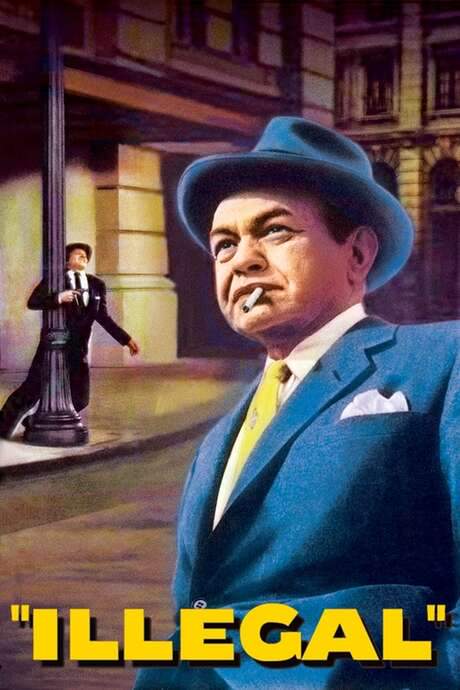
Illegal (1955) movie poster

Timeline

Illegal (1955) Timeline Explained – Every Event in Order

Release, runtime and language
1955 · 88 mins · English
Directed by
Lewis Allen
Starring
Ellen Corby, Lawrence Dobkin, Hugh Marlowe, Edward G. Robinson, Jan Merlin, Stuart Hall

A successful district attorney who once sentenced a hundred men to death is shaken when Angel O’Hara, a striking blonde, intervenes and forces him to re‑examine his life. After learning the man he sent to the chair was innocent, he leaves public office for private practice, but his new career is tainted by alcoholism and a reputation for defending low‑life criminals, as he seeks redemption.

On this page (6)
  1. 1 Where to watch
  2. 2 Events in order (11)
  3. 3 Timeline questions answered
  4. 4 Movie threads
  5. 5 Movies like Illegal
  6. 6 Every angle

Where to watch

Where to Watch Illegal (1955)

Where can you watch Illegal? Stream, rent or buy it in the US, including on Fawesome, Mometu and Plex: current JustWatch availability with up-to-date prices.

Streaming availability powered by JustWatch

11 events in order · contains spoilers

Illegal Timeline: Events in Chronological Order

Every key event of Illegal (1955) in order, scene by scene, with when and where it takes place. Use it to untangle flashbacks, time jumps and parallel storylines, to refresh your memory before the sequel or to find the exact scene you are thinking of.

  1. Mentorship and pledge to protect Ellen Miles

    Early in his career, Scott is mentored by Ellen Miles's father on his deathbed, who asks him to promise to protect Ellen. This pledge shapes Scott's sense of duty and loyalty throughout the story. The arrangement foreshadows the tension between personal affection and professional obligation that runs through the plot.

    When
    Before the main trials
    Where
    Ellen Miles's father's deathbed
  2. Prosecution and conviction of Gloria Benson's murder

    Victor Scott prosecutes the sensational murder case of Gloria Benson with a commanding courtroom performance. The jury convicts the defendant and the judge sentences Edward Clary to death by electric chair (not shown). The victory boosts Scott's political ambitions and signals his rising power in the D.A.'s office.

    When
    Day of the trial
    Where
    Courtroom
  3. The confession on the execution hour

    At the very hour of Clary's execution, a dying declarant, shot by police during the crime, confesses to Benson's murder. The declaration is admitted as legitimate, but it provides no motive for the crime. Scott desperately attempts to halt the execution, but the order goes through.

    When
    Execution hour
    Where
    Prison / Execution chamber
  4. Scott resigns and falls into alcohol

    The death of an innocent man unsettles Scott and prompts his resignation from the D.A.'s office. He sinks into alcoholism and is shunned by former allies, drinking away his former influence. The case becomes a turning point in his career and in his personal life.

    When
    Immediately after the execution
    Where
    D.A.'s Office / personal life
  5. Becoming a defense attorney after a brawl case

    While appearing drunk in court on a disorderly charge, Scott encounters a man implicated in a fatal brawl and chooses to defend him. He publicly challenges a very large prosecution witness, and then sucker-punches him with a concealed roll of nickels, knocking him out. The dismissed case marks Scott's abrupt transition to a successful defense attorney.

    When
    Shortly after resignation
    Where
    Courtroom
  6. Defense of Garland's associate in a poison murder case

    Scott takes on a client connected to crime boss Frank Garland, accused of murder by poison. He wins by drinking from the poison bottle and resting his case, planning to force a recess so he can reach a doctor before the poison does its work. The victory deepens a dangerous, uneasy alliance with Garland while the office's integrity remains eroded.

    When
    During the poison murder trial
    Where
    Courtroom
  7. The leak surfaces: Borden is the mole

    An ongoing leak between the D.A.'s office and Garland is revealed to be Ellen's husband, Ray Borden. Ellen confronts him and kills Borden in self-defense. The new D.A. mistakenly believes Ellen was the leak and prosecutes her, prompting Scott to defend his former ally.

    When
    Between the Garland case and Ellen's trial
    Where
    Ellen's home / Courtroom
  8. Lunch recess plan and attempted hit on Scott

    During a lunch recess, Scott has his secretary mail his confidential case notes to herself as protection against being killed. He then meets Garland, who asks him to throw the case to avoid implicating him. Garland's men follow Scott and shoot him, but the hitman is killed by the D.A.'s agents before completing the job.

    When
    Lunch recess
    Where
    D.A.'s Office / courthouse steps
  9. Angel O'Hara's testimony and Ellen's clearance

    Scott calls Angel O'Hara, who has been living with Garland, and she testifies that Borden spoke to Garland regularly and arranged the call that led to Ellen learning of the leak. The testimony helps clear Ellen of the charges, though Scott's injuries leave him physically weakened. He collapses as the courtroom scene advances toward resolution.

    When
    During the trial
    Where
    Courtroom
  10. Evidence strengthens Ellen's exoneration

    The testimony ties Borden to Garland and undermines the prosecution's case against Ellen. Scott's effort to rescue Ellen culminates in her exoneration, even as his own condition worsens. The case underscores the corrosive influence of crime and corruption on justice.

    When
    Final moments of trial
    Where
    Courtroom
  11. Scott's ultimate downfall and uneasy victory

    Though Ellen is cleared, Scott's relentless pursuit of justice ends with him collapsing from his injuries. The public and former allies look on as he contemplates the cost of his career. The film closes on a somber note, balancing personal cost with the sliver of justice achieved.

    When
    End of film
    Where
    Courthouse / hospital

Last updated: October 09, 2025 at 11:21

Was this helpful?

Timeline questions answered

Illegal Timeline Explained: Your Questions Answered

When does it happen, and why in that order? The questions people ask about the chronology of Illegal (1955): time jumps, flashbacks, cause and effect between scenes and the correct order of events, each answered with spoilers.

Q1

Why did Victor Scott resign from his position as district attorney?

Victor Scott resigned after discovering he helped convict an innocent man. At the execution hour of Edward Clary, a dying declarant (shot by police during the Benson murder) confessed to the crime, fingering Clary. Despite Scott's desperate attempts to halt the execution, the order went through. This wrongful execution deeply unsettled Scott and led him to leave the D.A.'s office, beginning his descent into alcoholism.

Foreshadowing: The film opens with Scott's courtroom victory in the Benson case, but the dramatic irony of his celebration is undercut by the truth revealed at the execution hour.

  • victor scott resignation
  • district attorney
  • wrongful execution
  • innocent man
  • edward clary
Q2

What was the dying confession and why did it matter?

The dying confession was a statement from a declarant who was shot by police during the Gloria Benson murder. Made at the very hour of Edward Clary's execution, the declarant confessed to killing Benson and implicated Clary as innocent. The document was admitted as legitimate, but it provided no motive for the crime. This revelation shook Scott because it confirmed he had sent an innocent man to the electric chair.

Foreshadowing: The courtroom drama during the initial conviction hints at the fragile certainty of guilt in capital cases.

  • dying confession
  • gloria benson
  • edward clary
  • execution
  • innocence
Q3

Why did Victor Scott become a defense attorney after leaving the D.A.'s office?

After resigning and sinking into alcoholism, Scott was charged with being drunk and disorderly in court. While appearing on this minor charge, he encountered a man accused in a fatal brawl and chose to defend him. This marked his transformation from prosecutor to defense attorney, a role that allowed him to defend the wrongfully accused rather than send them to prison.

Foreshadowing: Scott's early career was built on courtroom showmanship, which he now redirects toward defending those the system has wronged.

  • victor scott defense attorney
  • alcoholism
  • courtroom transformation
  • redemption
Q4

Why did Victor Scott drink poison during the Garland associate's trial?

Scott represented an associate of crime boss Frank Garland who was accused of murder by poison. To force a recess and prevent the case from proceeding, Scott dramatically drank from the poison bottle in court, knowing the defense would call for a physician's intervention while the poison took effect. His plan worked, he reached a doctor in time and won the case, though this move deepened his dangerous alliance with Garland.

Foreshadowing: This theatrical gambit echoes Scott's earlier prosecutor showmanship, but now uses his skills to protect criminals rather than convict them.

  • poison trial
  • frank garland
  • courtroom stunt
  • defense attorney
Q5

Who was the leak providing information to crime boss Frank Garland?

The leak was Ray Borden, Ellen Miles' husband. Borden served as a liaison between the D.A.'s office and the crime world, secretly feeding information to Frank Garland. Ellen discovered this betrayal during a confrontation and killed Borden in self-defense when he became violent.

Foreshadowing: Earlier scenes hint at tension in Ellen's marriage and暗示 the mysterious source of Garland's information.

  • ray borden
  • leak
  • frank garland
  • district attorney office
  • corruption
Q6

Why was Ellen Miles accused of murder after Ray Borden's death?

When Ellen killed Ray Borden in self-defense during their confrontation, the new D.A. misread the situation and believed Ellen was actually the leak supplying information to Garland. She was wrongfully prosecuted for murder, with the authorities assuming she was protecting herself after being exposed as the mole.

Foreshadowing: Scott's earlier relationship with Ellen and his pledge to protect her create dramatic irony around her wrongful accusation.

  • ellen miles
  • murder charge
  • ray borden
  • wrongful accusation
  • self-defense
Q7

What was the relationship between Victor Scott and Ellen Miles?

Victor Scott was mentored by Ellen Miles' father on his deathbed, who asked Scott to promise to protect Ellen. This pledge shaped their professional relationship throughout their careers in the D.A.'s office. Ellen worked as Scott's loyal attorney and likely hoped for a deeper romantic connection, but Scott nudged her toward marrying colleague Ray Borden instead. Later, Scott defends Ellen when she is wrongfully accused, honoring his old pledge.

Foreshadowing: The deathbed pledge echoes throughout the film, finally paying off when Scott must defend the woman he promised to protect.

  • victor scott
  • ellen miles
  • relationship
  • mentorship
  • promise
Q8

How did Angel O'Hara's testimony help clear Ellen Miles?

Angel O'Hara, who had been living with crime boss Frank Garland, was called to testify. She revealed that Ray Borden regularly spoke with Garland and arranged the phone call that led Ellen to discover the leak. This testimony directly connected Borden to Garland and corroborated Ellen's claim that she killed Borden upon learning of his betrayal, clearing her of the murder charge.

Foreshadowing: Angel's presence in Garland's life earlier in the film sets up her crucial testimony.

  • angel ohara
  • testimony
  • ellen miles exoneration
  • frank garland
  • ray borden
Q9

Why did Victor Scott defend Frank Garland's associate if he sought redemption?

Scott's path to redemption was complicated by his need to make a living as a defense attorney and his growing involvement with criminal elements. After taking the Garland associate's poison murder case, Scott performed his dramatic courtroom stunt, drinking the poison, which forced a dangerous, uneasy alliance with Garland. Scott did not become Garland's henchman, but their relationship became a tense standoff where each tested the other's limits, reflecting Scott's ambiguous moral position between justice and survival.

Foreshadowing: The initial meeting between Scott and Garland during the poison case establishes their fraught dynamic.

  • frank garland
  • redemption
  • criminal defense
  • moral compromise
  • alliance
Q10

Why did Victor Scott have his secretary mail his confidential case files?

Scott anticipated danger from his confrontation with Garland and the criminal underworld. During a lunch recess, he instructed his secretary to mail his confidential case files to herself as a precaution, preserving the evidence should anything happen to him. This protective measure proved wise, as Garland's men subsequently attempted to kill Scott outside the courthouse.

Foreshadowing: The tension between Scott and Garland builds directly to this moment of attempted assassination.

  • case files
  • protection
  • assassination attempt
  • garland
  • self-preservation
Q11

What happened to Victor Scott at the end of Illegal?

Although Ellen was cleared of all charges thanks to Angel O'Hara's testimony, Scott's body bore the toll of his ordeals. After the attempted hit by Garland's men and the intense trial, Scott collapsed from his injuries. The film ends on a bittersweet note: justice was achieved, innocence proven, but Scott paid a heavy personal price for his quest for redemption.

Foreshadowing: Throughout the film, Scott's physical and moral decline accumulates, leading to this final collapse.

  • victor scott collapse
  • ending
  • injuries
  • bittersweet
  • redemption cost

Movie threads

More Movies Like Illegal, by Mood & Story

Curated lists built around what makes Illegal tick: the same mood, the same kind of story or the same emotional payoff. Each list explains why these movies belong together.

Movies about redemption in a corrupt system like Illegal

Flawed characters seek atonement in a morally bankrupt system. If you liked the fall and gritty redemption arc in Illegal, explore more movies about characters seeking atonement within morally bankrupt worlds. These films often feature heavy emotional weight, tense legal or criminal dilemmas, and bittersweet conclusions.

  • morally complex
  • gritty
  • redemptive
  • tense
  • anxious
  • corrupt
  • Tone: tense, morally complex
  • Pacing: steady, methodical
Why these movies?

The story pattern: These narratives follow a protagonist, frequently a lawyer, cop, or official, who experiences a moral crisis after enabling or witnessing a grave injustice. Their journey toward redemption is messy, often involving a descent into the underworld they once opposed, grappling with addiction, and making dirty deals in pursuit of a greater good.

Why they belong together: Movies are grouped here for their shared focus on a specific character arc—the redemption seeker in a corrupt environment—combined with a tense, gritty tone and a narrative that balances legal/criminal procedural elements with deep personal crisis.

Gritty noir morality tales similar to Illegal

Stylish, tense stories where characters are crushed by their own ethical dilemmas. Fans of the tense, morally complex atmosphere of Illegal will find more like it in this collection of gritty noir stories. These movies share a bleak worldview, high-stakes ethical conflicts, and a steady, suspenseful pacing that keeps you on edge.

  • tense
  • gritty
  • suspenseful
  • bleak
  • morally complex
  • anxious
  • Tone: tense, bleak, suspenseful
  • Pacing: steady, suspenseful
Why these movies?

The story pattern: The narrative pattern involves a central character facing an impossible moral choice, often related to crime or justice. This choice triggers a chain of events that exposes the fragility of their morality and the corruption of the world around them. The story unfolds with a steady, relentless pace towards a conclusion that is rarely purely victorious, emphasizing the cost of their actions.

Why they belong together: These films are united by their distinct noir vibe: a combination of a tense, bleak tone; a steady, suspenseful pacing; high emotional intensity; and a core thematic focus on moral crisis, guilt, and the dark side of human nature, often within an urban criminal setting.

If you liked this

Movies Like Illegal

Similar movies to Illegal: the same genre, themes or kind of story. Each one comes with its own plot summary, timeline and ending explained.

Browse all movie summaries

Every angle

Illegal (1955) Explained: Plot, Timeline & Characters

Everything about Illegal in one place: what happens in the plot summary, the timeline in chronological order, the characters and meaning and a spoiler-free summary. What's After the Movie adds the cast, box office and post-credit scenes.

Coming soon on iOS and Android

The Plot Explained Movie Summary App

Plot summaries, endings explained and timelines on your phone. Catch up on any movie in minutes, save your favorites and never miss a twist again.

Be the first to know when we launch. Your email stays private, always.

Learn more about the app