Year: 1956
Runtime: 143 min
Language: Japanese
Director: Akira Kurosawa
After receiving a terminal cancer diagnosis, Mr. Watanabe struggles to find meaning in his remaining time. Initially consumed by despair, he is inspired by a colleague's generosity and resolves to dedicate himself to a meaningful project. He channels his energy into building a much-needed playground for local children, overcoming bureaucratic obstacles and personal grief along the way. Through this endeavor, Watanabe finds purpose, connection, and ultimately, a quiet acceptance of his mortality.
Warning: spoilers below!
Haven’t seen Ikiru yet? This summary contains major spoilers. Bookmark the page, watch the movie, and come back for the full breakdown. If you're ready, scroll on and relive the story!
Read the complete plot breakdown of Ikiru (1956), including all key story events, major twists, and the ending explained in detail. Discover what really happened—and what it all means.
Ikiru, which translates to “to live,” revolves around a high-ranking Japanese bureaucrat who confronts the reality of his approaching death while striving to make a meaningful, lasting impact on his community. The story commences with an X-ray image accompanied by a voiceover revealing that Kanji Watanabe, portrayed by Takashi Shimura, is unknowingly afflicted with terminal stomach cancer. As the Section Chief of Public Affairs, Kanji is preoccupied with his work, diligently signing papers and managing his team, when a delegation from the Kuroe Women’s Association approaches for support. They seek to transform a dilapidated cesspool into a joyful park where their children can play safely. Sakai, played by Haruo Tanaka, handles their request and turns to Kanji for guidance. Without pause, Kanji instructs him to redirect them to Public Works.
The atmosphere shifts later in the day when a moment of levity sparks laughter in the office as Toyo Odagiri, the sole female staff member portrayed by Miki Odagiri, shares a joke about the tedious bureaucracy. Sub-Section Chief Ono, represented by Kamatari Fujiwara, admonishes Toyo for laughing in the workplace. She innocently explains that she’s sharing a humorous story, but her colleagues share no amusement. The voiceover chillingly notes that Kanji has already been “dead for twenty years.” In this moment, he uncovers an old report he drafted on improving efficiency, collecting dust in his drawer.
The Kuroe Women’s Association repeatedly encounters the labyrinthine bureaucracy, being shuffled between various offices. Eventually, they reach the Deputy Mayor’s office, only to be met with empty political promises that lead them back to square one. When they finally return to Public Affairs, Kanji is absent, having taken a day off to consult a doctor. Unable to recall them, Sakai unwittingly directs them back to Public Works. Frustrated after yet another rejection, the women express their disappointment as they leave, prompting a remorseful Sakai to suggest they submit a written request.
Meanwhile, in a medical waiting area, Kanji learns devastating news from another patient about impending death from stomach cancer. The man warns Kanji of the dire implications of being misdiagnosed as having only an ulcer. As Kanji ultimately receives his diagnosis—which insists there’s no need for surgery—he senses the truth lurking beneath the surface. Overwhelmed, he seeks honesty from the physician, but is met with denial, leaving him in despair.
As a widower raising his son Mitsuo, portrayed by Nobuo Kaneko, Kanji rushes home seeking comfort. However, he discovers that Mitsuo and his wife, Kazue, are more concerned about their inheritance than about his health, shattering Kanji’s hope for support. When Kanji’s coworkers express concern over his absence after years of perfect attendance, it sends shockwaves through his family, particularly as Kazue informs Mitsuo regarding his father. While Kanji drowns his sorrows in a local bar, he meets a writer who invites him to seize the chance to “enjoy life.”
Determined not to remain stagnant, Toyo fortuitously encounters Kanji while searching for him and openly bemoans the dead-end nature of their bureaucratic jobs. Kanji, sympathetic to her plight, agrees to sign her resignation. Their initial connection grows as she brings light into his life, prompting Kanji to reassess his priorities. He then attempts to share his illness with Mitsuo; sadly, the misunderstanding regarding Toyo’s presence ignites Mitsuo’s anger over protecting his inheritance rather than nurturing their father-son relationship.
As Toyo struggles with her stressful job and Kanji seeks the secrets of her zest for life, he learns that her fulfillment comes from crafting toy rabbits for children. Inspired by her passion and remembering the plight of the Kuroe community, Kanji resolves to create a significant legacy.
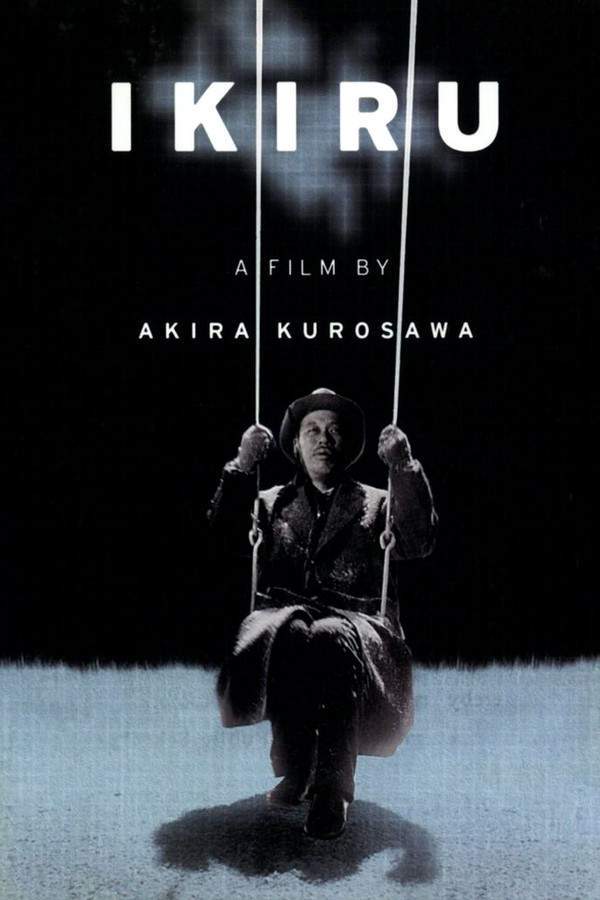
Five months post-diagnosis, Kanji passes away. His funeral witnesses a profound impact, as the Kuroe Women’s Association mournfully honors him. In a touching reminiscence, a police officer recounts how he saw Kanji joyously swinging in the new park he fought to establish—the very place where children now revel in their newfound joy. With reflections of Kanji’s struggles against the bureaucratic odds, his colleagues eventually acknowledge his contributions. This shared commitment instigates a newfound resolve within them to champion those in need.
As a new group approaches Public Affairs, the fog of bureaucracy looms large, and when Sakai turns to the recently appointed Section Chief Ono for guidance, history threatens to repeat itself. Kimura, a fellow staff member, desperately urges Ono to remember Kanji’s legacy as he grapples with the tumult of paperwork. Standing on a bridge overlooking the Kuroe park, he ponders Kaiji’s determination and contemplates whether he will rise above the overwhelming pressures of bureaucracy to genuinely assist those whose voices are often unheard.
Last Updated: November 04, 2024 at 01:18
Discover curated groups of movies connected by mood, themes, and story style. Browse collections built around emotion, atmosphere, and narrative focus to easily find films that match what you feel like watching right now.
Characters confronting death seek purpose in their remaining time.Discover films similar to Ikiru where characters facing mortality embark on existential quests. If you liked the poignant search for purpose in Ikiru, you'll find other moving dramas about legacy, redemption, and the meaning of life in the face of terminal illness.
Stories in this thread typically begin with a catalyst—often a terminal diagnosis—that forces the protagonist to reevaluate their life. The narrative follows their journey from despair to action, as they overcome personal and bureaucratic obstacles to achieve a final, meaningful goal. The arc is one of spiritual awakening and quiet redemption.
These films are grouped by their shared focus on existential themes, a melancholic yet hopeful tone, and a narrative centered on a character's race against time to create something good. They deliver a heavy emotional weight through quiet reflection rather than high drama.
A single determined individual battles systemic inertia for a noble cause.Explore films similar to Ikiru that feature a lone protagonist challenging a bureaucratic system. If you enjoyed Watanabe's struggle to build the playground, you'll appreciate these stories about perseverance, community impact, and the triumph of humanity over red tape.
The narrative pattern involves a protagonist identifying a social or community problem that is being ignored by the authorities. The central conflict is their uphill battle against paperwork, apathy, and rigid procedures. The journey is less about explosive confrontations and more about dogged determination, culminating in a small but significant victory that affirms human spirit.
Movies in this thread share a specific conflict type: individual versus system. They possess a slow, deliberate pacing that allows the weight of bureaucratic obstacles to be felt, and a tone that blends frustration with gentle optimism. The emotional core is the protagonist's unwavering commitment.
Don't stop at just watching — explore Ikiru in full detail. From the complete plot summary and scene-by-scene timeline to character breakdowns, thematic analysis, and a deep dive into the ending — every page helps you truly understand what Ikiru is all about. Plus, discover what's next after the movie.
Track the full timeline of Ikiru with every major event arranged chronologically. Perfect for decoding non-linear storytelling, flashbacks, or parallel narratives with a clear scene-by-scene breakdown.
Discover the characters, locations, and core themes that shape Ikiru. Get insights into symbolic elements, setting significance, and deeper narrative meaning — ideal for thematic analysis and movie breakdowns.
Get a quick, spoiler-free overview of Ikiru that covers the main plot points and key details without revealing any major twists or spoilers. Perfect for those who want to know what to expect before diving in.
Visit What's After the Movie to explore more about Ikiru: box office results, cast and crew info, production details, post-credit scenes, and external links — all in one place for movie fans and researchers.
Discover movies like Ikiru that share similar genres, themes, and storytelling elements. Whether you’re drawn to the atmosphere, character arcs, or plot structure, these curated recommendations will help you explore more films you’ll love.
Ikiru (1956) Scene-by-Scene Movie Timeline
Ikiru (1956) Movie Characters, Themes & Settings
Ikiru (1956) Spoiler-Free Summary & Key Flow
Movies Like Ikiru – Similar Titles You’ll Enjoy
Harakiri (1964) Detailed Story Recap
The Twilight Samurai (2004) Full Movie Breakdown
Hara-Kiri: Death of a Samurai (2012) Plot Summary & Ending Explained
Departures (2009) Detailed Story Recap
Kikujirô no natsu (2000) Full Movie Breakdown
Cry (2019) Film Overview & Timeline
Kurosawa (2000) Story Summary & Characters
Jyukai: The Sea of Trees Behind Mt. Fuji (2005) Full Movie Breakdown
Akira and Akira (2022) Detailed Story Recap
Kodokushi (2020) Full Summary & Key Details
Tokyo Story (1953) Plot Summary & Ending Explained
Madadayo (1993) Story Summary & Characters
The Last Dance (1993) Story Summary & Characters
Dying at a Hospital (1993) Spoiler-Packed Plot Recap
Ikigami: The Ultimate Limit (2008) Story Summary & Characters