Plot Explained Spoilers guaranteed!
Plot Explained

Browse by genre

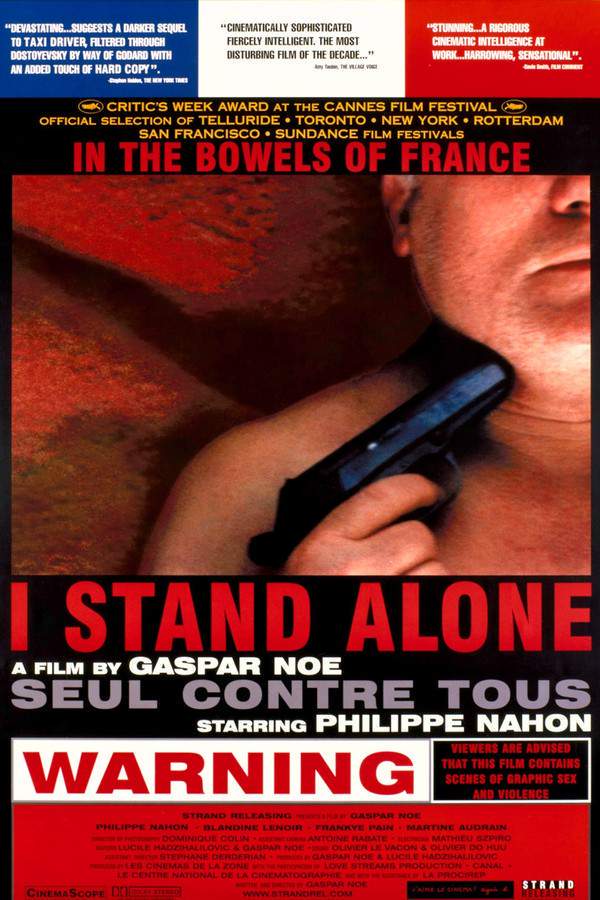
I Stand Alone (1998) movie poster

Plot Summary

I Stand Alone (1998) Plot Summary Explained

Release, runtime and language
1998 · 93 min · French
Directed by
Gaspar Noé
Starring
Aïssa Djabri, Blandine Lenoir, Frankie Pain, Jean-François Rauger, Martine Audrain, Olivier Doran

A man recently released from prison seeks revenge on the man who assaulted his autistic daughter. Destitute and jobless, he finds himself on the streets with nothing but a pistol and three bullets. Driven by hate and a thirst for retribution, he becomes a dangerous force, embarking on a path fueled by vengeance.

On this page (5)
  1. 1 What happens: full plot
  2. 2 Plot questions answered
  3. 3 Movie threads
  4. 4 Movies like I Stand Alone
  5. 5 Every angle

Full plot summary · contains spoilers

What Happens in I Stand Alone: Full Plot Summary

The whole story of I Stand Alone (1998) explained, from the opening scene to the final frame: every key event, every twist and what it all adds up to. Read it as a quick recap before the sequel, to check a scene you missed, or to finally understand what really happened.

The film opens with a heart-wrenching portrayal of memories, constructed from still images accompanied by the somber narration of a character known simply as The Butcher. Orphaned at a young age, he endures horrific trauma, becoming a victim of sexual abuse at the hands of a priest. As he moves into his teenage years, opportunities to pursue his ambitions slip away, leading him down the dark path of butchering horse meat—an unseemly profession in France during that time.

After years of relentless toil, The Butcher achieves his dream of owning his own shop, coinciding with the birth of his daughter. However, his happiness is short-lived as his girlfriend departs upon realizing their child is a girl. Left alone in a situation rife with challenges, The Butcher resolves to raise his daughter by himself. His feelings of isolation soon spiral into an overwhelming and disturbing possessiveness, pushing him towards unthinkable inclinations regarding his own child.

A moment of tragedy strikes when a crimson stain on his daughter's skirt leads him to a catastrophic error: believing she has been harmed, he acts violently, only to discover later that the blood was simply menstrual. This grave misunderstanding leads to his imprisonment, during which he has to surrender his butcher shop to a Muslim butcher, while his daughter is sent to an institution for her protection.

While incarcerated, The Butcher confronts his past and forms an unexpected connection with a prison cellmate. Once freed, he looks to rebuild his life, taking a job as a bartender at a tavern where he once spent his time. There, he becomes involved with the tavern's owner, and as their relationship grows, they anticipate a future together, especially after she becomes pregnant. Yet, just as he begins to envision a bright future, she sells her business and relocates north, where she intends to help him set up another butcher shop.

When this new partner fails to uphold their plans, The Butcher finds himself working nights in a nursing home, where he meets a compassionate young nurse who starkly contrasts the harshness of his previous mistress. After the death of an elderly resident prompts reflection on his loveless past, The Butcher's frustrations erupt when he is falsely accused of infidelity, leading to an act of violence that could have dire consequences.

Feeling cornered and humiliated, he decides to return to Paris, reclaiming his old living quarters—the same place where he conceived his daughter. Eager to resume his butcher career, he is met with resistance as changing consumer preferences render his expertise nearly obsolete. As he faces repeated job rejections, The Butcher finds himself adrift, fueled by anger and desperation. A visit to a former business connection emphasizes how far he has fallen, leading him to contemplate drastic measures against those he blames for his misfortunes. With only three bullets left in his gun, he prepares to confront the figures representing his shame and despair, setting the stage for a harrowing conclusion.
Last updated: November 18, 2024 at 21:24

Was this helpful?

Plot questions answered

I Stand Alone Plot Explained: Your Questions Answered

The questions people ask most about I Stand Alone (1998): what happens in the confusing scenes, why the characters do what they do, the twists, hidden details and what the ending means. Each answer contains spoilers.

Q1

Why does The Butcher's girlfriend leave him after their daughter is born?

The Butcher's girlfriend leaves because she discovers the baby is a girl. This reveals her deep-seated gender preference, she wanted a son, not a daughter. Her departure forces The Butcher to raise his child alone, already in a precarious financial and social situation as a horse meat butcher, a profession that carries significant stigma in French society.

  • girlfriend leaves
  • daughter born
  • gender preference
  • abandonment
Q2

Why does The Butcher become so possessive of his daughter?

The Butcher's possessiveness stems from multiple factors: his own traumatic childhood as an orphan who suffered sexual abuse, his girlfriend's abandonment leaving him entirely alone with the child, and his inability to form healthy relationships. These accumulated traumas manifest as an unhealthy, twisted attachment to his daughter, blurrying the boundaries of protective fatherhood into something darker and more disturbing.

Foreshadowing: Earlier scenes of his childhood trauma and isolation establish his inability to process emotions healthily.

  • possessiveness
  • daughter
  • trauma
  • isolation
  • fatherhood
Q3

What really happened with the bloodstain on his daughter's skirt?

The bloodstain on his daughter's skirt was simply menstrual blood, the natural onset of her first period. The Butcher, seeing the blood and knowing his daughter had been assaulted previously, panicked and believed she had been harmed again. This tragic misunderstanding, combined with his unstable mental state and history of trauma, led him to commit a violent act against her, resulting in his imprisonment.

Foreshadowing: The film establishes early that his daughter was previously assaulted, making The Butcher hypervigilant to any sign of harm.

  • bloodstain
  • menstrual
  • misunderstanding
  • violence
  • daughter
Q4

Why does the tavern owner abandon their plans to open a new butcher shop together?

The tavern owner sells her business and moves north with the intention of helping The Butcher set up a new butcher shop. However, she ultimately fails to uphold this plan, leaving him alone once again. This betrayal shatters his hope for redemption and a fresh start, adding to his mounting despair and sense that every attempt at rebuilding his life ends in failure.

  • tavern owner
  • betrayal
  • butcher shop
  • moving away
  • disappointment
Q5

What leads to the conflict at the nursing home that causes The Butcher to become violent again?

While working nights at a nursing home, The Butcher meets a compassionate young nurse who contrasts sharply with his past relationships. After the death of an elderly resident, he is falsely accused of infidelity, likely by someone who misunderstood his interactions with the nurse or deliberately misinterpreted them. Feeling cornered and humiliated, his frustrations erupt into another violent outburst that threatens serious consequences.

  • nursing home
  • false accusation
  • infidelity
  • violence
  • nurse
Q6

Why is The Butcher unable to find work as a butcher when he returns to Paris?

When The Butcher returns to Paris hoping to resume his butcher career, he faces rejection because consumer preferences have changed. His expertise in horse meat butchering, already a stigmatized profession, has become obsolete as the market shifted away from this type of meat. Each rejection deepens his despair and reinforces his feeling that society has moved on without him.

  • rejected
  • butcher job
  • Paris
  • consumer preferences
  • horse meat
Q7

Who is The Butcher planning to confront with his three bullets at the end?

With only three bullets remaining, The Butcher prepares to confront the figures who represent his shame and despair, likely the man who assaulted his daughter, the business connection who let him down, and perhaps himself. The film suggests he is targeting those he blames for his misfortunes, though the exact identities remain ambiguous. This final confrontation represents the culmination of his path of vengeance and self-destruction.

Foreshadowing: Earlier scenes establish his desire for revenge against the man who assaulted his daughter, and his visit to the former business connection shows his mounting rage.

  • three bullets
  • confrontation
  • revenge
  • target
  • final confrontation
Q8

What is the significance of The Butcher's relationship with his prison cellmate?

While incarcerated, The Butcher confronts his past trauma and forms an unexpected bond with his cellmate. This relationship represents the first genuine human connection he's experienced, playing a critical role in his psychological reflection and eventual rehabilitation. The cellmate serves as a mirror, allowing The Butcher to process his childhood abuse and understand the roots of his darkness.

  • prison
  • cellmate
  • connection
  • rehabilitation
  • reflection
Q9

Why does The Butcher lose his butcher shop to a Muslim butcher while he's in prison?

When The Butcher goes to prison for his violent act against his daughter, he is forced to surrender his butcher shop. A Muslim butcher takes over the business, which adds another layer of irony and social commentary to the film. This loss represents another blow to The Butcher's identity, he loses not just his livelihood but the one dream he managed to achieve despite his difficult life.

  • muslim butcher
  • shop lost
  • prison
  • livelihood
Q10

What happens to The Butcher's daughter after his imprisonment?

After The Butcher is imprisoned for the violent act against his daughter, she is sent to an institution for her protection. This separation reflects the severity of his actions and the need to shield her from a dangerous situation. The film implies she has special needs (the summary mentions she's autistic), making her placement in an institution both a tragic necessity and a commentary on how society handles vulnerable individuals.

  • daughter
  • institution
  • protection
  • autism
  • separation

Movie threads

More Movies Like I Stand Alone, by Mood & Story

Curated lists built around what makes I Stand Alone tick: the same mood, the same kind of story or the same emotional payoff. Each list explains why these movies belong together.

Movies about bleak vengeance spirals like I Stand Alone

Stories where a quest for revenge consumes a character's soul, leading to ruin. If the grim, single-minded pursuit of revenge in I Stand Alone resonated with you, explore these similar films. These movies feature characters whose lives are consumed by a thirst for payback, often leading to severe moral compromises, intense violence, and tragic, hopeless conclusions. They are dark character studies of obsession and societal alienation.

  • vengeful
  • angry
  • desperate
  • violent
  • oppressive
  • unsettling
  • Tone: bleak, violent, hateful
  • Pacing: steady, relentless
Why these movies?

The story pattern: Narratives in this thread follow a linear, downward trajectory. A catalyst—often a personal tragedy or profound injustice—triggers a protagonist's vengeful mission. The plot steadily escalates in intensity as the character sheds their humanity, isolating themselves and embracing violence, culminating in a final confrontation that offers no catharsis, only further loss or a bleak reaffirmation of their despair.

Why they belong together: Movies are grouped here based on their shared focus on vengeance as a corrupting, self-destructive force rather than a righteous path. They possess a consistently high intensity and bleak tone, featuring morally compromised protagonists on a steady, irreversible journey toward a nihilistic endpoint. The emotional weight is consistently heavy, dominated by themes of anger, trauma, and alienation.

Movies with grim social realism like I Stand Alone

Raw portraits of individuals crushed by poverty, trauma, and a hostile society. For viewers drawn to the stark portrayal of poverty, alienation, and existential despair in I Stand Alone. This section features films that share a commitment to grim social realism, depicting the harsh lives of marginalized individuals. These are heavy, often disturbing dramas about unemployment, trauma, and the psychological impact of being an outcast.

  • depressing
  • oppressive
  • lonely
  • desperate
  • anxious
  • unsettling
  • Tone: bleak, depressing, oppressive
  • Pacing: steady, character-driven
Why these movies?

The story pattern: The narrative pattern is one of gradual or rapid decline. A character, already vulnerable due to their socioeconomic status or past trauma, faces a series of setbacks that push them further into desperation. There is little narrative relief; each event reinforces their isolation and powerlessness. The story structure often feels like a case study in human suffering, prioritizing emotional authenticity over plot-driven excitement.

Why they belong together: These films are united by their bleak, realistic tone and their focus on themes of social alienation, economic hardship, and existential crisis. They share a steady, deliberate pacing that allows the weight of the circumstances to fully sink in. The experience is characterized by a high emotional weight, with overwhelming feelings of sadness and tension, and minimal to no humor.

If you liked this

Movies Like I Stand Alone

Similar movies to I Stand Alone: the same genre, themes or kind of story. Each one comes with its own plot summary, timeline and ending explained.

Browse all movie summaries

Every angle

I Stand Alone (1998) Explained: Plot, Timeline & Characters

Everything about I Stand Alone in one place: what happens in the plot summary, the timeline in chronological order, the characters and meaning and a spoiler-free summary. What's After the Movie adds the cast, box office and post-credit scenes.

Coming soon on iOS and Android

The Plot Explained Movie Summary App

Plot summaries, endings explained and timelines on your phone. Catch up on any movie in minutes, save your favorites and never miss a twist again.

Be the first to know when we launch. Your email stays private, always.

Learn more about the app