Plot Explained Spoilers guaranteed!
Plot Explained

Browse by genre

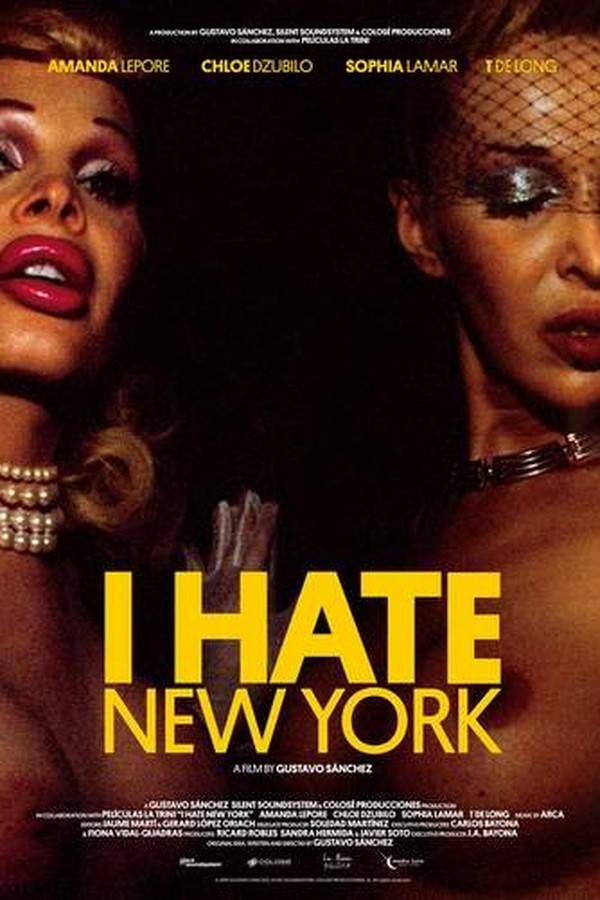
I Hate New York (2020) movie poster

Plot Summary

I Hate New York (2020) Plot Summary Explained

Release, runtime and language
2020 · 75 min · English
Loading streaming availability…
Directed by
Gustavo Sánchez
Starring
Amanda Lepore, Bibbe Hansen, Chloe Dzubilo, Io Tillett Wright, Katrina Del Mar, Sophia Lamar

Four transgender activists navigate the complexities of New York City, facing societal pressures as they fight for self-expression and acceptance. The film explores their individual journeys and the challenges they encounter while striving to create a space for themselves within a vibrant, but often unforgiving, urban environment.

On this page (6)
  1. 1 Where to watch
  2. 2 What happens: full plot
  3. 3 Plot questions answered
  4. 4 Movie threads
  5. 5 Movies like I Hate New York
  6. 6 Every angle
Loading streaming availability…

Full plot summary · contains spoilers

What Happens in I Hate New York: Full Plot Summary

The whole story of I Hate New York (2020) explained, from the opening scene to the final frame: every key event, every twist and what it all adds up to. Read it as a quick recap before the sequel, to check a scene you missed, or to finally understand what really happened.

In I Hate New York, set against the vibrant backdrop of New York City from 2007 to 2017, director Gustavo Sánchez takes us on a heartfelt journey through the lives of four remarkable transgender artists: Amanda Lepore, Chloe Dzubilo, Sophia Lamar, and T De Long. With nothing but a home video camera and no scripted dialogue, Sánchez captures the raw and unfiltered essence of their experiences, allowing their personal narratives to unfold in compelling detail.

As their stories intertwine, fragments of their past come to light, revealing the often dramatic yet always captivating journey that shaped their identities and transformed their lives. Viewers are drawn into a rich tapestry of emotions—fears, hopes, and the relentless pursuit of freedom. This film goes beyond mere observation; it engages the audience in a powerful dialogue about survival and the bonds forged within the transgender community.

Particularly poignant is the story of Chloe Dzubilo, a trans artist and HIV activist who has been a crucial voice for the transgender community and those affected by AIDS since the '90s, showcasing her vital role during a significant epoch in history. Over the span of a decade, Sánchez artfully navigates the evolution of Manhattan's East Side, shedding light on a vibrant art and club scene that flourished in the late '80s and early '90s but began to dissipate post-9/11. This was a time when the energies of punk, disco, rap, and new wave converged, with trans artists using art and music as platforms for activism.

Throughout this evocative exploration, the film's camera becomes a companion in motion, capturing intimate moments as it travels through the alleys, taxis, and nightlife of the city. It invites us into the hidden corners of underground dives, sleazy motels, and dimly lit dressing rooms, where looks, gestures, and confessions are portrayed with unparalleled honesty and depth.

The narrative is further enhanced by a meticulously curated soundtrack featuring acclaimed contemporary artist ARCA, Academy Award®-winning composer Ryuichi Sakamoto, the innovative soundscapes of Alva Noto, and the iconic drag artistry of Sharon Needles, alongside the punk-rock rhythms of the Transisters, weaving an audibly rich experience that complements the unconventional storytelling.

Through this brave film, we are not merely spectators but confidants to these extraordinary lives and their enduring fight for recognition and acceptance, turning the lens of insight on their unforgettable experiences in New York's ever-evolving landscape.
Last updated: October 25, 2024 at 11:02

Was this helpful?

Plot questions answered

I Hate New York Plot Explained: Your Questions Answered

The questions people ask most about I Hate New York (2020): what happens in the confusing scenes, why the characters do what they do, the twists, hidden details and what the ending means. Each answer contains spoilers.

Q1

Why is the documentary called 'I Hate New York' when it celebrates the city?

The title reflects the complex, bittersweet relationship the artists have with New York City. While the city provided a vital space for artistic expression and community, it also represents the struggles of gentrification, the loss of the vibrant East Side art scene post-9/11, and the everyday challenges faced by transgender individuals. The title captures both love and frustration with a city that can be unforgiving yet essential to their identity.

Foreshadowing: Early scenes show the artists navigating both the beauty and hardship of NYC, setting up this conflicted relationship.

  • title meaning
  • i hate new york
  • new york city
  • transgender artists
  • documentary title
Q3

What happened to Chloe Dzubilo after the documentary?

Chloe Dzubilo passed away in 2016 from breast cancer. She was a pioneering trans artist and HIV activist who had been a vital voice for the transgender community and those affected by AIDS since the 1990s. Her story in the documentary highlights her enduring legacy within the community during a significant historical period.

Foreshadowing: The timeline mentions her activism in the 1990s and her crucial role in the community, showing her importance before her passing.

  • chloe dzubilo
  • death
  • passing
  • HIV activist
  • transgender community
Q4

Why does the documentary use a home video camera instead of professional filmmaking?

Director Gustavo Sánchez intentionally used a home video camera to capture raw, unfiltered moments without scripted dialogue. This approach emphasizes authenticity and creates an intimate, personal connection with the artists, allowing their genuine experiences and emotions to unfold naturally rather than through traditional documentary formatting.

Foreshadowing: The timeline notes this as 'Camerawork and Perspective' emphasizing authenticity.

  • documentary style
  • home video camera
  • gustavo sanchez
  • filmmaking approach
  • authentic
Q5

What happened to Manhattan's East Side art scene after 9/11?

The documentary shows how the vibrant art and club scene that flourished in the late 1980s and early 1990s on Manhattan's East Side began to dissipate after 9/11. This was a cultural space where punk, disco, rap, and new wave converged, with trans artists using art and music as platforms for activism. The film contrasts the vibrancy of the past with the challenges faced in post-9/11 New York.

Foreshadowing: The timeline includes 'Art and Activism' from late 80s/early 90s and 'The Art Scene Evolution' in the 2000s, showing the transition.

  • east side art scene
  • manhattan
  • 9/11
  • club scene
  • art community
  • new york city
Q6

How does the film connect HIV/AIDS activism with the transgender community?

Through Chloe Dzubilo's story, the documentary highlights how transgender individuals, particularly trans women of color, have been disproportionately affected by HIV/AIDS since the 1990s. Chloe was a crucial voice for both the transgender community and those affected by AIDS, using her art and activism to raise awareness during a critical period in the epidemic.

Foreshadowing: The timeline mentions 'Chloe's Activism' in the 1990s as a pivotal story element.

  • HIV
  • AIDS
  • activism
  • transgender community
  • chloe dzubilo
  • health crisis
Q7

What role does the soundtrack play in the documentary?

The carefully curated soundtrack features ARCA, Academy Award-winning composer Ryuichi Sakamoto, Alva Noto, Sharon Needles, and the Transisters. This musical backdrop enhances the storytelling by underscoring emotions and themes, creating an audibly rich experience that complements the unconventional documentary style and reflects the artists' connection to music and performance.

  • soundtrack
  • ARCA
  • ryuichi sakamoto
  • alva noto
  • sharon needles
  • music
  • transisters
Q8

What underground spaces in New York does the documentary explore?

The film takes viewers through hidden corners of New York City's nightlife, including underground dives, sleazy motels, and dimly lit dressing rooms. These spaces are portrayed with honesty and depth, representing places where the boundaries of gender and identity blur and where the transgender community found connection and expression.

  • underground spaces
  • new york nightlife
  • dives
  • motels
  • clubs
  • transgender spaces
Q9

How do the transgender artists find community and support in the film?

The documentary emphasizes the powerful bonds forged within the transgender community as essential for survival and resilience. These connections provide mutual support, solidarity, and shared resources amid individual struggles with discrimination, poverty, and health challenges. The artists' relationships with each other become a central theme of hope and determination.

Foreshadowing: The timeline includes 'Community and Connection' as a key element.

  • community
  • transgender community
  • support
  • solidarity
  • bonds
  • survival
Q10

What challenges do transgender individuals face in New York City according to the documentary?

The film depicts the daily realities of survival as transgender individuals in a rapidly changing urban environment, including societal pressures, discrimination, economic hardship, and health disparities. The artists confront these obstacles while striving to create space for self-expression and acceptance in a city that can be both vibrant and unforgiving.

Foreshadowing: The description mentions 'facing societal pressures as they fight for self-expression and acceptance.'

  • transgender challenges
  • discrimination
  • societal pressures
  • new york city
  • survival
  • self-expression

Movie threads

More Movies Like I Hate New York, by Mood & Story

Curated lists built around what makes I Hate New York tick: the same mood, the same kind of story or the same emotional payoff. Each list explains why these movies belong together.

Documentaries about Urban Life and Community like I Hate New York

Raw and heartfelt documentaries about finding community in challenging cities. Find more movies like I Hate New York that capture the raw, intimate stories of marginalized communities in urban environments. If you liked the focus on artistic expression and survival in New York, you'll appreciate these similar documentaries about city life and community bonds.

  • raw
  • intimate
  • gritty
  • heartfelt
  • nostalgic
  • unflinching
  • Tone: melancholic, heartfelt, unflinching
  • Pacing: steady, observational
Why these movies?

The story pattern: The narrative pattern in these films is character-driven and observational, often following individuals over an extended period as they confront systemic challenges and seek personal and collective identity. The structure is typically straightforward, prioritizing emotional honesty and the documentation of real-life struggles and small victories.

Why they belong together: These movies are grouped together for their shared commitment to intimate, grounded storytelling about real people in urban settings. They share a melancholic yet heartfelt tone, a steady pacing that allows for deep reflection, and a heavy emotional weight derived from their authentic subject matter.

Movies about Resilience and Artistic Identity like I Hate New York

Stories about artists and activists persevering through hardship with hope. Explore films similar to I Hate New York that follow the bittersweet journeys of artists and activists. If you were moved by the themes of resilience, self-expression, and the fight for acceptance against adversity, these movies share a powerful and emotionally heavy narrative pattern.

  • bittersweet
  • resilient
  • heartfelt
  • emotional
  • unflinching
  • hopeful
  • Tone: bittersweet, melancholic, heartfelt
  • Pacing: steady, character-driven
Why these movies?

The story pattern: Stories in this thread typically follow a linear arc where characters use their art or activism as a means to cope with and combat personal and societal challenges. The journey is often difficult, marked by loss and sacrifice, leading to a conclusion that is not purely happy or sad, but bittersweet—acknowledging the pain endured while celebrating the strength and legacy of the fight.

Why they belong together: These films are united by their focus on the bittersweet emotional arc of resilience. They balance heavy themes like loss and oppression with a core of hope and defiance. The shared experience is one of emotional depth, a steady or reflective pace, and a final feeling that honors the struggle without simplifying the outcome.

If you liked this

Movies Like I Hate New York

Similar movies to I Hate New York: the same genre, themes or kind of story. Each one comes with its own plot summary, timeline and ending explained.

Browse all movie summaries

Every angle

I Hate New York (2020) Explained: Plot, Timeline & Characters

Everything about I Hate New York in one place: what happens in the plot summary, the timeline in chronological order, the characters and meaning and a spoiler-free summary. What's After the Movie adds the cast, box office and post-credit scenes.

Coming soon on iOS and Android

The Plot Explained Movie Summary App

Plot summaries, endings explained and timelines on your phone. Catch up on any movie in minutes, save your favorites and never miss a twist again.

Be the first to know when we launch. Your email stays private, always.

Learn more about the app