










Plot Explained Spoilers guaranteed!
Plot Explained

Browse by genre

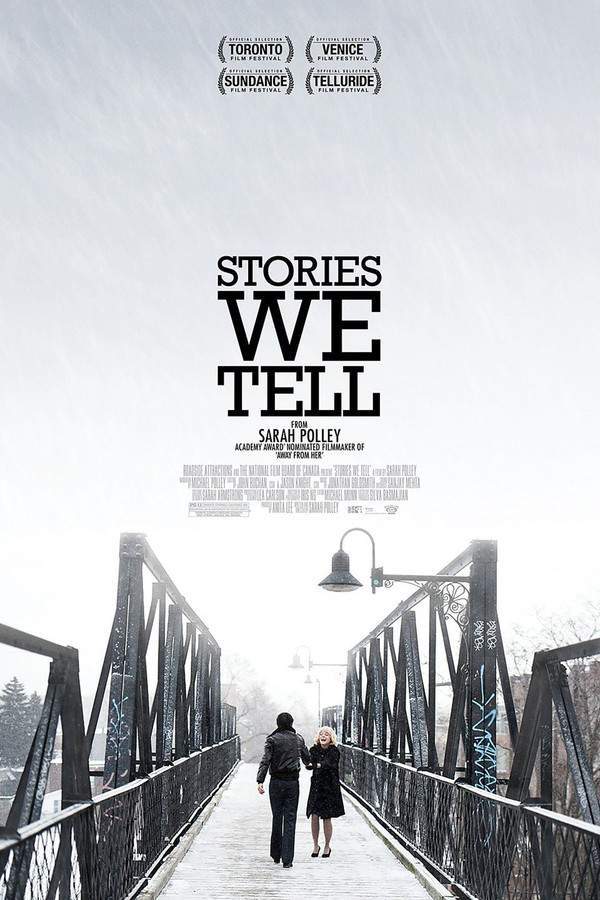
Stories We Tell (2013) movie poster

Plot Summary

Stories We Tell (2013) Plot Summary Explained

Release, runtime and language
2013 · 108 min · English
JustWatch #3,755 22
Starring
Harry Gulkin, John Buchan, Susy Buchan

Filmmaker Sarah Polley explores her family's past, uncovering long-held secrets and challenging her understanding of love, memory, and identity. Through interviews with relatives and archival footage, she pieces together a complex narrative that reveals surprising truths and redefines her perception of her own history. The film is a deeply personal and moving exploration of family dynamics and the power of storytelling.

On this page (6)
  1. 1 Where to watch
  2. 2 What happens: full plot
  3. 3 Plot questions answered
  4. 4 Movie threads
  5. 5 Movies like Stories We Tell
  6. 6 Every angle

Where to watch

Where to Watch Stories We Tell (2013)

Where can you watch Stories We Tell? Stream, rent or buy it in the US, including on Hoopla, Kanopy and Tubi TV: current JustWatch availability with up-to-date prices.

Streaming availability powered by JustWatch

Full plot summary · contains spoilers

What Happens in Stories We Tell: Full Plot Summary

The whole story of Stories We Tell (2013) explained, from the opening scene to the final frame: every key event, every twist and what it all adds up to. Read it as a quick recap before the sequel, to check a scene you missed, or to finally understand what really happened.

The film delves into the intricate relationship between Polley’s parents, Michael and Diane Polley, shedding light on the dramatic revelation that the filmmaker herself is the product of an extramarital affair involving her mother and Montreal producer Harry Gulkin. This poignant documentary weaves together interviews with Polley’s siblings from her mother’s two marriages and conversations with various relatives and family friends. It also features Michael Polley’s narration of his memoir, complemented by stunning Super-8 footage that is crafted to emulate genuine home movies chronicling significant moments in Polley’s family life.

The faux home video sequences feel remarkably authentic, attributed to the thoughtful casting choices, with Rebecca Jenkins portraying Diane, who unfortunately passed away due to cancer on January 10, 1990, just a week before Polley’s 11th birthday. Distinctively, Polley devoted five years to the completion of this documentary, often taking breaks to reflect and regroup her thoughts during the process.

In a revealing blog post on the NFB.ca website, Polley shares that multiple journalists, including Brian D. Johnson and Matthew Hays, had been aware of the narrative surrounding her biological father for an extended period. However, they graciously respected Polley’s desire to maintain the privacy of this matter until she felt prepared to share her story authentically in her own voice.

Last updated: November 08, 2024 at 02:24

Was this helpful?

Plot questions answered

Stories We Tell Plot Explained: Your Questions Answered

The questions people ask most about Stories We Tell (2013): what happens in the confusing scenes, why the characters do what they do, the twists, hidden details and what the ending means. Each answer contains spoilers.

Q1

Who is Sarah Polley's biological father?

Sarah Polley's biological father is Montreal producer Harry Gulkin, not Michael Polley who raised her. The documentary reveals that Sarah was conceived during an extramarital affair between her mother Diane Polley and Gulkin. This revelation is the central secret that Sarah uncovers while investigating her family's history.

Foreshadowing: The film hints at this truth early through subtle comments from family members about Sarah's physical resemblance to someone else.

  • harry gulkin
  • biological father
  • paternity
  • affair
  • sarah polley family
Q2

Why does Sarah Polley investigate her family's past?

Sarah Polley investigates her family's past to understand her own identity and reconcile with her family history. After her mother Diane died when Sarah was just 11 years old, she felt there were unresolved questions about her family background that needed answers. The documentary represents her five-year journey to piece together the truth about her origins.

Foreshadowing: The film opens by introducing the complexity of her parents' relationship, setting up the deeper investigation to come.

  • identity
  • family secrets
  • investigation
  • personal history
  • motivation
Q3

When and how did Diane Polley die?

Diane Polley died from cancer on January 10, 1990, just one week before Sarah Polley's 11th birthday. Her death profoundly impacted the family and left Sarah with unresolved questions about her identity and family history. The timing of her death, so close to Sarah's birthday, adds emotional weight to the documentary's exploration of loss and memory.

Foreshadowing: Earlier scenes establish Diane as a vibrant presence in the family, making her illness and eventual death feel like a sudden, devastating turn.

  • diane polley death
  • cancer
  • family loss
  • sarah polley birthday
  • 1990
Q4

Why were journalists aware of Sarah Polley's biological father but didn't publish the story?

Journalists including Brian D. Johnson and Matthew Hays had known about Sarah's biological father for years but respected her privacy. They waited for Sarah to feel ready to share her story in her own voice rather than having it exposed publicly without her consent. Sarah ultimately chose to reveal the truth herself through her documentary.

Foreshadowing: This detail underscores the theme of control over one's own narrative, which becomes central to the film's message about storytelling.

  • journalists
  • privacy
  • brian d johnson
  • matthew hays
  • nfb
Q5

What is the purpose of the Super-8 footage in the documentary?

The Super-8 footage in the documentary is actually faux home videos created specifically for the film, not authentic family recordings. Director Sarah Polley cast actors to portray family members in these staged scenes to emulate genuine home movies. This creative choice adds a nostalgic quality while also raising questions about memory, authenticity, and the construction of family narratives.

Foreshadowing: The film presents these sequences with such authenticity that viewers initially believe they are real home movies, which ties into the documentary's themes about truth and storytelling.

  • super-8
  • home movies
  • faux footage
  • nostalgia
  • memory
  • reconstruction
Q6

How did Michael Polley react to learning about the affair?

Michael Polley, who raised Sarah as his own daughter, narrates portions of the documentary from his memoir. His narration provides insight into his perspective on the marriage, the affair, and the family dynamics. While the documentary doesn't reveal explicit details of his initial reaction, his involvement in the project suggests a willingness to confront the past and participate in Sarah's journey of discovery.

Foreshadowing: Michael's narration appears early in the film, establishing his voice as a key perspective on the family's history.

  • michael polley
  • reaction
  • affair
  • marriage
  • memoir
  • narration
Q7

How did Sarah Polley's siblings react to the truth about their father?

The documentary features interviews with Sarah's siblings from her mother's two marriages. Each sibling offers different perspectives on the family dynamics and the revelation about Harry Gulkin being Sarah's biological father. The interviews reveal the varying impacts this knowledge had on their understanding of family history and their relationships with both their mother and Sarah.

Foreshadowing: Early interviews establish the siblings' diverse viewpoints, hinting at the different ways the revelation would affect each of them.

  • siblings
  • reaction
  • family members
  • interviews
  • half-siblings
  • perspective
Q8

Why did Sarah Polley take five years to make this documentary?

Sarah Polley spent five years making the documentary because the emotional weight of uncovering her family's secrets required significant time for reflection and processing. She often took breaks during the five-year production to regroup her thoughts. The extended timeline allowed her to conduct thorough interviews, gather archival material, and ultimately come to terms with what she discovered before sharing it with the public.

Foreshadowing: The documentary's methodical pacing reflects the careful, considered approach Sarah took throughout her investigation.

  • five years
  • production
  • timeline
  • reflection
  • emotional journey
  • process
Q9

Why was the affair kept secret for so many years?

The affair between Diane Polley and Harry Gulkin remained hidden for decades due to the stigma of extramarital relationships and the desire to protect family relationships. Diane passed away in 1990, and the secret remained protected by family members and journalists who learned of it over the years. Sarah herself chose to keep the matter private until she felt prepared to confront it publicly through her documentary.

Foreshadowing: The film's exploration of secrecy and its consequences becomes evident early as Sarah describes her motivation for uncovering the truth.

  • secrecy
  • hidden
  • family secret
  • privacy
  • protection
  • stigma
Q10

Does Harry Gulkin appear in the documentary?

While Harry Gulkin is identified as Sarah Polley's biological father, the summary does not specify whether he appears in interviews or contributes directly to the documentary. The film focuses primarily on family members including Michael Polley, Diane Polley (portrayed by Rebecca Jenkins), siblings, and other relatives who share their perspectives on the family history.

Foreshadowing: The documentary's emphasis on family interviews suggests Gulkin's perspective may be indirectly addressed rather than directly featured.

  • harry gulkin
  • montreal producer
  • interview
  • contribution
  • perspective

Movie threads

More Movies Like Stories We Tell, by Mood & Story

Curated lists built around what makes Stories We Tell tick: the same mood, the same kind of story or the same emotional payoff. Each list explains why these movies belong together.

Movies about uncovering family secrets like Stories We Tell

Personal journeys of uncovering long-buried family secrets and redefining identity. If you were captivated by the investigative journey in Stories We Tell, you'll find similar themes in these films. This section features movies like Stories We Tell, where characters delve into personal histories, uncovering secrets that reshape their understanding of family and identity through documentary-style inquiry or narrative mystery.

  • investigative
  • revelatory
  • introspective
  • emotional
  • nostalgic
  • unsettling
  • Tone: melancholic, revelatory
  • Pacing: steady, methodical
Why these movies?

The story pattern: Narratives in this thread are structured as investigations, often non-linear, built from interviews, archival material, and personal testimony. The central conflict is the tension between remembered history and uncovered truth, leading to a climax of revelation that forces a reevaluation of the protagonist's entire world.

Why they belong together: These movies are grouped by their shared focus on a personal, emotional investigation. They blend documentary techniques or a journalistic approach with deeply human stories, creating a specific mood of introspective discovery where the past actively reshapes the present.

Movies about memory and subjective truth like Stories We Tell

Explorations of how personal stories and memories shape our fragile realities. For viewers who appreciated the layered storytelling of Stories We Tell, this section collects similar movies about memory and subjective truth. Discover films like Stories We Tell that explore how personal narratives are woven from fragile memories, creating ambiguous and emotionally heavy dramas about the stories we tell ourselves.

  • introspective
  • contemplative
  • complex
  • melancholic
  • ambiguous
  • thought-provoking
  • Tone: melancholic, ambiguous
  • Pacing: steady, contemplative
Why these movies?

The story pattern: The narrative pattern involves presenting a central event or history through multiple points of view, deliberately creating a fractured or layered story. The journey is less about finding one objective truth and more about understanding the power and fallibility of memory, often leading to an ambiguous or bittersweet conclusion.

Why they belong together: These films are connected by their philosophical inquiry into storytelling itself. They share a melancholic mood and a deliberate pacing that allows the audience to sit with the complexity of human recollection, making the act of remembering a central theme.

If you liked this

Movies Like Stories We Tell

Similar movies to Stories We Tell: the same genre, themes or kind of story. Each one comes with its own plot summary, timeline and ending explained.

Browse all movie summaries

Every angle

Stories We Tell (2013) Explained: Plot, Timeline & Characters

Everything about Stories We Tell in one place: what happens in the plot summary, the timeline in chronological order, the characters and meaning and a spoiler-free summary. What's After the Movie adds the cast, box office and post-credit scenes.

Coming soon on iOS and Android

The Plot Explained Movie Summary App

Plot summaries, endings explained and timelines on your phone. Catch up on any movie in minutes, save your favorites and never miss a twist again.

Be the first to know when we launch. Your email stays private, always.

Learn more about the app