Plot Explained Spoilers guaranteed!
Plot Explained

Browse by genre

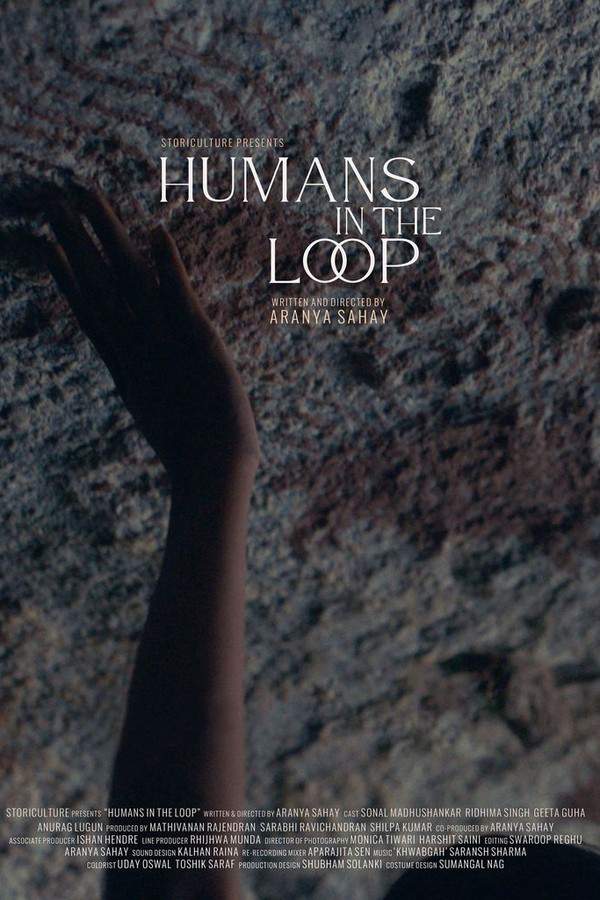
Humans in the Loop (2025) movie poster

Ending Explained

Humans in the Loop (2025) Ending Explained – Final Scene & Meaning

Release, runtime and language
2025 · 1 h 14 m · Hindi
Loading streaming availability…
Starring
Gita Guha, Monika, Prayrak Mehta, Ridhima Singh, Sonal Madhushankar, Anurag Lugun

A single mother from the Oraon tribe balances training AI systems and reconnecting with her roots, while her pre-teen son struggles to accept their new life away from the city.

On this page (7)
  1. 1 Where to watch
  2. 2 What happens at the end
  3. 3 Final events in order
  4. 4 Ending questions answered
  5. 5 Movie threads
  6. 6 Categories
  7. 7 Every angle
Loading streaming availability…

Ending explained · contains spoilers

What Happens at the End of Humans in the Loop?

How Humans in the Loop (2025) ends, what the final scene means, which earlier moments set it up and how to read the ending if the film leaves it open. The full ending explained, with every spoiler.

When Nehma returns home from the data‑labeling center she finds that both of her children have vanished. Panic drives her and Roshan into the forest, where, after a frantic search, they spot Dhaanu emerging onto the road with the baby Guntu. In the confrontation Dhaanu vents a mixture of anger, fear and yearning that Nehma cannot fully grasp, but the sight of her daughter alive, clutching the phone her father had given her, is enough to shatter the mother's despair.

Through the footage Dhaanu captured on her phone, Nehma discovers that her daughter has begun to notice the forest’s quiet wonders—birds tracing patterns in the sky, an ancient tree that seems to hold the memory of their ancestors, and even a trail of porcupine quills that lead them back to safety. The porcupine, an animal that once befriended Nehma as a child, reappears symbolically as a guardian in the woods, suggesting that the land remembers kindness and can guide the lost.

Seeing Dhaanu’s tentative connection to the environment, Nehma realizes that the world she has been trying to protect for her children is not a prison but a place where they can claim an identity that blends both tradition and the possibilities of technology. She apologises for not having understood her daughter’s needs, returns the phone, and allows Dhaanu to keep speaking with her father. When asked whether she will return to Ranchi, Dhaanu shakes her head—she is not ready to leave the forest that now feels like home.

The film closes with the two women standing together in the trees, the AI‑trained “digital child” humming in the background of Nehma’s work, and the porcupine’s silent presence in the underbrush. It suggests that a balance between the natural world and the machines we build is possible, but only if the voices of those who live in the margins are finally heard and respected.

Last updated: December 10, 2025 at 15:53

Was this helpful?

The last 4 events

How Humans in the Loop Ends: The Final Events in Order

The last events of Humans in the Loop (2025) in chronological order, the run-up to the ending explained above. The complete timeline has all 12 events, scene by scene.

Open the full timeline
  1. Cultural misalignment deepens the conflict

    A tension emerges between the ecological wisdom of the Oraon community and the rigid needs of AI categorization. The friction shows that supposed universal labels fail to accommodate local practices and environments. The conflict invites viewers to question what is lost when diversity is compressed into standardized classes.

    When
    ongoing
    Where
    lab and village ecosystems
  2. Family bonds under pressure

    Nehma and Dhaanu navigate the strain of their disrupted lives while trying to stay connected. The mother-daughter relationship reveals resilience, care, and moments of tenderness amid uncertainty. Their bond becomes a map for how communities endure technological and social change.

    When
    post-return period
    Where
    home in the village
  3. Invisible teachers and representation in AI

    The film argues that intelligence depends on teachers who are invisible, uncredited, or culturally misunderstood. When those teachers are overlooked, the knowledge they transmit tends to be missing or misused within AI systems. The narrative uses this premise to critique how representation shapes algorithmic outcomes.

    When
    present
    Where
    education, technology sectors, and community
  4. A call to integrate local contexts in AI ethics

    The conclusion invites viewers to recognize that AI ethics cannot be separated from local context, memory, and social structures. It urges a more inclusive approach that centers indigenous knowledge and lived experience in technology development. The film leaves viewers with a demand for accountability and representation in AI.

    When
    conclusion
    Where
    village and broader AI industry

Ending questions answered

Humans in the Loop Ending: Your Questions Answered

The questions people ask most about the ending of Humans in the Loop (2025): what the final scene means, how the twist works, what happens to each character and how to read the ending. Each answer contains spoilers.

Q1

Why does Dhaanu take the baby into the forest?

Dhaanu takes the baby into the forest because she feels suffocated in their new environment and longs for a connection to her roots. She wants to show the baby the ancestral lands and introduce them to the natural world she is beginning to discover. Her actions stem from a mixture of anger at being uprooted from city life and a desperate attempt to claim an identity that feels authentic to her.

Foreshadowing: Earlier scenes establish Dhaanu's unhappiness with moving away from Ranchi and her struggle to adapt to the new surroundings.

  • dhaanu
  • baby
  • forest
  • run away
  • oraon tribe
Q2

What does the porcupine represent in the ending?

The porcupine serves as a symbolic guardian that connects Nehma's childhood to her daughter's present. It appears as a protective presence in the underbrush, representing the land's memory of kindness and its ability to guide the lost. The animal's reappearance suggests that ancestral wisdom and ecological connections can transcend generations, acting as a bridge between tradition and the children's emerging connection to their heritage.

Foreshadowing: The porcupine once befriended Nehma as a child, establishing its symbolic role as a protector of the family.

  • porcupine
  • symbolism
  • forest
  • guardian
  • nature
Q3

Why does Dhaanu decide to stay in the forest instead of returning to Ranchi?

Dhaanu decides to stay because she has finally found a sense of belonging in the forest. Through her explorations, she discovered beauty in the natural world, ancient trees, birds, and the quiet wonders of the land, that she never experienced in the city. When asked if she will return to Ranchi, she shakes her head, indicating she has claimed the forest as her home and is no longer willing to leave.

Foreshadowing: Her phone footage reveals she has been quietly observing and documenting the forest's wonders, showing her growing attachment.

  • dhaanu
  • ranchi
  • forest
  • stay
  • home
  • identity
Q4

What is the 'digital child' that hums in the background at the end?

The humming sound comes from the AI system Nehma trains at the data-labeling center, a system she refers to as a "digital child." Its presence in the closing scene symbolizes the possibility of coexistence between technological advancement and natural wisdom. The AI, trained by someone from the margins of society, represents how machines can be built with respect for human voices and natural systems.

Foreshadowing: Nehma's work throughout the film involves training AI systems through data labeling, establishing the 'digital child' as her professional creation.

  • digital child
  • ai
  • machine
  • hum
  • technology
Q5

Why is the phone important to Dhaanu at the ending?

The phone represents Dhaanu's connection to her father who lives in Ranchi, as well as her ability to bridge two worlds. Her father gave her the phone, and she has been using it to capture footage of the forest and to maintain communication with him. Nehma returns the phone and allows Dhaanu to keep speaking with her father, symbolizing a shift from control to trust and an acceptance of Dhaanu's need to maintain connections to both her heritage and her family.

Foreshadowing: The phone was introduced earlier as a gift from Dhaanu's father, making it a symbol of her link to her paternal roots.

  • phone
  • father
  • dhaanu
  • connection
  • communication
Q6

What does Nehma's apology to Dhaanu signify?

Nehma's apology represents her realization that she failed to understand her daughter's unique needs and perspective. She acknowledges that she viewed the forest as a place to protect her children from, rather than a place where they could develop their own identity. This moment marks Nehma's growth from a protective mother to one who respects her children's agency and cultural connection.

Foreshadowing: Throughout the film, Nehma struggles to balance providing for her family with maintaining their connection to their tribal roots.

  • nehma
  • apology
  • dhaanu
  • understanding
  • mother daughter
Q7

What is the film's message about nature and technology at the ending?

The ending suggests that a balance between the natural world and the machines humans build is possible, but only when the voices of marginalized communities are heard and respected. The closing image combines the forest, the porcupine, and the humming AI to show that technology trained with ecological wisdom and cultural sensitivity can coexist with nature rather than replacing it.

Foreshadowing: Nehma's work training AI systems while living close to the forest establishes this tension throughout the film.

  • nature
  • technology
  • balance
  • ai
  • tradition
  • modernity
Q8

What happens to Roshan at the end of the film?

Roshan accompanies Nehma in searching for the children in the forest, showing his commitment to the family. While the ending focuses primarily on Nehma and Dhaanu's reconciliation, Roshan's presence suggests he remains part of their household. The story does not explicitly detail his fate, but he appears in the final scene searching with them, indicating he continues to be part of their lives.

Foreshadowing: Roshan is introduced as part of the family's new life in the forest settlement.

  • roshan
  • family
  • ending
  • search
Q9

What does Dhaanu's phone footage reveal about her character development?

The footage reveals that Dhaanu has been quietly observing and appreciating the forest's beauty despite her initial resistance. She captured images of birds tracing patterns in the sky, an ancient tree that seems to hold ancestral memory, and a trail of porcupine quills that ultimately guided them back to safety. This shows her transformation from a reluctant settler to someone who has developed her own spiritual and emotional connection to the land.

Foreshadowing: Dhaanu's initial unhappiness masks her gradual discovery of the forest's beauty and her ability to find wonder there.

  • dhaanu
  • footage
  • forest
  • transformation
  • discovery
Q10

Is the ending of the film meant to be ambiguous?

The ending maintains a bittersweet tone that is hopeful but not entirely resolved. While Dhaanu clearly chooses to stay in the forest and Nehma accepts this, the film leaves certain questions open, their future stability, Roshan's role, and whether the family will truly prosper in this new identity. The ambiguous ending reflects the film's themes of ongoing adaptation and the complexity of balancing tradition with modernity.

Foreshadowing: The meta notes describe the ending as ambiguous, with the central conflict between ecological wisdom and rigid systems remaining open-ended.

  • ending
  • ambiguous
  • interpretation
  • resolution

Movie threads

More Movies Like Humans in the Loop, by Mood & Story

Curated lists built around what makes Humans in the Loop tick: the same mood, the same kind of story or the same emotional payoff. Each list explains why these movies belong together.

Movies about cultural reconnection like Humans in the Loop

Characters quietly reconcile their heritage with the demands of a modern world. This list features thoughtful dramas where characters grapple with their heritage in a modern context, much like Humans in the Loop. If you enjoyed the themes of cultural identity and quiet struggle, you'll find similar reflective and bittersweet stories here.

  • contemplative
  • melancholic
  • hopeful
  • cultural dissonance
  • quiet
  • reflective
  • Tone: bittersweet, melancholic, hopeful
  • Pacing: slow, contemplative
Why these movies?

The story pattern: These narratives typically center on a protagonist caught between two worlds—often a traditional, community-oriented past and a fragmented, individualistic present. The conflict is internal and emotional, driven by a search for belonging. The journey is less about dramatic external events and more about quiet moments of reflection, learning, and acceptance, often leading to an ambiguous but hopeful resolution.

Why they belong together: Movies in this thread share a focus on the personal and societal tensions of cultural identity. They are united by a bittersweet tone, a slow, character-driven pace, and a moderate emotional weight that explores themes of displacement, heritage, and the complex process of finding one's place.

Thoughtful tech ethics dramas similar to Humans in the Loop

Personal stories that explore the social and ethical impact of technology. For viewers who appreciated the exploration of AI's social impact in Humans in the Loop, this section collects movies with similar themes. These films use personal stories to ask big questions about technology, ethics, and inequality, often with a slow, reflective pace.

  • thought-provoking
  • sobering
  • contemplative
  • social commentary
  • ethical dilemma
  • quiet
  • Tone: thoughtful, bittersweet, sobering
  • Pacing: slow, steady
Why these movies?

The story pattern: Stories in this thread use a personal lens—often a family or an individual worker—to explore broader technological and ethical questions. The plot revolves around the tension between impersonal systems and human values, revealing the hidden labor and social costs behind technological progress. The narrative is driven by character dilemmas and moral questions rather than action, leading to ambiguous conclusions about our relationship with technology.

Why they belong together: These films are connected by their serious, grounded approach to technology themes, a medium intensity that builds from emotional and ethical tension, and a tendency toward slow, contemplative pacing. They share a common interest in the intersection of social issues like class and identity with technological advancement.

Categories

Movie Lists Featuring Humans in the Loop

Humans in the Loop appears in these hand-built movie categories. Each one groups movies by a specific mood, theme or story type, with their plot summaries and endings explained.

View all movie categories

Every angle

Humans in the Loop (2025) Explained: Plot, Ending, Timeline & Characters

Everything about Humans in the Loop in one place: what happens in the plot summary, the timeline in chronological order, the characters and meaning, the ending explained and a spoiler-free summary. What's After the Movie adds the cast, box office and post-credit scenes.

Coming soon on iOS and Android

The Plot Explained Movie Summary App

Plot summaries, endings explained and timelines on your phone. Catch up on any movie in minutes, save your favorites and never miss a twist again.

Be the first to know when we launch. Your email stays private, always.

Learn more about the app