Plot Explained Spoilers guaranteed!
Plot Explained

Browse by genre

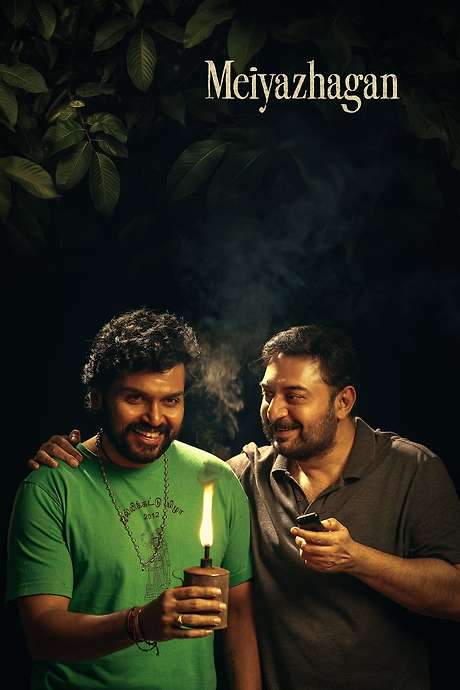
Meiyazhagan (2024) movie poster

Plot Summary

Meiyazhagan (2024) Plot Summary & Ending Explained

Release, runtime and language
2024 · 177 mins · Tamil
Echo score 88
Loading streaming availability…
Directed by
C. Prem Kumar
Starring
Karthi, Saran Shakthi, M. S. Bhaskar, Jayaprakash, Ilavarasu, Sri Divya

Twenty-two years after losing his home, Arulmozhi Varman returns to Thanjavur to celebrate his cousin’s wedding. During the festivities, he encounters a familiar but elusive man from his past. With this man’s assistance, Arul begins to piece together forgotten memories and confront the events that led to his displacement. The reunion sparks a journey of rediscovery and a quest to understand his lost heritage.

On this page (7)
  1. 1 Where to watch
  2. 2 What happens: full plot
  3. 3 Plot questions answered
  4. 4 How it ends
  5. 5 Movie threads
  6. 6 Movies like Meiyazhagan
  7. 7 Every angle
Loading streaming availability…

Full plot summary · contains spoilers

What Happens in Meiyazhagan: Full Plot Summary

The whole story of Meiyazhagan (2024) explained, from the opening scene to the final frame: every key event, every twist and what it all adds up to. Read it as a quick recap before the sequel, to check a scene you missed, or to finally understand what really happened.

In 1996, Karthi portrays Arulmozhi Varman, known as Arul, a man who, along with his family, leaves the town of Thanjavur after their ancestral home is divided among relatives. His family, including his father Jayaprakash as Arivudai Nambi, a dedicated school teacher, his mother Valliyammal "Valli" and his older brother, migrate to Madras with heavy hearts, carrying memories of their past life. Over twenty-two years, the story unfolds through Arul's journey back to his roots during a family wedding invitation from his younger cousin, Bhuvaneshwari "Bhuvana".

Arul’s plan is simple — attend the wedding reception in Needamangalam and leave promptly afterwards. He travels by train back to Thanjavur, where nostalgic feelings overwhelm him as he visits his ancestral house, prompting reflections on his childhood and the life he left behind. As he walks through familiar surroundings, memories flood his mind, stirring feelings of longing and loss. He shares these feelings with his wife, Sri Divya as he discusses his hope to buy back their family home in Chennai, hinting at unresolved emotional bonds tied to his past.

During his bus journey to the wedding venue, Arul meets an unassuming bus conductor called Jagadeesan "Jaggu", played by Karunakaran, who is a former student of Arul's father. Jaggu drops Arul near the railway gate of Needamangalam, from where the wedding hall is within walking distance. Inside the hall, Arul reunites with Sokku Mama (played by M. S. Bhaskar), who is visibly emotionally moved—his joy tinged with sadness because his parents have not come to the celebration. The wedding scenes reveal hints of personal struggles, as Arul listens to stories of marriage troubles from Latha, a relative, which deepen his understanding of the complexities in family relationships.

One of the pivotal elements of the story is Arul's encounter with a cheerful, unfamiliar relative who calls him "Athaan" (meaning "cousin" or "elder sister's husband") affectionately. Although initially annoyed by this persistent figure, Arul eventually engages with him, sharing a conversation over the phone with his wife. This relative, full of infectious enthusiasm, introduces himself and his family, including Nandhini, the relative’s pregnant wife. The relative also displays a deep affection for his Kangeyam bull named Dhoni, referring to him as his "son" in a touching display of love, which surprises Arul, revealing his own capacity for affection and attachment.

As the visit progresses, Arul discovers an old bicycle left behind in Thanjavur, which belonged to his family’s history—used by his father Santhanam to sell saris and cherished as a household symbol of perseverance. Seeing it well-maintained sparks a wave of nostalgia and emotional warmth. They walk together to the nearby Vennaaru dam, where Nandhini’s husband shares his joy about expecting their first child, whom they plan to name after Arul himself—adding a layer of emotional connection and a sense of continuity for Arul.

The following morning, Arul is approached by Nandhini’s husband, who asks for forgiveness for the wrongful grabbing of their ancestral property and urges Arul to recognize him by his real name. Although overwhelmed with remorse and affection for this selfless relative, Arul slips away before dawn, feeling conflicted yet deeply moved. His journey takes him back to Kovilvenni for a quiet moment of reflection, pondering the meaningful encounters he has experienced and the importance of acknowledging his roots.

Throughout his trip, Arul shares with Ilavarasu the profound emotional impact of reconnecting with his family and the man he once knew only by the nickname "Potato," given affectionately during a summer vacation in 1994. Memories pour back as he seeks to uncover the identity of this special person. His daughter Jhanvi also plays a role in his emotional voyage, discovering the relative’s phone number and passing the call to her father, which leads him closer to understanding the deep bonds that transcend time and distance.

Ultimately, Arul’s curiosity and love bring him to the humble home of "Potato"; he calls out "Meiyazhaga", the real name of his long-lost relative, and when the door finally opens, he is overwhelmed with joy as he recognizes the person who has shown him unconditional love despite years of separation. This reunion signifies a moment of rediscovery, healing, and the affirmation of family ties that had remained unbroken beneath the surface of everyday life.

Throughout this beautifully told story, themes of nostalgia, kinship, forgiveness, and the enduring strength of familial bonds are explored with sincerity and care. The film delicately balances emotional depth with subtle humor, crafting a narrative that celebrates the importance of remembering one’s roots while embracing the future with hope and compassion.
Last updated: August 19, 2025 at 05:14

Was this helpful?

Plot questions answered

Meiyazhagan Plot Explained: Your Questions Answered

The questions people ask most about Meiyazhagan (2024): what happens in the confusing scenes, why the characters do what they do, the twists, hidden details and what the ending means. Each answer contains spoilers.

Q1

Why did Arul's family leave their ancestral home in Thanjavur?

Arul's family left Thanjavur in 1996 after their ancestral house was divided among relatives. His father Arivudai Nambi, a school teacher, along with Arul and his mother Valliyammal, migrated to Madras with heavy hearts, carrying memories of their past life. This displacement set the stage for Arul's eventual return 22 years later.

Foreshadowing: The partition of the family home in 1996 is mentioned early, establishing the emotional wound that drives Arul's journey.

  • arul
  • thanjavur
  • ancestral home
  • family displacement
  • relatives
Q2

Who is the relative nicknamed Potato that Arul meets at the wedding?

Potato is Arul's long-lost relative from his childhood, whom he eventually discovers as Meiyazhagan. They first met during a summer vacation in 1994 when Arul was young. The nickname Potato was given affectionately during that vacation, and the memory of this special bond remained buried in Arul's subconscious for decades.

Foreshadowing: Arul recalls the childhood nickname Potato while reflecting in his Chennai, which triggers journey to find this relative.

  • potato
  • meiyazhagan
  • childhood friend
  • relative
  • summer vacation
Q3

What does the relative mean when he calls Arul Athaan?

Athaan is a Tamil term meaning elder sister's husband or cousin. The enthusiastic relative uses this term affectionately to address Arul, indicating their familial connection. Although Arul is initially annoyed by this persistent stranger, the term hints at their true relationship as cousins.

Foreshadowing: The relative's persistent use of Athaan foreshadows their actual blood relationship that is revealed later.

  • athaan
  • tamil term
  • cousin
  • family relationship
Q4

Why does the relative ask Arul for forgiveness about the property?

The relative admits to wrongfully grabbing Arul's ancestral property and asks for forgiveness. This explains the guilt the relative carries and why he goes out of his way to welcome Arul and show him hospitality. The act of asking forgiveness reveals the relative's conscience and desire for reconciliation despite the family division.

Foreshadowing: This confession connects to the 1996 displacement when the family home was divided among relatives.

  • forgiveness
  • property dispute
  • ancestral land
  • family division
Q5

What is the significance of the bicycle and the Dhoni bull that Arul discovers?

The bicycle belonged to Arul's father Santhanam, who used it to sell saris. It became a cherished family symbol of perseverance. The Kangeyam bull named Dhoni is called the relative's son, showing deep affection. Both items represent family heritage and emotional continuity - the bicycle connecting Arul to his father's past struggles, and the bull象征 the relative's loving nature.

Foreshadowing: These discoveries during Arul's overnight stay deepen his emotional connection to his roots.

  • bicycle
  • dhoni bull
  • kangeyam
  • heritage
  • family history
Q6

Why does Arul leave the relative's house before dawn without fully recognizing him?

Arul leaves before dawn because he feels conflicted and overwhelmed by the emotional encounter. Although moved by the relative's display of love and forgiveness, Arul struggles to fully process and recognize the connection. He feels guilty for not recognizing someone who clearly knows him so well, and this guilt drives his departure to reflect on everything.

Foreshadowing: This departure sets up Arul's later realization and his journey back to find the truth about Potato.

  • arul departure
  • guilt
  • emotional conflict
  • reflection
Q7

Why does the relative plan to name his unborn son Arulmozhi?

Nandhini's husband reveals they plan to name their first child after Arulmozhi Varman as a tribute to their deep family bonds. This act symbolizes continuity and respect for the family lineage. It overwhelms Arul, showing him the enduring love and connection his relatives have maintained despite years of separation and the property dispute.

Foreshadowing: The naming intention reflects the relative's unconditional love that has persisted throughout the years.

  • naming
  • arulmozhi
  • family bond
  • unborn child
  • continuity
Q8

How does Arul finally discover Potato's real identity?

Arul pieces together the clues through several steps: his daughter Jhanvi finds the relative's phone number, Arul recalls the childhood nickname Potato from a 1994 summer vacation, and he connects details from Nandhini's family. These memories flood back as he seeks to uncover the identity of this special person who showed him unconditional love.

Foreshadowing: The flashback to 1994 and the childhood nickname Potato becomes the key that unlocks Arul's buried memories.

  • jhanvi
  • phone number
  • childhood memories
  • 1994
  • discovery
Q9

What is the significance of Arul calling out Meiyazhaga at the door?

Meiyazhaga is the real name of the relative nicknamed Potato. When Arul finally calls out this name at the door, it signifies his complete recognition and acceptance of their bond. The relative opens the door in overwhelming joy, marking the emotional climax where Arul finally acknowledges their relationship after 22 years of separation.

Foreshadowing: Throughout the film, the mystery of the relative's identity builds until this final revelation.

  • meiyazhaga
  • recognition
  • reunion
  • emotional climax
  • door
Q10

How long was Arul away from Thanjavur before returning for the wedding?

Arul was away from Thanjavur for 22 years. He left in 1996 after the ancestral home was partitioned among relatives and moved to Madras. He returns in 2018 when his cousin Bhuvaneshwari invites him to her wedding, making this his first journey back to his roots in over two decades.

Foreshadowing: The 22-year gap establishes the deep sense of loss and the magnitude of Arul's emotional journey.

  • 22 years
  • thanjavur
  • return
  • wedding
  • time gap
Q11

Why is Sokku Mama emotionally moved but sad at the wedding?

Sokku Mama is visibly emotional at the wedding because his parents have not come to celebrate his daughter's marriage. This detail reveals his personal struggles and the complexities within the family relationships. Arul witnesses this moment, which deepens his understanding of family dynamics and the emotional weight people carry.

Foreshadowing: Sokku Mama's situation parallels Arul's own emotional journey of reconnecting with family.

  • sokku mama
  • wedding
  • emotional
  • parents
  • family struggles

Ending explained

What Happens at the End of Meiyazhagan?

How Meiyazhagan (2024) ends, in short: the final scene, the last twist and what it means for the characters. The full ending explained, with every spoiler, lives on its own page.

Read the full ending explained

Arul’s life had been split by the loss of his ancestral home in Thanjavur. When his family was forced to abandon the house, the memory of that place and the people who drove them away became a wound he carried into middle age. Years later, he travels back to the town only to attend his cousin Bhuvana’s wedding, hoping to keep a polite distance from the relatives who had once taken everything from him.

At the pre‑wedding gathering Arul is greeted not by cold shoulders but by a younger cousin who treats him like an elder brother. The two men spend the evening swapping stories—about a rescued bull, a hard‑won legal battle over a house, and even the old bicycle Arul once gave away. The cousin’s generosity surprises Arul, and as the night drifts on they share tea, ride the bicycle in the moonlight, and talk until they are both drunk. The cousin even mentions that he intends to name his future child after Arul, a silent tribute to the respect he feels. Despite this growing bond, Arul leaves the house in the early hours, ashamed that he never learned the man’s name and burdened by guilt for abandoning his hospitality.

Continue reading the ending (2 more paragraphs)

Back in Chennai Arul’s daughter discovers the mysterious phone number his father scribbled and pushes him to call. When Arul finally dials, the cousin answers, delighted but confused by the wrong number Arul had given. The conversation forces Arul to confront the fact that he had blocked much of his past, even the simple fact of his cousin’s name. After an awkward confession, the cousin tells Arul that when they first met, Arul used to call him “Potato.” That revelation unlocks a flood of recollection, and Arul realizes the man he has been talking to all night is the same relative he once knew as a mischievous youth.

Empowered by this new clarity, Arul returns to Thanjavur, stops at the temple, and offers a prayer in his cousin’s honor. He finally speaks the name that has been hidden for so long—Meiyazhagan—the very title of the film. The door swings open, and the two cousins embrace, their long‑lost connection finally restored. In that moment the past’s bitterness gives way to a hopeful future, as Arul discovers that the man who changed his perspective on home and family was waiting for him all along.

Meiyazhagan ending explained in full

Movie threads

More Movies Like Meiyazhagan, by Mood & Story

Curated lists built around what makes Meiyazhagan tick: the same mood, the same kind of story or the same emotional payoff. Each list explains why these movies belong together.

Movies about nostalgic homecomings like Meiyazhagan

Quiet films about characters returning to their past to find healing and meaning. Discover films like Meiyazhagan that explore the bittersweet experience of returning home. These movies share a slow, reflective pace and focus on themes of memory, family history, and personal healing, perfect for viewers who enjoy emotionally resonant character-driven dramas.

  • nostalgic
  • reflective
  • bittersweet
  • melancholic
  • healing
  • contemplative
  • Tone: bittersweet, melancholic, reflective
  • Pacing: slow, deliberate, atmospheric
Why these movies?

The story pattern: The narrative typically follows a linear journey where a protagonist, often after a long absence, returns to a significant location. Through encounters with people and places from their past, they slowly piece together forgotten memories, confront unresolved emotions, and ultimately gain a new, more complex understanding of their identity and roots.

Why they belong together: These movies are grouped together because they share a specific mood blend of melancholy and warmth, a slow and deliberate pacing that prioritizes atmosphere over plot, and a central theme of reconciling with one's personal history. They offer a cathartic, emotionally substantial viewing experience.

Family reunion dramas with emotional depth like Meiyazhagan

Stories where family gatherings unearth the past and pave the way for forgiveness. If you liked the family dynamics in Meiyazhagan, explore these similar dramas. They center on family gatherings that force characters to confront the past, featuring heartfelt conversations, emotional weight, and a focus on reconciliation and the strength of familial ties.

  • family drama
  • emotional
  • heartfelt
  • bittersweet
  • healing
  • nostalgic
  • Tone: bittersweet, warm, heartfelt
  • Pacing: steady, character-driven
Why these movies?

The story pattern: The plot is often triggered by a ceremonial family gathering that forces dispersed relatives together. The central conflict revolves around confronting a shared, often painful, history. The narrative arc moves from initial tension or distance toward gradual, hard-won moments of connection, acknowledgment, and emotional healing among family members.

Why they belong together: Movies in this thread are connected by their core setting—a family reunion—and their thematic focus on reconciliation, generational trauma, and forgiveness. They share a medium emotional intensity, balancing the sadness of past wounds with the warmth of rediscovered connection, resulting in a deeply human and relatable experience.

If you liked this

Movies Like Meiyazhagan

Similar movies to Meiyazhagan: the same genre, themes or kind of story. Each one comes with its own plot summary, timeline and ending explained.

Browse all movie summaries

Every angle

Meiyazhagan (2024) Explained: Plot, Ending, Timeline & Characters

Everything about Meiyazhagan in one place: what happens in the plot summary, the timeline in chronological order, the characters and meaning, the ending explained and a spoiler-free summary. What's After the Movie adds the cast, box office and post-credit scenes.

Coming soon on iOS and Android

The Plot Explained Movie Summary App

Plot summaries, endings explained and timelines on your phone. Catch up on any movie in minutes, save your favorites and never miss a twist again.

Be the first to know when we launch. Your email stays private, always.

Learn more about the app