Plot Explained Spoilers guaranteed!
Plot Explained

Browse by genre

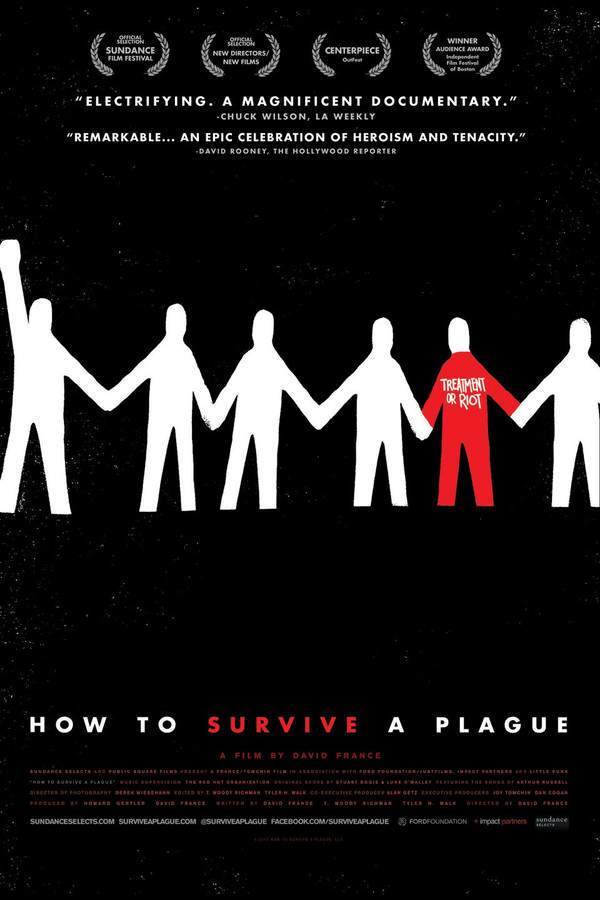
How to Survive a Plague (2012) movie poster

Plot Summary

How to Survive a Plague (2012) Plot Summary Explained

Release, runtime and language
2012 · 120 min · English
Loading streaming availability…
Directed by
David France
Starring
Bob Rafsky, Iris Long, Larry Kramer, Peter Staley

This powerful documentary chronicles the determined fight of young activists against the AIDS pandemic in the 1980s and 1990s. Through direct action and infiltration of government and pharmaceutical institutions, they pressured for faster research and broader access to treatments. Their relentless advocacy significantly accelerated the development and distribution of life-saving medications, ultimately transforming a devastating epidemic into a more manageable condition and drastically reducing the impact on hospitals.

On this page (6)
  1. 1 Where to watch
  2. 2 What happens: full plot
  3. 3 Plot questions answered
  4. 4 Movie threads
  5. 5 Movies like How to Survive a Plague
  6. 6 Every angle
Loading streaming availability…

Full plot summary · contains spoilers

What Happens in How to Survive a Plague: Full Plot Summary

The whole story of How to Survive a Plague (2012) explained, from the opening scene to the final frame: every key event, every twist and what it all adds up to. Read it as a quick recap before the sequel, to check a scene you missed, or to finally understand what really happened.

"How To Survive A Plague" unveils the untold saga of individuals whose relentless efforts transformed AIDS into a disease that can be managed effectively. This film chronicles the extraordinary journey of a diverse group of young men and women, who, despite lacking formal scientific training, boldly infiltrated government bureaucracies and the pharmaceutical sector. They played a crucial role in identifying and advancing promising new compounds, rapidly moving these innovations through trials and into drugstores. The result was life-saving medication that dramatically reduced the mortality rates associated with the epidemic, leading to the near-emptying of AIDS wards in American hospitals.

These courageous activists set a new precedent for patient empowerment and healthcare advocacy, a model that has inspired movements against various other diseases, such as breast cancer and heart disease. Their mission did not stop at the borders of the United States; as AIDS spread to regions like Africa, India, and Asia, these advocates actively established local organizations, exporting their knowledge and techniques to demand improved access to treatment.

Their compelling narrative serves as a powerful motivation for future generations, offering a guide and a passionate call to action. With science still struggling to discover a cure, and concerning trends of rising transmission—especially among unaware young gay men—it's essential to remember the pivotal role that AIDS activists played in combating this plague. Their legacy continues to resonate, reminding us of the urgent need for sustained vigilance and advocacy in the face of ongoing challenges.

Last updated: November 15, 2024 at 18:03

Was this helpful?

Plot questions answered

How to Survive a Plague Plot Explained: Your Questions Answered

The questions people ask most about How to Survive a Plague (2012): what happens in the confusing scenes, why the characters do what they do, the twists, hidden details and what the ending means. Each answer contains spoilers.

Q1

How did AIDS activists actually influence pharmaceutical companies?

Activists without scientific backgrounds infiltrated pharmaceutical companies and government agencies by learning complex medical terminology and regulatory processes. They demanded faster drug trials, challenged the FDA's slow approval process, and pushed companies to prioritize AIDS drug research. Their direct action tactics and expert knowledge forced institutions to listen and accelerate treatment development.

Foreshadowing: Earlier protests and demonstrations drew public attention to the urgent need for treatments.

  • act up
  • aids activism
  • pharmaceutical industry
  • drug development
  • clinical trials
Q2

What impact did activist pressure have on drug approval?

Activist pressure led to the approval of life-saving medications in the 1990s that drastically reduced AIDS mortality rates. Their advocacy shortened clinical trial timelines and pushed for expanded access programs. This directly resulted in the near-emptying of AIDS wards in American hospitals.

Foreshadowing: Early demands for faster approval processes set the stage for later breakthroughs.

  • fda approval
  • drug trials
  • life-saving medication
  • mortality rates
  • hospital wards
Q3

How did ACT UP and other groups organize their protests?

ACT UP organized targeted demonstrations at the FDA, pharmaceutical companies, and government buildings. They used dramatic visual protests, die-ins, and blockades to demand action. The group also developed sophisticated media strategies to maintain public attention on the crisis.

Foreshadowing: The urgency of the health crisis drove increasingly bold direct-action tactics.

  • act up
  • protests
  • direct action
  • organizing
  • demonstrations
  • fda
Q4

What specific treatments were developed as a result of activist efforts?

The activists helped accelerate development of combination antiretroviral therapies that transformed AIDS from a fatal diagnosis into a manageable condition. While the summary doesn't name specific drugs, their advocacy ensured promising compounds moved quickly through clinical trials and reached patients.

Foreshadowing: Early research into compounds laid the groundwork for effective therapies.

  • antiretroviral therapy
  • treatments
  • drug development
  • clinical trials
  • medication
Q5

Why was patient empowerment so important during the AIDS crisis?

Patients took control because government and pharmaceutical companies were failing to act quickly enough during the deadly epidemic. Activists realized that waiting for institutions to act meant watching people die, so they educated themselves and demanded a voice in treatment decisions and research priorities.

Foreshadowing: Early institutional failures to respond created the necessity for patient-led action.

  • patient empowerment
  • healthcare advocacy
  • patient rights
  • treatment access
Q6

How did AIDS activism spread beyond the United States?

As AIDS spread to Africa, India, and Asia in the late 1990s, activists exported their knowledge and organizing techniques to those regions. They helped establish local organizations that could effectively demand treatment access and push for better healthcare resources in developing countries.

Foreshadowing: The global nature of the epidemic became increasingly apparent as it spread.

  • global aids
  • international advocacy
  • africa
  • india
  • asia
  • organizing
Q7

What is the legacy of 1980s AIDS activists today?

AIDS activists set new standards for patient empowerment that influenced healthcare advocacy for breast cancer, heart disease, and other conditions. Their strategies became models for modern patient rights movements. However, the film notes concerning trends of rising transmission rates among young gay men, emphasizing that continued vigilance is needed.

Foreshadowing: The ongoing challenges mentioned throughout the film highlight the unfinished nature of the struggle.

  • legacy
  • patient advocacy
  • breast cancer
  • heart disease
  • healthcare movements
Q8

What role did government agencies play in delaying AIDS treatments?

Government agencies, particularly the FDA, operated with slow bureaucratic processes that activists argued cost lives during a fast-moving epidemic. The activists challenged these institutions directly, staging protests and demanding they prioritize urgent treatment needs over standard lengthy approval timelines.

Foreshadowing: Early institutional inaction motivated increasingly confrontational tactics.

  • government
  • fda
  • bureaucracy
  • treatment delays
  • regulatory process
Q9

Why was fast-tracking drug approval so significant?

Fast-tracking allowed experimental treatments to reach patients sooner, saving lives that would have been lost during lengthy approval processes. Activists argued that dying patients couldn't wait for standard timelines, and their pressure led to accelerated access programs that became models for future emergency health responses.

Foreshadowing: Early activism around access laid groundwork for fast-tracking demands.

  • fast track
  • expanded access
  • experimental treatment
  • emergency response
Q10

Why does the film have a bittersweet ending despite the activists' success?

While activists achieved remarkable success in developing life-saving treatments and transforming AIDS into a manageable condition, the film acknowledges the enormous human cost of the struggle. Millions died before treatments became available, and the ongoing transmission rates among young people represent unfinished business. The victory was real but came at tremendous loss.

Foreshadowing: Throughout the film, the high death toll underscores the urgency of the activists' mission.

  • bittersweet
  • death toll
  • loss
  • treatment success
  • ongoing challenge

Movie threads

More Movies Like How to Survive a Plague, by Mood & Story

Curated lists built around what makes How to Survive a Plague tick: the same mood, the same kind of story or the same emotional payoff. Each list explains why these movies belong together.

Documentaries about grassroots movements like How to Survive a Plague

Inspiring stories of ordinary people fighting systemic injustice for profound change. If you were inspired by How to Survive a Plague, explore more movies about determined activists fighting for social and political change. These films showcase the power of organized communities facing systemic injustice, with stories that are urgent, courageous, and ultimately hopeful.

  • urgent
  • courageous
  • determined
  • empowering
  • frustrated
  • triumphant
  • Tone: hopeful, determined, urgent
  • Pacing: fast, driven
Why these movies?

The story pattern: These narratives typically follow a chronological progression from crisis to organization to action. They document the formation of a movement, the strategic challenges it faces, its internal conflicts, and its tangible impacts on the systems it confronts. The journey is one of collective empowerment against a seemingly immovable opponent.

Why they belong together: Movies in this thread share a core focus on organized citizen action as the central driver of the plot. They possess a 'we the people' energy, blending heavy emotional stakes with a determined, and often fast-paced, tone that mirrors the urgency of the cause.


Movies with bittersweet victories like How to Survive a Plague

Stories where hope and progress are forged through immense loss and struggle. Fans of the powerful, bittersweet ending of How to Survive a Plague will appreciate these films. They explore stories where hard-fought success is tempered by significant cost, offering deeply emotional and realistic journeys that balance triumph with tragedy.

  • triumphant
  • sad
  • hopeful
  • grieving
  • heavy
  • resilient
  • Tone: bittersweet, hopeful, grieving
  • Pacing: steady, fast
Why these movies?

The story pattern: The narrative arc follows a struggle against a major source of suffering, often involving life-or-death stakes. The protagonists achieve a meaningful, concrete victory that changes the world for the better, but the story explicitly recognizes the personal and collective losses endured along the way, leaving the audience with a complex mix of emotions.

Why they belong together: These films are grouped by their unique emotional mix: a high-stakes, heavy journey that concludes with a genuine achievement, yet the overall feeling is bittersweet. They masterfully balance hope and grief, making the triumph feel earned and profound rather than facile.

If you liked this

Movies Like How to Survive a Plague

Similar movies to How to Survive a Plague: the same genre, themes or kind of story. Each one comes with its own plot summary, timeline and ending explained.

Browse all movie summaries

Every angle

How to Survive a Plague (2012) Explained: Plot, Timeline & Characters

Everything about How to Survive a Plague in one place: what happens in the plot summary, the timeline in chronological order, the characters and meaning and a spoiler-free summary. What's After the Movie adds the cast, box office and post-credit scenes.

Coming soon on iOS and Android

The Plot Explained Movie Summary App

Plot summaries, endings explained and timelines on your phone. Catch up on any movie in minutes, save your favorites and never miss a twist again.

Be the first to know when we launch. Your email stays private, always.

Learn more about the app