It follows the courageous doctors, scientists and activists who first recognized a mysterious immune‑deficiency disease, tracing how their dedication clashed with bureaucratic politics and rivalries that delayed an effective response. Their strength, friendship and resolve become the film’s core.
Find where to stream, rent, or buy And the Band Played On (1993) in the US with current JustWatch availability, up-to-date pricing, and platform listings for subscription, rental, and digital purchase options.
Warning: spoilers below!
Haven’t seen And the Band Played On yet? This summary contains major spoilers. Bookmark the page, watch the movie, and come back for the full breakdown. If you're ready, scroll on and relive the story!
Read the complete plot breakdown of And the Band Played On (1993), including all key story events, major twists, and the ending explained in detail. Discover what really happened, and what it all means.
In a prologue set in 1976, Don Francis, an American epidemiologist with the World Health Organization, arrives in a remote village on the banks of the Ebola River in Zaire. He encounters a mysterious illness that claims the lives of many residents and the doctors who work with them, later identified as the Ebola hemorrhagic fever. The stark images of the dying and the cremation rituals he witnesses haunt him as his career takes him toward the study of HIV/AIDS at the Centers for Disease Control and Prevention years later.
Jump to 1981, and Francis contends with a surge of unexplained deaths among gay men in major American cities due to a rare immune-system-threatening condition, pneumocystis pneumonia. He moves to Atlanta where CDC Administrator Dr. Jim Curran asks him to lead an in-depth investigation into this new immune disorder. The working conditions are poor—tight budgets, cramped spaces, outdated equipment—reflecting the Reagan era's restraint on public spending. He clashes with several segments of the medical community who have their own agendas and skepticism about his conclusions.
While examining early clues, Francis and his team encounter the gay community and witness how the disease appears to spread through sexual contact. Some individuals, like activist Bill Kraus, rally to support the investigation, while others push back against what they perceive as intrusive meddling in private lives. Kraus even puts his own relationships at risk when his partnership with Kico Govantes suffers as he helps push for change and awareness.
The scientists also face resistance from the blood industry, which fears financial losses and slows cooperative efforts to curb transmission. At the same time, a rivalry unfolds between American researchers and their French counterparts from the Pasteur Institute. The dispute intensifies over credit for identifying the virus and developing a blood test, with Dr. Robert Gallo at the center of the tensions and anger when he learns of collaborations with the French team.
By 1984, the crisis hits closer to home for Kraus when a spot on his ankle signals Kaposi's sarcoma, a marker of AIDS. He and Govantes reunite as Kraus confront his illness, while the scientific community continues to respond to the evolving knowledge of the virus. After the official announcement of the AIDS virus, Francis pushes a comprehensive plan for prevention and a potential cure, but encounters resistance from Curran, who deems the plan unaffordable and blocked by bureaucratic obstacles, and Francis is reassigned to San Francisco.
In the following years, Kraus's health declines; he passes away in early 1986. Francis remains at the CDC until 1992, when he leaves to work on an AIDS vaccine project. The film closes with a tribute sequence set to Elton John's The Last Song, featuring a montage of notable individuals affected by HIV/AIDS and reminding viewers of the human cost behind the scientific race.
Last updated: October 07, 2025 at 09:44
Explore frequently asked questions about And the Band Played On (1993) with spoiler-rich answers covering the full plot summary, major story beats, character motivations, hidden details, and ending meaning. This movie summary FAQ helps explain confusing scenes, plot twists, and narrative decisions in clear, searchable detail.
Don Francis witnessed the devastating Ebola outbreak in Zaire in 1976, which left a lasting impact on him. When he later encountered the emerging immune-deficiency syndrome affecting gay men in 1981, his previous experience with hemorrhagic fevers made him uniquely positioned to recognize this as a new viral threat. His expertise in epidemic investigations led the CDC to assign him to lead the AIDS task force, continuing his work in tracking and understanding deadly infectious diseases.
Francis advocated for closing bathhouses as a public health measure to limit the spread of HIV, but faced intense opposition. The gay community saw this as an intrusion on personal freedoms and privacy, fearing stigmatization. Many in the medical establishment also resisted, questioning the evidence of sexual transmission at the time. The debate reflected broader cultural and political battles over how to handle the epidemic without alienating a marginalized community.
Earlier scenes show Francis engaging directly with the gay community to understand transmission patterns, building the case for public health intervention.
The blood industry, which included blood banks and plasma donation centers, feared that implementing screening measures for HIV would cause significant financial losses. They argued that mandatory testing and restrictions would damage their business operations. This resistance slowed the implementation of crucial public health measures, as industry representatives prioritized economic concerns over preventing transmission through blood supplies.
American researchers, particularly Dr. Robert Gallo at the National Cancer Institute, and French scientists at the Pasteur Institute both claimed credit for identifying the HIV virus and developing a blood test. The dispute centered on patents, research credit, and national pride. This competition strained international collaboration and created friction within the scientific community, with Francis caught in the middle as both sides sought recognition for their discoveries.
Francis developed a thorough prevention plan that included widespread testing, education, and potential cure research. However, CDC Administrator Dr. Jim Curran informed him that the plan would never be approved due to cost concerns and bureaucratic obstacles. The Reagan administration's resistance to funding public health initiatives for what was still seen as a disease affecting primarily marginalized communities prevented the comprehensive response Francis advocated.
Earlier scenes establish the poor working conditions at the CDC, with tight budgets and limited resources reflecting Reagan-era cutbacks.
Bill Kraus was a prominent gay rights activist who had been supporting Francis's investigation and helping bridge communication between researchers and the gay community. His personal diagnosis of Kaposi's sarcoma brought the epidemic from an abstract scientific problem into a visceral, personal tragedy. It personalized the crisis for viewers and underscored how the disease was affecting leaders within the very community fighting for awareness.
Earlier scenes show Kraus actively supporting the investigation and putting his relationships at risk for the cause, making his diagnosis feel like a direct sacrifice.
During the November 1985 candlelight parade, Bill Kraus suddenly coughed and became too weak to stand, experiencing visual and speech difficulties that suggested the virus had progressed to his neurological system. The symptoms temporarily subsided after Don Francis arrived, but the incident demonstrated how rapidly the disease could progress and the devastating physical toll it took on those infected.
After years of fighting bureaucratic resistance, limited funding, and institutional obstacles at the CDC, Francis left in 1992 to work on developing an AIDS vaccine. His departure represented a shift from epidemiological research to vaccine science, as he sought to make a more direct impact on preventing the disease. Despite his frustration with the CDC system, he remained committed to fighting AIDS through different means.
The film shows Francis consistently encountering obstacles from Curran and other officials throughout the 1980s, building toward his departure.
The film's narrative demonstrates how political factors consistently hindered the response to AIDS. The Reagan administration imposed budget cuts on public health agencies, limiting resources for investigation. The blood industry's economic interests clashed with prevention measures. Prejudices toward the gay community reduced political will to act quickly. Scientific rivalries between countries further complicated international cooperation. These intersecting political forces created delays that cost lives.
The opening prologue establishes Don Francis's traumatic introduction to deadly viral outbreaks. His experience in Zaire, where he witnessed the mysterious illness kill villagers and doctors, haunts him throughout the film and motivates his subsequent work on AIDS. The prologue also establishes his expertise in hemorrhagic fevers and demonstrates his willingness to work in dangerous conditions, setting up his role as the central figure who recognizes the emerging threat of HIV.
Bill Kraus's intense activism and dedication to the AIDS cause created strain in his relationship with partner Kico Govantes. Kraus prioritized pushing for change and awareness over maintaining the relationship, putting both his personal connections at risk as he devoted himself to the movement. Their eventual reunion came as Kraus faced his own AIDS diagnosis, showing how the crisis affected both public and private aspects of activists' lives.
The film closes with Elton John's The Last Song paired with a montage of photos and videos depicting real individuals affected by HIV/AIDS, including many who died from the disease. This tribute sequence honors the human cost of the epidemic and serves as a memorial to those lost. It underscores that behind all the scientific and political battles, millions of real people suffered and died, reinforcing the film's message about the importance of remembering those impacted by the crisis.
Discover curated groups of movies connected by mood, themes, and story style. Browse collections built around emotion, atmosphere, and narrative focus to easily find films that match what you feel like watching right now.
True stories where dedicated individuals fight powerful, complacent institutions amidst a crisis.Movies like And the Band Played On focus on real-life crises where dedicated experts battle systemic failure. If you liked the tense, fact-based struggle against bureaucracy, you'll find similar gripping dramas about institutional breakdown and the fight for truth.
Stories in this thread follow a chronological, investigative structure, tracking a crisis from its initial discovery through the mounting evidence and the protagonists' escalating efforts to sound the alarm. The central conflict is not just solving the problem, but convincing a powerful, reluctant establishment to act, often with tragic delays.
These movies are grouped by their core narrative of fighting systemic failure, a shared tone of urgent frustration, and a focus on the emotional weight of battling institutional apathy during a life-or-death situation.
Emotionally heavy journeys where hard-won progress is shadowed by profound loss.If you appreciated the bittersweet ending of And the Band Played On, where scientific discovery is tempered by tragedy, explore similar movies. These films follow heavy journeys where hard-won truths or justice arrive only after immense sacrifice.
The narrative arc involves a long, difficult investigation or struggle against overwhelming odds. The climax is not a pure victory but a moment of somber recognition: the truth is confirmed, a crisis is abated, or justice is partially served, but the final scenes are dedicated to honoring those lost along the way, emphasizing that the gain cannot erase the pain.
Movies here share a specific emotional trajectory: a heavy, determined tone, a steady pacing that builds to a conclusion where progress and loss are inextricably linked, creating a powerful and bittersweet final feeling.
Don't stop at just watching - explore And the Band Played On in full detail. From the complete plot summary and scene-by-scene timeline to character breakdowns, thematic analysis, and a deep dive into the ending - every page helps you truly understand what And the Band Played On is all about. Plus, discover what's next after the movie.
Track the full timeline of And the Band Played On with every major event arranged chronologically. Perfect for decoding non-linear storytelling, flashbacks, or parallel narratives with a clear scene-by-scene breakdown.
Discover the characters, locations, and core themes that shape And the Band Played On. Get insights into symbolic elements, setting significance, and deeper narrative meaning - ideal for thematic analysis and movie breakdowns.
Discover movies like And the Band Played On that share similar genres, themes, and storytelling elements. Whether you’re drawn to the atmosphere, character arcs, or plot structure, these curated recommendations will help you explore more films you’ll love.
And the Band Played On (1993) Scene-by-Scene Movie Timeline
And the Band Played On (1993) Movie Characters, Themes & Settings
And the Band Played On (1993) Spoiler-Free Summary & Key Flow
Movies Like And the Band Played On – Similar Titles You’ll Enjoy
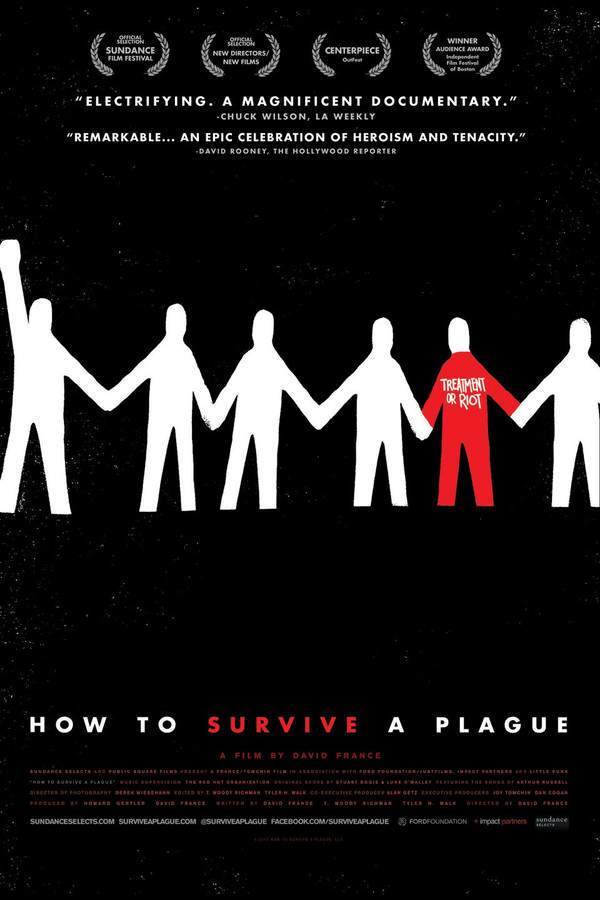
How to Survive a Plague (2012) Plot Summary & Ending Explained
Philadelphia (1993) Complete Plot Breakdown
Killing Patient Zero (2019) Film Overview & Timeline
Frontline: The Age of AIDS (2006) Movie Recap & Themes
Larry Kramer In Love & Anger (2015) Film Overview & Timeline
Buddies (1985) Film Overview & Timeline
A Virus Knows No Morals (1986) Full Summary & Key Details
Longtime Companion (1989) Story Summary & Characters
Estou com AIDS (1986) Detailed Story Recap
Something Has Happened (1987) Spoiler-Packed Plot Recap
Positive (1990) Complete Plot Breakdown
As Is (1986) Full Movie Breakdown
Voices from the Front (1992) Film Overview & Timeline
The Broadcast Tapes of Dr. Peter (1993) Spoiler-Packed Plot Recap
In Our Blood (1000) Full Summary & Key Details