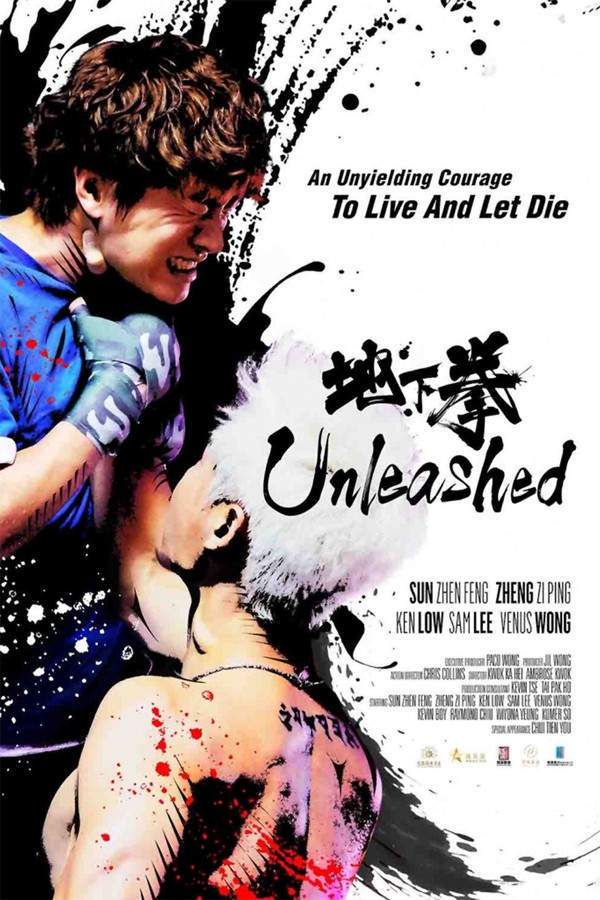
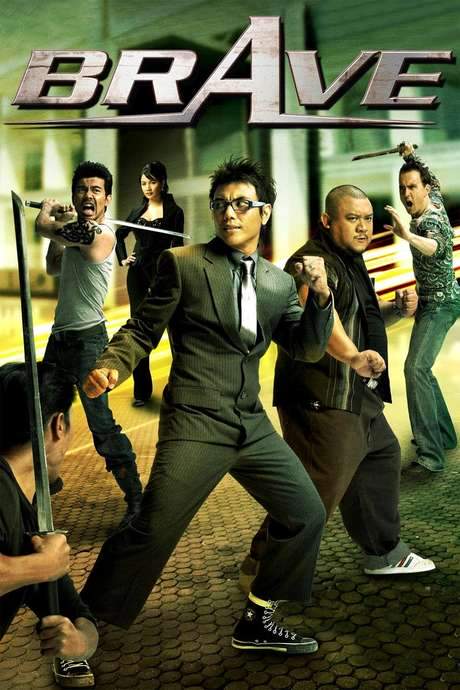
After several years in the United States Marine Corps, Henry Chen returns to his roots to take a teaching post at Tak Chi Secondary School. He lands the challenging assignment of guiding room 6B, a class infamous for its mischief and lack of focus, a group that tests patience and creativity from the very first moment. On day one, the students’ restless energy runs wild, so he makes a bold opening move: he triggers the fire sprinkler to drench them, turning chaos into a shared, memorable welcome and signaling that he intends to earn their attention through presence and persistence.
From there, the lessons unfold in unorthodox ways. Henry steps into a tense moment when he spots Jack with a pack of cigarettes and confiscates it, signaling that safety and responsibility matter just as much as grades. He then engages Zufa, a student whose father is a Pakistani immigrant and who has faced years of discrimination, by asking him to name the three ingredients in a cigarette. This simple prompt becomes a teachable moment about health, consequences, and responsibility, capturing the class’s curiosity and shifting the tone of the room toward learning. The day’s tensions simmer into a broader picture of life outside the classroom: the school’s basketball captain instigates a fight that leaves five students suspended, an event Henry steps in to defuse, underscoring his commitment to de-escalation and accountability.
As nights unfold, Henry studies the kids beyond their classroom antics. He compiles profiles on Zufa—the aspiring musician fighting stereotypes, Denan—the tomboy seeking her father’s attention, and the twins Bruce and Chris, who navigate school, work, and gaming in different ways. Jack’s family background remains elusive, hinting at deeper currents beneath the surface of this group. The personal stakes for each student begin to reveal themselves: Zufa’s struggle against discrimination, Denan’s longing for a father’s approval, and the dual pressures on Bruce and Chris as they balance responsibility at home with school life.
To reach Zufa, Henry arranges a moment of exposure and opportunity: a concert where Zufa can perform in front of a crowd that once teased him. The empowering experience strengthens Zufa’s resolve, while Henry also addresses the twins’ home life by encouraging their father to pursue rehabilitation for their wellbeing. Denan’s story takes another turn when she drives away in her parents’ car, attempting to act like a girl she’s not. Henry intervenes, reminding her that driving without a license is illegal, and he escorts her to a racetrack with her father, where a tragic accident destroys her go-kart but leaves Denan alive. The emotional aftermath reveals a father who, in his grief, begins to recognize the love he has for his daughter.
In the days that follow, Bruce and Chris are placed in rehabilitation with their father, who opens up about a painful past—his wife leaving him during his lowest moment—and his later regret becomes a catalyst for healing. Meanwhile, Jack’s path tangles with Kane, a mixed martial arts bettor who pressures him to drug a fighter before a match. When Jack is betrayed and locked inside a locker, Henry arrives to confront the danger, fending off Kane’s armed associates and a professional fighter scheduled to compete. The confrontation uncovers a painful link: Kane is the same former student whom Henry once bullied by showering him with water balloons and breaking his hand with a statue, a childhood act that derailed Kane’s dreams and set him on a path of vengeance. Kane’s memory surfaces the past, but Henry’s response is one of forgiveness and retreat, rather than retaliation.
The mock entrance examination becomes a turning point. All of Henry’s students perform well, except Bruce, whose reliance on prescription drugs begins to derail his focus and ultimately his health. Henry promises help, but tragedy interrupts progress when Bruce’s condition worsens and he slips into a coma. The incident triggers a broader professional consequence: Henry’s teaching license is revoked after media reports twist the narrative, casting doubt on his methods even as the students rally to prove his ideas work and recommit to their studies.
On exam day, Kane’s scheme escalates. Kane and his crew lure the class to meet Henry a short time before the exam, intending to trap the students inside the school and sabotage their chances. Henry darts to the scene, fights Kane’s operatives, and frees his pupils to head toward the examination hall. In a final, charged confrontation, Kane reveals the lingering grievance from their shared past, the moment that shaped both of their lives. Henry seeks forgiveness, choosing to walk away rather than escalate the feud, and the air clears for the students to focus on the test ahead.
Weeks pass, and the students all succeed. The school is awarded a twenty percent bonus fund in recognition of the improved results, and Henry returns to the classroom the following year. His signature, unconventional teaching style endures—he once again uses the fire sprinkler trick on a different, rowdier class, a quiet reminder that the path to learning can be unconventional but ultimately effective when guided by care, consistency, and the belief that every student can rise.