Plot Explained Spoilers guaranteed!
Plot Explained

Browse by genre

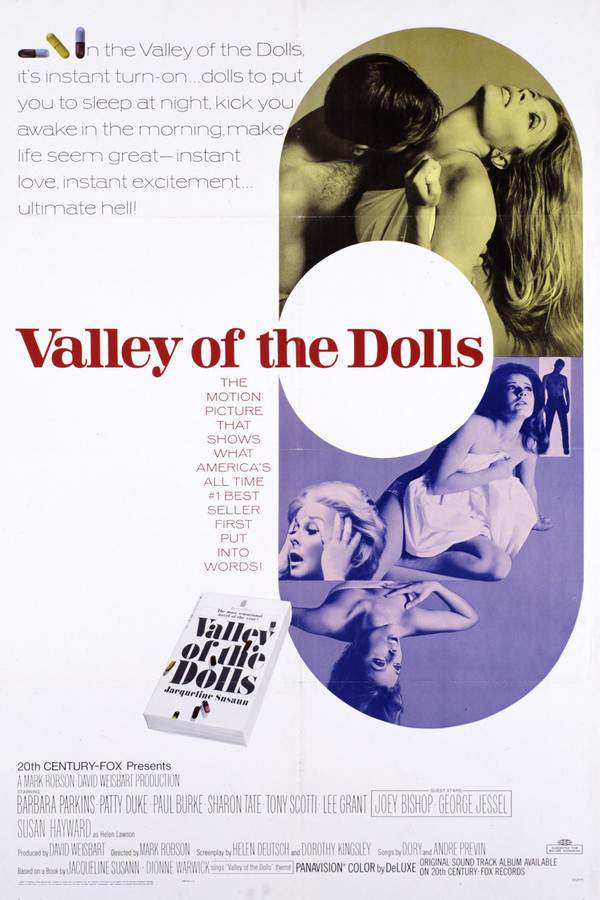
Valley of the Dolls (1967) movie poster

Plot Summary

Valley of the Dolls (1967) Plot Summary Explained

Release, runtime and language
1967 · 123 min · English
Loading streaming availability…
Directed by
Mark Robson
Starring
Lee Grant, Patty Duke, Paul Burke, Naomi Stevens, Martin Milner, Sharon Tate

In the dazzling but unforgiving landscape of New York City, a young woman named Anne Welles experiences the harsh realities of the entertainment industry. As she pursues her dreams, she finds herself entangled with two other women: Neely O’Hara, a fiercely ambitious aspiring actress, and Helen Lawson, a once-famous singer struggling with her fading career. The story explores their intertwined lives, revealing the pressures of fame, the complexities of love, and the devastating consequences of chasing ambition in a world of glamour and heartbreak.

On this page (6)
  1. 1 Where to watch
  2. 2 What happens: full plot
  3. 3 Plot questions answered
  4. 4 The book behind the movie
  5. 5 Movie threads
  6. 6 Every angle
Loading streaming availability…

Full plot summary · contains spoilers

What Happens in Valley of the Dolls: Full Plot Summary

The whole story of Valley of the Dolls (1967) explained, from the opening scene to the final frame: every key event, every twist and what it all adds up to. Read it as a quick recap before the sequel, to check a scene you missed, or to finally understand what really happened.

As Anne Welles, a recent Radcliffe graduate, steps into her role as a secretary at a theatrical agency, she becomes embroiled in the ruthless and competitive landscape of Broadway. Helen Lawson, a famed diva known for her unforgiving nature, eyes the talented newcomer Neely O'Hara with suspicion, worried that Anne's rising star might overshadow her own. In an effort to eliminate her competition, Helen employs devious tactics, leading to Anne's boss being pressured into having Neely withdraw from their upcoming production. This experience shatters Anne's illusions about the industry's darker side and highlights the harsh treatment received by aspiring talents.

Despite this disillusionment, Lyon Burke, the business associate of Anne's boss, persuades her to remain at the agency, revealing that there is still merit in her position. Throughout her journey, Anne develops a close friendship with Neely, as well as Jennifer North, an ambitious chorus girl who often falls for the wrong type of men. Together, the trio shares a profound bond, understanding the trials and temptations that accompany the pursuit of fame.

As Neely's rise in the spotlight escalates, it is marked by a series of questionable choices, including her decision to move to Hollywood for a promising film career. Sadly, her increasing reliance on substances takes a toll on her relationships, resulting in failed marriages and a chaotic personal life.

In the midst of Neely's turbulent journey, Anne faces pivotal moments in her own professional and personal life. A serendipitous meeting with Kevin Gillmore, a charismatic client of Lyon, sparks a romantic interest that ultimately fizzles out when Anne acknowledges their lack of compatibility. At the same time, Jennifer’s plunge into Hollywood’s murky depths unveils heartbreaking truths about her husband Tony Polar and his undisclosed health issues.

As the narrative progresses, tragedy strikes with Jennifer’s devastating diagnosis of breast cancer. Tormented by the belief that her physical form is her only asset, she makes the heartbreaking decision to end her life rather than undergo a mastectomy. This harrowing event serves as a stark reminder of the price of fame and the fragility of human existence.

As Neely's struggles with addiction come to a head, she finds herself admitted to the very same sanitarium as Tony. A fortuitous meeting rekindles musical memories as Neely breaks into song in the shared space, prompting Tony to harmonize with her. After Neely’s release, Lyon manages to secure her a coveted position on Broadway, where she quickly becomes the center of attention, albeit for all the wrong reasons. Her entanglement with Lyon reaches dramatic heights at a press event for Helen Lawson, culminating in a memorable confrontation in the women’s restroom, where Neely tears off Helen’s wig and flushes it away. In the aftermath, Lyon ends their relationship when Neely's addiction spirals out of control, opting to seek comfort in her understudy instead.

Left to deal with her crushing responsibilities, Neely finds herself alone, sobbing in an empty alley as reality settles in during a lonely night. Meanwhile, Anne grapples with Lyon's betrayal, resorting to risky self-soothing habits that jeopardize her very life. A dangerous encounter with drugs nearly costs her everything when she nearly drowns while high at sea. In search of solace from her ruined relationships, Anne retreats to her New England roots, receiving care from her Aunt Amy. Though Lyon eventually tracks her down, entreating her for another chance, Anne firmly chooses independence and solitude—a choice that ultimately liberates her.

Last updated: November 19, 2024 at 21:00

Was this helpful?

Plot questions answered

Valley of the Dolls Plot Explained: Your Questions Answered

The questions people ask most about Valley of the Dolls (1967): what happens in the confusing scenes, why the characters do what they do, the twists, hidden details and what the ending means. Each answer contains spoilers.

Q1

Why does Helen Lawson target Neely O'Hara?

Helen Lawson sees Neely as a threat to her own fading fame. As a once-famous diva struggling with declining relevance, Helen immediately views the talented newcomer as competition. She manipulates Anne's boss to pressure Neely into withdrawing from their upcoming production, eliminating what she perceives as a rising star that could overshadow her own diminishing status.

Foreshadowing: Helen's jealous nature is established the moment she notices Anne's potential, hinting at her willingness to sabotage rivals.

  • helen lawson
  • neely o'hara
  • jealousy
  • broadway
  • competition
  • sabotage
Q2

Why does Jennifer North commit suicide instead of getting treatment?

Jennifer receives a breast cancer diagnosis but chooses suicide because she believes her physical appearance is her only valuable asset in the entertainment industry. Having built her identity and career on beauty, she cannot face the prospect of a mastectomy that she perceives would destroy her worth. This tragic decision reflects the movie's exploration of how the industry objectifies women and the devastating psychological toll of measuring self-value solely through physical attractiveness.

Foreshadowing: Earlier scenes establish Jennifer's pattern of seeking validation through relationships with men who mistreat her, suggesting her fragile self-image.

  • jennifer north
  • breast cancer
  • suicide
  • beauty
  • industry
  • self-worth
Q3

Why does Neely O'Hara's career spiral downward despite her success?

Neely's career collapses due to her escalating substance abuse. After moving to Hollywood for film opportunities, she develops a pattern of relying on drugs and alcohol, which leads to failed marriages and erratic behavior. Her addiction progressively worsens until she requires hospitalization in a sanitarium, and even after her release, her continued struggles cause Lyon to end their relationship, leaving her isolated and emotionally devastated.

Foreshadowing: Neely's move to Hollywood marks the beginning of her questionable choices and substance dependence, setting her on a path of self-destruction.

  • neely o'hara
  • addiction
  • hollywood
  • substance abuse
  • career
  • breakdown
Q4

Why does Anne Welles almost drown at sea?

Anne nearly drowns while high on drugs during a reckless episode at sea. Haunted by her experiences in the entertainment industry and devastated by Lyon's betrayal, she turns to dangerous self-soothing habits. This traumatic event occurs during a moment of profound despair when she is alone and overwhelmed by the collapse of her relationships and dreams.

Foreshadowing: Anne's disillusionment with Broadway and her growing isolation hint at her psychological deterioration throughout the narrative.

  • anne welles
  • near drowning
  • drugs
  • sea
  • despair
  • betrayal
Q5

Why does Lyon end his relationship with Neely?

Lyon ends his relationship with Neely because her addiction has spiraled out of control. After Neely's release from the sanitarium, Lyon gives her a second chance by securing her a Broadway comeback, but her continued substance abuse and emotional instability force him to make the painful decision to leave. He seeks comfort with Neely's understudy instead, a choice that reflects his recognition that he cannot save someone who refuses to help themselves.

Foreshadowing: The decline in Neely's mental and physical condition throughout the narrative builds toward this inevitable breaking point.

  • lyon burke
  • neely o'hara
  • relationship
  • addiction
  • breakup
  • broadway
Q6

Why does Neely O'Hara end up in a sanitarium?

Neely is admitted to a sanitarium due to her severe struggles with substance abuse and mental health. Her addiction reaches a breaking point, requiring professional treatment. While there, she unexpectedly encounters Tony Polar, Jennifer's husband, and they share a moment of connection through music, briefly lifting their spirits amid their respective struggles.

Foreshadowing: Her pattern of increasingly poor choices and dependency sets the stage for this mental health crisis.

  • neely o'hara
  • sanitarium
  • mental health
  • addiction
  • tony polar
Q7

Why does Anne Welles reject Lyon at the end?

Anne rejects Lyon because she chooses independence and self-respect over a toxic relationship. After retreating to New England to recover from her near-death experience and the emotional devastation caused by Lyon's betrayal, she regains perspective. When Lyon tracks her down and asks for another chance, Anne firmly declines, viewing solitude as liberation rather than loneliness.

Foreshadowing: Anne's early disillusionment with Broadway's dark side foreshadows her eventual rejection of the lifestyle and relationships that have caused her pain.

  • anne welles
  • lyon burke
  • independence
  • rejection
  • new england
  • freedom
Q8

What happens when Neely O'Hara confronts Helen Lawson?

At a press event for Helen Lawson, Neely publicly confronts her rival in a women's restroom. In a fit of rage over their long-standing rivalry and Neely's emotional instability, she tears off Helen's wig and flushes it away. This dramatic act symbolizes Neely's rebellion against the established hierarchy and the excesses of their competitive relationship, creating a scandalous spectacle.

Foreshadowing: The tension between these two women has been building since Helen first sabotaged Neely's career.

  • neely o'hara
  • helen lawson
  • confrontation
  • wig
  • press event
  • broadway
Q9

Why is Tony Polar in the sanitarium with Neely?

Tony Polar, Jennifer's husband, is in the sanitarium due to undisclosed health issues. The movie reveals that he has been suffering from a serious medical condition that requires treatment. This tragic connection brings Neely and Tony together in the facility, where their shared困境 creates a brief moment of musical connection that briefly lifts their spirits.

Foreshadowing: Jennifer's earlier concerns about Tony's health hint at his underlying condition.

  • tony polar
  • sanitarium
  • health issues
  • neely o'hara
  • jennifer north
Q10

Why does Anne's romance with Kevin Gillmore fail?

Anne's romantic interest in Kevin Gillmore, a charismatic client she meets through Lyon, fizzles out because she recognizes their fundamental incompatibility. Despite the initial spark of attraction, Anne acknowledges they lack the necessary chemistry and alignment to sustain a meaningful relationship, leading her to end things before they can develop further.

Foreshadowing: Anne's analytical nature and eventual independence are previewed through her willingness to make difficult decisions about her own happiness.

  • anne welles
  • kevin gillmore
  • romance
  • incompatibility
  • lyon burke

Movie threads

More Movies Like Valley of the Dolls, by Mood & Story

Curated lists built around what makes Valley of the Dolls tick: the same mood, the same kind of story or the same emotional payoff. Each list explains why these movies belong together.

Movies about fame's dark side like Valley of the Dolls

The glamorous facade of ambition crumbles to reveal addiction and heartbreak. If you were captivated by the destructive glamour of Valley of the Dolls, this list features similar dramatic movies about ambition in the entertainment industry. Explore stories of characters chasing fame, only to be consumed by addiction, mental health struggles, and the bitter cost of their dreams.

  • glamorous
  • tragic
  • gritty
  • lonely
  • disillusioned
  • dramatic
  • Tone: melancholic, tragic, disillusioned
  • Pacing: steady, deliberate decline
Why these movies?

The story pattern: Narratives in this thread often begin with hopeful ambition in a glittering world, then methodically chart a downward spiral as the pressures of fame lead to self-destructive behaviors. The journey is one of rising success followed by a profound, disillusioning fall.

Why they belong together: Movies are grouped here for their shared focus on the corrosive effects of ambition and public life. They share a melancholic, tragic tone and explore themes of addiction, mental health, and the loss of identity under the glare of the spotlight.

Glamorous female-led melodramas like Valley of the Dolls

Interwoven stories of women navigating a beautiful but unforgiving world toward tragic ends. Fans of the tragic, intertwined stories of Anne, Neely, and Jennifer in Valley of the Dolls will appreciate these similar melodramas. Discover emotionally heavy films featuring complex women in glamorous settings, dealing with friendship, betrayal, and heartbreaking downfalls.

  • melancholic
  • glamorous
  • tragic
  • dramatic
  • lonely
  • disillusioned
  • Tone: melancholic, dramatic, bittersweet
  • Pacing: steady, character-driven
Why these movies?

The story pattern: These stories typically follow multiple female protagonists, often friends or rivals, as they navigate a world of surface-level glamour. Their arcs are defined by complex relationships, moral compromises, and a steady, often inevitable, progression toward personal ruin or profound loss.

Why they belong together: These films share a specific mood mix: a visually glamorous and opulent setting contrasted with gritty, tragic emotional content. They feature heavy themes like betrayal and survival, with a steady, dramatic pace that builds to a bittersweet or bleak conclusion.

Every angle

Valley of the Dolls (1967) Explained: Plot, Timeline & Characters

Everything about Valley of the Dolls in one place: what happens in the plot summary, the timeline in chronological order, the characters and meaning and a spoiler-free summary. What's After the Movie adds the cast, box office and post-credit scenes.

Coming soon on iOS and Android

The Plot Explained Movie Summary App

Plot summaries, endings explained and timelines on your phone. Catch up on any movie in minutes, save your favorites and never miss a twist again.

Be the first to know when we launch. Your email stays private, always.

Learn more about the app