Plot Explained Spoilers guaranteed!
Plot Explained

Browse by genre

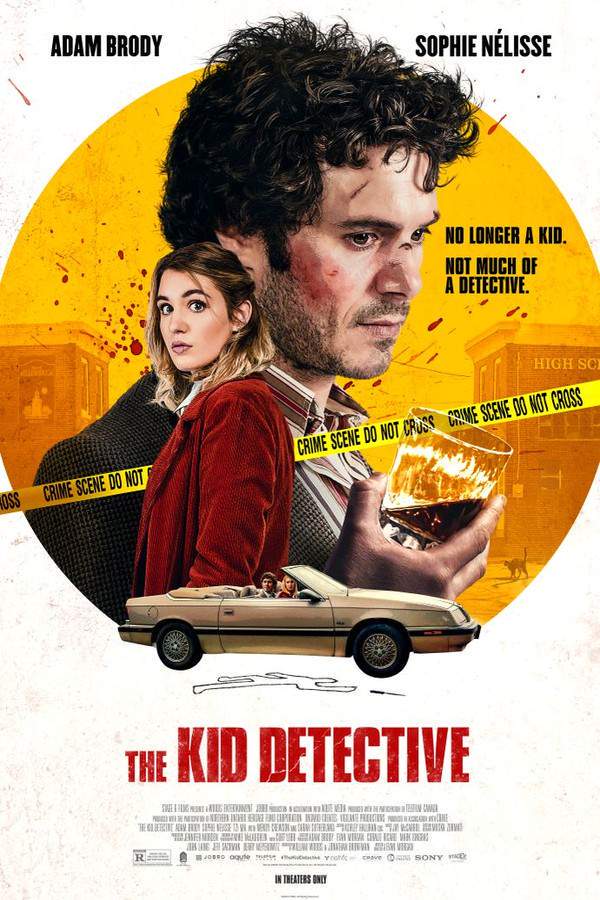
The Kid Detective (2020) movie poster

Plot Summary

The Kid Detective (2020) Plot Summary & Ending Explained

Release, runtime and language
2020 · 100 min · English
Echo score 82
JustWatch #1,265 23
Directed by
Evan Morgan
Starring
Tzi Ma, Wendy Crewson, Adam Brody, Dallas Edwards, Sophie Nélisse, Jesse Noah Gruman

A former child prodigy now facing the challenges of adulthood is pulled into a complex and disturbing case. When a desperate client asks for his help, he must confront his own fading glory while investigating the murder of her boyfriend. The investigation forces him to navigate a web of secrets and lies, testing his skills and pushing him to his limits.

On this page (7)
  1. 1 Where to watch
  2. 2 What happens: full plot
  3. 3 Plot questions answered
  4. 4 How it ends
  5. 5 Movie threads
  6. 6 Movies like The Kid Detective
  7. 7 Every angle

Where to watch

Where to Watch The Kid Detective (2020)

Where can you watch The Kid Detective? Stream, rent or buy it in the US, including on Netflix, Netflix Standard and Amazon Video: current JustWatch availability with up-to-date prices.

Streaming availability powered by JustWatch

Full plot summary · contains spoilers

What Happens in The Kid Detective: Full Plot Summary

The whole story of The Kid Detective (2020) explained, from the opening scene to the final frame: every key event, every twist and what it all adds up to. Read it as a quick recap before the sequel, to check a scene you missed, or to finally understand what really happened.

As a young boy, Abe Applebaum, portrayed by Adam Brody, was a celebrated figure in the town of Willowbrook, known for his knack for solving minor mysteries as a "kid detective." However, everything changed when his close friend, Gracie Gulliver, vanished without a trace when he was just twelve years old. Despite Abe's dedicated investigation, neither he nor the authorities could uncover her whereabouts, leaving a lasting scar on him.

Now at the age of 32, Abe continues to run his detective agency, yet he faces skepticism from his family and ridicule from his peers for his apparent inability to mature and adapt to adult life. Struggling with his failing business and the absence of respect, he turns to alcohol and drugs as a means to cope with his depression. His mundane life takes a turn when Caroline, an orphaned high school student, approaches him, seeking help in uncovering the truth behind the murder of her boyfriend, Patrick Chang.

Abe, despite lacking experience in murder investigations, views this as an opportunity to redeem himself and accepts the case pro bono. Their pursuit for answers leads them to unearth multiple hidden truths about Patrick, including his involvement in drug trafficking and a secret relationship with an older girl named Melody. They also discover that Patrick's friend, Calvin, harbored feelings for Caroline and resented their romance.

However, Abe's investigative methods are clumsy, resulting in multiple blunders such as inciting anger from Patrick's father and even getting arrested for trespassing at Calvin's house. A breakthrough comes when Abe realizes that a series of origami roses, which Caroline believed were from Patrick, bear a striking resemblance to those received by Gracie shortly before her disappearance. Further complicating matters, Abe learns that a childhood assumption he made about a school fundraiser theft—wrongly implicating an innocent person—was also misguided.

With this new information, Abe connects the dots and uncovers the identities of both Gracie's kidnapper and Patrick's killer: Principal Erwin, who had developed an unhealthy obsession with Gracie. During a tense confrontation at Erwin's residence, Abe reveals his findings. It becomes evident that Erwin had not only stalked and kidnapped Gracie but had also left her child, Caroline, at a church after a horrific act of violence. In a tragic twist, Erwin had misidentified a revealing photograph of Melody in Patrick's locker as Caroline's, leading him to murder Patrick in a fit of rage.

Facing the truth of his heinous crimes and realizing he killed an innocent person out of a terrible mistake, Erwin takes his own life in front of Abe. In a shocking conclusion, Abe finds Gracie, alive yet imprisoned in a shed on Erwin's property.

Celebrated as a hero for solving the case and reuniting with Gracie, Abe regains the respect of the community and sees a boost in his business. Nevertheless, the traumatic events weigh heavily on his conscience, leaving him emotionally fractured. In a poignant moment, he breaks down in tears when his parents come to check on him, marking a profound end to this gripping tale.
Last updated: November 02, 2024 at 13:30

Was this helpful?

Plot questions answered

The Kid Detective Plot Explained: Your Questions Answered

The questions people ask most about The Kid Detective (2020): what happens in the confusing scenes, why the characters do what they do, the twists, hidden details and what the ending means. Each answer contains spoilers.

Q1

Why did Abe accept Caroline's case despite having no murder investigation experience?

Abe accepted the case because he saw it as an opportunity to redeem himself. After years of his detective business failing and being ridiculed for not moving past his childhood fame, taking on Patrick's murder represented a chance to prove he could still solve meaningful cases. Additionally, the mystery of Patrick's death unknowingly connected to Gracie's disappearance, making it impossible for Abe to refuse.

Foreshadowing: Early in the film, Abe's desperation for a meaningful case is established through his failing business and substance abuse struggles.

  • abe applebaum
  • caroline
  • patrick chang
  • redemption
  • detective case
Q2

What was the connection between the origami roses and Gracie's disappearance?

The origami roses were the key link between Patrick's murder and Gracie's disappearance. Caroline received origami roses she believed were from Patrick, but Abe realized they looked identical to roses Gracie had received shortly before she vanished. This connection convinced Abe both cases were related and pointed to the same perpetrator.

Foreshadowing: The film establishes early that Gracie received mysterious origami roses before her disappearance, though this detail is initially easy to overlook.

  • origami roses
  • gracie gulliver
  • patrick chang
  • evidence
  • connection
Q3

Why did Principal Erwin kill Patrick?

Principal Erwin killed Patrick because he misidentified a photograph. When Erwin saw a photo of Patrick's secret girlfriend Melody in Patrick's locker, he believed it was Caroline, whom he was obsessively watching because she was actually Gracie's daughter. Believing Caroline was in a relationship with Patrick, Erwin flew into a rage and murdered him, thinking he was protecting Gracie's child from what he perceived as an inappropriate relationship.

Foreshadowing: Erwin's obsession with Gracie and by extension Caroline is established early through his peculiar behavior and proximity to the school.

  • principal erwin
  • patrick chang
  • murder
  • photo mix-up
  • obsession
Q4

How did Abe discover that Principal Erwin was responsible for both Gracie's kidnapping and Patrick's murder?

Abe connected the origami roses to Gracie's case, then used his childhood memories to identify the roses as coming from the same source. He revisited his old case files and realized Erwin had been the one giving roses to Gracie. Combining this with the knowledge that Patrick's locker contained a photo Erwin would have misinterpreted, Abe pieced together that Erwin was responsible for both crimes.

Foreshadowing: Abe's childhood case files and his memory of Erwin's unusual interest in Gracie during school events provide the crucial clues.

  • abe applebaum
  • principal erwin
  • investigation
  • discovery
  • gracie gulliver
Q5

What was Abe's childhood mistake regarding the school fundraiser theft?

When Abe was a child, he wrongly accused an innocent person of stealing money during a school fundraiser. This misguided accusation haunted Abe as an adult and contributed to his desire for redemption. The revelation shows that Abe's detective skills, while impressive as a child, were not infallible and that he carried guilt from this past error.

Foreshadowing: This detail is revealed during Abe's investigation, showing his willingness to confront his own past failures.

  • abe applebaum
  • childhood
  • fundraiser
  • mistake
  • accusation
Q6

How was Caroline related to Gracie?

Caroline was Gracie's daughter. When Principal Erwin kidnapped Gracie, he held her captive for years and fathered a child with her. After committing violence against Gracie, Erwin abandoned the baby, Caroline, at a church. Caroline never knew her true parentage until Abe uncovered the truth during his investigation.

Foreshadowing: The film hints at Caroline's mysterious origins early on through her status as an orphan with no known family.

  • caroline
  • gracie gulliver
  • daughter
  • parentage
  • erwin
Q7

Why did Abe break down in tears at the end of the movie?

Abe broke down because despite solving the case and being celebrated as a hero, he was emotionally shattered by everything he experienced. He discovered his childhood friend had been held captive for years, witnessed a man commit suicide, and confronted the full weight of his past failures and traumas. The ending shows that professional success did not equal personal healing, he needed to process the overwhelming emotional toll of the case.

Foreshadowing: Throughout the film, Abe's substance abuse and emotional struggles foreshadow his ultimate breakdown when forced to confront his deepest fears.

  • abe applebaum
  • emotional breakdown
  • tears
  • trauma
  • healing
Q8

Why did Abe struggle so much as an adult detective?

Abe struggled because he never truly matured past his childhood identity as the local hero. When Gracie disappeared, his biggest case ended in failure, and he coped by clinging to his old persona while sinking into depression and substance abuse. His investigative methods remained amateur, and he lacked the skills to handle adult cases, leading to ridicule and professional failure.

Foreshadowing: The film's opening establishes Abe's childish behavior and his family's frustration with his inability to grow up.

  • abe applebaum
  • adulthood
  • struggle
  • depression
  • substance abuse
Q9

What happened to Gracie after she disappeared?

Gracie was kidnapped by Principal Erwin, who held her captive in a shed on his property for approximately twenty years. During this time, she gave birth to Caroline, who was taken by Erwin and left at a church. Gracie was eventually found alive by Abe at the end of the film, though she had been traumatized by two decades of captivity.

Foreshadowing: The mystery of Gracie's disappearance haunts Abe throughout the entire film, with hints that she may still be alive.

  • gracie gulliver
  • captivity
  • shed
  • kidnapping
  • survival
Q10

Why did Principal Erwin kidnap Gracie?

Principal Erwin developed an unhealthy obsession with Gracie while she was his student. This obsession drove him to kidnap her when she was twelve years old, holding her captive on his property for two decades. The film reveals this as the driving force behind all subsequent events, including his violent reaction when he believed Caroline (Gracie's daughter) was in a relationship.

Foreshadowing: Erwin's position as school principal and his peculiar behavior around students hint at his disturbed psychology.

  • principal erwin
  • gracie gulliver
  • kidnapping
  • obsession
  • captivity

Ending explained

What Happens at the End of The Kid Detective?

How The Kid Detective (2020) ends, in short: the final scene, the last twist and what it means for the characters. The full ending explained, with every spoiler, lives on its own page.

Read the full ending explained

At the end of The Kid Detective, Abe finally unravels the truth behind the crimes haunting his town. He discovers that Principal Erwin was responsible for both Patrick’s murder and Gracie’s kidnapping. Abe’s realization is helped along by two key moments: first, recalling that in his youth, he wrongly accused Rory Beans of theft; and second, noticing that the origami roses found in Caroline’s locker resemble those from the old kidnapping case, which Erwin had also used to test Abe’s detective skills. Confronting Erwin at his home, Abe deduces that Erwin had orchestrated both crimes, setting up Gracie’s kidnapping to cover his tracks and testing Abe’s abilities. Erwin admits to everything, revealing that he murdered Patrick because he believed Patrick was taking nude photos of Caroline and leaving them in his locker. He also confesses that he is Caroline’s biological father, a fact he kept hidden. In a final act of depravity, Erwin stabs himself, choosing death over facing the consequences of his actions. The film’s closing scene echoes an earlier moment when Abe’s parents visit, expecting him to be proud after solving the case. Instead, Abe is overwhelmed, breaking down in tears. This emotional breakdown signifies that, despite the resolution, Abe is haunted by the revelations, especially the betrayal by someone he trusted. His tears reveal that he’s mourning not just these crimes, but also the innocence and idealism of his past. Throughout the film, Abe’s struggles symbolize the gap between perception and reality, illustrating how appearances can deceive and how difficult it can be to confront uncomfortable truths. The ending underscores that growing up involves accepting that life’s truths are often darker and more complex than they initially seem. In uncovering these harsh realities, Abe is forced to face his own disillusionment and the reality that the world isn’t as kind or simple as he once believed. His tears show that true understanding comes at a heavy emotional cost, and that even when the mysteries are solved, the impact of those truths lingers long after the case is closed.

The Kid Detective ending explained in full

Movie threads

More Movies Like The Kid Detective, by Mood & Story

Curated lists built around what makes The Kid Detective tick: the same mood, the same kind of story or the same emotional payoff. Each list explains why these movies belong together.

Bittersweet detective stories like The Kid Detective

Cases solved, but personal healing remains elusive and costly. If you liked watching Abe Applebaum's complex journey in The Kid Detective, explore more movies where damaged detectives find professional closure but face bittersweet personal reckonings. These films blend procedural mystery with deep character studies, delivering victories shadowed by trauma.

  • melancholic
  • gritty
  • somber
  • redemptive
  • traumatic
  • humbling
  • Tone: melancholic, bittersweet
  • Pacing: steady, procedural
Why these movies?

The story pattern: Stories in this thread follow a flawed investigator, often grappling with past failures or trauma, as they pursue a case that mirrors their own unresolved issues. The narrative balances the procedural elements of the investigation with the character's internal decline, culminating in a resolution that offers justice but not necessarily peace, underscoring the theme that professional success cannot erase deep-seated personal wounds.

Why they belong together: These films are grouped together because they share a specific emotional structure: a melancholic tone, a steady investigative pace, and a central theme of redemption that is professionally earned but personally incomplete. They resonate with viewers seeking crime stories with profound psychological depth and emotionally complex, unsatisfyingly satisfying conclusions.

Somber small town noirs like The Kid Detective

Gritty mysteries unraveling dark secrets beneath a quiet community's surface. Fans of The Kid Detective's small-town atmosphere will appreciate these similar movies where a close-knit community hides disturbing secrets. Discover more melancholic mysteries with a steady pace, heavy emotional weight, and a gritty, nostalgic feel that explores the dark side of quiet places.

  • somber
  • gritty
  • nostalgic
  • claustrophobic
  • small town
  • atmospheric
  • Tone: melancholic, gritty, somber
  • Pacing: steady, atmospheric
Why these movies?

The story pattern: The narrative pattern involves an outsider or a disillusioned local investigating a crime that exposes the rot festering beneath the town's placid exterior. The plot is often less about complex twists and more about the gradual revelation of hidden lives, collective guilt, and the ways the past haunts the present, all set against a backdrop of palpable community pressure and limited escape.

Why they belong together: These movies share a cohesive vibe defined by their melancholic and gritty tone, the use of a small-town setting to create a sense of claustrophobia and inescapable pasts, and a steady pacing that allows for atmospheric dread and character depth to build. They appeal to viewers who enjoy mood and place as much as plot.

If you liked this

Movies Like The Kid Detective

Similar movies to The Kid Detective: the same genre, themes or kind of story. Each one comes with its own plot summary, timeline and ending explained.

Browse all movie summaries

Every angle

The Kid Detective (2020) Explained: Plot, Ending, Timeline & Characters

Everything about The Kid Detective in one place: what happens in the plot summary, the timeline in chronological order, the characters and meaning, the ending explained and a spoiler-free summary. What's After the Movie adds the cast, box office and post-credit scenes.

Coming soon on iOS and Android

The Plot Explained Movie Summary App

Plot summaries, endings explained and timelines on your phone. Catch up on any movie in minutes, save your favorites and never miss a twist again.

Be the first to know when we launch. Your email stays private, always.

Learn more about the app