

Plot Explained Spoilers guaranteed!
Plot Explained

Browse by genre

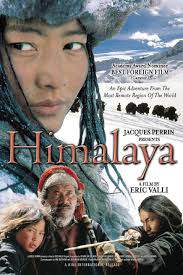
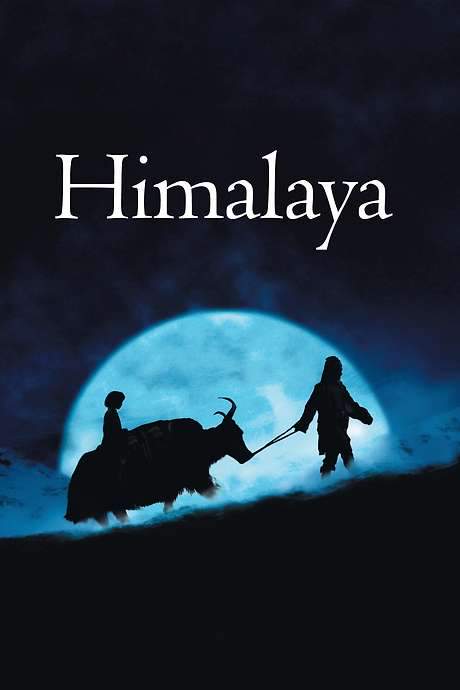
Himalaya (1999) movie poster

Timeline

Himalaya (1999) Timeline Explained – Every Event in Order

Release, runtime and language
1999 · 108 mins · Tibetan
Directed by
Eric Valli
Starring
Gurgon Kyap, Thilen Lhondup, Jampa Kalsang Tamang, Karma Wangel, Lhakpa Tsamchoe, Karma Tensing

When villagers of a remote Tibetan settlement begin their yearly trek to exchange salt for grain, loyalties divide between elder chieftain Tinle (Thilen Lhondup) and rebellious youth Karma (Gurgon Kyap). Tinle fights to keep his authority and ancient customs, while Karma openly challenges him, sparking a clash of tradition and rebellion.

On this page (6)
  1. 1 Where to watch
  2. 2 Events in order (14)
  3. 3 Timeline questions answered
  4. 4 Movie threads
  5. 5 Movies like Himalaya
  6. 6 Every angle

Where to watch

Where to Watch Himalaya (1999)

Where can you watch Himalaya? Stream, rent or buy it in the US, including on Kanopy: current JustWatch availability with up-to-date prices.

Streaming availability powered by JustWatch

14 events in order · contains spoilers

Himalaya Timeline: Events in Chronological Order

Every key event of Himalaya (1999) in order, scene by scene, with when and where it takes place. Use it to untangle flashbacks, time jumps and parallel storylines, to refresh your memory before the sequel or to find the exact scene you are thinking of.

  1. Lhakpa’s death triggers leadership vacuum

    At the film's outset, Lhakpa, the heir to the chieftainship, dies in a botched attempt to navigate a shortcut. His death unsettles the tribe and opens a struggle for who will lead the caravan. The community realizes that the annual salt trade is at stake as winter approaches.

    When
    beginning of the film
    Where
    Dolpa, Nepal
  2. The annual salt caravan is prepared for winter

    The caravan carries rock salt from the high plateau down to the lowlands in exchange for grain. The elders enforce the tradition that keeps the villagers fed through the winter. The success of this journey hinges on capable leadership and trust among the tribe.

    When
    before winter; annual event
    Where
    Dolpa, Nepal
  3. Rivalry forms between Tinle and Karma

    Tension grows between the aging chief Tinle and the young herdsman Karma, who is both a friend and a rival to Tinle’s family. The issue is who should lead the caravan in Lhakpa's absence. The elders sense a test of strength and wisdom between generations.

    When
    pre-departure
    Where
    tribal council, village
  4. Elders decree Karma should lead in Lhakpa's absence

    The elders decide that Karma should take the lead in the absence of Lhakpa, underscoring a shift in authority. Tinle objects, arguing that leadership should be earned or chosen by tradition. The dispute sets the stage for a dramatic race to leadership across the mountains.

    When
    before departure
    Where
    village council
  5. Karma leaves early with a shortcut

    Karma departs a few days before the scheduled departure, taking a shortcut and leaving behind only the youngest and oldest members. His relatives plead with him not to go, warning that the departure would be seen as deceitful. The act foreshadows the challenges ahead on the treacherous route.

    When
    days before scheduled departure
    Where
    village outskirts
  6. Tinle organizes a salt caravan with Norbou

    With the rest of the salt still available, Tinle decides to lead the caravan on the original departure day. He recruits his monastic son, Norbou, to join the effort, solidifying his claim to lead. The caravan begins its trek while Karma starts his own course ahead.

    When
    on original departure day
    Where
    village and caravan trail
  7. Tinle catches up to Karma's caravan

    Tinle's caravan catches up to Karma's earlier improvised route, illustrating a clash of plans and leadership styles. Karma had left days earlier via a shortcut, yet Tinle pushes to keep pace and assert control. The two leaders’ approaches test the unity of the group.

    When
    shortly after departure
    Where
    mountain pass
  8. Karma inspires Tinle’s grandson, Tserin

    Karma acts as a role model for Tinle's grandson, Tserin, demonstrating courage and skill in the mountains. The younger generation learns leadership through Karma’s example. The moment hints at reconciliation between rival lines of authority.

    When
    during pursuit
    Where
    caravan route
  9. Tinle foresees a snowstorm and orders depart

    Tinle predicts an oncoming snowstorm and orders the caravan to depart immediately. Karma counters that the sky is clear, arguing for patience. The disagreement highlights the split between experience and caution.

    When
    before storm
    Where
    mountain pass
  10. Karma stays behind as Tinle leaves

    Karma chooses to stay behind rather than hold up the caravan, acknowledging his misjudgment. The caravan departs under Tinle's leadership with Norbou and the rest of the group. Karma’s sacrifice underscores the bond between rival factions.

    When
    just after decision
    Where
    mountain pass
  11. Snowstorm hits; Tinle saves by Karma arrives

    As the storm bears down, Tinle grows weary and collapses in the snow. Karma arrives having realized his earlier mistake and carries Tinle to the front of the caravan. Together the caravan endures the blizzard and presses onward.

    When
    during snowstorm
    Where
    mountain pass in snowstorm
  12. The caravan reaches a landmark; Tinle asks to die in the mountains

    The caravan reaches a landmark and survives the snowstorm, but Tinle collapses again and asks to be left to die in the mountains. The leaders honor the ancient code of the mountains and allow him to pass away there. The moment marks a quiet acceptance of the harsh life the mountains demand.

    When
    after storm
    Where
    landmark on route
  13. Caravan leaders honor Tinle’s wish

    The caravan leaders choose to honour Tinle's wish to die in the mountains rather than be carried to the flatlands, accepting the traditional mercy of the mountains. The decision reflects the tribe’s deep respect for the cycle of life and the land. Karma’s earlier actions become a bridge between generations.

    When
    after storm
    Where
    mountains
  14. Norbou paints the monastery wall, ending the tale

    Norbou, Tinle’s monastic son, honors his father by painting a monastery wall with the caravan’s adventures. The mural preserves the memory of the journey and the leadership struggle. The film closes on a note of reverence for the mountains and their people.

    When
    end of the film
    Where
    monastery

Last updated: October 07, 2025 at 09:15

Was this helpful?

Timeline questions answered

Himalaya Timeline Explained: Your Questions Answered

When does it happen, and why in that order? The questions people ask about the chronology of Himalaya (1999): time jumps, flashbacks, cause and effect between scenes and the correct order of events, each answered with spoilers.

Q1

Why did Karma leave early with a shortcut instead of waiting for the caravan?

Karma left early to prove himself as a leader and to demonstrate his skills as a herdsman. Eager to prove his worth after Lhakpa's death created a leadership vacuum, Karma took a shortcut hoping to arrive first and claim the leadership position. His relatives warned him that leaving early would be seen as deceitful, but he proceeded anyway, believing he could complete the journey faster and outperform the aging chief Tinle.

Foreshadowing: The shortcut echoes Lhakpa's own failed shortcut attempt that caused his death at the start of the film.

  • karma shortcut
  • early departure
  • leadership challenge
  • caravan race
Q2

How did Tinle catch up to Karma's caravan when Karma had a head start?

Tinle caught up despite Karma's early departure because Karma's shortcut proved to be more treacherous than expected. While Karma left days earlier, the difficult terrain slowed his progress significantly. Tinle, traveling the traditional route with a well-organized group, was able to overtake Karma's smaller caravan. This demonstrated that experience and proper preparation sometimes outweigh sheer ambition and youth.

  • tinle catches karma
  • traditional route
  • shortcut failure
  • mountain journey
Q3

Why did Tinle recruit his son Norbou to join the caravan?

Tinle recruited Norbou, his monastic son, to join the caravan to strengthen his claim to leadership. With the elders having previously decided Karma should lead in Lhakpa's absence, Tinle needed to assert his authority by mobilizing the remaining community himself. Bringing Norbou served both a practical purpose, having an extra capable person, and a symbolic one, demonstrating that Tinle's family remained committed to the tribe's survival and traditions.

  • norbou joins caravan
  • tinle son
  • monastic son
  • leadership claim
Q4

Why did Karma stay behind when Tinle ordered the caravan to leave during the storm?

Karma stayed behind because he realized his earlier judgment was flawed. When Tinle predicted the snowstorm and ordered an immediate departure, Karma argued the sky was clear. However, when Tinle proceeded with the caravan, Karma chose not to delay them further by arguing further. He accepted responsibility for his misjudgment and allowed the group to move quickly, sacrificing his own position to ensure the caravan's safety.

  • karma stays behind
  • snowstorm
  • judgment
  • caravan safety
Q5

Why did Tinle ask to be left to die in the mountains?

Tinle asked to die in the mountains because he was exhausted from the journey and had reached the limit of his strength. As a lifelong leader of the mountain passages, he recognized that his body could no longer endure the harsh journey. More importantly, dying in the mountains rather than being carried down to the flatlands held deep cultural significance, he would pass away on terrain he had mastered throughout his life, surrounded by the landscape that defined his identity.

  • tinle death
  • mountains
  • ancient code
  • traditional death
Q6

Why did the caravan leaders honor Tinle's wish to die in the mountains?

The caravan leaders honored Tinle's wish because it aligned with the ancient code of the mountains, a traditional mercy for elderly leaders who have given their lives to the land. In the harsh Himalayan culture, being allowed to die on one's own terms in the mountains was considered a dignified end rather than being helplessly carried to the flatlands. This tradition reflected the tribe's deep respect for the cycle of life, death, and their relationship with the harsh environment that sustained them.

  • ancient code
  • mountain tradition
  • respect for elders
  • dignified death
Q7

Why did Karma carry Tinle through the snowstorm?

Karma carried Tinle through the snowstorm because he realized his earlier shortcut decision had endangered the entire caravan. When the storm hit and Tinle collapsed from exhaustion, Karma arrived having understood the consequences of his choices. By carrying Tinle to the front of the caravan, Karma demonstrated both physical strength and a shift in attitude, moving from rival to protector. This act bridged the gap between the two men and symbolized Karma's acceptance of responsibility and matured leadership.

  • karma saves tinle
  • snowstorm rescue
  • reconciliation
  • leadership growth
Q8

Why did Karma become a role model for Tinle's grandson Tserin?

Karma became a role model for Tserin because despite his rivalry with Tinle, he demonstrated courage, skill, and mountain knowledge that impressed the younger generation. Tserin watched Karma navigate the treacherous terrain with confidence and witnessed his willingness to take risks. Even though Karma's decisions sometimes created conflict, his boldness and competence in the mountains made him an example of the qualities needed to survive in their harsh environment. This represented a subtle reconciliation between the old and new ways.

  • tserin
  • karma as example
  • younger generation
  • mountain skills
Q9

Why did Lhakpa's death create the leadership conflict for the caravan?

Lhakpa's death created the leadership conflict because he was the heir to the chieftainship and would have naturally led the caravan. His death in a botched shortcut attempt left a vacuum at exactly the time when strong leadership was needed most, before the winter journey that would bring grain to sustain the village. This unexpected loss forced the elders to decide who would lead: the experienced but aging Tinle, or the ambitious young Karma. The dispute over this succession became the central tension of the entire film.

Foreshadowing: Lhakpa's shortcut failure foreshadowed Karma's similar choice to take a shortcut.

  • lhakpa death
  • leadership vacuum
  • heir
  • succession conflict
Q10

Why did the elders originally choose Karma to lead the caravan?

The elders chose Karma to lead the caravan because they recognized a shift in power was needed after Lhakpa's death. The elders decided that youth, energy, and boldness were necessary for the dangerous journey ahead. This decision directly challenged Tinle, who argued that leadership should follow tradition. The elders' choice set up the central conflict between traditional authority and new blood, between experience and ambition, driving the narrative forward.

  • elders decision
  • karma leadership
  • tribal council
  • authority shift
Q11

What is the significance of Norbou painting the monastery wall at the end?

Norbou painting the monastery wall represents the preservation of legacy and the continuation of tradition through art. As Tinle's monastic son, Norbou honored his father's memory by creating a visual record of the caravan journey and the leadership struggle. The mural ensures that the story, the sacrifices, the conflicts, and the survival, would be remembered by future generations. It serves as a bridge between the secular world of the caravan and the spiritual world of the monastery, completing the cycle of life and meaning.

  • norbou mural
  • monastery painting
  • legacy
  • tradition preservation
Q12

How did Tinle know a snowstorm was coming?

Tinle knew a snowstorm was coming because of his decades of experience navigating the Himalayan mountains. As the aging chief who had led countless caravans, he possessed intimate knowledge of the mountain's signs and weather patterns. This expertise was what made him respected despite the elders' initial decision to favor Karma. His ability to read the environment represented the wisdom that comes from a lifetime of survival in one of the world's harshest landscapes.

  • tinle prediction
  • mountain wisdom
  • weather signs
  • experience

Movie threads

More Movies Like Himalaya, by Mood & Story

Curated lists built around what makes Himalaya tick: the same mood, the same kind of story or the same emotional payoff. Each list explains why these movies belong together.

Slow-burn epics of generational conflict like Himalaya

Stories where the clash between tradition and youth unfolds against vast landscapes. If you liked the clash between Tinle and Karma in Himalaya, explore more movies like it. These films capture similar stories of tradition vs. progress, featuring slow, immersive pacing, stunning natural backdrops, and deep emotional stakes centered on family and community survival.

  • epic
  • somber
  • contemplative
  • reverent
  • enduring
  • austere
  • Tone: bittersweet, reverent, somber
  • Pacing: slow, deliberate, contemplative
Why these movies?

The story pattern: The narrative follows a linear, straightforward path focused on a central dispute over leadership or methods within a close-knit community. The conflict simmers rather than explodes, often culminating in a bittersweet resolution where loss is acknowledged, but the continuation of the community offers a glimmer of hope.

Why they belong together: Movies are grouped here for their shared focus on intergenerational tension, their slow and deliberate pacing that allows for deep immersion in a culture, and their bittersweet emotional tone that balances hardship with enduring human spirit.


Austere journeys of survival and legacy like Himalaya

Films about arduous trefs that test character and define what is left behind. For viewers who appreciated the harsh salt caravan journey in Himalaya, this collection highlights similar movies about survival treks. Discover films with a slow, steady pace, emotional weight, and themes of enduring human spirit against nature's power, much like the experience of Himalaya.

  • austere
  • somber
  • enduring
  • epic
  • contemplative
  • tranquil
  • Tone: somber, bittersweet, enduring
  • Pacing: slow, steady, journey-based
Why these movies?

The story pattern: The plot is structured around a linear, physically demanding expedition. The challenges of the journey force characters to confront mortality, leadership, and the meaning of their traditions. The ending often carries a bittersweet feel, honoring those lost while affirming the necessity of carrying on.

Why they belong together: These films share a core narrative of a survival journey, a straightforward plot driven by external challenges, a medium emotional weight dealing with death and legacy, and a consistent tone that balances the bleakness of hardship with dignified endurance.

If you liked this

Movies Like Himalaya

Similar movies to Himalaya: the same genre, themes or kind of story. Each one comes with its own plot summary, timeline and ending explained.

Browse all movie summaries

Every angle

Himalaya (1999) Explained: Plot, Timeline & Characters

Everything about Himalaya in one place: what happens in the plot summary, the timeline in chronological order, the characters and meaning and a spoiler-free summary. What's After the Movie adds the cast, box office and post-credit scenes.

Coming soon on iOS and Android

The Plot Explained Movie Summary App

Plot summaries, endings explained and timelines on your phone. Catch up on any movie in minutes, save your favorites and never miss a twist again.

Be the first to know when we launch. Your email stays private, always.

Learn more about the app