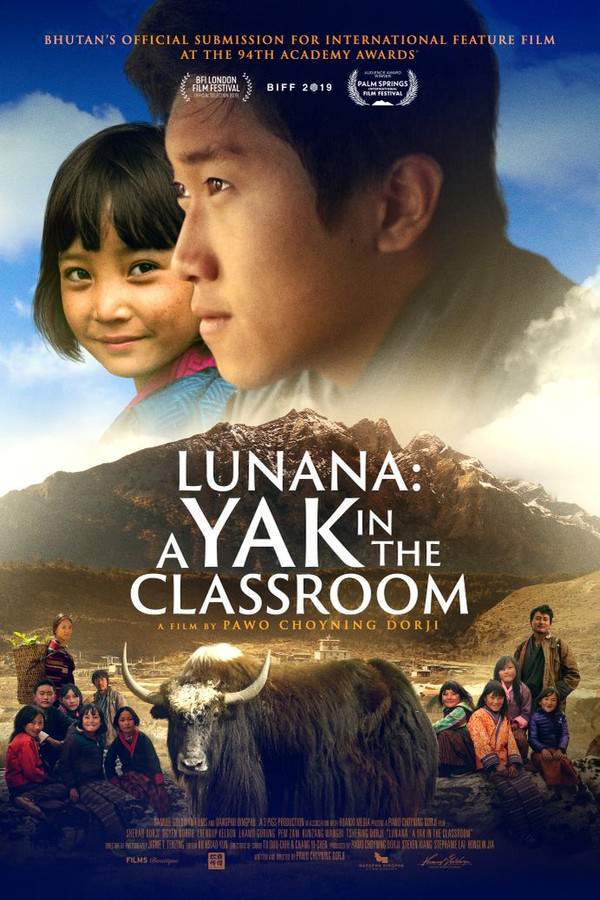
Lunana: A Yak in the Classroom

Lunana: A Yak in the Classroom

JustWatch#20,64814

Year: 2019

Runtime: 109 mins

Language: Dzongkha

Director: Pawo Choyning Dorji

Echo Score: 88
Drama

Seeking inspiration, a teacher journeys to Lunana, a remote village in the Himalayas, home to the world's most isolated school. Immersed in the unique culture and breathtaking landscape, he rediscovers the purpose of his profession and gains a newfound appreciation for the local way of life, including the practical use of yak dung as a vital resource.

Where to Watch Lunana: A Yak in the Classroom?

Find where to stream, rent, or buy Lunana: A Yak in the Classroom (2019) in the US with current JustWatch availability, up-to-date pricing, and platform listings for subscription, rental, and digital purchase options.

Warning: spoilers below!

Haven’t seen Lunana: A Yak in the Classroom yet? This summary contains major spoilers. Bookmark the page, watch the movie, and come back for the full breakdown. If you're ready, scroll on and relive the story!

Lunana: A Yak in the Classroom (2019) – Full Plot Summary & Ending Explained

Read the complete plot breakdown of Lunana: A Yak in the Classroom (2019), including all key story events, major twists, and the ending explained in detail. Discover what really happened, and what it all means.

Ugyen, Sherab Dorji, lives in Thimphu with his grandmother Tsheri Zom. He has completed four of his five years of mandatory training as a government teacher, but his heart longs for a different life: to sing in Australia. When he is assigned to teach in Lunana, a remote mountain village, he wrestles with the idea of quitting, yet his grandmother urges him to finish the assignment and honor the commitment he began.

With the help of Michen, Ugyen Norbu Lhendup, a patient village guide, he begins the six-day ascent to Lunana, a place perched at 4,800 meters above sea level that houses just 56 people. The stark beauty of the landscape clashes with Ugyen's discomfort at the village’s spartan conditions, and he wonders aloud if he made a mistake by coming.

Upon arrival, the villagers welcome him warmly, but the conditions feel hard and unfamiliar. Asha, the village leader, explains that the mules need time to rest and that he can return to Thimphu in a few days if needed. The next morning, Pem Zam, the class captain, wakes him to a classroom where eager children believe teachers can touch the future. Their affection moves him, and he decides to stay for the remainder of the school year, despite his initial misgivings.

Right away, Ugyen proves adaptable. Lacking a traditional blackboard, he writes on the classroom wall with charcoal, and Michen later constructs a makeshift board to help the lessons. He also makes small sacrifices, such as stepping away from the windows to preserve scarce writing material, and he slowly earns the trust and respect of the students. The kids respond to his guitar melodies and his patient teaching in math, English, and Dzongkha, and a bond grows that makes the idea of leaving feel heavier with each passing day.

One day, Ugyen meets Saldon, the niece of Asha, singing atop a hillside. She explains that she performs Yak Lebi Lhadar as an offering to the mountain spirits and invites him to learn the song. They meet daily, and he gradually learns to sing it himself. Saldon tells him the song's poignant origin, a tale of a local yak herder who lamented slaughter but offered a promise that the yak would return one day.

Saldon then gifts Ugyen a yak named Norbu to provide warmth and fuel—its dung can be used to start fires in the cold nights. Norbu becomes a fixture in their classroom life, and Ugyen's lessons adapt to incorporate this unusual new helper, letting winter's chill be met with creativity and community.

As winter approaches, the reality of leaving Lunana looms. Ugyen informs the villagers that he intends to depart for good in the spring unless something changes, but Saldon reminds him that only the children can judge whether he should stay or go, and they plead for him to return in the spring to continue teaching.

Before he departs, Asha sings Yak Lebi Lhadar as a farewell, and Pem Zam presents him with a letter from all the children thanking him for teaching them and urging him to come back. The elder Michen reveals that Asha had written the song in memory of his wife, lending the moment a quiet, shared history that deepens Ugyen's connection to Lunana.

On the descent, Ugyen stops at a shrine to offer thanks and to request safe passage home, secretly hoping that he will someday find a way to return to Lunana and keep guiding its bright, hopeful students.

Back in Australia, in a dim bar, the bar’s Sydney Bartender Art Finch tries to keep the room steady as Ugyen begins with a Western tune, but the moment shifts when he switches to Yak Lebi Lhadar, drawing the room to attention and signaling a deeper truth about his journey as the closing credits roll.

Last updated: November 22, 2025 at 16:00

Was this helpful?

Lunana: A Yak in the Classroom (2019) Plot Questions Answered – Summary FAQ

Explore frequently asked questions about Lunana: A Yak in the Classroom (2019) with spoiler-rich answers covering the full plot summary, major story beats, character motivations, hidden details, and ending meaning. This movie summary FAQ helps explain confusing scenes, plot twists, and narrative decisions in clear, searchable detail.

Q1

Why does Ugyen decide to stay in Lunana after initially wanting to leave?

A.

Ugyen decides to stay after Pem Zam, the class captain, wakes him to find eager children waiting in the classroom who believe teachers can touch the future. Their enthusiasm and trust deeply move him, convincing him to honor his commitment for the remainder of the school year despite the harsh conditions.

The children's belief in education is established early when they gather excitedly for their first lesson.

ugyenpem zamdecision to staychildrenlunana
Q2

What is Yak Lebi Lhadar and what does it mean?

A.

Yak Lebi Lhadar is a traditional song performed as an offering to mountain spirits. Saldon teaches Ugyen that it tells the story of a yak herder who lamented slaughtering a yak but made a promise that the yak would return one day. The song becomes central to his connection with Lunana's culture.

Saldon first sings the song atop a hillside as an offering to the mountain spirits, establishing its spiritual significance.

yak lebi lhadarsaldonsongmountain spiritstradition
Q3

Why does Saldon give Ugyen a yak named Norbu?

A.

Saldon gifts Ugyen the yak Norbu primarily to provide warmth during the cold Himalayan winters. The yak's dung can be used to start fires, making it a practical resource for survival in the remote village where heating and cooking fuel are scarce.

The harsh winter conditions and sparse resources are mentioned early when Ugyen struggles with the cold.

saldonnorbuyakdungfirewarmthlunana
Q4

Why does Ugyen perform Yak Lebi Lhadar in Australia at the end?

A.

In the ending, Ugyen performs Western songs in an Australian bar with little attention from the audience. When he switches to Yak Lebi Lhadar, the crowd becomes attentive, signaling that his experience in Lunana has profoundly changed him and that he now carries the village's culture with him wherever he goes.

Ugyen's growing attachment to the song throughout his stay foreshadows its importance to his identity.

australiaendingperformanceyak lebi lhadaridentity
Q5

Why is the yak Norbu kept inside the classroom?

A.

Norbu is brought inside the classroom because of the extreme cold at 4,800 meters altitude. The yak's body heat helps warm the students during lessons, and its dung provides fuel for fires, making it a practical companion that becomes integrated into daily classroom life.

The timeline notes that Norbu stays in the classroom during winter due to cold conditions.

norbuclassroomcoldwinteryak dung
Q6

Why do the villagers welcome Ugyen so warmly despite his initial reluctance?

A.

The villagers welcome Ugyen warmly because they value education deeply and have been without a teacher for some time. Their hospitality is part of the local culture, and they understand that a teacher's presence is crucial for the children's future, regardless of the teacher's personal doubts.

The villagers' warmth is established from the moment he arrives, with Asha offering him the option to return if needed.

villagerswelcomehospitalityculturelunana
Q7

What does Asha's farewell song represent?

A.

When Asha sings Yak Lebi Lhadar as a farewell, it represents the village's deepest expression of gratitude and respect. Michen reveals that Asha wrote the song in memory of his wife, lending the moment profound emotional weight and sharing a piece of the village's personal history with Ugyen.

The song's origin as a memorial for Asha's wife is revealed only at the farewell, creating emotional impact.

ashafarewellsongmemorywife
Q8

How does Ugyen adapt his teaching methods to Lunana's conditions?

A.

Ugyen adapts by improvising when resources are scarce: he writes on classroom walls with charcoal when there is no blackboard, lets students use scarce writing materials sparingly, and incorporates the yak Norbu into lessons. His patience and willingness to sacrifice transform him into a beloved teacher.

The lack of proper teaching supplies is mentioned early when he arrives at the sparse village.

teachingadaptationresourcesimprovisationstudents
Q9

Why does Ugyen originally want to leave Bhutan for Australia?

A.

Ugyen has completed four of five years of mandatory teacher training, but his true passion is singing. He longs to go to Australia to pursue a career in music, viewing it as his escape from the constraints of his current life and profession.

His longing for a different life is established at the beginning when he lives with his grandmother in Thimphu.

australiasingingmusicdreamugyen
Q10

Why does Ugyen's grandmother urge him to complete the Lunana assignment?

A.

Ugyen's grandmother urges him to finish the assignment because he made a commitment to complete his five years of mandatory government teacher training. She believes honoring that commitment is important, even when the circumstances are difficult, and encourages him to see the assignment through.

The grandmother's influence is mentioned at the start when she convinces him to accept the post.

grandmothercommitmenttrainingobligationthimphu
Q11

What triggers Ugyen to consider leaving Lunana permanently?

A.

As winter approaches and the mountain pass threatens to close, Ugyen tells the villagers he plans to leave Bhutan for good in the spring. This decision creates tension because he has grown close to the students and community, yet feels drawn to his original dream of pursuing music in Australia.

The timeline marks winter as the period when departure becomes a serious consideration.

winterdeparturespringaustraliadecision
Q12

What do the children express in their letter to Ugyen?

A.

Pem Zam presents Ugyen with a letter from all the children thanking him for teaching them and urging him to return in the spring to continue their education. The letter represents the children's hope and emotional connection to their teacher.

The children's fear of losing their teacher is mentioned earlier when they celebrate his presence but dread winter.

childrenletterpem zamgratitudereturn
Mobile App Preview

Coming soon on iOS and Android

The Plot Explained Mobile App

From blockbusters to hidden gems - dive into movie stories anytime, anywhere. Save your favorites, discover plots faster, and never miss a twist again.

Sign up to be the first to know when we launch. Your email stays private, always.

Explore Movie Threads

Discover curated groups of movies connected by mood, themes, and story style. Browse collections built around emotion, atmosphere, and narrative focus to easily find films that match what you feel like watching right now.

Movies about finding purpose in remote places like Lunana: A Yak in the Classroom

Stories of personal transformation sparked by immersion in an isolated community.If you liked the journey of self-discovery in Lunana: A Yak in the Classroom, explore other movies where characters find new meaning and perspective by immersing themselves in an isolated community or a remote, breathtaking landscape. These films often share a slow, contemplative pace and a hopeful, transformative tone.

contemplativeheartwarminginspiringsereneisolatedtransformativereflective

Narrative Summary

The narrative pattern involves a protagonist, typically feeling adrift or burnt out, who is placed in a setting far removed from their comfort zone. The plot unfolds through their gradual adaptation to a simpler way of life, forming deep, meaningful connections that challenge their previous values and lead to an internal reawakening.

Why These Movies?

These films are grouped together because they share a core theme of meaningful personal change catalyzed by a specific, remote environment. They prioritize atmosphere, cultural immersion, and quiet character reflection over high-stakes drama, resulting in a similarly contemplative and heartwarming viewing experience.

Gentle transformation movies with a similar feel to Lunana: A Yak in the Classroom

Slow-burn character studies where hope and bittersweet feelings intertwine.Fans of the gentle, hopeful, and bittersweet journey in Lunana: A Yak in the Classroom will appreciate these other films. They feature slow pacing, low intensity, and a medium emotional weight, focusing on quiet, meaningful character development that leaves you feeling contemplative and inspired.

heartwarmingbittersweetupliftingcontemplativemelancholicinspiringserenehopeful

Narrative Summary

Stories in this thread unfold at a deliberate pace, allowing the audience to fully absorb the protagonist's emotional landscape. The central conflict is often internal—a struggle with purpose or connection—that is resolved through meaningful relationships and quiet revelations, leading to a conclusion that balances sadness of change with the hope of a new beginning.

Why These Movies?

These movies are united by a specific combination of tone, pacing, and emotional impact. They share a low-intensity, slow-burn approach to storytelling that results in a deeply heartfelt and hopeful mood, even when touching on melancholic themes. The experience is consistently gentle, uplifting, and introspective.

Unlock the Full Story of Lunana: A Yak in the Classroom

Don't stop at just watching - explore Lunana: A Yak in the Classroom in full detail. From the complete plot summary and scene-by-scene timeline to character breakdowns, thematic analysis, and a deep dive into the ending - every page helps you truly understand what Lunana: A Yak in the Classroom is all about. Plus, discover what's next after the movie.

Lunana: A Yak in the Classroom Timeline

Track the full timeline of Lunana: A Yak in the Classroom with every major event arranged chronologically. Perfect for decoding non-linear storytelling, flashbacks, or parallel narratives with a clear scene-by-scene breakdown.

Lunana: A Yak in the Classroom Timeline

Characters, Settings & Themes in Lunana: A Yak in the Classroom

Discover the characters, locations, and core themes that shape Lunana: A Yak in the Classroom. Get insights into symbolic elements, setting significance, and deeper narrative meaning - ideal for thematic analysis and movie breakdowns.

Characters, Settings & Themes in Lunana: A Yak in the Classroom

Lunana: A Yak in the Classroom Spoiler-Free Summary

Get a quick, spoiler-free overview of Lunana: A Yak in the Classroom that covers the main plot points and key details without revealing any major twists or spoilers. Perfect for those who want to know what to expect before diving in.

Lunana: A Yak in the Classroom Spoiler-Free Summary

More About Lunana: A Yak in the Classroom

Visit What's After the Movie to explore more about Lunana: A Yak in the Classroom: box office results, cast and crew info, production details, post-credit scenes, and external links - all in one place for movie fans and researchers.

More About Lunana: A Yak in the Classroom

Similar Movies to Lunana: A Yak in the Classroom

Discover movies like Lunana: A Yak in the Classroom that share similar genres, themes, and storytelling elements. Whether you’re drawn to the atmosphere, character arcs, or plot structure, these curated recommendations will help you explore more films you’ll love.