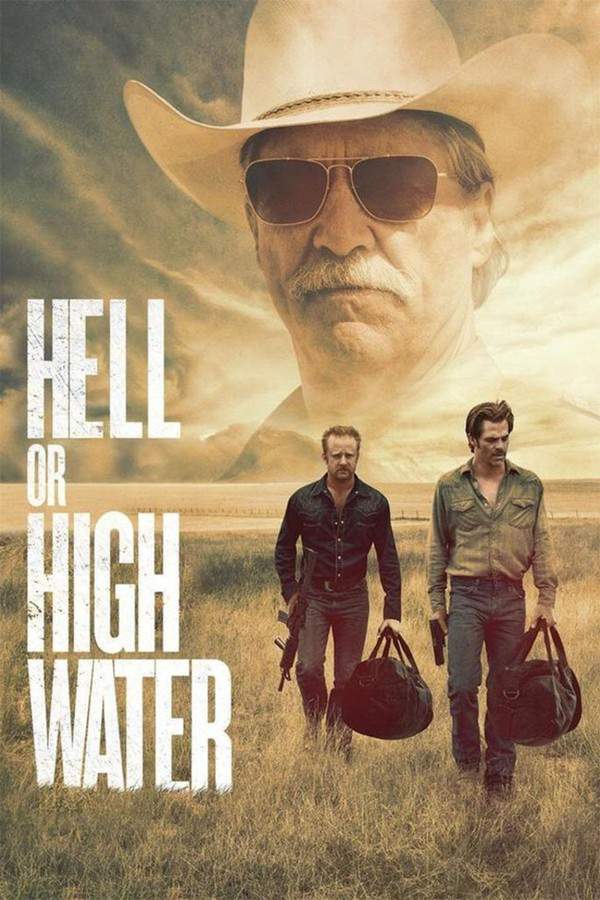
The finale of Hell or High Water sees the Howard brothers' paths diverge irrevocably. After their final robbery, Tanner creates a fatal distraction, drawing the police away so Toby can secure their future. Tanner’s decision to make a last stand isn't purely selfless; it is an acceptance of his own obsolescence. He recognizes that he is too wild for the modern world, a "Lord of the plains" who would rather die on his own terms than fade away in a society that has no place for him. His death is a release, allowing him to exit the story as a chaotic legend while ensuring his brother escapes with the necessary capital.
The shootout claims the life of Alberto, the partner of Texas Ranger Marcus Hamilton, in a narrative twist that highlights the film’s thematic parallels. Throughout the movie, Marcus and Tanner are presented as inverses of one another—both are men of a dying era, relics of a Wild West that has been erased by modern banking and civilization. While Tanner dies in his blaze of glory, Marcus is forced to live on, grappling with the loss of his partner and his own forced retirement. Alberto’s death underscores the tragedy of this changing landscape: the "civilized" partner dies unceremoniously, while the two aging "cowboys"—Tanner and Marcus—are the ones left to resolve their existential crises.
Toby’s success stems from his ability to manipulate the modern system, a sharp contrast to his brother's inability to adapt. He launders the stolen money through a casino, reporting it as gambling winnings to pay off the reverse mortgage on his mother's land. Crucially, he places the land and its oil rights into a trust managed by the very bank he robbed, Texas Midlands. This move creates a legal shield; the bank cannot turn him in without implicating themselves and losing a profitable asset. By using the bank's greed against it, Toby effectively breaks the cycle of poverty that plagued his family, securing a future for his sons that he could never achieve through honest work.
The film concludes with a tense, ambiguous standoff between Marcus and Toby. Marcus, now retired, approaches Toby with a pistol, seeking a confession or perhaps a violent end to his own feelings of uselessness. He admits that the mystery of the robberies and Alberto's death will haunt him forever. However, the film refuses to show a violent resolution. Instead, the ending emphasizes that the conflict is already resolved: Toby has won by saving his children from poverty, and Marcus has lost by surviving in a world that has moved past him. Their conversation ends with an open invitation for violence, but it is ultimately an empty threat; Toby has achieved his "peace," and Marcus is left to wrestle with a changing world that no longer needs his brand of justice.