Plot Explained Spoilers guaranteed!
Plot Explained

Browse by genre

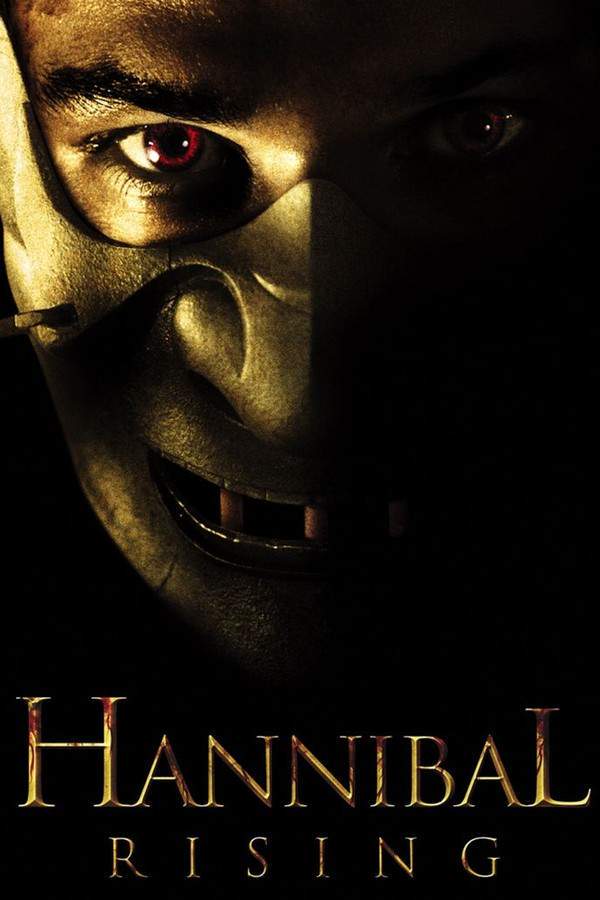
Hannibal Rising (2007) movie poster

Plot Summary

Hannibal Rising (2007) Plot Summary Explained

Release, runtime and language
2007 · 121 min · English
JustWatch #1,473 35
Directed by
Peter Webber
Starring
Rhys Ifans, Li Gong, Gaspard Ulliel

Following the devastation of World War II, a young and deeply traumatized Hannibal Lecter finds himself in Paris, seeking refuge with his uncle's mysterious widow, Lady Murasaki. While studying medicine, his exceptional intellect is increasingly overshadowed by a desire for retribution stemming from a horrific childhood event. This quest for vengeance leads him down a dark and calculated path, shaping him into the infamous figure he will eventually become and forever changing his understanding of justice.

On this page (7)
  1. 1 Where to watch
  2. 2 What happens: full plot
  3. 3 Plot questions answered
  4. 4 The book behind the movie
  5. 5 Movie threads
  6. 6 Movies like Hannibal Rising
  7. 7 Every angle

Where to watch

Where to Watch Hannibal Rising (2007)

Where can you watch Hannibal Rising? Stream, rent or buy it in the US, including on Amazon Prime Video, Peacock Premium and Peacock Premium Plus: current JustWatch availability with up-to-date prices.

Streaming availability powered by JustWatch

Full plot summary · contains spoilers

What Happens in Hannibal Rising: Full Plot Summary

The whole story of Hannibal Rising (2007) explained, from the opening scene to the final frame: every key event, every twist and what it all adds up to. Read it as a quick recap before the sequel, to check a scene you missed, or to finally understand what really happened.

In 1944, young Hannibal Lecter is just eight years old, residing in the grand Lecter Castle, built by his ancestor Hannibal the Grim in the serene Lithuanian countryside. Together with his younger sister Mischa, and their parents, they flee to the family's hunting lodge, desperately trying to escape the encroaching German army. Back at the castle, six Lithuanian militiamen—Grutas, Dortlich, Grentz, Kolnas, Milko, and Pot Watcher—seek to join the Waffen-SS. The commanding SS officer orders them to murder the family's Jewish cook left behind, a task they carry out with disturbing enthusiasm.

In a twist of fate, a Soviet tank arrives at the lodge looking for water, forcing the family out. But their moment of reprieve is short-lived; the tank is spotted by a German Stuka bomber, leading to chaos. The bomber is brought down by the tank but crashes into it, triggering an explosion that leaves only Hannibal and Mischa alive from the initial tragedy.

Stripped of their home, the SS militiamen loot Lecter Castle. When Grutas kills their wounded commander and seizes his Iron Cross, they retreat into the woods, ultimately finding the Lecter lodge. With resources dwindling in the harsh Baltic winter, the men turn their hungry eyes toward Hannibal and Mischa, setting the stage for terror.

Fast forward eight years, Lecter Castle transforms into a Soviet-run orphanage. Hannibal, now unable to speak due to the horrors he endured, is taunted by a bully about not singing the orphanage anthem. In a moment of defiance, he uses a fork to fend off an attack, piercing the bully's hand.

As memories of Mischa haunt him, enraged, the youth commander confines Hannibal to a dungeon. In a bid for freedom, he escapes to Paris to live with his widowed aunt, Lady Murasaki-Lecter, who helps him find his voice again and introduces him to the art of flower arrangement, martial arts, and honoring his ancestors.

In a local market, after facing a butcher's racist insult directed at Lady Murasaki, Lecter's restraint wears thin. He confronts the butcher later, demanding an apology, which is met with hostility. Overwhelmed by rage, Hannibal uses a katana, brutally exacting revenge by slicing the butcher and finally decapitating him. Later, an insightful family cook tells him about the fish's most tender morsels, contributing to Lecter's unsettling culinary skills that involve biting off victims’ cheeks.

As Inspector Popil, a detective grappling with his own grief from the war, investigates the butcher's murder, Lady Murasaki helps Lecter evade suspicion by displaying the butcher's head outside the police station during Hannibal's questioning.

Eventually, Hannibal secures a spot as the youngest medical student in France, where he gets involved in cadaver preparation. Witnessing the execution of a war criminal, he injects himself with a sodium thiopental solution in an effort to recall his sister's tragic fate while listening to Glenn Gould's rendition of the Goldberg Variations, an iconic piece also present in Silence of the Lambs. His jarring memories drive him back to Lithuania, determined to unearth dog tags and the remains of his sister.

Crossing into Soviet territory, Dortlich, now a border patrol agent, spots Lecter. In excavating the lodge ruins, he unearths the dog tags of his sister's murderers. A fight ensues, where Hannibal triumphs over Dortlich and forces him to disclose information about his accomplices before gruesomely executing him.

With vengeance on his mind, Lecter seeks out connections with Kolnas, a member of the gang. Despite his intentions, he refrains from killing Kolnas for the sake of his children, but the pressure intensifies as Grutas, evolving into a sex trafficker, hires another member, Zigmas Milko, to eliminate him. Lecter, aware of Milko's approach, asserts his dominance, ultimately sealing Milko's fate in a gruesome manner.

In a tense moment, Grutas kidnaps Lady Murasaki, luring Lecter into a trap. Hannibal cunningly uses Kolnas' emotions against him, forcing him to divulge information. Betrayed by his own actions, Kolnas meets a grim end at Lecter's hands.

In the climactic confrontation with Grutas, tensions soar as secrets are unraveled. Lecter, cultivating a newfound rage, inflicts gruesome punishment, leaving an indelible mark on Grutas. After the houseboat is engulfed in flames, Lecter, presumed dead, emerges from the shadows, now unchained in a chilling pursuit across Canada, intent on hunting down the last of his sister's assailants, Grentz. This harrowing saga concludes, seamlessly stitching the fabric of Lecter's dark legend as he eventually makes his way to America, setting the stage for further chaos and mayhem.
Last updated: November 02, 2024 at 11:55

Was this helpful?

Plot questions answered

Hannibal Rising Plot Explained: Your Questions Answered

The questions people ask most about Hannibal Rising (2007): what happens in the confusing scenes, why the characters do what they do, the twists, hidden details and what the ending means. Each answer contains spoilers.

Q1

Why did the Lithuanian militiamen kill Hannibal's sister Mischa?

The six militiamen, Grutas, Dortlich, Grentz, Kolnas, Milko, and Pot Watcher, found Hannibal and Mischa alone in the hunting lodge after their family was killed in the explosion. With resources dwindling during the harsh Baltic winter and desperate for food, the men captured and killed the children. Mischa was murdered and cannibalized by the group, while Hannibal was left traumatized and unable to speak.

Foreshadowing: Earlier, the men eagerly murdered the family's Jewish cook, demonstrating their capacity for savagery.

  • mischa
  • militiamen
  • cannibalism
  • hunger
  • winter
Q2

How did Hannibal Lecter become a cannibal?

Hannibal developed his cannibalistic tendencies after witnessing the murder and consumption of his sister Mischa by the Lithuanian militiamen in 1944. This trauma stayed with him throughout his life. Later, a cook taught him about the most tender parts of a fish, which inspired his disturbing practice of biting off victims' cheeks. He later killed and ate the butcher who insulted Lady Murasaki, marking the beginning of his cannibalistic killings.

Foreshadowing: The cook's lesson about the fish's tender morsels directly precedes Hannibal's first cannibalistic act.

  • cannibalism
  • mischa
  • trauma
  • butcher
  • cooking
Q3

Why did Hannibal stop speaking after the trauma at the lodge?

After witnessing the murder of his sister Mischa and the horrific events at the hunting lodge, Hannibal became mute. The psychological trauma was so severe that he refused to speak for eight years, enduring life in the Soviet orphanage as a silent boy who was bullied by other children.

Foreshadowing: The traumatic explosion that killed his parents and sister set the psychological foundation for his silence.

  • trauma
  • mute
  • orphanage
  • silence
  • psychological
Q4

How did Lady Murasaki help Hannibal after he came to Paris?

Lady Murasaki, Hannibal's widowed aunt, provided him with shelter in Paris and helped him recover his voice after years of muteness. She taught him martial arts, the art of flower arrangement, and encouraged him to honor his ancestors. She also helped him evade suspicion after the butcher's murder by displaying the butcher's severed head outside the police station during Hannibal's questioning.

  • lady murasaki
  • paris
  • voice
  • flower arrangement
  • martial arts
Q5

Why did Hannibal kill the Paris butcher?

Hannibal killed the butcher after the man insulted Lady Murasaki with a racist remark at a local market. When Hannibal confronted the butcher demanding an apology, the butcher responded with hostility. Overcome by rage, Hannibal used a katana to kill him, also decapitating him in the process.

Foreshadowing: Hannibal's earlier confrontation with the butcher in the market establishes the insult that motivates the murder.

  • butcher
  • paris
  • katana
  • revenge
  • insult
Q6

How did Hannibal recover his suppressed memories of Mischa's death?

Hannibal injected himself with sodium thiopental (a sedative) while listening to Glenn Gould's rendition of the Goldberg Variations, a piece that would become iconic in his adult life. The drug-induced state helped him access the traumatic memories he had repressed since childhood, allowing him to remember what happened to his sister.

  • sodium thiopental
  • goldberg variations
  • memory
  • mischa
  • trauma
Q7

Why did Hannibal choose not to kill Kolnas when he found him?

When Hannibal located Kolnas, one of the militiamen who murdered his sister, he initially refrained from killing him because Kolnas had children. Hannibal's sense of mercy was limited, but he wouldn't kill in front of the children, showing a strange moral line he still maintained.

Foreshadowing: This decision creates tension later when Kolnas betrays him to Grutas.

  • kolnas
  • children
  • mercy
  • revenge
  • betrayal
Q8

How did Hannibal track down each of the men who killed his sister?

Hannibal used a combination of methods to find the militiamen. After recovering his memories with sodium thiopental, he traveled to Lithuania and confronted Dortlich, who had become a Soviet border patrol agent. Hannibal forced Dortlich to reveal information about the other men's locations before killing him. He then tracked down Kolnas and Grutas, using manipulation and force to obtain information and execute his revenge.

Foreshadowing: Dortlich's dog tags and information provided the trail to the remaining murderers.

  • dortlich
  • kolnas
  • grutas
  • tracking
  • revenge
Q9

What happened to Grutas at the end of the movie?

Grutas, who had become a sex trafficker, set a trap for Hannibal by kidnapping Lady Murasaki. Hannibal managed to manipulate Kolnas into revealing the location, then pursued Grutas to a houseboat. In the climactic confrontation, Hannibal inflicted gruesome punishment on Grutas before setting the houseboat on fire. Grutas presumably died in the flames, though Hannibal was seen emerging from the shadows afterward.

Foreshadowing: Earlier, Grutas killed his own wounded commander to seize the Iron Cross, showing his ruthless nature.

  • grutas
  • houseboat
  • sex trafficker
  • final confrontation
  • fire
Q10

Why did Hannibal go to Canada after killing Grutas?

After defeating Grutas on the houseboat, Hannibal traveled to Canada to hunt down the last of his sister's assailants, Grentz, who remained alive. The movie concludes with Hannibal, now unchained and fully embracing his dark nature, pursuing Grentz in Canada before eventually making his way to America.

  • canada
  • grentz
  • america
  • hunt
  • escape
Q11

What was Inspector Popil's role in the story?

Inspector Popil was a French detective investigating the butcher's murder. He was also grappling with his own grief from the war, which gave him insight into Hannibal's psychological state. However, Lady Murasaki's clever display of the butcher's head outside the police station during Hannibal's questioning helped deflect suspicion away from him.

  • inspector popil
  • butcher murder
  • investigation
  • police
Q12

Why is the Goldberg Variations music significant to Hannibal's character?

The Goldberg Variations, performed by Glenn Gould, become a significant piece in Hannibal's psychological journey. He uses the music during his sodium thiopental session to access repressed memories of his sister's death. The piece would later become famously associated with the adult Hannibal Lecter in The Silence of the Lambs, establishing it as a recurring element in his psychological profile.

  • goldberg variations
  • glenn gould
  • memory
  • psychology
  • music

Movie threads

More Movies Like Hannibal Rising, by Mood & Story

Curated lists built around what makes Hannibal Rising tick: the same mood, the same kind of story or the same emotional payoff. Each list explains why these movies belong together.

Movies about revenge and trauma like Hannibal Rising

Stories where a quest for justice becomes a journey into darkness. If you liked Hannibal Rising's exploration of how trauma fuels a dark quest for vengeance, you'll find similar stories here. These movies feature protagonists whose pursuit of justice leads them down a path of moral decay, focusing on the psychological transformation that comes with calculated revenge.

  • vengeful
  • traumatic
  • grim
  • methodical
  • cold
  • unsettling
  • Tone: dark, grim, unsettling
  • Pacing: steady, methodical
Why these movies?

The story pattern: The narrative pattern begins with a horrific, defining trauma that shatters the protagonist's world. This event fuels a linear, obsessive quest for revenge that is methodical and cold. The story arc is less about external obstacles and more about the internal, psychological transformation as the character sacrifices their innocence and morality to achieve their goal, often ending in a morally ambiguous or bittersweet victory.

Why they belong together: Movies are grouped here because they share a core focus on the cause-and-effect relationship between profound trauma and a methodical, psychologically damaging descent into vengeance. They have a dark, heavy tone, a steady pacing that builds tension, and an emotional core centered on loss and transformation rather than traditional heroism.

Villain origin stories with a dark tone like Hannibal Rising

Witness the chilling, step-by-step creation of an iconic villain. Fans of Hannibal Rising's portrayal of a young Lecter's descent will appreciate these dark villain origin stories. These films methodically trace the path from trauma to infamy, focusing on the psychological breaking points and calculated choices that forge a monster, similar to the journey in Hannibal Rising.

  • cold
  • methodical
  • psychological
  • unsettling
  • grim
  • traumatic
  • Tone: dark, cold, psychological
  • Pacing: steady, deliberate
Why these movies?

The story pattern: These narratives are character-driven explorations that follow a future antagonist's early life. They typically depict a series of traumatic events—often set against a backdrop of wider societal turmoil—that systematically break down the character's empathy and morality. The plot is a straightforward, chronological descent, showing the calculated decisions and intellectual justifications that lead the character to embrace their dark potential.

Why they belong together: These films are connected by their primary goal: to provide a credible and psychologically compelling backstory for a character known for their villainy. They share a dark tone, high emotional intensity from traumatic subject matter, and a steady, deliberate pacing that allows the audience to witness the gradual corrosion of a soul.

If you liked this

Movies Like Hannibal Rising

Similar movies to Hannibal Rising: the same genre, themes or kind of story. Each one comes with its own plot summary, timeline and ending explained.

Browse all movie summaries

Every angle

Hannibal Rising (2007) Explained: Plot, Timeline & Characters

Everything about Hannibal Rising in one place: what happens in the plot summary, the timeline in chronological order, the characters and meaning and a spoiler-free summary. What's After the Movie adds the cast, box office and post-credit scenes.

Coming soon on iOS and Android

The Plot Explained Movie Summary App

Plot summaries, endings explained and timelines on your phone. Catch up on any movie in minutes, save your favorites and never miss a twist again.

Be the first to know when we launch. Your email stays private, always.

Learn more about the app