Plot Explained Spoilers guaranteed!
Plot Explained

Browse by genre

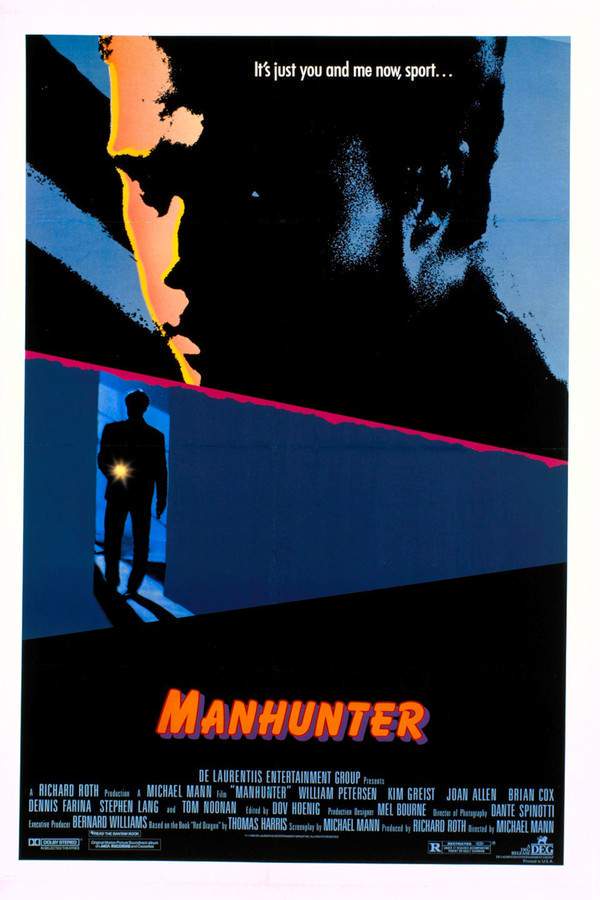
Manhunter (1986) movie poster

Plot Summary

Manhunter (1986) Plot Summary Explained

Release, runtime and language
1986 · 119 min · English
JustWatch #401 345
Directed by
Michael Mann
Starring
William Petersen

FBI agent Will Graham, a specialist in profiling serial killers, is drawn into a disturbing case involving a murderer dubbed "The Tooth Fairy." As he attempts to understand the killer's horrific methods, Graham is forced to confront the memories of his previous, terrifying encounters with the brilliant psychiatrist and cannibal, Dr. Hannibal Lecter. Reliving those past horrors, Graham must use his unique abilities to prevent the new killer from striking again, while battling the psychological toll the investigation takes on him.

On this page (7)
  1. 1 Where to watch
  2. 2 What happens: full plot
  3. 3 Plot questions answered
  4. 4 The book behind the movie
  5. 5 Movie threads
  6. 6 Movies like Manhunter
  7. 7 Every angle

Where to watch

Where to Watch Manhunter (1986)

Where can you watch Manhunter? Stream, rent or buy it in the US, including on Kanopy, Plex and Amazon Video: current JustWatch availability with up-to-date prices.

Streaming availability powered by JustWatch

Full plot summary · contains spoilers

What Happens in Manhunter: Full Plot Summary

The whole story of Manhunter (1986) explained, from the opening scene to the final frame: every key event, every twist and what it all adds up to. Read it as a quick recap before the sequel, to check a scene you missed, or to finally understand what really happened.

Will Graham, played by William Petersen, is a former FBI criminal profiler who has withdrawn from his demanding career following a traumatic encounter with the cannibalistic serial killer, Dr. Hannibal Lecktor. Now living a quieter life in Florida, Graham is approached by his former FBI superior, Jack Crawford, played by Dennis Farina, who seeks his expertise on a new killer case. Despite promising his wife that he will only review evidence and avoid danger, Graham finds himself drawn into a chilling investigation in Atlanta, where the police have labeled the murderer the "Tooth Fairy" due to the bite marks left on the victims.

As he delves deeper into the case, Graham uncovers the killer's fingerprints and faces the intrusive tabloid journalist Freddy Lounds. With a bitter personal history between them, Graham's tension with Lounds rises when they meet. Seeking guidance, Graham visits Lecktor in his prison cell, where he elicits the psychiatrist's insights on the ongoing case. After an unsettling exchange, Lecktor claims he will look over the case file, but he cunningly extracts Graham's home address in a deceptive manner.

Graham then journeys to the initial crime scene in Birmingham, Alabama, where he learns from Crawford about Lounds's sensationalized article on the investigation. During this time, they connect with Frederick Chilton, Lecktor's warden, who reveals a note from the Tooth Fairy that indicates admiration for Lecktor and interest in Graham. This revelation leads to a visit to the FBI Academy at Quantico, where further analysis discloses a missing portion of the note that instructs communication via the personals section of Lounds' tabloid.

In a twist of strategy, the FBI deliberately allows Lecktor’s original advertisement to run knowing it would clue the Tooth Fairy into their plans. They orchestrate a meeting with Lounds, providing him with a misleading profile of the killer to provoke a response. However, the operation to catch the Tooth Fairy fails, and Lounds becomes a victim, waking up in the murderer’s lair. Here, he is subjected to a horrific slideshow showcasing William Blake's The Great Red Dragon paintings alongside the killer's victims, culminating in a terrifying moment where Lounds records a statement before meeting a gruesome fate.

As the investigation intensifies, Graham discovers that Lecktor's coded message contains his home address with a chilling directive to harm his family. Rushing back home, Graham finds them safe but shaken. The FBI quickly relocates his family to a secure location, and he attempts to discuss his earlier retirement with his son, Kevin, amidst a mundane grocery trip. Meanwhile, the Tooth Fairy, Francis Dollarhyde, portrayed by Tom Noonan, engages with a blind co-worker, Reba McClane, played by Joan Allen, developing a complicated relationship that both soothes and challenges his violent urges.

Yet, as their bond strengthens, Dollarhyde’s inner conflict surges, leading him to a tragic misunderstanding that escalates into violence. Upon piecing together a connection between the murdered families, Graham and Crawford trace the culprit's path to a St. Louis film lab. Here, they uncover that Dollarhyde utilized home movies to meticulously plan the killings.

In a dramatic showdown at Dollarhyde's residence, Graham, armed with newfound insight and police backup, desperately attempts to save Reba. Just as he confronts Dollarhyde, chaos erupts, leading to a life-or-death struggle. With trepidation coursing through him, Graham fights back, ultimately putting an end to the violent menace. With the chaos subsiding, he reflects on the harrowing experience, choosing to embrace a permanent retirement, bringing a weary closure to his tumultuous journey.
Last updated: November 07, 2024 at 23:14

Was this helpful?

Plot questions answered

Manhunter Plot Explained: Your Questions Answered

The questions people ask most about Manhunter (1986): what happens in the confusing scenes, why the characters do what they do, the twists, hidden details and what the ending means. Each answer contains spoilers.

Q1

Why did Will Graham retire from the FBI after catching Hannibal Lecktor?

Graham retired because the psychological toll of confronting Lecktor was overwhelming. Lecktor was able to manipulate Graham during their interviews, digging into his psyche and making him question his own mental state. The encounter left Graham with traumatic memories that haunted him, causing him to withdraw from the FBI and seek a quieter life in Florida. He found the experience so damaging that he could not continue working as a profiler.

Foreshadowing: Earlier scenes show Graham experiencing flashbacks and unease when reminded of his past encounters with Lecktor.

  • will graham retirement
  • fbi profiler
  • hannibal lecter
  • psychological trauma
  • mental exhaustion
Q2

How did Hannibal Lecktor get Will Graham's home address?

Lecktor extracted Graham's address through deception during their conversation in the prison cell. When Graham visited Lecktor to seek insights on the Tooth Fairy case, Lecktor asked seemingly innocent questions about Graham's living situation. By carefully steering the conversation, Lecktor convinced Graham to reveal where he lived, using the information later to send a coded message to the Tooth Fairy directing him to Graham's family.
Foreshadowing: Lecktor's psychological manipulation style is established early as he reads and exploits people's weaknesses.
  • hannibal lecktor address
  • will graham home address
  • prison conversation
  • manipulation
  • coded message
Q3

Why did the FBI allow Lecktor's advertisement to run in the newspaper?

The FBI deliberately ran Lecktor's original advertisement as a trap to lure the Tooth Fairy into revealing himself. They knew the killer was trying to communicate with Lecktor through the personals section of Freddy Lounds' tabloid. By running the ad, they hoped to provoke a response from the killer and gather evidence to identify him. The strategy was risky but designed to catch the murderer through his own ego and desire to contact his idol.

Foreshadowing: Earlier analysis of the note revealed the killer was using the personals section to communicate with Lecktor.

  • fbi operation
  • lecter advertisement
  • tooth fairy trap
  • lures killer
  • newspaper personals
Q4

Why was Freddy Lounds killed by the Tooth Fairy?

Lounds became a victim because the FBI used him as bait in their plan to catch the Tooth Fairy. After the FBI ran Lecktor's advertisement, they gave Lounds a misleading profile of the killer to publish, hoping it would provoke a reaction. The plan backfired because the Tooth Fairy recognized the manipulation and targeted Lounds directly. The killer took Lounds to his lair, where he was forced to view a slideshow of victims paired with William Blake artwork before being killed.

Foreshadowing: The FBI's decision to involve Lounds directly in the operation placed him directly in the killer's path.

  • freddy lounds death
  • tooth fairy victim
  • fbi plan backfires
  • blake paintings
  • lair slideshow
Q5

How did the Tooth Fairy know where Will Graham's family lived?

Lecktor deliberately provided Graham's home address to the Tooth Fairy through a coded message hidden in his communication. When Lecktor claimed he would review the case file, he actually used the conversation to extract Graham's address. He then included this information in his message to the killer, essentially handing over Graham's family as targets. This betrayal put Graham's wife and son in grave danger, forcing the FBI to relocate them to a secure location.

Foreshadowing: Lecktor's cunning is demonstrated when he subtly redirects conversation toward Graham's personal details during their prison meeting.

  • tooth fairy family threat
  • graham family danger
  • lecktor betrayal
  • home address
  • coded message killer
Q6

Who is Francis Dollarhyde and why is he called the Tooth Fairy?

Francis Dollarhyde is the serial killer known as the Tooth Fairy, a large and quiet man who works at a film lab in St. Louis. He earned his nickname from the distinctive bite marks he leaves on his victims, which distinguish his murders from other killings. Dollarhyde is obsessed with William Blake's artwork, particularly the Red Dragon paintings, and sees himself as a divine figure. Despite his violent nature, he develops a complicated relationship with his blind coworker Reba McClane.

Foreshadowing: Early crime scenes with bite marks establish the killer's distinctive signature before Dollarhyde is identified.

  • francis dollarhyde
  • tooth fairy identity
  • serial killer
  • bite marks
  • film lab worker
Q7

Why did Dollarhyde kill Reba despite their relationship?

Dollarhyde killed Reba during a tragic misunderstanding rather than out of deliberate malice. When Reba accidentally discovered evidence of his crimes, Dollarhyde experienced an intense internal conflict between his growing love for her and his violent impulses. In a moment of panic and rage, he attacked her, unable to control the monster within him despite the connection they had formed. His relationship with Reba represented his attempt to suppress his violent urges, but ultimately he could not overcome his nature.

Foreshadowing: Dollarhyde's internal struggle is visible throughout his scenes with Reba, showing the tension between his desire for normalcy and his violent impulses.

  • reba death
  • dollarhyde kills reba
  • blind woman
  • tragic misunderstanding
  • internal conflict
Q8

How did Will Graham trace the Tooth Fairy to the film lab in St. Louis?

Graham connected the murdered families by noticing they all appeared in home movies, which led him to investigate film processing. He and Crawford traveled to a film lab in St. Louis, where they discovered that Dollarhyde worked as a projectionist and film processor. This job gave him access to home movies from the families he targeted, allowing him to study their routines and plan his attacks. The discovery of this connection finally revealed the killer's identity and location.

Foreshadowing: Graham's attention to detail about the victims' backgrounds reveals he noticed the pattern connecting the families.

  • st louis film lab
  • home movies evidence
  • traces killer
  • projectionist
  • family connection
Q9

Why does Will Graham choose to retire permanently at the end of the movie?

Graham retires permanently because the psychological toll of the case becomes unbearable. Confronting both Lecktor's manipulation and the violent Dollarhyde brings back all the trauma from his previous encounter with Lecktor. The experience leaves him so scarred and exhausted that he decides he can no longer continue working as an FBI profiler. Though he successfully stops the killer and saves Reba, the victory comes at such a personal cost that he chooses to walk away from his career entirely, seeking peace away from the darkness of serial killer investigations.

Foreshadowing: Graham's earlier promise to his wife about staying out of danger and his discussion of retirement during the grocery trip establish his desire to leave the FBI.

  • graham retirement
  • permanent exit
  • psychological cost
  • career end
  • bittersweet ending
Q10

What is the significance of the William Blake paintings in the movie?

The William Blake paintings, particularly 'The Great Red Dragon,' represent Dollarhyde's distorted self-image and divine delusion. He sees himself as a powerful, transformative figure like the dragon in Blake's artwork. During his killing sessions, he forces victims to view slideshows pairing the paintings with images of his victims, treating it as a twisted religious experience. The artwork symbolizes the monster within Dollarhyde, a man who sees his violent acts as something holy rather than criminal.

Foreshadowing: Dollarhyde's fascination with the paintings is established early through his workplace and personal items.

  • william blake paintings
  • great red dragon
  • dollarhyde obsession
  • symbolism
  • divine delusion

Movie threads

More Movies Like Manhunter, by Mood & Story

Curated lists built around what makes Manhunter tick: the same mood, the same kind of story or the same emotional payoff. Each list explains why these movies belong together.

Psychological Profiling Thrillers Like Manhunter

Thrillers where investigators must deeply understand a killer's psyche to stop them. For viewers who liked the methodical criminal profiling in Manhunter, this list features similar movies where investigators use psychology to hunt serial killers. These stories explore the dark, cerebral cat-and-mouse games that define the genre, focusing on the mental toll of the pursuit.

  • methodical
  • psychological
  • unsettling
  • cerebral
  • tense
  • anxious
  • Tone: dark, psychological
  • Pacing: steady, methodical
Why these movies?

The story pattern: Stories in this thread typically follow a detective or profiler with a unique ability to empathize with criminals. The plot is driven by the investigation, but the core conflict is psychological, as the protagonist risks their own sanity to understand and anticipate the antagonist's next move. The narratives often involve revisiting past trauma and confronting a mirror-like adversary.

Why they belong together: These films are grouped together because they share a focus on the psychological method of criminal profiling. They create a specific kind of tension derived not just from action, but from the cerebral dread of understanding a murderer's motives and patterns, leading to a heavy emotional weight.

Claustrophobic Psychological Thrillers Like Manhunter

Stories where quiet tension and psychological unease build to an unbearable level. If you liked the slow-building, claustrophobic anxiety of Manhunter, this list features movies with a similar vibe. These films use a steady pace, dark tone, and psychological depth to create a deeply unsettling and suspenseful viewing experience that prioritizes mood over action.

  • claustrophobic
  • suspenseful
  • unsettling
  • anxious
  • psychological
  • bleak
  • Tone: dark, unsettling
  • Pacing: steady, slow burn
Why these movies?

The story pattern: The narrative pattern involves a gradual accumulation of tension, often through meticulous detail and a focus on the protagonist's deteriorating mental state. The conflict is internal as much as external, with the setting and pacing creating a sense of inescapable confinement. The plots unfold logically but are charged with a constant, underlying threat that rarely relents.

Why they belong together: These movies are united by their shared commitment to a specific atmospheric vibe: a methodical, claustrophobic, and psychologically heavy thriller experience. They prioritize mood, tone, and the slow erosion of a character's psyche, resulting in a cohesive feeling of sustained anxiety.

If you liked this

Movies Like Manhunter

Similar movies to Manhunter: the same genre, themes or kind of story. Each one comes with its own plot summary, timeline and ending explained.

Browse all movie summaries

Every angle

Manhunter (1986) Explained: Plot, Timeline & Characters

Everything about Manhunter in one place: what happens in the plot summary, the timeline in chronological order, the characters and meaning and a spoiler-free summary. What's After the Movie adds the cast, box office and post-credit scenes.

Coming soon on iOS and Android

The Plot Explained Movie Summary App

Plot summaries, endings explained and timelines on your phone. Catch up on any movie in minutes, save your favorites and never miss a twist again.

Be the first to know when we launch. Your email stays private, always.

Learn more about the app