Plot Explained Spoilers guaranteed!
Plot Explained

Browse by genre

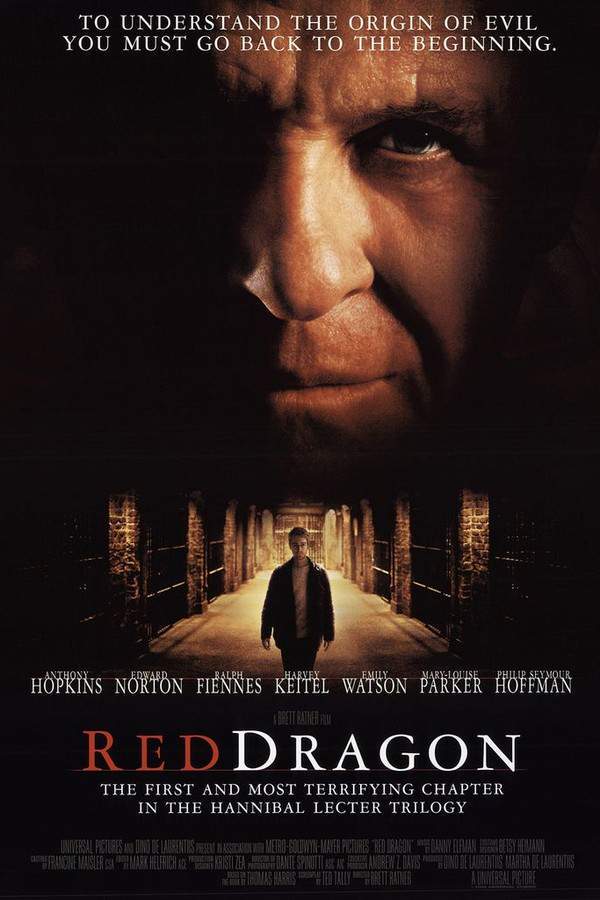
Red Dragon (2002) movie poster

Plot Summary

Red Dragon (2002) Plot Summary Explained

Release, runtime and language
2002 · 124 min · English
Loading streaming availability…
Directed by
Brett Ratner
Starring
Anthony Hopkins, Ralph Fiennes, Edward Norton
Budget
$78M

A former FBI profiler, Will Graham, is drawn back into a terrifying case involving a serial killer known as the Tooth Fairy. Haunted by his ability to empathize with killers, Graham must confront his inner demons while working with the imprisoned Hannibal Lecter to understand the killer's disturbing methods. As Graham delves deeper into the investigation, he risks losing himself in the darkness he's trying to solve, blurring the lines between hunter and prey.

On this page (7)
  1. 1 Where to watch
  2. 2 What happens: full plot
  3. 3 Plot questions answered
  4. 4 The book behind the movie
  5. 5 Movie threads
  6. 6 Movies like Red Dragon
  7. 7 Every angle
Loading streaming availability…

Full plot summary · contains spoilers

What Happens in Red Dragon: Full Plot Summary

The whole story of Red Dragon (2002) explained, from the opening scene to the final frame: every key event, every twist and what it all adds up to. Read it as a quick recap before the sequel, to check a scene you missed, or to finally understand what really happened.

In his Baltimore townhouse, the renowned psychiatrist Dr. Hannibal Lecter (Anthony Hopkins) hosts an elegant dinner party that subtly veils a sinister undertone. The conversation flows, centering around the mysterious disappearance of a local musician who, notably, had drawn criticism for hitting several incorrect notes during a concert that Lecter had attended. As the evening progresses, Lecter serves his guests a sumptuous meal and cryptically replies when probed about the meat's origin: > "If I tell you, I'm afraid you won't even try it."

After the dinner, the young and talented FBI agent Will Graham (Edward Norton) pays a visit to Lecter. They are engaged in developing a psychological profile of a dangerous local serial killer. As the investigation unfolds, it surfaces that the madman displays a gruesome pattern—removing edible parts from his victims, such as kidneys and livers—prompting Graham to suspect a more horrific truth: the killer might actually be a cannibal.

In the midst of their consultation, Graham uncovers damning evidence linking Lecter to the heinous murders. Tensions escalate when Lecter, confronting the implications of Graham's discoveries, launches a sudden attack, grievously wounding him before Graham manages to overpower the brilliant but deranged psychiatrist. Following this incident, Lecter is sentenced to life imprisonment within a high-security institution for the criminally insane, while Graham is left to grapple with the profound psychological scars of the encounter, leading him to retire from the FBI.

Years later, the emergence of a new serial killer—dubbed the Tooth Fairy—complicates matters anew. The killer stalks and mercilessly slaughters apparently random families on successive full moons, creating a wave of terror and urgency. In a desperate bid to apprehend the murderer before a potential next victim is claimed, Special Agent Jack Crawford appeals to Graham for assistance. Haunted by guilt over the potential loss of another innocent family, Graham begrudgingly agrees to re-enter the fray.

As he begins to sift through the evidence and crime scenes, Graham recognizes that many of his past successes in catching criminals had been greatly aided by his collaborations with Dr. Lecter, prompting him to seek the psychiatrist's help once more. Meanwhile, the Tooth Fairy is revealed to be a deeply troubled man named Francis Dolarhyde (Ralph Fiennes), whose schizophrenia and twisted admiration for Lecter fuel his horrific actions. Dolarhyde, self-identifying as "The Great Red Dragon" due to an obsession with a painting by William Blake, is unable to rein in his violent and sexual impulses, which spiraled from years of brutal abuse by his grandmother.

Graham's investigation faces further obstacles with the presence of Freddy Lounds, an insatiable reporter from the tabloid Tattler, who relentlessly pursues leads regarding the Tooth Fairy. The tension heightens when a secret correspondence between Lecter and Dolarhyde is unearthed. Lecter coldly reveals Graham's home address, placing the lives of Graham's wife, Molly (Mary-Louise Parker), and son Josh (Tyler Patrick Jones) in peril. To ensure their safety, Molly and Josh are swiftly relocated to a secluded farm belonging to Crawford’s brother.

In a fraught game of psychological chess, Graham strives to intercept the communication between Lecter and Dolarhyde while shielding the vulnerable Graham family. Lecter, however, deftly manipulates the situation, boosting the stakes—his cooperation in capturing the Tooth Fairy hinges on a first-class meal in his cell and the restoration of his reading privileges. In a ploy to provoke Dolarhyde, Graham gives an interview that diminishes the killer in public view, a calculated move designed to bait him further. Yet, the malevolent Dolarhyde retaliates by kidnapping and viciously torturing Lounds to force a public recantation of Graham's allegations, showcasing his reckless brutality when he gruesomely mutilates Lounds before ultimately setting him ablaze.

Amid this chaos, Dolarhyde's burgeoning relationship with a blind co-worker, Reba McClane (Emily Watson), becomes a pivotal layer in the unfolding story. Despite his violent urges, Dolarhyde finds solace in Reba, leading to a tender but conflicted romance that causes him to battle against his darker inclinations and the haunting presence of the Red Dragon. The complexity of their relationship brings forth a chilling tension as Dolarhyde attempts to shield Reba from his monstrous identity.

As the investigation progresses, Graham uncovers the startling realization that the killer's familiarity with the victims' homes stems from his access to the home videos processed by the video editing company where Dolarhyde works. Time runs short as Dolarhyde, sensing he’s narrowing in on him, visits Reba one last time only to discover her companionship with another co-worker, leading to a violent confrontation that spirals into chaos.

The eventual encounter between Graham and Dolarhyde escalates into a heart-pounding climax, culminating in a bitter struggle within Graham's own family home. As the two engage in a deadly dance, Graham’s quick-thinking tactics become the difference between life and death for his son. The tension peaks when chaos breaks out, resulting in both profound loss and the haunting consequences of Dolarhyde's violent quest as Graham must confront his own traumas and the specter of Lecter’s manipulations.

In the aftermath, Graham receives a cryptic letter from Dr. Lecter, reminding him of their intertwined fates, while Lecter yearns for contact with a new agent at the FBI. This chillingly orchestrated web of violence, psychological battles, and deep-seated emotional scars highlights not only the intricate dance between predator and prey but delves into the very fabric of humanity and the darkness that lies within.
Last updated: January 13, 2025 at 13:49

Was this helpful?

Plot questions answered

Red Dragon Plot Explained: Your Questions Answered

The questions people ask most about Red Dragon (2002): what happens in the confusing scenes, why the characters do what they do, the twists, hidden details and what the ending means. Each answer contains spoilers.

Q1

Why does Dr. Lecter attack Will Graham?

Lecter attacks Graham because Graham uncovers evidence linking Lecter to the serial killings during their consultation session. When Graham pieces together that Lecter himself is the killer he was profiling, Lecter launches a sudden attack, nearly killing Graham before Graham manages to overpower him.

Foreshadowing: Earlier in their conversation, Graham notes that the killer removes edible organs from victims, hinting at cannibalism and drawing suspicion toward Lecter.

  • hannibal lecter
  • attack
  • will graham
  • arrest
  • cannibal
Q2

Why does Will Graham retire from the FBI?

Graham retires because he is psychologically traumatized from his encounter with Lecter. The experience of being attacked by someone he was profiling and nearly dying leaves him with deep emotional scars, prompting him to leave active duty and seek a quieter life.

Foreshadowing: The attack leaves Graham severely wounded, and the summary notes he "grapples with the profound psychological scars" of the encounter.

  • will graham
  • retirement
  • fbi
  • trauma
  • hannibal lecter
Q3

Why does Will Graham agree to help catch the Tooth Fairy?

Graham agrees because Special Agent Jack Crawford appeals to him out of desperation, noting that another innocent family could be killed. Graham feels guilty about the potential loss of life and reluctantly returns to help, despite the psychological toll it will take.

Foreshadowing: The summary notes Graham is "haunted by guilt over the potential loss of another innocent family" when Crawford approaches him.

  • will graham
  • jack crawford
  • tooth fairy
  • fbi
  • return
Q4

Why is the serial killer called the Tooth Fairy?

The killer earns the nickname "Tooth Fairy" because he removes teeth from his victims as part of his brutal methodology. The name reflects the disturbing nature of his crimes and becomes the media designation for the murders.

  • tooth fairy
  • serial killer
  • nickname
  • murders
Q5

Why does Francis Dolarhyde call himself the Great Red Dragon?

Dolarhyde becomes obsessed with a William Blake painting called "The Great Red Dragon" and uses this identity to define himself. His schizophrenia and twisted admiration for Hannibal Lecter fuel this persona, which represents his attempt to embrace and control his violent impulses rather than suppress them.

Foreshadowing: The timeline reveals Dolarhyde's self-identification as "The Great Red Dragon" is directly tied to his obsession with the painting.

  • francis dollarhyde
  • red dragon
  • william blake
  • obsession
  • schizophrenia
Q6

Why does Dr. Lecter give Will Graham's address to Francis Dolarhyde?

Lecter reveals Graham's address to Dolarhyde through their secret correspondence as a deliberate manipulation. By placing Graham's family in danger, Lecter creates a situation where Graham must confront Dolarhyde, essentially using Dolarhyde as a proxy to continue his psychological games with Graham.

Foreshadowing: The summary notes Lecter "deftly manipulates the situation," using the threat to Graham's family to leverage cooperation from the FBI.

  • hannibal lecter
  • address
  • dolarhyde
  • manipulation
  • family threat
Q7

Why does Dolarhyde kidnap and torture Freddy Lounds?

Dolarhyde kidnaps Lounds, a tabloid reporter, in retaliation for an interview Graham gave that diminished Dolarhyde publicly. To force a recantation, Dolarhyde tortures Lounds viciously and then sets him on fire, demonstrating his volatile nature and need for control over how he is perceived.

Foreshadowing: Graham's "calculated move" to provoke Dolarhyde through the media directly triggers this violent retaliation.

  • freddy lounds
  • kidnap
  • torture
  • dolarhyde
  • retaliation
Q8

Why does Dolarhyde become romantically interested in Reba?

Despite his violent nature, Dolarhyde develops feelings for Reba McClane, a blind co-worker, because she treats him with kindness and sees him as a person rather than a monster. This relationship becomes a pivotal conflict as he struggles between his love for her and his uncontrollable violent impulses.

Foreshadowing: The timeline notes Dolarhyde's relationship with Reba causes him to "battle against his darker inclinations" and the Red Dragon persona.

  • francis dolarhyde
  • reba mcclane
  • romance
  • blind
  • relationship
Q9

How does Dolarhyde know which houses to target?

Dolarhyde works at a video editing company where he processes home videos. This gives him access to personal recordings from which he gathers information about potential victims' homes, allowing him to select targets and know the layout of their residences.

Foreshadowing: The summary explicitly states the killer's "familiarity with the victims' homes stems from his access to the home videos processed by the video editing company."

  • dolarhyde
  • home videos
  • targets
  • video editing
  • surveillance
Q10

Why does the final confrontation happen at Graham's home?

Dolarhyde goes to Graham's home because he has learned Graham's address from Lecter's communication. Sensing Graham is closing in on him, Dolarhyde directly targets Graham's family, leading to the climactic showdown in Graham's house.

Foreshadowing: Lecter's revelation of Graham's address directly places the Graham family in danger, setting up this inevitable confrontation.

  • showdown
  • graham home
  • dolarhyde
  • confrontation
  • family
Q11

Why does Molly shoot Dolarhyde?

Molly shoots Dolarhyde during the chaotic struggle in her home to protect her husband and son from being killed. When Graham and Dolarhyde engage in a deadly fight, Molly intervenes at the critical moment, killing Dolarhyde and ending the threat.

  • molly graham
  • shoot
  • dolarhyde
  • protection
  • death
Q12

What is the meaning of Lecter's final letter to Graham?

Lecter's cryptic letter serves as a haunting reminder that their connection persists despite Lecter's imprisonment. By writing from his cell and expressing interest in contacting a new FBI agent, Lecter demonstrates that he remains a manipulative force, suggesting their cat-and-mouse relationship is far from over.

  • hannibal lecter
  • letter
  • finale
  • meaning
  • manipulation
Q13

Why does Dolarhyde kill Reba's acquaintance?

Dolarhyde kills Reba's acquaintance out of jealousy when he discovers her with another co-worker during his final visit. This violent act represents his complete surrender to the Red Dragon persona, as he prepares to eliminate Reba rather than let the monster take control of her.

Foreshadowing: The timeline indicates this murder occurs when Dolarhyde "kills Reba's acquaintance out of jealousy" during a violent confrontation.

  • dolarhyde
  • jealousy
  • kill
  • murder
  • reba

Movie threads

More Movies Like Red Dragon, by Mood & Story

Curated lists built around what makes Red Dragon tick: the same mood, the same kind of story or the same emotional payoff. Each list explains why these movies belong together.

Profiler vs. Serial Killer thrillers like Red Dragon

Brilliant investigators hunt twisted killers by thinking like them. If you liked the cat-and-mouse psychological warfare in Red Dragon, you'll find similar tension in these movies. This list features intense thrillers about criminal profilers hunting serial killers, where the line between hunter and prey becomes dangerously blurred.

  • tense
  • psychological
  • gripping
  • dark
  • suspenseful
  • investigative
  • Tone: tense, dark, psychological
  • Pacing: steady, investigative
Why these movies?

The story pattern: These stories follow a linear investigative structure, driven by a series of clues and escalating threats. The core conflict is internal and external: the hero must use their empathy for madness to catch a killer, often at great personal psychological cost, creating a tense, character-driven journey.

Why they belong together: Movies are grouped here for their shared focus on the psychological profiling process, the intense mental duel between investigator and killer, and the heavy emotional weight of delving into darkness. They deliver a specific, gripping blend of crime procedural and psychological horror.

Movies about a psychological descent like in Red Dragon

Protagonists risk their sanity by confronting pure evil. Fans of Red Dragon who were captivated by Will Graham's perilous journey into the mind of a killer will appreciate these films. This collection features stories where heroes confront darkness so profound it threatens to consume them, leaving a lasting psychological impact.

  • disturbing
  • psychological
  • oppressive
  • anxious
  • unsettling
  • dark
  • Tone: oppressive, disturbing, tense
  • Pacing: steady, psychological build
Why these movies?

The story pattern: The narrative arc is one of psychological erosion. The protagonist, often an expert or someone uniquely vulnerable, is drawn into a confrontation with a monstrous antagonist. The plot's progression is paralleled by the hero's internal struggle, culminating in a victory that may feel pyrrhic, leaving them permanently marked by the experience.

Why they belong together: These films are connected by their exploration of the cost of facing evil. They share a heavy emotional weight, a tense and oppressive atmosphere, and a focus on the protagonist's fragile mental state. The similarity lies in the unsettling feeling of the hero's identity being at stake.

If you liked this

Movies Like Red Dragon

Similar movies to Red Dragon: the same genre, themes or kind of story. Each one comes with its own plot summary, timeline and ending explained.

Browse all movie summaries

Every angle

Red Dragon (2002) Explained: Plot, Timeline & Characters

Everything about Red Dragon in one place: what happens in the plot summary, the timeline in chronological order, the characters and meaning and a spoiler-free summary. What's After the Movie adds the cast, box office and post-credit scenes.

Coming soon on iOS and Android

The Plot Explained Movie Summary App

Plot summaries, endings explained and timelines on your phone. Catch up on any movie in minutes, save your favorites and never miss a twist again.

Be the first to know when we launch. Your email stays private, always.

Learn more about the app