Year: 2024
Runtime: 1 h 37 m
Language: norwegian
Director: Thea Hvistendahl
Echo Score: 70Budget: $4.5M
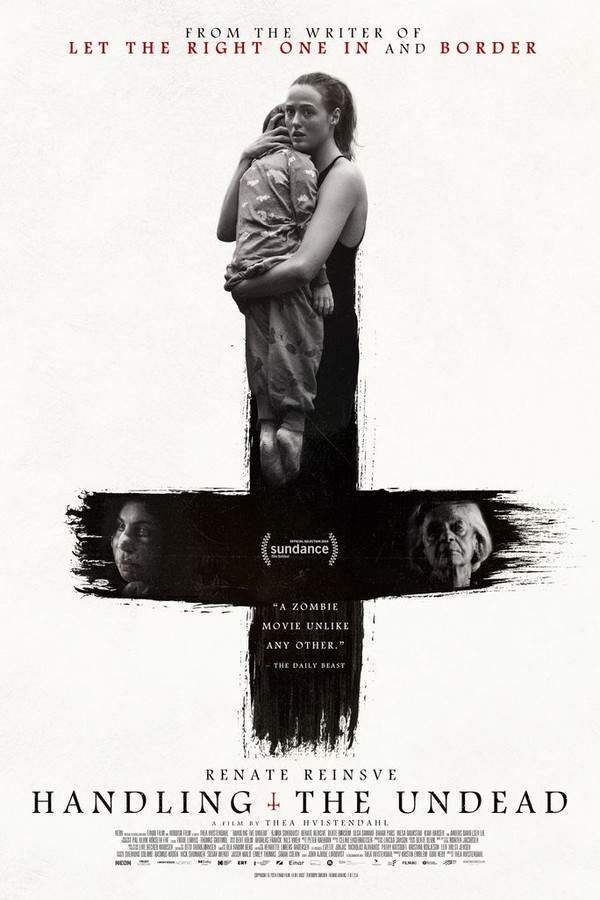
When a series of unsettling events coincide with the end of a sweltering summer in Oslo, the boundary between the living and the dead begins to dissolve. Three families find themselves confronted by the return of their deceased loved ones, forcing them to question their grief and the unresolved issues that linger. As these spirits reappear, the families must uncover the intentions of these restless souls and confront unsettling truths about their identities.
Warning: spoilers below!
Haven’t seen Handling the Undead yet? This summary contains major spoilers. Bookmark the page, watch the movie, and come back for the full breakdown. If you're ready, scroll on and relive the story!
Read the complete plot breakdown of Handling the Undead (2024), including all key story events, major twists, and the ending explained in detail. Discover what really happened—and what it all means.
After an inexplicable and eerie event causes the deceased to return, three grieving families find themselves faced with the shocking resurrection of loved ones. Among them is Mahler, who has been mourning the loss of his young grandson Elias, the child of his daughter Anna. Another is David, who is still reeling from the premature death of his wife Eva. Lastly, there is Tora, who is deeply affected by the passing of her partner Elisabet.
The story begins with Mahler visiting Elias’s grave when the mysterious event unfolds. Suddenly, he collapses, only to find himself awakening across the grave. In a desperate move, he digs up the coffin and is astonished to discover Elias alive, albeit in an alarming condition. He takes the child home, where the already traumatized Anna, returning from her night shift, is met with chaos as she finds Elias in bed. Overwhelmed by the surreal turn of events, she plunges into despair, leading her to attempt to take her own life until Mahler intervenes just in time to save her.
Simultaneously, David grapples with his own grief at work when the catastrophic event occurs. He receives a panicked call informing him of Eva’s accident and rushes to the hospital only to discover that she has died before he could arrive. In a shocking twist, while grieving by her side, Eva unexpectedly begins to breathe again, leaving the hospital staff in a state of confusion.
As the story unfolds, Oslo transforms into a surreal environment where the deceased walk amongst the living, lost in a trance and unable to express themselves. Streets become crowded with the resurrected souls, many of whom desperately try to escape their graves, adding to the chaos and confusion surrounding the living.
In her struggle to cope with Elisabet’s death, Tora attempts to restore normalcy by bathing and dressing her. However, this act leads to a terrifying encounter when Elisabet, now altered, viciously attacks Tora.
In search of solace, Mahler and Anna retreat to a secluded cottage with Elias, hoping to find peace in isolation. Yet, Elias’s peculiar behavior and the pervasive smell of decay fuel Anna’s dread. As tensions rise, Anna finds herself alone at the cottage with Elias after taking a swim. Upon her return, she stumbles upon a decomposing man near the cottage. As Mahler arrives just in time to battle the intruder, he suffers a fatal injury from a vicious bite to his throat. While chaos ensues, Anna escapes with Elias in a rowboat, seeking safety.
David, determined to understand the phenomenon, reaches out to the hospital but receives no updates regarding Eva’s condition. He attempts to push forward with life alongside his children, Flora and Kian, even preparing to celebrate Kian’s birthday. A visit to Eva at the hospital takes a dark turn when she holds Kian’s pet bunny, only to crush it mindlessly in a trance. Flora quietly remarks, “Mom is dead,” which forces David to confront the harsh reality of their situation.
As events continue to spiral, Elisabet appears fully transformed, having committed a tragic act by killing Tora in her sleep. Meanwhile, Kian, struggling under the weight of his grief, holds a private burial ceremony for his beloved bunny in the woods. The narrative closes with Anna and Elias drifting away on a rowboat, where she lovingly tells him she loves him before gently placing him in the water, watching as he sinks beneath the surface. The haunting imagery and emotional turmoil encapsulate the depths of sorrow and the complexities of life after death in this gripping tale.
Last Updated: May 13, 2025 at 20:30
Still wondering what the ending of Handling the Undead (2024) really means? Here’s a spoiler-heavy breakdown of the final scene, major twists, and the deeper themes that shape the film’s conclusion.
Handling the Undead ends with the horrifying truth about the undead returning from the dead. Throughout the film, we see how the characters’ grief drives them to hope and even desperation, leading them to believe in impossible reunions. The phenomenon that causes the dead to come back is mysterious, linked to a strange electromagnetic event that affects both the living and the deceased. When Eva wakes up after being pronounced dead and is declared legally alive again, it initially feels like a miracle for her family, especially after their grief and denial. However, as Eva’s condition deteriorates, it becomes clear she isn’t truly back—she’s a zombie. The same goes for Elisabet, who, despite her initial moments of tenderness and longing to reconnect, ultimately reveals darker signs of her undead nature, including biting and violence. The final reveal confirms that those who reappear are indeed flesh-eating zombies, not the loved ones they once were.
In the film’s brutal climax, Anna’s worst fears are realized when she finds Elias, her son, returned but turned into a reanimated zombie. The heartbreaking moment comes when Anna, overwhelmed by the horror and the realization that her son no longer exists as her child, drowns him to end his suffering and her own agony. This act of destruction is also portrayed as an escape for Anna—drowning Elias allows her to rid herself of the illusion that her son might still be alive in some form, and it offers her a tragic hope: that maybe now, she can hold onto the memory of Elias without the horrifying truth permanently tainting her grief. In her final act, Anna chooses to destroy what’s left of her son to prevent him from hunting others, even if it means destroying her own capacity for hope. Ultimately, her act signifies an acceptance of the terrifying reality—that death’s return is a monstrous facsimile of life, and sometimes, letting go means saying goodbye forever.
Last Updated: June 25, 2025 at 09:02
Discover curated groups of movies connected by mood, themes, and story style. Browse collections built around emotion, atmosphere, and narrative focus to easily find films that match what you feel like watching right now.
Where the return of the dead forces characters to confront unresolved sorrow.For viewers who liked the heavy emotional weight of Handling the Undead, this section features movies that blend supernatural horror with deep explorations of grief and mourning. These stories use eerie events to unpack unresolved trauma and existential dread in a similar, somber tone.
These stories typically involve a supernatural intrusion—often the return of the dead—that disrupts the lives of grieving characters. The narrative follows their struggle not just with the strange event itself, but with the reopened wounds, unanswered questions, and heavy emotional burdens it represents, often leading to a bleak or bittersweet resolution.
Movies are grouped here because they share a core focus on using horror elements as a metaphor for processing loss. They prioritize a melancholic, somber mood over traditional frights, creating a cohesive experience of heavy emotional weight and existential reflection.
Stories where a slow, oppressive atmosphere builds profound unease and sorrow.If you appreciated the deliberate, slow pacing and oppressive atmosphere of Handling the Undead, this collection features films that use a similar slow burn approach to build a profound sense of dread, sorrow, and unease through atmospheric storytelling.
Narratives in this thread unfold gradually, often with a loose or episodic structure that prioritizes mood over a tight plot. The journey is internal, focusing on the psychological state of characters as they are consumed by a creeping, inescapable sense of despair, loss, or impending doom.
These films are united by their shared commitment to a slow, atmospheric build-up that creates a specific, heavy mood. The experience is defined by its pacing and tone, resulting in a cohesive feeling of meditative unease and emotional exhaustion for the viewer.
Don't stop at just watching — explore Handling the Undead in full detail. From the complete plot summary and scene-by-scene timeline to character breakdowns, thematic analysis, and a deep dive into the ending — every page helps you truly understand what Handling the Undead is all about. Plus, discover what's next after the movie.
Track the full timeline of Handling the Undead with every major event arranged chronologically. Perfect for decoding non-linear storytelling, flashbacks, or parallel narratives with a clear scene-by-scene breakdown.
Discover the characters, locations, and core themes that shape Handling the Undead. Get insights into symbolic elements, setting significance, and deeper narrative meaning — ideal for thematic analysis and movie breakdowns.
What really happened at the end of Handling the Undead? This detailed ending explained page breaks down final scenes, hidden clues, and alternate interpretations with expert analysis and viewer theories.
Get a quick, spoiler-free overview of Handling the Undead that covers the main plot points and key details without revealing any major twists or spoilers. Perfect for those who want to know what to expect before diving in.
Visit What's After the Movie to explore more about Handling the Undead: box office results, cast and crew info, production details, post-credit scenes, and external links — all in one place for movie fans and researchers.
Discover movies like Handling the Undead that share similar genres, themes, and storytelling elements. Whether you’re drawn to the atmosphere, character arcs, or plot structure, these curated recommendations will help you explore more films you’ll love.
Handling the Undead (2024) Scene-by-Scene Movie Timeline
Handling the Undead (2024) Movie Characters, Themes & Settings
Handling the Undead (2024) Ending Explained & Theories
Handling the Undead (2024) Spoiler-Free Summary & Key Flow
Movies Like Handling the Undead – Similar Titles You’ll Enjoy
Bloody Angels (2001) Story Summary & Characters
Midsommar (2019) Story Summary & Characters
Dead & Buried (1981) Complete Plot Breakdown
The Dead Girl (2006) Story Summary & Characters
Deadgirl (2009) Story Summary & Characters
Midsummer (2003) Plot Summary & Ending Explained
Ragmork (2019) Plot Summary & Ending Explained
Lake of Death (2019) Full Summary & Key Details
Death at Oslo Central (1990) Full Movie Breakdown
Mortuary (1982) Movie Recap & Themes
Cadaver (2020) Complete Plot Breakdown
Project Z (2021) Full Movie Breakdown
Post Mortem: No One Dies in Skarnes (1000) Detailed Story Recap
Lake of the Dead (1958) Plot Summary & Ending Explained
The Dead Hate the Living! (1999) Film Overview & Timeline