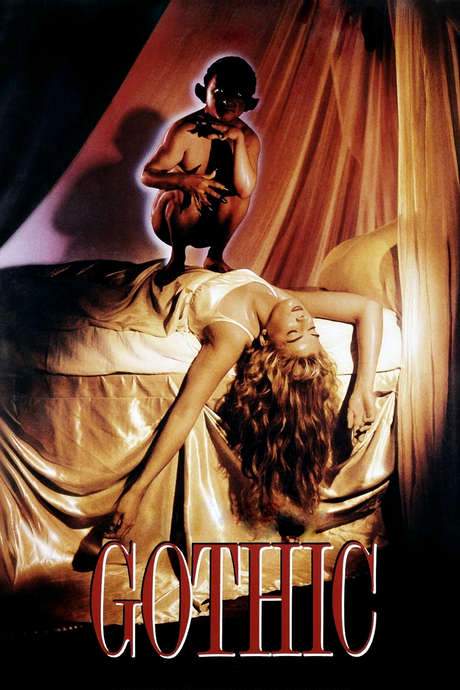










Gothic

Gothic

Year: 1986

Runtime: 88 mins

Language: English

HorrorHorror

On an isolated estate by Lake Geneva, Lord Byron receives Percy and Mary Shelley. Joined by Byron’s lover Claire Clairmont, they experiment with hallucinogens and devise a night of macabre storytelling. As the evening unfolds, the horrors they summon blur the line between illusion and reality, making it impossible to tell specter from fact.

Warning: spoilers below!

Haven’t seen Gothic yet? This summary contains major spoilers. Bookmark the page, watch the movie, and come back for the full breakdown. If you're ready, scroll on and relive the story!

Timeline & Setting – Gothic (1986)

Explore the full timeline and setting of Gothic (1986). Follow every major event in chronological order and see how the environment shapes the story, characters, and dramatic tension.

Time period

1816, Summer

The core events unfold during the summer of 1816, a period of Romantic experimentation and stormy weather that intensifies the group's anxieties. The era is early 19th century, marked by interest in science and the supernatural, which fuels their discourse and creations. The film also briefly shows a modern visitation, underscoring the villa's lasting legacy.

Location

Villa Diodati, Switzerland, Geneva, Switzerland

Villa Diodati sits beside Lake Geneva in Switzerland and became the gathering place for Lord Byron, Mary Godwin (Mary Shelley), Percy Shelley, and others during the summer of 1816. The moody, atmospheric villa provides the backdrop for stormy conversations, a séance around a skull, and the eruption of fears that shape their literary futures. In the film's contemporary frame, tourists visit the villa, linking its legendary past to present-day intrigue.

❄️ Historic site 🏰 Villa setting 🕰️ 19th century

Last Updated: October 04, 2025 at 14:11

Main Characters – Gothic (1986)

Meet the key characters of Gothic (1986), with detailed profiles, motivations, and roles in the plot. Understand their emotional journeys and what they reveal about the film’s deeper themes.

Mary Shelley (Natasha Richardson)

Intelligent and perceptive, Mary serves as a stabilizing voice amid rising fear. She confronts Byron about his treatment of Claire, witnesses the nightmarish phenomena with a mix of skepticism and curiosity, and processes the events in a way that foreshadows her later literary achievements. Her experiences during the gathering feed into Frankenstein's creation of life from terror and imagination.

🧠 Observant 💬 Rational 🔎 Curious

Lord Byron (Gabriel Byrne)

Aristocratic host with a magnetic yet volatile temperament. He provokes and manipulates the group, including an intimate encounter with Claire and a controversial stance on abortion. His atheistic worldview and charismatic authority contribute to the tension and distrust within the circle, fueling the night’s dramatic escalation.

👑 Aristocrat 💬 Charismatic 🗡️ Provocative

Percy Shelley (Julian Sands)

Fascinated by science and the allure of the strange, Percy is both intrigued by the séance and increasingly unsettled by the group's dynamics. He engages with Mary as a partner in navigating fear and wonder, and his mounting paranoia mirrors the night’s descent into dread. His temperament helps drive the balancing act between skepticism and belief.

🔬 Curious 🧭 Visionary 🗨️ Thoughtful

Dr. John Polidori (Timothy Spall)

Byron's physician friend, obsessed with sleepwalking and nightmares. He becomes a focal point for fear and suspicion, wavering between rational explanations and unsettling suspicions of self-harm or vampiric affliction. His instability and eventual despair underscore the night’s collapse into paranoia.

🩺 Doctor 🧭 Intellectual 🩸 Morbid

Claire Clairmont (Myriam Cyr)

Claire is Mary's stepsister and central to the night’s most startling events, including her pregnancy with Byron's child and a cascade of bodily and supernatural horrors. She becomes the subject of transformation and fear as the group confronts the boundaries of life, desire, and the uncanny. Her fate is tightly bound to the night’s escalating chaos.

💃 Companion 🌀 Transformation 🫂 Vulnerable

Last Updated: October 04, 2025 at 14:11

Major Themes – Gothic (1986)

Explore the central themes of Gothic (1986), from psychological, social, and emotional dimensions to philosophical messages. Understand what the film is really saying beneath the surface.

🕯️ Gothic Horror

A night of séances, shadows, and transformation blurs the line between reality and nightmare. The group confronts terrifying visions and uncanny phenomena that push them toward extreme acts and a sense that their fear is feeding something unseen. The atmosphere—grim, claustrophobic, and ritualistic—embodies the era's fascination with the uncanny.

🎨 Creativity and Fear

Dialogue about science, sleep, and nightmares fuels creative impulse within a tight-knit circle. The fear and tension surrounding personal relationships become fuel for their later literary productions, including Frankenstein and The Vampyre. The night acts as a catalyst where imagination and dread coalesce into enduring works.

⚖️ Power and Consent

The interactions among Byron, Claire, Mary, and Shelley reveal complex power dynamics, including Byron's influence over Claire and the pregnancy and abortion discussions. The group's conflict—physical confrontations, accusations, and private desires—drives the emotional and moral tensions of the night. These tensions steer how each character responds to fear and desire, shaping their eventual fates.

Last Updated: October 04, 2025 at 14:11

Mobile App Preview

Coming soon on iOS and Android

The Plot Explained Mobile App

From blockbusters to hidden gems — dive into movie stories anytime, anywhere. Save your favorites, discover plots faster, and never miss a twist again.

Sign up to be the first to know when we launch. Your email stays private — always.

Explore Movie Threads

Discover curated groups of movies connected by mood, themes, and story style. Browse collections built around emotion, atmosphere, and narrative focus to easily find films that match what you feel like watching right now.

Psychological gothic terror like in Gothic

Stories where internal fears manifest into claustrophobic, nightmarish realities.If you enjoyed the mind-bending horror of Gothic, you'll find similar experiences here. These films explore the terrifying intersection of psychological breakdown and supernatural phenomena, often within confined, atmospheric settings. Discover movies like Gothic where reality is a fragile concept.

psychologicalclaustrophobichallucinatorygothiceerienightmarishanxiousoppressive

Narrative Summary

Narratives in this thread typically isolate characters, often artists or intellectuals, in a single location. Through a catalyst like drugs, grief, or suggestion, their deepest fears are externalized, creating a haunting that is as much internal as external. The plot revolves around the struggle to discern truth from hallucination as the environment becomes a prison for the mind.

Why These Movies?

These movies are grouped by their shared focus on psychological unraveling within a gothic, claustrophobic framework. They prioritize mood over jump scares, building an overwhelming sense of dread through atmosphere, intense internal conflict, and the blurring of reality.

Dark stories of artistic creation like in Gothic

Tormented artists who birth masterpieces from a crucible of personal suffering.Explore movies like Gothic that delve into the painful process of artistic creation. These narratives show how great art can be born from nights of terror, psychological torment, and personal tragedy. Find similar films about the heavy price paid for a creative legacy.

tormentedcreativemelancholichistoricalintensebittersweettragicpsychological

Narrative Summary

The narrative follows a creator or group of creators as they enter a period of intense, often destructive, collaboration or isolation. Their artistic pursuit forces them to grapple with dark themes—mortality, desire, madness—mirroring the content of the art they are trying to create. The journey is transformative but leaves permanent scars, resulting in a bittersweet legacy.

Why These Movies?

These films are united by the theme of art emerging from profound suffering. They share a heavy emotional weight, a dark tone, and a focus on the psychological cost of genius. The ending is rarely purely happy, instead acknowledging the sacrifice inherent in the creative act.

Unlock the Full Story of Gothic

Don't stop at just watching — explore Gothic in full detail. From the complete plot summary and scene-by-scene timeline to character breakdowns, thematic analysis, and a deep dive into the ending — every page helps you truly understand what Gothic is all about. Plus, discover what's next after the movie.

Gothic Summary

Read a complete plot summary of Gothic, including all key story points, character arcs, and turning points. This in-depth recap is ideal for understanding the narrative structure or reviewing what happened in the movie.

Gothic Summary

Gothic Timeline

Track the full timeline of Gothic with every major event arranged chronologically. Perfect for decoding non-linear storytelling, flashbacks, or parallel narratives with a clear scene-by-scene breakdown.

Gothic Timeline

Gothic Spoiler-Free Summary

Get a quick, spoiler-free overview of Gothic that covers the main plot points and key details without revealing any major twists or spoilers. Perfect for those who want to know what to expect before diving in.

Gothic Spoiler-Free Summary

More About Gothic

Visit What's After the Movie to explore more about Gothic: box office results, cast and crew info, production details, post-credit scenes, and external links — all in one place for movie fans and researchers.

More About Gothic

Similar Movies to Gothic

Discover movies like Gothic that share similar genres, themes, and storytelling elements. Whether you’re drawn to the atmosphere, character arcs, or plot structure, these curated recommendations will help you explore more films you’ll love.