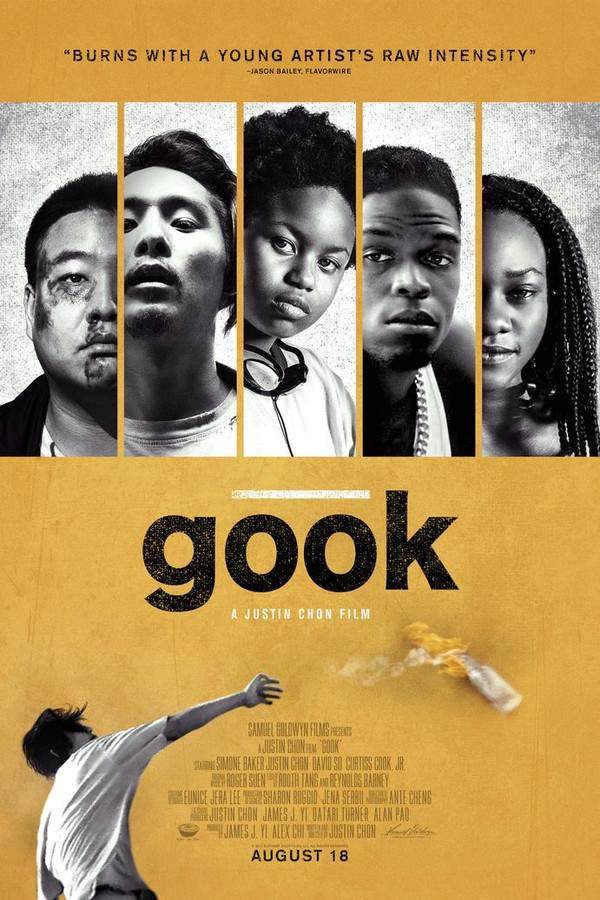
Eli and Daniel are two Korean American brothers who run their late father’s shoe store in Paramount, California, a neighborhood where the local dynamic is complex and multiethnic. The shop is a small beacon for their family history and we see them navigate daily pressures from both within their community and from outside, all while trying to keep the doors open. Their bond is at the center of the story, and their relationship is tested by a shared hunger to keep their father’s legacy alive.
Kamilla, an 11-year-old African American girl dealing with a troubled home life, becomes a focal point of their world. She often finds herself at the store, drawing a sense of safety from the presence of the two brothers, who repeatedly step in to protect her from the neighborhood’s rougher edges. The trio forms an unlikely trio, each bringing their own scars and hopes to the table, and their everyday exchanges reveal a tentative trust that grows even in the face of mounting hardship.
Racism rears its head in everyday moments, sometimes from within the community itself and sometimes from the outside, as Eli and Daniel confront prejudice on multiple fronts. Kamilla’s life is already fragile, haunted by the death of her mother years earlier, and the constant pressure from her brother Keith and his peers adds another layer of danger to an already precarious situation. The store becomes a sanctuary and a battlefield at once, a place where acts of kindness collide with the harsh realities of the time.
On April 29, 1992, the news dominates with the Rodney King verdict, a moment that intensifies racial tensions across Los Angeles. As the verdict is announced—an acquittal for the officers involved—the city feels the heat rise, and the tensions that had already been simmering begin to spill over into the streets. At the shoe store, Eli worries about keeping the business afloat, while Daniel dreams of turning his life toward music and begins trying to make a demo tape, even as the day’s challenges threaten to overwhelm them.
The day spirals further into upheaval as the riots begin to spread toward their area. An argument erupts between Eli and Daniel over discounts to customers, revealing the strain of keeping the business open under economic pressure. Daniel leaves to pursue the recording opportunity, but trouble follows: he is assaulted in the streets, robbed of money and a necklace by Keith and his friends. The moment becomes a turning point: the incident foreshadows the escalating danger surrounding the store and the people who depend on it.
Daniel pushes forward with his music, yet the debt from the recording studio leaves him in a bind. The studio owner offers a harsh bargain—help with his debt by joining in looting during the riots. A later confrontation in a car with rioters results in another brutal beating, and Mr. Kim—who has his own long and complicated history with Eli, Daniel, and the family—rescues him after a tense moment. In a candid revelation, Mr. Kim shares that he served in the South Korean military with Eli and Daniel’s father, tying personal histories to present chaos and hinting at the larger thread of sacrifice and loss that runs through the film.
As night falls, the danger surrounding Kamilla intensifies at home. Keith discovers she has been spending time at the shoe store because of a pair of Air Jordan sneakers Eli had given her earlier that day. A furious confrontation with their mother’s death as a possible consequence of the Korean family’s involvement intensifies the feud, and Keith plots to assemble his crew to rob the store of its remaining sneakers. Kamilla, attempting to warn Eli and Daniel, takes Keith’s other gun and rushes to alert them, a moment that heightens the peril for everyone involved.
With the car failing to start, Eli improvises and tries to move as many shoes as possible, while Daniel and Kamilla head out. A tense sequence unfolds as three Hispanic gang members who previously attacked Eli reappear and steal the shoes from him at gunpoint. The couple reunite with Kamilla at a nearby restaurant, where Jesús, a neighbor who has kept a low profile around the store, lends a hand and a practical solution: a gas can to refill Eli’s car. Jesús also reveals a critical detail—that the Air Jordans Eli thought had been looted were actually women’s shoes placed on the store roof, a misdirection that shifts the evening’s understanding of what had happened.
The trio returns to the store and tries to move the sneakers again, only to be forced into hiding on the roof when Keith and his gang close in. In a defining moment, Eli contemplates closing the store for good and starting anew, a decision that leads to a dangerous standoff. Keith’s persistence escalates into a violent confrontation, and he threatens to burn the store with Molotov cocktails. Kamilla grabs Keith’s other gun and rushes out to intervene, but tragedy strikes when she trips and fires a shot that injures her, a moment that shakes everyone to their core.
Keith’s crew retreats, leaving Keith and Eli to carry Kamilla to a hospital. An emotional breakdown from Keith illuminates the raw pain at the heart of the story, and Eli’s decision to stop him signals a fragile moment of reconciliation even in the face of overwhelming loss. The morning after, Eli learns that Kamilla has died. In a horrified act of resolve, Eli gathers the remaining Molotov lies, burns the store, and accepts a somber new beginning.
The film closes with a return to the first image in a haunting circular shot: the spirit of Kamilla dancing as the shoe store burns. It’s a stark ending that refuses to sanitize the consequences of violence and grief, instead presenting a raw meditation on community, loyalty, and the costs of trying to protect what matters most in the face of seismic social upheaval.
> “free shit South Central”