Plot Explained Spoilers guaranteed!
Plot Explained

Browse by genre

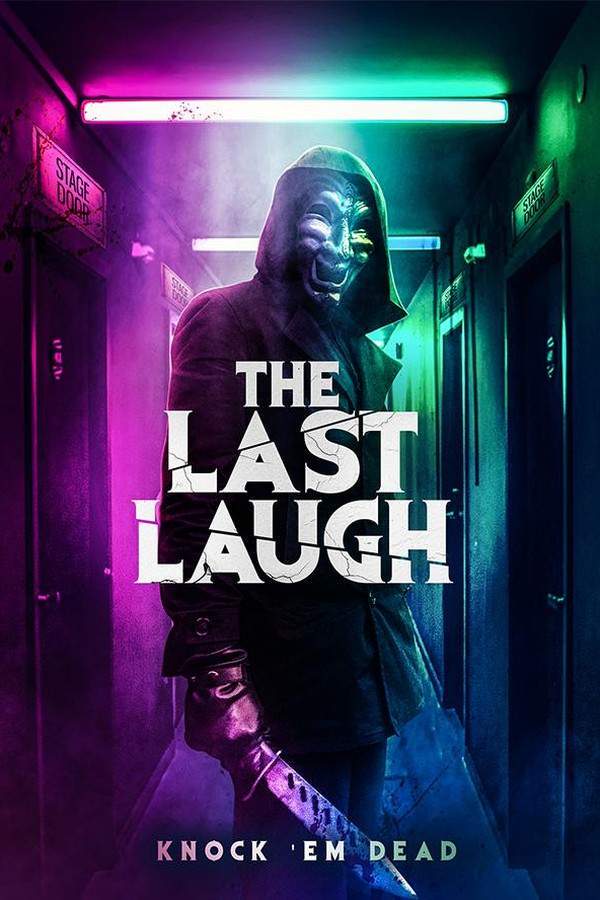
The Last Laugh (2020) movie poster

Plot Summary

The Last Laugh (2020) Plot Summary Explained

Release, runtime and language
2020 · 82 mins · English
Echo score 46
JustWatch #31,180 1
Directed by
Jeremy Berg
Starring
Nick Sage Palmieri, Lowell Deo, Jeffrey Arrington, Scott C. Brown, Angela DiMarco, Tonya M. Skoog

A rising stand-up comedian finds himself in a precarious situation when he stumbles upon a murderer hiding in the theater just before his most important performance. Faced with a difficult decision, he must navigate the escalating danger and protect himself while trying to alert the authorities and save the audience. The comedian's pursuit of success is suddenly overshadowed by the terrifying presence of a killer.

On this page (5)
  1. 1 Where to watch
  2. 2 What happens: full plot
  3. 3 Plot questions answered
  4. 4 Movie threads
  5. 5 Every angle

Where to watch

Where to Watch The Last Laugh (2020)

Where can you watch The Last Laugh? Stream, rent or buy it in the US, including on Netflix and Netflix Standard: current JustWatch availability with up-to-date prices.

Streaming availability powered by JustWatch

Full plot summary · contains spoilers

What Happens in The Last Laugh: Full Plot Summary

The whole story of The Last Laugh (2020) explained, from the opening scene to the final frame: every key event, every twist and what it all adds up to. Read it as a quick recap before the sequel, to check a scene you missed, or to finally understand what really happened.

Retired talent manager Al Hart, a once-relentless drive behind other people’s careers, is settling into a slower pace in a retirement village where fine dining and daily entertainment are the norm. When his granddaughter Jeanie suggests he embrace the quiet life, Al’s world begins to tilt back toward the old spark he thought was gone.

At the village, he meets Buddy Green, a resident who was once Al’s first client and showed early promise that could have made him a star. Fifty years ago, Buddy nearly earned a coveted spot on The Ed Sullivan Show in 1967, the kind of career-defining moment that could have changed everything. Yet Buddy never showed up, abruptly leaving comedy behind to raise a family and become a podiatrist. The sight of Buddy still being the life of the party, even after all those years, surprises Al and rekindles a feeling that maybe the best moments aren’t behind them after all.

As Al and Buddy reminisce about the “good old days,” the bitterness of missed opportunities sits alongside the warmth of shared memories. Al, irritable about the prospect of coexisting with peers his own age, finds himself drawn to the possibility of guiding Buddy toward one last shot at stardom. When Buddy’s partner in the retirement home dies, a strange freedom settles on Buddy, and the idea of giving their dream one final run seems suddenly possible.

With a stubborn optimism, Al digs up his old Rolodex and begins dialing old contacts. The plan is a cross‑country tour: humbler venues at first, gradually building toward larger audiences and, finally, a late‑night TV slot in New York. He negotiates to land Buddy on a broadcast‑caliber stage, aiming for a showcase that could revive their careers and, perhaps, repair the space left by 50 years of what‑ifs. The road stretches from a truck stop near Las Vegas to Tijuana, then through Tucson, Texas, and Kansas, with each stop testing their patience and chemistry as a duo that bickers like an aging but funny pair.

Along the way, Buddy’s momentum remains a bright signal even as Al’s old dreams collide with reality. In Kansas City, a chance meeting with Doris, a free‑spirited artist, injects warmth into the journey. Doris becomes a companion and confidant as they press on toward Chicago, where the pair stay unsure about which hotel room awaits them. A wrench in the plan arrives when Vic, their contact, informs them that Buddy did not land a spot on Jimmy Fallon, forcing Al to confront a new setback just as the tour’s momentum begins to wobble.

The trip is a mix of triumphs and trials. In Chicago, Buddy’s performances spark roars of laughter, and Al, meanwhile, navigates the sting of disappointment while exploring the mind‑altering moment of mushroom “therapy” Doris offers to quell the sting of failure. The road trip culminates in a revelation that deepens the emotional stakes: Buddy is living with pancreatic cancer, a detail that adds a quiet gravity to his relentless spirit and his persistent urge to perform.

Despite the personal storms, Buddy continues to perform on tour, with Texas notably absent from his string of successes. The long drive finally brings the two men to a moment of reckoning in New York, where Al and Buddy reconnect with past partners and former clients. They discover Max Becker, a former client, who is now appearing on Stephen Colbert at the Ed Sullivan Theater, presenting a last‑chance opportunity to secure a legendary slot for Buddy. Max introduces Buddy to a chance at a late‑night comeback, and the moment is charged with the weight of decades of waiting.

Buddy takes the stage on that grand New York night, and his performance hits with a rare force, a testament to a life spent refining a craft that never truly died. After the show, Buddy offers a quiet, heartfelt apology to the legend who waited fifty years to share the stage with him again—Ed Sullivan—and the crowd erupts in applause as Al watches, a witness to something both stubborn and beautiful.

In the end, Al does not return to the retirement home. Instead, he remains with Doris in Kansas, choosing companionship, memory, and the chance to pursue a dream that never truly left him. The final message is clear and tender: it’s never too late to chase a dream, and true partnerships—whether with old friends or new loves—can redefine what a life well spent looks like.

Last updated: March 05, 2026 at 18:41

Was this helpful?

Plot questions answered

The Last Laugh Plot Explained: Your Questions Answered

The questions people ask most about The Last Laugh (2020): what happens in the confusing scenes, why the characters do what they do, the twists, hidden details and what the ending means. Each answer contains spoilers.

Q1

Why didn't Buddy show up for The Ed Sullivan Show in 1967?

Buddy never showed up for his Ed Sullivan Show booking in 1967 because he chose to leave comedy and start a family instead. The film implies he got cold feet about pursuing stardom, opting for a safer life as a podiatrist. This missed opportunity haunted him for fifty years and becomes the driving motivation for his late-in-life comeback attempt.

  • buddy green
  • ed sullivan show
  • 1967
  • missed opportunity
  • comedy career
Q2

Why is Buddy's cancer diagnosis important to the story?

Buddy's pancreatic cancer diagnosis, revealed in Chicago, adds urgency to the road trip and transforms it into a final farewell tour. Knowing he has limited time makes every performance meaningful and raises the stakes of getting that elusive late-night spot. The diagnosis also forces Al to confront his own regrets about wasted time.

  • buddy green
  • pancreatic cancer
  • terminal illness
  • final tour
  • urgency
Q3

Why does Al choose to stay with Doris instead of returning to the retirement home?

Al stays with Doris in Kansas because he realizes the retirement home represents the end of his meaningful life. After experiencing the excitement of the road trip and rekindling his purpose as a manager, he chooses companionship and a new beginning over returning to a slow, quiet existence. His choice reflects the film's theme that it's never too late to chase happiness.

  • al hart
  • doris
  • ending
  • retirement home
  • kansas
  • new beginning
Q4

How does Al manage to get Buddy a late-night TV spot?

Al uses his old industry connections to work toward a late-night booking. In New York, he reconnects with Max Becker, a former client now producing Stephen Colbert's show at the Ed Sullivan Theater. Through this connection and some persistence, Buddy gets a spot on The Late Show, fulfilling the dream that started fifty years earlier.

  • al hart
  • max becker
  • stephen colbert
  • late night show
  • ed sullivan theater
  • booking
Q5

What is the significance of Buddy apologizing to Ed Sullivan?

Buddy's apology to Ed Sullivan on stage represents closure for a fifty-year regret. By finally apologizing for standing him up in 1967, Buddy achieves emotional resolution alongside professional success. The moment acknowledges both his past failure and his eventual courage to face it, making the performance about redemption rather than just comedy.

  • buddy green
  • ed sullivan
  • apology
  • redemption
  • late night debut
Q6

Why does Al want to restart Buddy's career after all these years?

Al sees Buddy's comeback as a chance to redeem both their careers. After spending decades managing other people's success, Al wants one final victory of his own. Additionally, Buddy represents unfinished business, Al blames himself for not pushing harder when they were young, and this tour is his attempt to make things right.

  • al hart
  • buddy green
  • talent manager
  • redemption
  • career revival
  • missed opportunity
Q7

What role does Doris play in the road trip?

Doris, a free-spirited artist Al meets in Kansas City, becomes Al's romantic companion and emotional anchor throughout the tour. She provides contrast to Al's Type-A personality, offering perspective and calm during setbacks like the Jimmy Fallon disappointment. Her presence helps Al reconsider what he really wants from life beyond professional success.

  • doris
  • kansas city
  • artist
  • romance
  • al hart
  • emotional support
Q8

Why does Buddy agree to attempt a comeback?

Buddy agrees to the comeback after his partner in the retirement home dies, leaving him feeling he has nothing to lose. The death creates a sense of freedom and urgency. Combined with Al's persistence and the lingering dream of finally making it, Buddy decides to take one final shot at the stardom he walked away from in 1967.

  • buddy green
  • partner death
  • retirement home
  • comeback
  • risk
  • second chance
Q9

How does the cross-country tour progress?

The tour progresses from humble beginnings to bigger venues: starting at a truck stop near Las Vegas, then moving through Tijuana, Tucson, Texas, Kansas City, and Chicago. Each location tests their patience and chemistry. Buddy's performances consistently land well, building momentum toward the New York finale, though Texas notably shows no success.

Foreshadowing: Early scenes establish Buddy's ability to charm any audience, foreshadowing his later stage success.

  • road trip
  • tour
  • las vegas
  • tijuana
  • tucson
  • texas
  • kansas city
  • chicago
  • venues
Q10

What does the title "The Last Laugh" mean in the film?

The title "The Last Laugh" refers to Buddy's delayed triumph after fifty years of regret. It also symbolizes the film's message about aging, that you can still achieve meaningful success and joy later in life. The "last laugh" is Buddy's eventual recognition, but also Al's and Doris's choices to pursue happiness on their own terms.

  • title meaning
  • last laugh
  • delayed success
  • triumph
  • late life achievement

Movie threads

More Movies Like The Last Laugh, by Mood & Story

Curated lists built around what makes The Last Laugh tick: the same mood, the same kind of story or the same emotional payoff. Each list explains why these movies belong together.

Bittersweet Journeys of Second Chances like in The Last Laugh

Characters facing mortality find meaning by revisiting old dreams. Explore movies like The Last Laugh, featuring heartfelt stories about late-in-life pursuits and second chances. These films blend nostalgia and hope as characters reconnect with past dreams, often set against the backdrop of friendship and the sobering truths of aging.

  • nostalgic
  • hopeful
  • wistful
  • reflective
  • friendship
  • aging
  • Tone: bittersweet, reflective
  • Pacing: steady, character-driven
Why these movies?

The story pattern: These stories often follow a linear journey, frequently a physical road trip or a series of events, that leads a character back to a passion or person they once left behind. The central conflict is internal, wrestling with regret and the passage of time, culminating in a resolution that is fulfilling yet tinged with melancholy, as not every aspect of the past can be fully reclaimed.

Why they belong together: Movies in this thread are grouped by their shared bittersweet tone, medium emotional weight, and focus on themes of aging, nostalgia, and pursuing unfinished business. They offer a reflective viewing experience that is both uplifting and emotionally resonant.

Race Against Time Under Pressure like in The Last Laugh

A protagonist must succeed in a high-pressure situation while a hidden threat looms. Find thrillers like The Last Laugh where a character's make-or-break moment is threatened by a hidden killer or imminent danger. These films create steady suspense as the hero tries to achieve their goal while evading a threat, perfect for fans of tense, single-location stories.

  • suspenseful
  • tense
  • claustrophobic
  • thrilling
  • high-stakes
  • cat-and-mouse
  • Tone: tense, bittersweet
  • Pacing: steady, suspenseful
Why these movies?

The story pattern: The narrative unfolds in a confined setting, often in real-time or over a short period, escalating the claustrophobia and pressure. The protagonist is forced to use their wits and specific skills—like comedy or persuasion—to navigate the situation, creating a cat-and-mouse dynamic where public success and private survival are inextricably linked.

Why they belong together: This thread groups films based on their medium intensity, steady pacing, and the specific narrative device of a 'performance under threat.' They share a tense, suspenseful vibe where personal ambition collides with immediate physical danger.

Every angle

The Last Laugh (2020) Explained: Plot, Timeline & Characters

Everything about The Last Laugh in one place: what happens in the plot summary, the timeline in chronological order, the characters and meaning and a spoiler-free summary. What's After the Movie adds the cast, box office and post-credit scenes.

Coming soon on iOS and Android

The Plot Explained Movie Summary App

Plot summaries, endings explained and timelines on your phone. Catch up on any movie in minutes, save your favorites and never miss a twist again.

Be the first to know when we launch. Your email stays private, always.

Learn more about the app