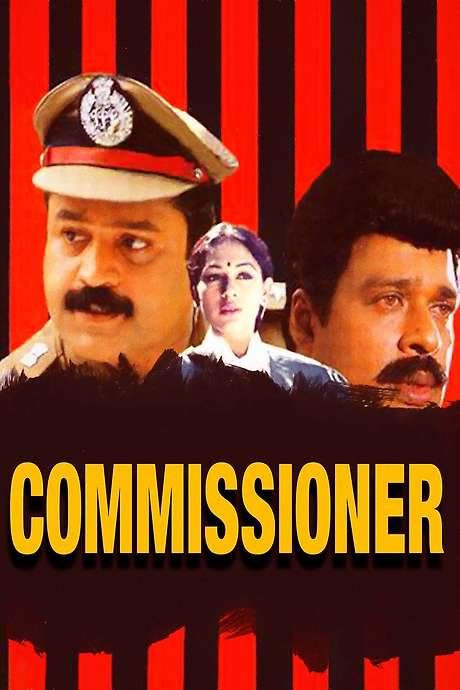
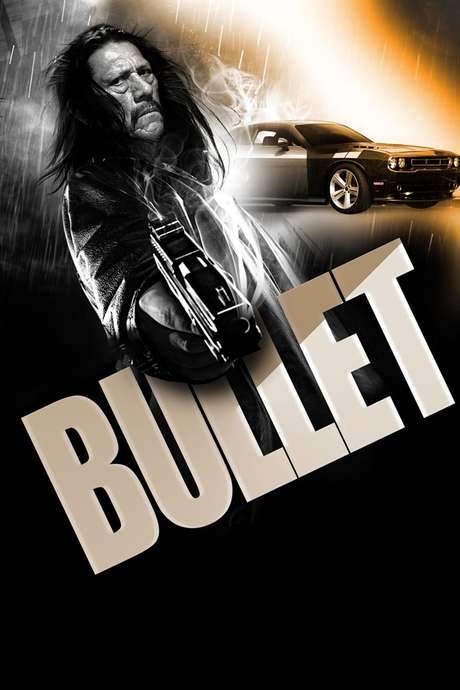
ACP Arjun Ranavat appears before the court in Mumbai, the room filled with shouts from ruling party supporters as he faces charges of 18 mass killings tied to an incident at the Chief Minister Satyanarayan Joshi’s farmhouse. In a surprising and unsettling moment, he confesses to every crime and asks for nothing more than an immediate death sentence. The courtroom drama is only the surface of a much larger story, and the narrative quickly shifts into a long flashback to reveal how Arjun reached this point.
The tale begins with Arjun and his close ally, Hyder Ali Khan, both aces in the Mumbai Police’s anti-crime effort. The two officers and friends are humiliated when the infamous gangster-turned-pimp Hakim Lukka is acquitted in a high-profile case after Lukka’s counsel, Advocate Kulkarni, can manufacture evidence before the court. The turn of events sets a darker tone: that same night Lukka and his cohorts cross paths with Arjun when his jeep stalls in a remote area. A violent confrontation ends with Lukka’s gang being killed by Arjun. This incident becomes the spark that triggers a full departmental inquiry led by Commissioner Samar Singh, who questions Arjun’s methods but ultimately backs the reasoning that capture and even killing dangerous criminals can be essential in establishing a crime-free state.
The inquiry also brings the Chief Minister into sharper focus. The veteran politician Chief Minister Satyanarayan Joshi approves Samar’s controversial stance, laying the groundwork for a formal Crime Control Squad under Arjun’s leadership. From this point, the squad begins a relentless campaign against gangsters and terrorists across Mumbai, facing sharp criticism from human-rights advocates and from political opponents, most notably Kashinath Trivedi and his brother Badri Tiwari. Their opposition is quietly fueled by the underworld power broker Zafar Supari, who influences political maneuvering from behind the scenes. In a tense meeting, Arjun’s force is defended by the Chief Minister and Samar, who insist that the encounter killings will persist until every major threat in the city is eliminated. During the encounter, Arjun publicly humiliates Kashinath, and the ominous warning from Kashinath that the CM’s days are numbered hangs over the ensuing power plays.
Kashinath’s machinations gradually reshape Mumbai politics. He chars a path to topple Joshi with Supari’s help, replacing the government and installing himself as Chief Minister. In this upheaval, the corrupt Commissioner Deshpande—now allied with Kashinath—takes over control of the police force in a bid to bend the system to their will. The Crime Control Squad continues its operations, though Hyder’s loyalty and the integrity of the squad are increasingly tested as Hyder’s suspicions about Deshpande’s schemes grow. Hyder’s rift with Deshpande peaks when Hyder is nearly targeted after a dangerous intruder enters Arjun’s home, and Deshpande seeks to sideline Hyder by manipulating the transfer system. Arjun intervenes, appealing to the Director General of Maharashtra Police to reinstate him and restore Hyder’s position within the squad.
Despite the internal strife, the investigation file that Arjun has accumulated—one that could implicate corrupt politicians and their ties to Zafar Supari—falls into the wrong hands when Deshpande urges Kashi to seize the file. Arjun’s team presents the file in the next day’s proceedings, only for Kashi to burn the original. However, Arjun reveals that copies have already reached high offices, including the Central Home Ministry, the President’s office, and the Prime Minister’s Office. The revelation triggers a dramatic escalation: Supari arrives in Mumbai and traps Hyder and his colleagues at the Old Jassai Railway Yard, using a lethal blast to try to wipe them out. Hyder fights back, destroying the explosive with courage, but is fatally shot by Inspector Avasthi—an act allegedly ordered by Supari, with Kash i and Deshpande implicated in the treachery. Hyder’s burial at a mosque site becomes a bitter moment of public accusation, with Deshpande further accusing Hyder of ISI ties as part of a smear campaign.
The courtroom drama returns to the present as Samar, a legal mind by training, leaves the force to represent Arjun. Justice Acharya presides as colleagues from the police force testify overwhelmingly in support of Arjun and Hyder, painting Deshpande and Kash i as corrupt traitors who betrayed the very people they were supposed to protect. The courtroom’s tension deepens when Lawyer Tyagi insinuates that Arjun’s sister, Rakhi, was seen at the Chief Minister’s farmhouse engaging in improper conduct. The accusations are brutal enough to rattle the court, and Arjun’s silence in the face of provocation earns a stern rebuke from the judge.
Samar shifts the course of the trial by presenting Rakhi in court to speak for herself. Rakhi’s revelations reveal the deeper truth behind Arjun’s years of restraint: on the night of November 1, she was kidnapped and subjected to a brutal gang-rape by a group of men that includes Badrinath, Zafar Supari, Avasthi, Kulkarni, Deshpande’s son, and his men. The testimony shatters the facade of the case and explains why Arjun chose silence in the face of extreme violence—he was protecting his sister’s dignity. With Rakhi’s testimony, Arjun is acquitted, and Kash i and Deshpande are charged with treason. The courtroom clears Arjun of the charges, and as he leaves the courthouse, the Maharashtra Police salute him—an acknowledgement that he will return to duty, whatever the personal cost.
In a final note, the film also features a musical moment with a special appearance by Reshma Bombaywala in the “Marhaba Marhaba” song, adding a distinct pop-culture moment to the sprawling, high-stakes story.