Plot Explained Spoilers guaranteed!
Plot Explained

Browse by genre

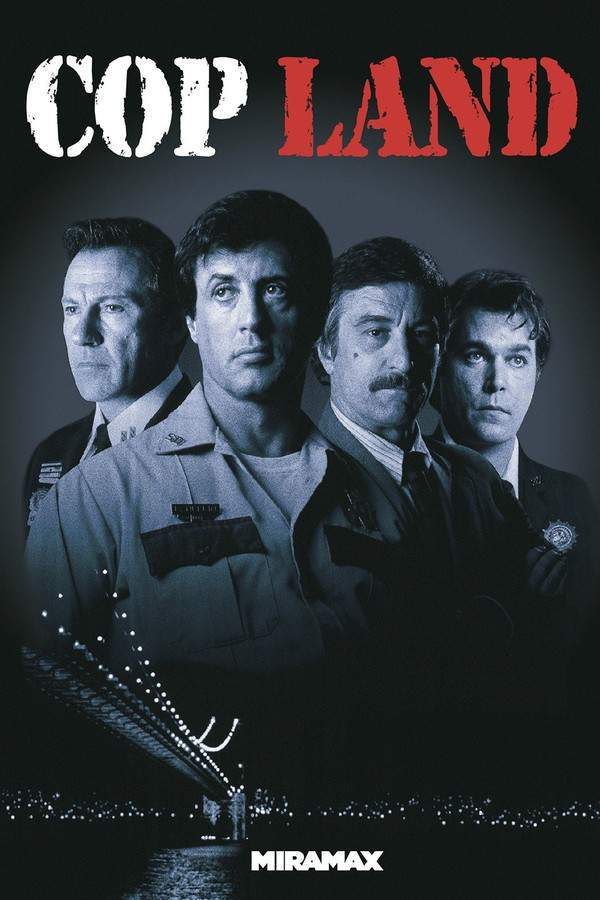
Cop Land (1997) movie poster

Plot Summary

Cop Land (1997) Plot Summary Explained

Release, runtime and language
1997 · 104 min · English
JustWatch #6,346 13
Directed by
James Mangold
Starring
Robert De Niro, Sylvester Stallone, Harvey Keitel, Ray Liotta
Budget
$15M

Sheriff Freddy Heflin lives a peaceful life in the small, close-knit town of Garrison, New Jersey, a community largely populated by New York City police officers. His respect for these men is challenged when a series of crimes reveals a disturbing corruption within their ranks. Freddy is forced to confront the truth about the people he admires and make a difficult choice between protecting them and pursuing justice, all while uncovering a dangerous conspiracy that threatens everything he believes in.

On this page (6)
  1. 1 Where to watch
  2. 2 What happens: full plot
  3. 3 Plot questions answered
  4. 4 Movie threads
  5. 5 Movies like Cop Land
  6. 6 Every angle

Where to watch

Where to Watch Cop Land (1997)

Where can you watch Cop Land? Stream, rent or buy it in the US, including on fuboTV, MGM Plus and Paramount Plus Essential: current JustWatch availability with up-to-date prices.

Streaming availability powered by JustWatch

Full plot summary · contains spoilers

What Happens in Cop Land: Full Plot Summary

The whole story of Cop Land (1997) explained, from the opening scene to the final frame: every key event, every twist and what it all adds up to. Read it as a quick recap before the sequel, to check a scene you missed, or to finally understand what really happened.

In the imaginary town of Garrison, New Jersey, nestled just across the Hudson River from New York City and near the George Washington Bridge, many residents are part of the NYPD. Among them, local sheriff Freddy Heflin (Sylvester Stallone) harbors a secret love for Liz Randone (portrayed by Annabella Sciorra), whom he saved from a horrific car accident—a heroic act that cost him the hearing in one ear and ultimately barred him from becoming a New York City cop, unlike his peers, including Liz's abusive husband Joey Randone (played by Peter Berg).

One fateful night, Murray "Superboy" Babitch (played by Michael Rapaport), the nephew of Lt. Ray Donlan (Harvey Keitel), leaves a bachelor party at Scores in Manhattan. As he drives over a discarded beer bottle, he gets his car sideswiped by a couple of young African-American teens. In an attempt to force them off the road, Babitch finds himself believing they are armed when one passenger points something at him—leading to a tragic and fatal exchange of gunfire, resulting in the deaths of both teens.

In the aftermath, during the investigation, Jack Rucker (Robert Patrick) is caught in a desperate act, attempting to plant a weapon in the teens' vehicle to justify Babitch's actions. Amid a chaotic scene, a paramedic intervenes, seizing the weapon and tossing it over the bridge, which leads to a brief altercation that is quickly subdued.

Fearing for his future after shooting unarmed teens, Babitch is persuaded by Donlan to stage his own suicide, creating a web of deception. However, the presence of Internal Affairs investigator Lt. Moe Tilden (Robert De Niro) complicates matters as he seeks Heflin's insights into the rampant corruption permeating the NYPD officers in Garrison. Although initially hesitant to cooperate out of fear, Heflin finds himself embroiled in a deeper conspiracy.

While Tilden faces pressure to end his investigation due to departmental connections with corrupt officers, the cover-up surrounding Babitch threatens to unravel. Donlan, aware of the imminent danger, makes the grim decision to eliminate his nephew. During a raucous party at Donlan's home, chaos ensues as Babitch tries to escape amid gunfire, eventually seeking sanctuary at Heflin's residence but is forced to flee once more.

As the night unfolds, tragedy strikes as Joey Randone suffers a deathly fall from a rooftop after a confrontation with a suspect, exacerbated by Donlan, who turns a blind eye in pursuit of revenge. Realizing his mistakes, Heflin seeks redemption but discovers the extent of the corruption within his community too late.

Following a gripping series of events, Heflin steals critical NYPD files in a desperate bid to unravel the corrupt web. After confronting his friends about their misdeeds, he pushes to protect Babitch from being silenced, leading to a violent showdown at Donlan's house. In a fierce battle, Heflin and his ally Gary "Figgsy" Figgis (Ray Liotta), confront the corrupt officers. The climax results in bloody vengeance, where Heflin stands over the dying Donlan and retorts with a profound, > "I can't hear you, Ray," signifying his moral victory amidst the chaos.

In a dramatic conclusion, Heflin and Figgsy ensure that Babitch is brought to justice, successfully delivering him to Tilden. As the dust settles with the investigation yielding indictments against the corrupt officers, Heflin reflects on the NYC skyline from across the river, symbolizing his renewed purpose, ready to face the challenges ahead, as he returns to work following a call about a jack-knifed truck.
Last updated: November 03, 2024 at 14:03

Was this helpful?

Plot questions answered

Cop Land Plot Explained: Your Questions Answered

The questions people ask most about Cop Land (1997): what happens in the confusing scenes, why the characters do what they do, the twists, hidden details and what the ending means. Each answer contains spoilers.

Q1

Why did Murray 'Superboy' Babitch shoot the two teenagers in the street?

Murray Babitch panicked after his car was sideswiped. When one of the teen passengers pointed what he believed was a weapon at him, he opened fire, killing both teens. It was later revealed the object was likely a telephone, not a gun. Babitch's fear and overreaction, combined with his uncle Ray Donlan's influence, led to the cover-up rather than accountability.

  • murray babitch
  • shooting
  • teenagers
  • cover-up
  • ray donlan
Q2

Why did Lt. Ray Donlan decide to eliminate his own nephew Babitch?

Donlan ordered Babitch's elimination because the staged suicide was failing and Internal Affairs was getting closer to the truth. Donlan prioritized protecting the broader corruption network among Garrison's NYPD officers over his family. As the conspiracy unraveled, Donlan viewed Babitch as a liability who could testify against him.

  • ray donlan
  • murray babitch
  • nephew
  • kill
  • elimination
  • corruption
Q3

Why did Sheriff Freddy Heflin turn against the NYPD officers he once admired?

Freddy's moral awakening came when he realized the depth of corruption among the officers he respected. After Internal Affairs investigator Moe Tilden revealed the systemic wrongdoing and after witnessing Joey Randone's death and the attempted murder of Babitch, Freddy chose to steal the NYPD files and confront Donlan. His love for Liz Randone and his lost dream of becoming a cop drove him to seek justice.

  • freddy heflin
  • corruption
  • nypd officers
  • betrayal
  • justice
Q4

Why did Liz Randone stay with her abusive husband Joey despite Freddy saving her?

Liz remained with Joey Randone despite his abuse, likely due to fear, dependency, and the complicit environment of Garrison where officers protected their own. The community's code of silence and her husband's status among the NYPD made leaving difficult. Freddy's unrequited love for her is a central tragedy of the film.

  • liz randone
  • joey randone
  • abuse
  • domestic violence
  • garrison
Q5

How did Joey Randone die at the rooftop?

Joey Randone died after falling from a rooftop during a confrontation with a suspect. Donlan deliberately withheld backup, allowing Joey to pursue the suspect alone. When Joey fell or was pushed, Donlan did nothing to help him. This was partly revenge for Joey's earlier attack on Donlan's son, demonstrating how the cycle of violence consumed everyone involved.

  • joey randone
  • death
  • rooftop
  • fall
  • donlan
  • revenge
Q6

Why did Jack Rucker try to plant a weapon in the teenagers' car?

Jack Rucker attempted to plant a gun in the victims' vehicle to justify Babitch's shooting and prevent criminal charges against him. This was part of the cover-up orchestrated by Ray Donlan to protect the officers involved. The paramedic intervened and threw the gun over the bridge, foiling this attempt.

  • jack rucker
  • plant weapon
  • cover-up
  • justification
  • shooting
Q7

What is the significance of Freddy saying 'I can't hear you, Ray' at the end?

The line 'I can't hear you, Ray' is deeply symbolic. Freddy lost hearing in one ear after saving Liz from a car accident, which prevented him from joining the NYPD. When he says this to the dying Donlan, it represents both a literal reference to his sacrifice and a metaphorical rejection of Donlan's corrupted world. It signifies his moral victory, he chose integrity over the brotherhood of corrupt officers.

Foreshadowing: Freddy's hearing loss was established early as the consequence of his heroic act saving Liz.

  • i cant hear you ray
  • hearing loss
  • freddy heflon
  • ray donlan
  • symbolic ending
Q8

Why was Garrison, New Jersey filled with corrupt NYPD officers?

Garrison served as a sanctuary town for off-duty NYPD officers who protected each other through a code of silence. The close-knit community enabled systemic corruption, where officers committed crimes knowing their colleagues would cover for them. Internal Affairs investigator Moe Tilden was trying to expose this network when Freddy became entangled in the investigation.

  • garrison new jersey
  • nypd officers
  • corruption
  • code of silence
  • cover-up
Q9

Why did Murray Babitch agree to stage his own suicide?

Babitch was coerced by his uncle Ray Donlan, who convinced him that a suicide would draw less scrutiny than the shooting itself. Donlan presented it as a way to protect Babitch from prison, but it was actually part of a larger conspiracy to control Babitch and prevent him from revealing the truth to investigators.

  • murray babitch
  • staged suicide
  • coercion
  • ray donlan
  • cover-up
Q10

Why did Freddy Heflin steal the NYPD files?

Freddy stole the NYPD files to gather evidence against the corrupt officers in Garrison. Realizing the depth of the conspiracy and the danger posed by Donlan, he needed proof to bring justice. The files contained records of the corruption that would implicate those involved and support Internal Affairs investigator Moe Tilden's case.

  • freddy heflin
  • steal files
  • nypd
  • evidence
  • corruption
  • investigation
Q11

Why wasn't Freddy Heflin able to join the NYPD?

Freddy lost hearing in one ear after heroically rescuing Liz Randone from a car accident. This hearing loss disqualified him from joining the NYPD, forcing him to become the town sheriff in Garrison instead. His fellow officers who made it onto the force would later become the very corrupt men he would confront.

Foreshadowing: The heroic act is established in the opening of the film, explaining Freddy's position and motivations.

  • freddy heflin
  • hearing loss
  • nypd disqualification
  • heroic act
  • liz randone
Q12

Why did Internal Affairs investigator Moe Tilden need Freddy's help?

Moe Tilden needed Freddy because Garrison's police force operated as an insulated network. As the local sheriff, Freddy had access and relationships with the corrupt officers that Tilden couldn't penetrate. Tilden hoped Freddy's moral compass and local knowledge would help expose the corruption, though he faced pressure from higher-ups to drop the case.
  • moe tilden
  • internal affairs
  • freddy heflin
  • corruption investigation
  • garrison

Movie threads

More Movies Like Cop Land, by Mood & Story

Curated lists built around what makes Cop Land tick: the same mood, the same kind of story or the same emotional payoff. Each list explains why these movies belong together.

Claustrophobic Conspiracy Thrillers like Cop Land

A closed community hides a dark secret, forcing an insider to expose the truth. If you liked the tense atmosphere of uncovering police corruption in Cop Land, explore movies like this where a single character confronts a powerful conspiracy within a small, closed community. These films share a gritty mood, a steady pace of revelation, and heavy emotional stakes.

  • claustrophobic
  • gritty
  • anxious
  • corrosive
  • paranoid
  • determined
  • Tone: tense, gritty, paranoid
  • Pacing: steady, deliberate
Why these movies?

The story pattern: Stories in this thread typically begin with a seemingly orderly community that is revealed to be rotten at the core. A central character, often initially naive or complicit, stumbles upon the rot and is forced to choose between loyalty and justice. The plot involves a slow, dangerous unveiling of the truth, leading to a confrontation that shatters the community's facade.

Why they belong together: These movies are grouped by their shared focus on a specific setting—the insular community—as a pressure cooker for moral conflict. They generate tension from the protagonist's isolation and the omnipresent threat of being discovered, resulting in a consistently gritty and anxious viewing experience.

Movies About Moral Awakenings with Heavy Costs like Cop Land

Protagonists who pay a steep personal price for choosing justice over loyalty. For viewers who appreciated Freddy Heflin's difficult journey in Cop Land, this section highlights similar films about characters facing a painful moral awakening. These stories explore the heavy price of doing the right thing when it means betraying your own tribe.

  • morally grey
  • heavy
  • determined
  • corrosive
  • bittersweet
  • grim
  • Tone: heavy, tense, bittersweet
  • Pacing: steady, character-driven
Why these movies?

The story pattern: The narrative pattern involves a character whose worldview is built on respect for a certain group or system. A catalyzing event shatters this illusion, presenting them with an undeniable truth. Their journey to expose the corruption or injustice requires them to sacrifice personal relationships, safety, and peace of mind, culminating in a resolution that is just but emotionally devastating.

Why they belong together: These films are united by a profound character arc centered on moral dilemma. The emotional core is the internal and external conflict of choosing principle over belonging. They share a heavy emotional weight and often conclude with a bittersweet or bleak feeling, emphasizing that true justice is rarely clean or rewarding for the individual who fights for it.

If you liked this

Movies Like Cop Land

Similar movies to Cop Land: the same genre, themes or kind of story. Each one comes with its own plot summary, timeline and ending explained.

Browse all movie summaries

Every angle

Cop Land (1997) Explained: Plot, Timeline & Characters

Everything about Cop Land in one place: what happens in the plot summary, the timeline in chronological order, the characters and meaning and a spoiler-free summary. What's After the Movie adds the cast, box office and post-credit scenes.

Coming soon on iOS and Android

The Plot Explained Movie Summary App

Plot summaries, endings explained and timelines on your phone. Catch up on any movie in minutes, save your favorites and never miss a twist again.

Be the first to know when we launch. Your email stays private, always.

Learn more about the app