Plot Explained Spoilers guaranteed!
Plot Explained

Browse by genre

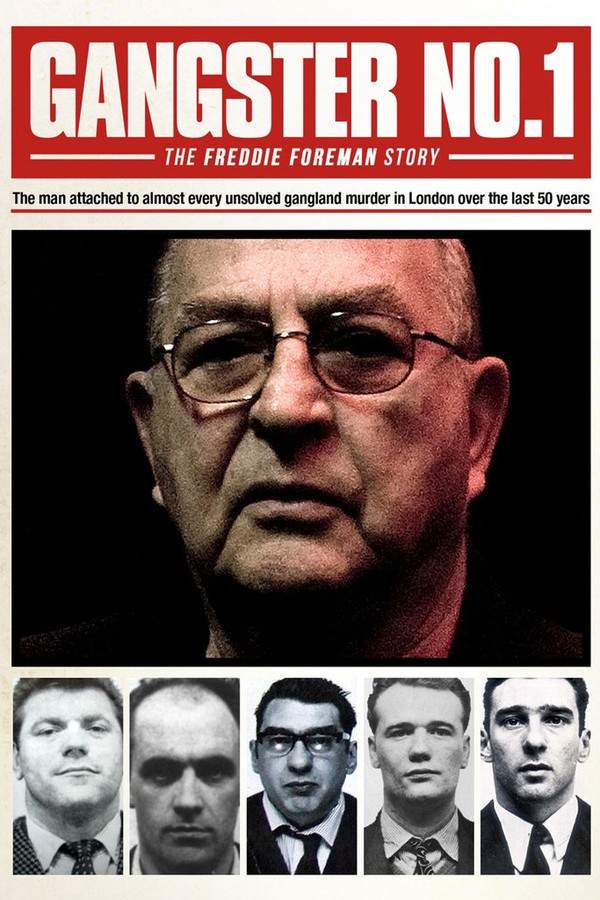
Gangster No. 1 (2002) movie poster

Timeline

Gangster No. 1 (2002) Timeline Explained – Every Event in Order

Release, runtime and language
2002 · 103 min · English
Loading streaming availability…

During the 1960s, Freddie Foreman establishes himself as a dominant figure in London's criminal underworld. He orchestrates a series of audacious robberies and violent encounters, navigating a landscape of shifting alliances and ruthless betrayals. His reign is marked by a string of unsolved murders and a constant struggle for power within the city's shadowy crime scene.

On this page (6)
  1. 1 Where to watch
  2. 2 Events in order (14)
  3. 3 Timeline questions answered
  4. 4 Movie threads
  5. 5 Movies like Gangster No. 1
  6. 6 Every angle
Loading streaming availability…

14 events in order · contains spoilers

Gangster No. 1 Timeline: Events in Chronological Order

Every key event of Gangster No. 1 (2002) in order, scene by scene, with when and where it takes place. Use it to untangle flashbacks, time jumps and parallel storylines, to refresh your memory before the sequel or to find the exact scene you are thinking of.

  1. Boxing Match Announcement

    The film opens with an unnamed British veteran gangster attending a boxing match with his friends. During the match, he receives surprising news about Freddie Mays, another infamous gangster, who is set to be released from prison after 30 long years.

    Where
    Boxing arena
  2. Gangster's Flashback

    Following the announcement of Mays' release, the story transitions to the 1960s, showcasing the rise of the young gangster to prominence in the criminal underworld. During this flashback, he captures the attention of Freddie Mays, who recognizes the gangster's potential as an enforcer.

    When
    1960s
  3. Joining Mays' Crew

    Eager to impress Mays, the young gangster displays his violent tendencies, which earn him Mays' admiration. As he becomes more involved in the gang, his obsession with Mays' lavish lifestyle grows, marked by Mays' stylish appearance and luxurious living conditions.

  4. Discovery of the Plot

    The gangster learns about a plot orchestrated by rival Lennie Taylor to murder Freddie Mays. Instead of warning Mays, he makes the fateful decision to let the attack take place, eliminating the only person who knew of the plot in order to protect his own interests.

  5. Mays' Attack

    In a horrific scene, Taylor's gang executes a brutal attack on Mays, resulting in a violent shooting and stabbing. Tragically, in the assault, Karen, Mays' fiancée, is also killed, marking a turning point in the gangster's life and escalating the violence in the story.

  6. Revenge on Taylor

    In response to the horrific attack on Mays, the gangster seeks vengeance against Lennie Taylor. He confronts Taylor at his flat, shooting him in the leg before torturing him to his death, further entrenching himself in the violent underbelly of crime.

    Where
    Taylor's flat
  7. Mays' Imprisonment

    The following day, the gangster finds out that Freddie Mays survived the attack but has been wrongfully imprisoned for orchestrating Taylor's murder. This unjust imprisonment allows the gangster to rise to power as he takes control of the gang.

  8. Taking Over the Gang

    With Mays behind bars, the gangster expands his operations and builds a formidable organization within the criminal landscape. His journey includes bank heists, casino openings, and race-fixing, ultimately growing his gang to over 300 members during his reign.

  9. Return to the Present

    The story returns to the present day, where the aged gangster finds himself back at the boxing event. He learns that Karen has survived the tragic events and is now set to marry a changed Freddie Mays, who has recently been released from prison.

    Where
    Boxing arena
  10. Confrontation with Mays

    In an attempt to confront his past, the gangster invites Mays to his flat, where he has taken over. He offers Mays money and his flat, but Mays, now desiring a quiet life with Karen, refuses the gangster's offers as he reflects on his lost ambitions.

    Where
    Gangster's flat
  11. Desperate Threat

    In a climactic moment, the gangster threatens Mays with a gun, revealing the depth of his desperation and regret. However, instead of taking his life, he surprising hands the gun over to Mays, confessing his role in Mays' suffering and Taylor's demise.

    Where
    Gangster's flat
  12. Mays Walks Away

    Mays, instead of retaliating against the gangster, walks away from their confrontation, choosing to leave the past behind. This act leaves the gangster to reflect on the emptiness and futility of his violent life choices as he grapples with guilt.

  13. Gangster's Final Decision

    Feeling lost and without purpose following Mays' departure, the gangster becomes increasingly unstable, losing his grip on reality. In a haunting finale, he chooses to end his life by stepping off a building, marking a tragic conclusion to his tumultuous journey.

    Where
    Building rooftop
  14. Last Words

    As he takes that final step, the gangster utters his last words: 'I'm number one.' This statement reflects his flawed worldview and his misguided belief in his own importance, leaving the audience with a profound sense of loss and regret.

Last updated: November 03, 2024 at 22:29

Was this helpful?

Timeline questions answered

Gangster No. 1 Timeline Explained: Your Questions Answered

When does it happen, and why in that order? The questions people ask about the chronology of Gangster No. 1 (2002): time jumps, flashbacks, cause and effect between scenes and the correct order of events, each answered with spoilers.

Q1

Why did the unnamed gangster let Freddie Mays get attacked instead of warning him?

The gangster deliberately allowed the attack to happen because he was obsessed with Mays' success and wanted him out of the way. When he learned that rival Lennie Taylor was planning to kill Mays, he saw an opportunity to eliminate his rival and take over the gang. He killed the only other gang member who knew about the plot to ensure no one would discover his betrayal, then let Taylor's gang carry out the attack.

Foreshadowing: Earlier in the flashback, the gangster's growing obsession with Mays' luxurious lifestyle and his resentment at being merely an enforcer hints at his willingness to betray Mays.

  • Freddie Mays
  • betrayal
  • Lennie Taylor
  • gang takeover
  • obsession
Q2

Why was Freddie Mays wrongfully imprisoned for 30 years?

Mays was imprisoned because he was framed for orchestrating Lennie Taylor's murder. After the attack on Mays (where his fiancée Karen was killed), Taylor was later tortured to death by the gangster seeking revenge. Since Mays had the most obvious motive to kill Taylor, the police assumed Mays ordered the killing and sentenced him to 30 years, despite the fact that Mays was actually the victim, not the perpetrator.

Foreshadowing: The film's structure establishes early on that Mays is about to be released after 30 years, creating anticipation for how this injustice shaped both characters.

  • wrongful imprisonment
  • Lennie Taylor murder
  • frame
  • police
  • 30 years
Q3

Why did the gangster kill Lennie Taylor after letting him attack Mays?

The gangster killed Taylor as revenge for the attack that left Mays critically injured and killed Karen. Although the gangster had allowed the attack to happen, he still felt compelled to avenge Mays and Karen. He went to Taylor's flat, shot him in the leg, and then tortured him to death, which further cemented his position in the criminal underworld and demonstrated his ruthless capability.

Foreshadowing: The gangster's violent tendencies were established early when Mays recruited him, showing he was capable of extreme violence.

  • revenge
  • Lennie Taylor
  • torture
  • killing
  • avenge Karen
Q4

Why did Freddie Mays walk away instead of killing the gangster?

Mays walked away because he has fundamentally changed during his 30 years in prison. He no longer desires power or revenge, he wants only to marry Karen and live a quiet life. When the gangster confesses and offers the gun, Mays recognizes that taking revenge would only perpetuate the cycle of violence that destroyed his life. By walking away, he denies the gangster the confrontation and death he seems to seek, leaving him with nothing but the emptiness of his choices.

Foreshadowing: The present-day Mays is described as transformed, wanting only peace rather than the fighting spirit that defined his youth.

  • Freddie Mays
  • forgiveness
  • walking away
  • redemption
  • quiet life
Q5

Why did the gangster confess and hand the gun to Mays?

The gangster's confession was an act of desperation and psychological collapse. After decades of living with guilt over his betrayal, he sought confrontation with Mays as a form of release. By threatening Mays with the gun and then handing it over, he was essentially offering Mays the chance to kill him, either as punishment or as a final test of their relationship. His confession of involvement in the murder attempt and Taylor's death represents his attempt to finally confront his past, though Mays denies him even this closure.

Foreshadowing: Throughout the film, the gangster's voice-over reveals his obsession with Mays and his inner turmoil, building toward this breaking point.

  • confession
  • guilt
  • gun
  • desperate
  • psychological breakdown
Q6

Why did the gangster choose to end his life at the end of the film?

The gangster committed suicide because Mays' refusal to kill him left him without purpose. After confessing everything and being rejected by the man he betrayed, the gangster has nothing left, no redemption, no confrontation, no meaning. His entire identity was built on being "number one" in the criminal world, but Mays walked away, denying him even the satisfaction of a violent end. Without purpose or identity, he loses his grip on reality and steps off a building, his final words being the hollow declaration "I'm number one", a mantra that has now become meaningless.

Foreshadowing: The gangster's entire arc is building toward this nihilistic conclusion, with the film emphasizing his emptiness and lack of redemption.

  • suicide
  • emptiness
  • purpose
  • no redemption
  • final words
Q7

What does the gangster's final words 'I'm number one' mean?

"I'm number one" represents the gangster's lifelong belief that he is the most important, most powerful person in his world, a twisted measure of success in the criminal underworld. However, by the end, this phrase becomes tragic irony. He dies alone, having lost everything meaningful, his power means nothing, his betrayal earned him nothing but emptiness, and even his declaration of superiority comes as he falls to his death. It symbolizes the hollowness of his entire life's pursuit.

Foreshadowing: The title "Gangster No. 1" and the gangster's obsessive drive for power throughout the film set up this final statement as his ultimate (but hollow) identity.

  • I'm number one
  • final words
  • ego
  • power
  • hollow victory
Q8

How did the gangster take control of the gang after Mays was imprisoned?

With Mays wrongfully imprisoned, the gangster seized the opportunity to take over Mays' criminal operations. Over the years following Mays' imprisonment in the 1960s, he expanded the gang's activities to include bank heists, casino openings, and race-fixing. His ruthlessness and organizational skills allowed him to grow the gang to over 300 members, making him the dominant criminal figure in London's underworld, a position that gave him the wealth and power he always envied in Mays.

Foreshadowing: The gangster's early display of violent tendencies and his ambition to rise above being just an enforcer set the stage for his eventual takeover.

  • gang takeover
  • criminal empire
  • bank heists
  • casino
  • 300 members
Q9

Why was Karen's death such a turning point in the story?

Karen's death was significant because it removed the one person who represented genuine love and innocence in Mays' life, and it directly resulted from the gangster's decision to let the attack happen. The gangster's betrayal led to an innocent woman dying, which deepens the moral gravity of his actions. Her death also fueled the gangster's subsequent revenge killing of Taylor, further entrenching him in violence. In the present day, the revelation that Karen actually survived adds another layer of irony, the gangster's biggest betrayal caused him to build his empire on a false assumption of her death.

Foreshadowing: The brutal attack scene emphasizes Karen's death as a major tragedy that escalates the conflict.

  • Karen death
  • turning point
  • innocent
  • betrayal
  • survived
Q10

Why was the young gangster so obsessed with Freddie Mays?

The gangster was obsessed with Mays because he represented everything the young enforcer wanted to become, powerful, wealthy, stylish, and respected. Mays had the luxurious apartment, the beautiful fiancée, the expensive clothes, and the command over the criminal world. The gangster envied this lifestyle and wanted it for himself. This obsession ultimately drove his betrayal: rather than warn Mays about the attack, he saw it as his opportunity to take Mays' place and inherit the life he coveted.

Foreshadowing: The film opens with scenes showing the gangster admiring Mays' lifestyle, establishing his envy early.

  • obsession
  • Freddie Mays
  • envy
  • lifestyle
  • aspirational

Movie threads

More Movies Like Gangster No. 1, by Mood & Story

Curated lists built around what makes Gangster No. 1 tick: the same mood, the same kind of story or the same emotional payoff. Each list explains why these movies belong together.

Movies about ruthless ambition like Gangster No. 1

Chilling character studies of ruthless individuals clawing their way to the top. If you were captivated by the chilling portrayal of a sociopath's rise in Gangster No. 1, explore these other movies about ruthless ambition. This collection features similar character-driven crime stories and psychological thrillers that follow cold, obsessive individuals as they violently seize power, resulting in bleak and haunting narratives.

  • sociopathic
  • ruthless
  • obsessive
  • grim
  • chilling
  • hollow victory
  • Tone: dark, cynical, unsettling
  • Pacing: steady, character-driven ascents
Why these movies?

The story pattern: These narratives typically follow a linear or reflective structure charting a character's violent and calculated climb to dominance. The journey is marked by betrayal, obsession, and a complete disregard for morality. The climax often reveals the hollow nature of their 'victory,' culminating in isolation, regret, or self-destruction rather than triumph.

Why they belong together: Movies are grouped here for their shared focus on a specific type of protagonist: the sociopathic climber. They share a dark, cynical tone, high intensity from psychological and physical violence, and a heavy emotional weight that stems from witnessing a corrosive and ultimately empty pursuit of power.

Bleak rise and fall crime stories like Gangster No. 1

Gritty stories of criminal empires built on violence, ending in inevitable collapse. For viewers who appreciated the grim and nihilistic trajectory of Gangster No. 1, this list features similar bleak rise and fall crime stories. These movies depict the violent ascent of gangsters and crime lords, but focus on the hollowness of their power and the inevitable, morally bankrupt collapse of their empires.

  • grim
  • nihilistic
  • violent
  • downward spiral
  • hollow
  • gangster
  • Tone: dark, grim, nihilistic
  • Pacing: variable, from energetic to reflective
Why these movies?

The story pattern: The narrative pattern is a downward spiral masquerading as an ascent. The protagonist gains power through escalating violence and betrayal, but the cost is their humanity and any chance of peace. The 'fall' is often less about external forces and more about an internal emptiness, resulting in an ending that is bleak, ambiguous, or actively tragic.

Why they belong together: These films are united by a specific, pessimistic take on the crime genre. They share a dark tone, high intensity, heavy emotional weight, and a conclusive bleak ending. The pacing often varies between the energetic rise and a slower, more reflective examination of the ensuing ruin.

If you liked this

Movies Like Gangster No. 1

Similar movies to Gangster No. 1: the same genre, themes or kind of story. Each one comes with its own plot summary, timeline and ending explained.

Browse all movie summaries

Every angle

Gangster No. 1 (2002) Explained: Plot, Timeline & Characters

Everything about Gangster No. 1 in one place: what happens in the plot summary, the timeline in chronological order, the characters and meaning and a spoiler-free summary. What's After the Movie adds the cast, box office and post-credit scenes.

Coming soon on iOS and Android

The Plot Explained Movie Summary App

Plot summaries, endings explained and timelines on your phone. Catch up on any movie in minutes, save your favorites and never miss a twist again.

Be the first to know when we launch. Your email stays private, always.

Learn more about the app