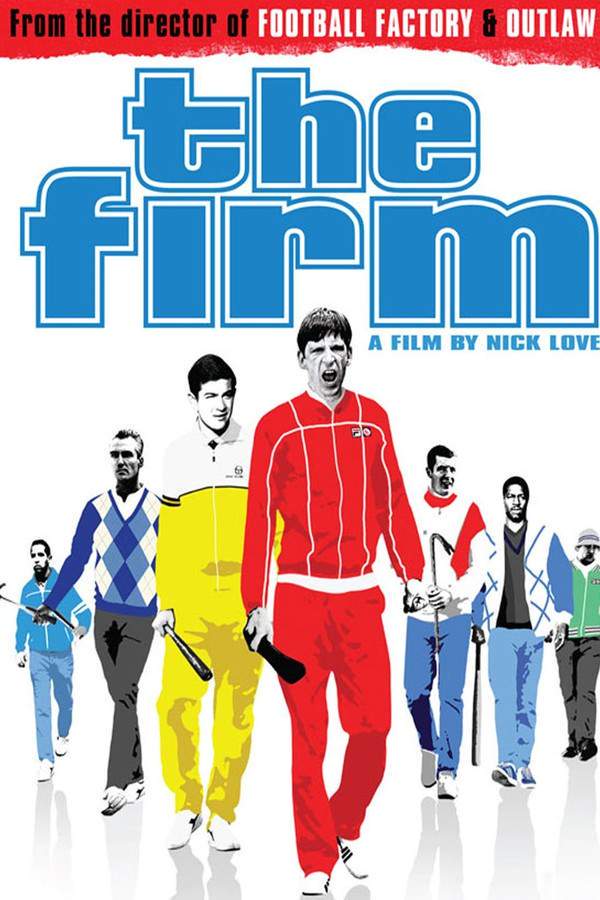
Frankie narrates a grim, sun-soaked tale set in South East London during the Thatcher era of the early 1980s—1984, to be precise—where a young man clings to a fragile dream of being somebody and escaping a dull, lonely life. After a brutal clash with his mother’s abusive boyfriend, Frankie becomes a fugitive, and through family ties he slips away to the Costa del Sol, chasing a chance to rewrite his future.
There, his fate crosses with Charlie, a suave expatriate who runs a nightclub and lives by a code of quiet, dangerous competence. Frankie is tasked with delivering a bag of money to Charlie, and what begins as a simple transfer quickly deepens into a relationship of trust and temptation. Charlie is impressed by Frankie’s restraint in not opening the bag, and he pulls him into his inner circle, introducing him to his associates and, notably, to the psychopathic Sammy. The invitation to stay in Spain and work as Charlie’s driver marks the start of a dramatic shift away from Frankie’s old London life.
As Frankie acclimates to this glittering, perilous world, he learns that Charlie and his crew are not just criminals but the very people the British authorities know as the “Peckham Four,” wanted for armed robbery back home. Yet Frankie finds the lure of wealth, status, and the adrenaline of this new milieu hard to resist, choosing the excitement of their high-flying scheme over his prior, unremarkable life. He becomes deeply involved in smuggling hashish across the Strait of Gibraltar from Morocco, a path that promises fast money but also breeds fear, paranoia, and increasingly reckless risks.
The film follows the familiar rise-and-fall arc of many crime dramas: the gang lives large while fortunes bloom, then greed and mistrust gnaw away at the crew, driving wedges between friends and rivals alike. Tensions spike when Frankie and Sammy’s wife, Carly, becomes a focal point of jealousy and desire, complicating loyalties within the group. As the business grows more ambitious, Charlie and Frankie decide to go it alone, shifting from cannabis to cocaine and arranging drop-offs from Colombian planes. Yet this shift only accelerates their downfall, as both men become increasingly addicted and the local authorities grow wary.
The mayor, a figure who once tolerated the cannabis trade, issues a blunt warning to stall the cocaine operation, and the tension culminates in a brutal crackdown that disrupts their entire operation. An assassination attempt on the mayor fails, and the ensuing fallout leads to the brutal beheading of one of their affiliates. Six months pass, and Frankie and Charlie find themselves as homeless thugs, reduced to stealing to survive.
A chipped, anticlimactic reunion party at Charlie’s old bar—now run by Frankie’s ally, Sonny—reintroduces Carly into Frankie’s orbit. He hatches one last plan, inviting Sammy to join a final pickup, but the scheme backfires as Carly had secretly given Sammy a pistol. The weapon’s empty magazine renders Sammy unable to shoot Frankie, and a desperate clash erupts. Frankie pounds Sammy with a rock, but the outcome is sealed when Spanish Navy patrolmen fatally shoot Sammy as Frankie makes a frantic escape through a sewage pipe. He surfaces to confront Carly, the person who handed Sammy his empty gun, and, after a tense confrontation, drives off into the fading sunset alone.
The ending threads together two futures: Sonny reforms and quietly runs Charlie’s old bar with steady success, while Charlie himself is reduced to a mere bouncer. The film closes with a stark, theatrical coda that glances at the fates of the others—Carly returns home to her parents’ house in Penge, Sammy descends into Hell, and Frankie, ever restless, sails toward Hollywood. In between these chapters, the story remains a blunt, immersive portrait of ambition, betrayal, and the fragile line between aspiration and ruin.