



Plot Explained Spoilers guaranteed!
Plot Explained

Browse by genre

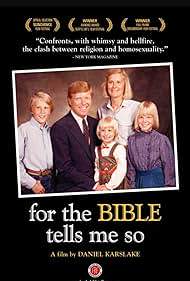
For the Bible Tells Me So (2007) movie poster

Timeline

For the Bible Tells Me So (2007) Timeline Explained – Every Event in Order

Release, runtime and language
2007 · English
Directed by
Daniel G. Karslake

Five families, including those of Richard Gephardt and Gene Robinson, confront the challenges of raising a gay child. The film explores how faith leaders and scholars offer perspectives on reconciling biblical teachings with unconditional love and acceptance. It's a moving examination of faith, understanding, and healing for individuals and communities wrestling with questions of scripture and sexual identity, offering a path toward greater compassion and acceptance.

On this page (6)
  1. 1 Where to watch
  2. 2 Events in order (10)
  3. 3 Timeline questions answered
  4. 4 Movie threads
  5. 5 Movies like For the Bible Tells Me So
  6. 6 Every angle

Where to watch

Where to Watch For the Bible Tells Me So (2007)

Where can you watch For the Bible Tells Me So? Stream, rent or buy it in the US, including on OVID, Kanopy and Apple TV Store: current JustWatch availability with up-to-date prices.

Streaming availability powered by JustWatch

10 events in order · contains spoilers

For the Bible Tells Me So Timeline: Events in Chronological Order

Every key event of For the Bible Tells Me So (2007) in order, scene by scene, with when and where it takes place. Use it to untangle flashbacks, time jumps and parallel storylines, to refresh your memory before the sequel or to find the exact scene you are thinking of.

  1. Introduction to Biblical Teachings

    The film opens by introducing traditional Biblical teachings on homosexuality, setting the stage for the ensuing discussion. It outlines the historical context and societal implications that these teachings have had over the years.

  2. Anecdotes from Families

    Viewers are presented with various anecdotes from families who are either accepting or at least tolerant of homosexual relationships. These personal stories add a human element to the discussion, revealing the challenges and triumphs of navigating faith and sexuality.

  3. Insights from Liberal Clergy

    The filmmakers seek out liberal clergy to provide interpretations of scriptural texts related to homosexuality. These discussions aim to challenge conventional beliefs and highlight progressive views on longstanding issues within the church.

  4. Preacher’s Perspective

    A prominent preacher from the Disciples of Christ asserts a critical viewpoint, stating, 'we cannot say what the Bible says; we can only say what it reads.' This profound statement introduces the idea that interpretation plays a crucial role in understanding scripture.

  5. Scrutiny of Abomination Verses

    The film scrutinizes specific verses in the Bible that label homosexuality as an abomination. By comparing these texts to dietary restrictions found in other parts of scripture, the filmmakers encourage viewers to reconsider their interpretations critically.

  6. Redefining Critical Terms

    The narrative introduces alternative interpretations of terms like 'natural' and suggests that they should be understood as 'customary.' This shift in understanding is presented as a significant potential change that could impact the perception of these verses.

  7. Exploration of Alternative Viewpoints

    Throughout the documentary, the filmmakers present a variety of interpretations, leaning heavily toward a more inclusive viewpoint. They argue that the discussions around scripture should be broadened to include diverse perspectives without dismissing them outright.

  8. Dissenting Opinions

    Any dissenting opinions presented in the film appear largely superficial and are often acknowledged only briefly. This raises questions about the depth of the exploration, leading to criticisms that the narrative doesn’t fully engage with opposing viewpoints.

  9. Cultural Context Matters

    The filmmakers emphasize that understanding the cultural context in which scripture was written is essential. They argue that neglecting historical and societal factors can lead to misinterpretations that harm individuals in the modern world.

  10. Call for Re-examination

    The documentary concludes with a call for re-examination of Biblical teachings on homosexuality. It urges viewers to engage in open dialogue about these topics, fostering understanding and acceptance within and outside religious communities.

Last updated: November 04, 2024 at 02:03

Was this helpful?

Timeline questions answered

For the Bible Tells Me So Timeline Explained: Your Questions Answered

When does it happen, and why in that order? The questions people ask about the chronology of For the Bible Tells Me So (2007): time jumps, flashbacks, cause and effect between scenes and the correct order of events, each answered with spoilers.

Q1

What does the quote 'we cannot say what the Bible says; we can only say what it reads' mean in the film?

The quote, spoken by a Disciples of Christ preacher, is presented as the film's central thesis. It argues that Biblical interpretation is inherently subjective, what the text 'says' depends on how readers 'read' it. The film uses this idea to suggest that traditional condemnations of homosexuality are not absolute commands but rather interpretations that can be reconsidered when viewed through different linguistic and cultural lenses.

Foreshadowing: This statement appears early in the film as the filmmakers set up their interpretive framework.

  • bible interpretation
  • scripture reading
  • theological debate
  • preacher quote
Q2

Why does the film compare homosexuality to dietary restrictions in the Bible?

The film argues that verses condemning homosexuality are found alongside Old Testament dietary laws that modern Christians no longer follow, such as restrictions on eating shellfish. By drawing this comparison, the filmmakers contend that certain Biblical prohibitions were culturally specific and should not be treated as universal moral commands. This is presented as a key argument for reinterpreting verses about homosexuality.

Foreshadowing: The film introduces this comparison when scrutinizing 'abomination' verses in the Bible.

  • dietary laws
  • old testament
  • leviticus
  • abomination
  • biblical interpretation
Q3

What is the film's argument about the word 'natural' in the Bible?

The film suggests that the Greek word often translated as 'natural' in Biblical references to homosexuality should instead be understood as 'customary' or 'according to tradition.' This linguistic redefinition is presented as a way to challenge the argument that homosexuality is 'unnatural.' By shifting the meaning, the filmmakers argue that the relevant verses do not necessarily condemn same-sex relationships as we understand them today.

Foreshadowing: This reinterpretation is introduced when the film discusses redefining critical Biblical terms.

  • greek word
  • natural meaning
  • biblical translation
  • word definition
  • theological argument
Q4

Why does the film present mostly one-sided viewpoints on homosexuality?

The documentary clearly leans toward an affirming interpretation of scripture, featuring families who are accepting or tolerant of gay children and liberal clergy who argue for inclusive readings of the Bible. The filmmakers acknowledge that dissenting opinions are included, but critics have noted these perspectives are presented superficially, serving more as a formality rather than a genuine exploration of opposing views. The film prioritizes its own argumentative arc over balanced debate.

Foreshadowing: The timeline notes that dissenting opinions appear largely superficial and are acknowledged only briefly.

  • one-sided
  • opposing viewpoints
  • critique
  • balanced debate
  • liberal perspective
Q5

Why are the Gephardt and Robinson families featured in the documentary?

The film features the families of former Democratic congressman Dick Gephardt and Episcopal bishop Gene Robinson to represent the intersection of politics, faith, and homosexuality. These families were prominent in public discussions about faith and sexual orientation in the mid-2000s. Their stories illustrate how different families within religious and political leadership navigate accepting a gay child while maintaining their faith commitments.

  • dick gephardt
  • gene robinson
  • episcopal bishop
  • politician family
  • faith and politics
Q6

How does the film use cultural context to interpret Biblical passages about homosexuality?

The documentary emphasizes that understanding the cultural and historical context in which Biblical texts were written is essential for interpretation. The filmmakers argue that verses about homosexuality were addressing specific ancient practices and cultural norms that differ significantly from modern same-sex relationships. By neglect of this context, the film contends, traditional interpretations have misapplied these texts to harm LGBTQ+ individuals.

Foreshadowing: The timeline explicitly notes that cultural context matters for understanding scripture.

  • historical context
  • cultural context
  • ancient practices
  • biblical interpretation
  • scripture understanding
Q7

What is the main argument of the film regarding faith and homosexuality?

The film argues that it is possible to reconcile traditional Biblical faith with acceptance of homosexuality by reinterpreting scriptural passages. Through the stories of five families and insights from progressive theologians, the documentary presents a path toward unconditional love that does not require abandoning religious belief. The film positions this reconciliation as a matter of compassionate interpretation rather than choosing between faith and acceptance.

  • faith reconciliation
  • unconditional love
  • christianity
  • lgbtq acceptance
  • family acceptance
Q8

Why are opposing viewpoints treated superficially in the film?

The documentary includes brief appearances from opposing perspectives but does not give them substantial engagement. Any dissenting opinions presented, such as traditional interpretations maintaining that homosexuality is sinful, are acknowledged only briefly and not deeply explored. This has been cited as a weakness by critics who argue the film presents a more comprehensive examination of one side while dismissing the other without thorough consideration.

Foreshadowing: The timeline notes that dissenting opinions appear largely superficial and are often acknowledged only briefly.

  • opposing views
  • critical perspective
  • conservative Christianity
  • theological debate
  • biblical literalism
Q9

What does the film ultimately want viewers to do?

The documentary concludes with a call for re-examination of Biblical teachings on homosexuality. The film urges viewers to engage in open dialogue about these topics, to reconsider their interpretations of scripture, and to foster greater understanding and acceptance within religious communities. The tone is hopeful, suggesting that reconciliation between faith and LGBTQ+ acceptance is possible through more compassionate reading of Biblical texts.

Foreshadowing: The final timeline point explicitly mentions the call for re-examination.

  • call to action
  • viewer response
  • dialogue
  • reconsideration
  • faith community

Movie threads

More Movies Like For the Bible Tells Me So, by Mood & Story

Curated lists built around what makes For the Bible Tells Me So tick: the same mood, the same kind of story or the same emotional payoff. Each list explains why these movies belong together.

Documentaries on Personal vs. Institutional Identity like For the Bible Tells Me So

Stories where individuals navigate deep rifts between their identity and larger belief systems. Explore movies like 'For the Bible Tells Me So' that offer a compassionate look at individuals grappling with their identity within a larger faith or community structure. These documentaries provide a hopeful, steady-paced exploration of deep-seated personal conflicts and the path toward acceptance.

  • thoughtful
  • challenging
  • emotionally charged
  • contemplative
  • compassionate
  • uplifting
  • Tone: hopeful, challenging, thoughtful
  • Pacing: steady, methodical
Why these movies?

The story pattern: Films in this pattern often follow individuals or families facing a core conflict between their personal truth—such as sexual identity, political beliefs, or personal aspirations—and the rigid expectations of a powerful institution like a church, family tradition, or cultural norm. The narrative typically involves a search for reconciliation, education, and dialogue, moving from a place of tension toward greater understanding.

Why they belong together: These films are grouped by their shared focus on internal and interpersonal conflict stemming from systemic beliefs. They share a steady, methodical pacing that allows for deep contemplation, a hopeful tone that emphasizes the possibility of change, and a heavy emotional weight that acknowledges the seriousness of the struggle without resorting to despair.
Emotionally Heavy but Hopeful Movies like For the Bible Tells Me So

Emotionally weighty stories that ultimately lead toward understanding, compassion, and healing. If you liked the hopeful resolution amid serious themes in 'For the Bible Tells Me So', you'll find similar films here. These movies balance heavy emotional subject matter with a ultimately positive and uplifting tone, focusing on healing and acceptance after conflict.

  • hopeful
  • emotionally charged
  • uplifting
  • compassionate
  • heartfelt
  • inspiring
  • Tone: hopeful, compassionate, uplifting
  • Pacing: steady, character-driven
Why these movies?

The story pattern: The narrative arc in these films often begins with a significant source of pain or conflict—such as family estrangement, social injustice, or personal crisis. The journey is difficult and emotionally taxing, but the focus remains on the process of healing, reconciliation, and finding a path forward. The ending is typically satisfying and positive, providing a sense of closure and hope.

Why they belong together: These movies share a unique and compelling emotional blend: a heavy weight derived from their serious subject matter is counterbalanced by a genuinely hopeful tone and resolution. The pacing is often steady, allowing the emotional journey to unfold naturally, and the complexity is usually straightforward, making the emotional core accessible.

If you liked this

Movies Like For the Bible Tells Me So

Similar movies to For the Bible Tells Me So: the same genre, themes or kind of story. Each one comes with its own plot summary, timeline and ending explained.

Browse all movie summaries

Every angle

For the Bible Tells Me So (2007) Explained: Plot, Timeline & Characters

Everything about For the Bible Tells Me So in one place: what happens in the plot summary, the timeline in chronological order, the characters and meaning and a spoiler-free summary. What's After the Movie adds the cast, box office and post-credit scenes.

Coming soon on iOS and Android

The Plot Explained Movie Summary App

Plot summaries, endings explained and timelines on your phone. Catch up on any movie in minutes, save your favorites and never miss a twist again.

Be the first to know when we launch. Your email stays private, always.

Learn more about the app