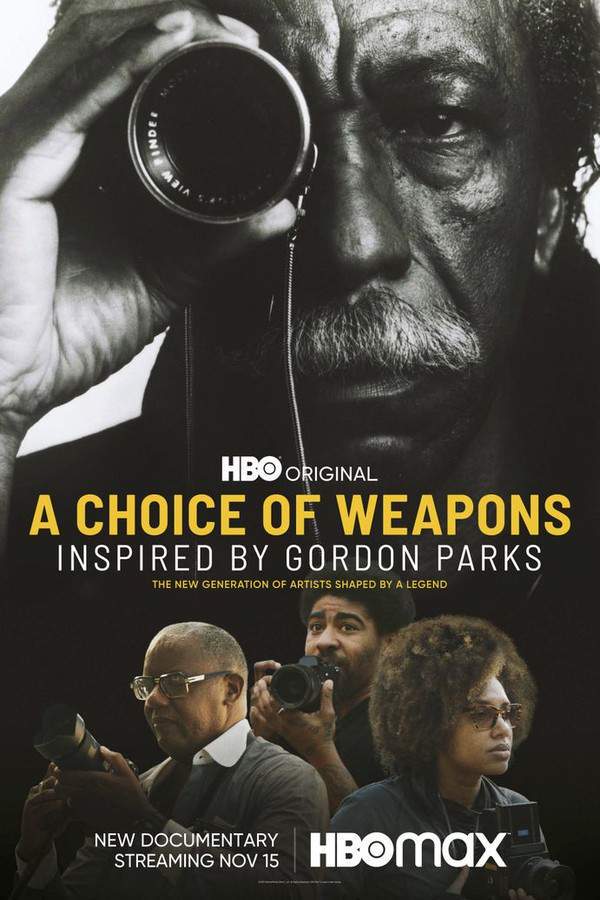
A Choice of Weapons: Inspired by Gordon Parks

A Choice of Weapons: Inspired by Gordon Parks

JustWatch#24,0811

Year: 2021

Runtime: 89 min

Language: english

Echo Score: 67
Documentary

Gordon Parks’ extraordinary life and career are explored through gritty realism and unflinching honesty. The documentary traces his journey from staff photographer at LIFE magazine to a groundbreaking filmmaker, novelist, and documentarian. It highlights how everyday Americans became artfully framed portraits, showcasing their resilience and offering glimpses of hope amidst challenging circumstances.

Where to Watch A Choice of Weapons: Inspired by Gordon Parks?

Find where to stream, rent, or buy A Choice of Weapons: Inspired by Gordon Parks (2021) in the US with current JustWatch availability, up-to-date pricing, and platform listings for subscription, rental, and digital purchase options.

Warning: spoilers below!

Haven’t seen A Choice of Weapons: Inspired by Gordon Parks yet? This summary contains major spoilers. Bookmark the page, watch the movie, and come back for the full breakdown. If you're ready, scroll on and relive the story!

A Choice of Weapons: Inspired by Gordon Parks (2021) – Full Plot Summary & Ending Explained

Read the complete plot breakdown of A Choice of Weapons: Inspired by Gordon Parks (2021), including all key story events, major twists, and the ending explained in detail. Discover what really happened, and what it all means.

In this compelling British documentary, the life and impact of Gordon Parks, the only Negro staff photographer at LIFE magazine, are explored. Not only was Parks a talented photographer, but he also made his mark as a composer, author, and film director. As a black man in a predominantly white industry, Parks felt compelled to exceed expectations, believing he had to be far more productive and talented than his colleagues to secure his position and prove his worth.

The film also features Devin Allen, a photographer who gained recognition for capturing the poignant images of the Black Lives Matter protests and riots in Baltimore. Allen shares a moment when he stumbled upon Parks' work during a visit to Barnes & Noble, where he saw photographs illustrating gang life in Harlem. This experience led him to appreciate the profound power of photography in storytelling. His career skyrocketed in 2015, after he took a striking photograph during the uprising at Camden Yards that became the cover of TIME magazine.

Reflecting on his journey, Parks noted that although he might have selected a gun or knife as his weapon, he ultimately chose the camera as a means to express his perspective on the pervasive injustices facing African Americans. Growing up in the South, he experienced the harsh realities of lynching and racial terrorism firsthand. This upbringing fostered a duality in Parks' personality—one persona shared with white society and another reserved for his family. After the tragic deaths of several friends, his mother moved him away from Kansas, propelling him to take a job as a waiter on a train, where he would encounter the nation's complex landscape, often marred by poverty and addiction.

Parks honed his photography skills from training manuals, using his kitchen as a makeshift studio and crafting light sources from tin cans. He aimed to highlight the dignity and artistry in the daily lives of ordinary black individuals, selling his work to newspapers. In 1942, he received a significant fellowship allowing him to serve as a photographer for the Farm Security Administration in Washington, D.C., documenting the challenges faced by families impacted by the Dust Bowl under the mentorship of Roy Stryker. One of Parks' notable projects involved photographing a dedicated cleaning woman named Ellen Watson, capturing her essence in a series of intimate images that painted a vivid picture of her life.

Inspired by Parks, artist Latoya Ruby Frazier endeavored to impact the world through photography. In 2016, she was tasked by Elle magazine to document the Flint water crisis, where she met Shea Cobb and her daughter, Zion. This encounter led to an ongoing visual narrative over four years, echoing the themes of empathy and presence that Parks had instilled in her.

Parks’ collaborations with literary figures like Ralph Ellison, particularly on topics concerning the psychology of Harlem and his visionary project on "The Invisible Man," marked pivotal moments in his career. By approaching LIFE magazine with a portfolio that included the stories of Harlem's gang leaders, he broke barriers as the first African American photographer on the staff. His relationship with gang leader Red Jackson illustrates this as he documented Jackson's daily life, weaving in personal stories of love and tragedy, including a heart-wrenching moment when he captured the aftermath of a gang member's death.

Moreover, Jamel Shabazz shares his perspective from his vast experience photographing youth in Brooklyn, motivated by a wish to inspire rather than see them fall victim to the streets. Parks' legacy blossomed further as he took powerful images of Alabama’s segregated life during the mid-1950s, showcasing the bitter contrast between black and white living conditions, particularly following the gruesome murder of Emmett Till.

As the narrative unfolds, Ava DuVernay underscores the intimate connection established by Parks between his subjects and the camera, drawing parallels to actors' efforts to resonate with audiences emotionally. The documentary highlights that Parks' storytelling extended beyond social justice, spanning genres from photojournalism to fashion and capturing a wide spectrum of human experience.

With iconic figures like Gloria Vanderbilt, Parks was able to bridge the gap between different societal classes, gaining respect across racial divides. In the late 1960s, he became a significant voice, navigating the complexities of race and crime, ultimately culminating in significant journalistic achievements that shaped public perceptions of black Americans.

The concluding segments of the documentary showcase Parks’ interactions with major cultural icons such as Malcolm X and how Parks' work became foundational in movements for racial justice. He developed a complex rapport with the Nation of Islam, which not only gained him unprecedented access to photograph the community but also earned him the respect of its leaders.

Parks also inspired future generations of photographers, including Devin Allen, who learned that emotion and context often speak louder than clarity in a photograph. The documentary beautifully encapsulates Parks’ relentless spirit, creativity, and his aspiration to tell stories that encourage change, ultimately leaving a lasting legacy that resonates with today’s artists and activists.
Last updated: November 04, 2024 at 01:31

Was this helpful?

A Choice of Weapons: Inspired by Gordon Parks (2021) Plot Questions Answered – Summary FAQ

Explore frequently asked questions about A Choice of Weapons: Inspired by Gordon Parks (2021) with spoiler-rich answers covering the full plot summary, major story beats, character motivations, hidden details, and ending meaning. This movie summary FAQ helps explain confusing scenes, plot twists, and narrative decisions in clear, searchable detail.

Q1

Why did Gordon Parks choose the camera as his weapon?

A.

camera weapongordon parks motivationphotography social justice
Q2

How did Gordon Parks become the first Black photographer at LIFE magazine?

A.

Parks broke barriers by approaching LIFE magazine with a portfolio that included stories about Harlem's gang leaders. His compelling visual narratives and unique perspective on Black life in America convinced the magazine to hire him as the first African American staff photographer in their history.

life magazine first black photographergordon parks career break
Q3

What was Gordon Parks' relationship with Roy Stryker?

A.

Roy Stryker mentored Parks during his fellowship with the Farm Security Administration in 1942. Under Stryker's guidance in Washington D.C., Parks documented families affected by the Dust Bowl, learning to capture hardship and dignity in everyday American life. This mentorship was foundational to Parks' documentary style.

roy strykermentorfarm security administration
Q4

Why did Gordon Parks photograph Harlem gang leader Red Jackson?

A.

Parks photographed Red Jackson to capture the complex realities of Harlem life, weaving in personal stories of love and tragedy within gang culture. This project demonstrated his ability to find humanity in difficult subjects and contributed to his portfolio that eventually got him hired by LIFE magazine.

red jacksonharlem gangsdocumentary photography
Q5

What was Gordon Parks' connection to the Emmett Till case?

A.

In the mid-1950s, Parks traveled to Alabama and captured powerful images of segregated life, particularly following the gruesome murder of Emmett Till. His photographs documented the bitter contrast between Black and white living conditions and became significant visual documentation of the civil rights era's atrocities.

emmett tillcivil rights photographyalabama segregation
Q6

How did Gordon Parks influence photographer Devin Allen?

A.

Devin Allen discovered Parks' work at Barnes & Noble, where he saw photographs illustrating gang life in Harlem. This experience showed him the profound power of photography in storytelling. Allen later gained recognition for capturing images of the Baltimore Black Lives Matter protests, with his photo of the Camden Yards uprising becoming a TIME magazine cover in 2015.

devin allenblack lives matterinspiration legacy
Q7

What was Gordon Parks' relationship with Malcolm X?

A.

Parks developed a complex rapport with Malcolm X and the Nation of Islam, which granted him unprecedented access to photograph the community. This relationship not only shaped his understanding of race relations but also allowed him to capture intimate moments that few other photographers could access.

malcolm xnation of islamphotography access
Q8

Why did Latoya Ruby Frazier document the Flint water crisis?

A.

Inspired by Parks' legacy of using photography to tell personal stories with social impact, Latoya Ruby Frazier was tasked by Elle magazine in 2016 to document the Flint water crisis. She met Shea Cobb and her daughter Zion, creating a visual narrative over four years that echoed Parks' themes of empathy, dignity, and documenting communities affected by injustice.

latoya ruby frazierflint water crisisshea cobb
Q9

What made Gordon Parks' approach to photography unique?

A.

Parks aimed to highlight the dignity and artistry in daily lives of ordinary Black individuals, transforming his kitchen into a makeshift studio and crafting light sources from tin cans. He believed in capturing the humanity and resilience of his subjects, whether they were cleaning women, gang members, or cultural icons, bridging gaps between different societal classes.

photography styledignity subjectseveryday black life
Q10

Why did Gordon Parks develop a dual identity?

A.

Growing up in the South experiencing lynching and racial terrorism, Parks developed a duality in his personality, one persona he shared with white society and another more genuine self reserved for his family. This survival mechanism shaped how he navigated the professional world while maintaining his authentic identity.

dual identityracial traumapersonal navigation
Q11

How did Gordon Parks teach himself photography?

A.

Parks honed his photography skills entirely from training manuals, using his kitchen as a studio and crafting light sources from tin cans. He sold his work to newspapers, eventually catching the attention that led to his 1942 fellowship with the Farm Security Administration and his breakthrough with LIFE magazine.

self taught photographyearly careertraining manuals
Mobile App Preview

Coming soon on iOS and Android

The Plot Explained Mobile App

From blockbusters to hidden gems - dive into movie stories anytime, anywhere. Save your favorites, discover plots faster, and never miss a twist again.

Sign up to be the first to know when we launch. Your email stays private, always.

Explore Movie Threads

Discover curated groups of movies connected by mood, themes, and story style. Browse collections built around emotion, atmosphere, and narrative focus to easily find films that match what you feel like watching right now.

Documentaries About Art as a Weapon for Change like A Choice of Weapons: Inspired by Gordon Parks

Powerful stories where creativity confronts injustice and inspires resilience.If you were inspired by how Gordon Parks used photography to confront racial injustice, you'll find similar stories here. This collection features movies and documentaries about artists, photographers, and activists who use their craft to document, protest, and empower communities.

inspiringthoughtfulempoweringgrittyrespectfulhopefulsocial commentary

Narrative Summary

The narratives in this thread typically follow an artist or documentarian as they navigate a complex social issue. The journey involves using their medium not just for observation, but as an active tool for evidence, testimony, and inspiration, often highlighting the resilience of their subjects.

Why These Movies?

Movies are grouped here due to their shared focus on the intersection of art and activism. They possess a tone that balances the heaviness of real-world issues with the hopefulness that creative action can inspire change, focusing on the process of creation as a response to adversity.

Documentaries with a Heavy but Hopeful Tone like A Choice of Weapons: Inspired by Gordon Parks

Documentaries that tackle difficult truths while leaving you feeling uplifted.For viewers who appreciated the balance of gritty realism and inspiring optimism in A Choice of Weapons. These movies explore challenging topics—from civil rights to personal triumphs—while maintaining a steady, respectful pace and an ending that feels genuinely hopeful and empowering.

hopefulheavyinspiringreflectiverespectfulempoweringgrittythoughtful

Narrative Summary

These documentaries often follow a linear or thematic structure, presenting difficult historical or contemporary facts. The emotional journey moves from witnessing hardship to understanding the mechanisms of resilience, often through the lens of individuals or communities who overcome or challenge their circumstances.

Why These Movies?

These films share a unique tonal blend: they carry significant emotional weight due to their subject matter, yet their pacing is measured and their core message is uplifting. They are connected by their ability to honor the gravity of a situation while affirming the possibility of positive change.

Unlock the Full Story of A Choice of Weapons: Inspired by Gordon Parks

Don't stop at just watching - explore A Choice of Weapons: Inspired by Gordon Parks in full detail. From the complete plot summary and scene-by-scene timeline to character breakdowns, thematic analysis, and a deep dive into the ending - every page helps you truly understand what A Choice of Weapons: Inspired by Gordon Parks is all about. Plus, discover what's next after the movie.

A Choice of Weapons: Inspired by Gordon Parks Timeline

Track the full timeline of A Choice of Weapons: Inspired by Gordon Parks with every major event arranged chronologically. Perfect for decoding non-linear storytelling, flashbacks, or parallel narratives with a clear scene-by-scene breakdown.

A Choice of Weapons: Inspired by Gordon Parks Timeline

Characters, Settings & Themes in A Choice of Weapons: Inspired by Gordon Parks

Discover the characters, locations, and core themes that shape A Choice of Weapons: Inspired by Gordon Parks. Get insights into symbolic elements, setting significance, and deeper narrative meaning - ideal for thematic analysis and movie breakdowns.

Characters, Settings & Themes in A Choice of Weapons: Inspired by Gordon Parks

A Choice of Weapons: Inspired by Gordon Parks Spoiler-Free Summary

Get a quick, spoiler-free overview of A Choice of Weapons: Inspired by Gordon Parks that covers the main plot points and key details without revealing any major twists or spoilers. Perfect for those who want to know what to expect before diving in.

A Choice of Weapons: Inspired by Gordon Parks Spoiler-Free Summary

More About A Choice of Weapons: Inspired by Gordon Parks

Visit What's After the Movie to explore more about A Choice of Weapons: Inspired by Gordon Parks: box office results, cast and crew info, production details, post-credit scenes, and external links - all in one place for movie fans and researchers.

More About A Choice of Weapons: Inspired by Gordon Parks