Year: 2007
Language: English
Director: Daniel G. Karslake
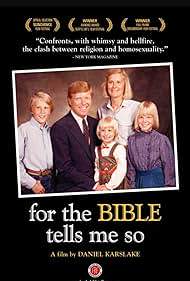
Five families, including those of Richard Gephardt and Gene Robinson, confront the challenges of raising a gay child. The film explores how faith leaders and scholars offer perspectives on reconciling biblical teachings with unconditional love and acceptance. It's a moving examination of faith, understanding, and healing for individuals and communities wrestling with questions of scripture and sexual identity, offering a path toward greater compassion and acceptance.
Find where to stream, rent, or buy For the Bible Tells Me So (2007) in the US with current JustWatch availability, up-to-date pricing, and platform listings for subscription, rental, and digital purchase options.
Warning: spoilers below!
Haven’t seen For the Bible Tells Me So yet? This summary contains major spoilers. Bookmark the page, watch the movie, and come back for the full breakdown. If you're ready, scroll on and relive the story!
Read the complete plot breakdown of For the Bible Tells Me So (2007), including all key story events, major twists, and the ending explained in detail. Discover what really happened, and what it all means.
The filmmakers delve into the complexities surrounding traditional Biblical teachings on homosexuality. Through various anecdotes from families who are either accepting or at least tolerant of homosexual relationships, they present a perspective that challenges conventional interpretations. They also seek insights from liberal clergy who engage in discussions regarding scriptural texts.
One prominent figure, a preacher from the Disciples of Christ, emphasizes that "we cannot say what the Bible says; we can only say what it reads." This sentiment reflects a broader theme in the film, as it scrutinizes verses that label homosexuality as an abomination, arguing that these should be viewed in the same light as dietary restrictions found in other scriptures. The film introduces distinct interpretations of critical terms, suggesting that words like "natural" should be understood as "customary," which could dramatically shift their perceived meanings.
However, the narrative leans heavily towards this alternative viewpoint, providing minimal attention to opposing perspectives. It becomes apparent that any dissenting opinions presented are largely superficial, serving more as a formality than a genuine exploration of the topic.
Last updated: November 04, 2024 at 02:03
Explore frequently asked questions about For the Bible Tells Me So (2007) with spoiler-rich answers covering the full plot summary, major story beats, character motivations, hidden details, and ending meaning. This movie summary FAQ helps explain confusing scenes, plot twists, and narrative decisions in clear, searchable detail.
The quote, spoken by a Disciples of Christ preacher, is presented as the film's central thesis. It argues that Biblical interpretation is inherently subjective, what the text 'says' depends on how readers 'read' it. The film uses this idea to suggest that traditional condemnations of homosexuality are not absolute commands but rather interpretations that can be reconsidered when viewed through different linguistic and cultural lenses.
This statement appears early in the film as the filmmakers set up their interpretive framework.
The film argues that verses condemning homosexuality are found alongside Old Testament dietary laws that modern Christians no longer follow, such as restrictions on eating shellfish. By drawing this comparison, the filmmakers contend that certain Biblical prohibitions were culturally specific and should not be treated as universal moral commands. This is presented as a key argument for reinterpreting verses about homosexuality.
The film introduces this comparison when scrutinizing 'abomination' verses in the Bible.
The film suggests that the Greek word often translated as 'natural' in Biblical references to homosexuality should instead be understood as 'customary' or 'according to tradition.' This linguistic redefinition is presented as a way to challenge the argument that homosexuality is 'unnatural.' By shifting the meaning, the filmmakers argue that the relevant verses do not necessarily condemn same-sex relationships as we understand them today.
This reinterpretation is introduced when the film discusses redefining critical Biblical terms.
The documentary clearly leans toward an affirming interpretation of scripture, featuring families who are accepting or tolerant of gay children and liberal clergy who argue for inclusive readings of the Bible. The filmmakers acknowledge that dissenting opinions are included, but critics have noted these perspectives are presented superficially, serving more as a formality rather than a genuine exploration of opposing views. The film prioritizes its own argumentative arc over balanced debate.
The timeline notes that dissenting opinions appear largely superficial and are acknowledged only briefly.
The film features the families of former Democratic congressman Dick Gephardt and Episcopal bishop Gene Robinson to represent the intersection of politics, faith, and homosexuality. These families were prominent in public discussions about faith and sexual orientation in the mid-2000s. Their stories illustrate how different families within religious and political leadership navigate accepting a gay child while maintaining their faith commitments.
The documentary emphasizes that understanding the cultural and historical context in which Biblical texts were written is essential for interpretation. The filmmakers argue that verses about homosexuality were addressing specific ancient practices and cultural norms that differ significantly from modern same-sex relationships. By neglect of this context, the film contends, traditional interpretations have misapplied these texts to harm LGBTQ+ individuals.
The timeline explicitly notes that cultural context matters for understanding scripture.
The film argues that it is possible to reconcile traditional Biblical faith with acceptance of homosexuality by reinterpreting scriptural passages. Through the stories of five families and insights from progressive theologians, the documentary presents a path toward unconditional love that does not require abandoning religious belief. The film positions this reconciliation as a matter of compassionate interpretation rather than choosing between faith and acceptance.
The documentary includes brief appearances from opposing perspectives but does not give them substantial engagement. Any dissenting opinions presented, such as traditional interpretations maintaining that homosexuality is sinful, are acknowledged only briefly and not deeply explored. This has been cited as a weakness by critics who argue the film presents a more comprehensive examination of one side while dismissing the other without thorough consideration.
The timeline notes that dissenting opinions appear largely superficial and are often acknowledged only briefly.
The documentary concludes with a call for re-examination of Biblical teachings on homosexuality. The film urges viewers to engage in open dialogue about these topics, to reconsider their interpretations of scripture, and to foster greater understanding and acceptance within religious communities. The tone is hopeful, suggesting that reconciliation between faith and LGBTQ+ acceptance is possible through more compassionate reading of Biblical texts.
The final timeline point explicitly mentions the call for re-examination.
Discover curated groups of movies connected by mood, themes, and story style. Browse collections built around emotion, atmosphere, and narrative focus to easily find films that match what you feel like watching right now.
Stories where individuals navigate deep rifts between their identity and larger belief systems.Explore movies like 'For the Bible Tells Me So' that offer a compassionate look at individuals grappling with their identity within a larger faith or community structure. These documentaries provide a hopeful, steady-paced exploration of deep-seated personal conflicts and the path toward acceptance.
Films in this pattern often follow individuals or families facing a core conflict between their personal truth—such as sexual identity, political beliefs, or personal aspirations—and the rigid expectations of a powerful institution like a church, family tradition, or cultural norm. The narrative typically involves a search for reconciliation, education, and dialogue, moving from a place of tension toward greater understanding.
These films are grouped by their shared focus on internal and interpersonal conflict stemming from systemic beliefs. They share a steady, methodical pacing that allows for deep contemplation, a hopeful tone that emphasizes the possibility of change, and a heavy emotional weight that acknowledges the seriousness of the struggle without resorting to despair.

Emotionally weighty stories that ultimately lead toward understanding, compassion, and healing.If you liked the hopeful resolution amid serious themes in 'For the Bible Tells Me So', you'll find similar films here. These movies balance heavy emotional subject matter with a ultimately positive and uplifting tone, focusing on healing and acceptance after conflict.
The narrative arc in these films often begins with a significant source of pain or conflict—such as family estrangement, social injustice, or personal crisis. The journey is difficult and emotionally taxing, but the focus remains on the process of healing, reconciliation, and finding a path forward. The ending is typically satisfying and positive, providing a sense of closure and hope.
These movies share a unique and compelling emotional blend: a heavy weight derived from their serious subject matter is counterbalanced by a genuinely hopeful tone and resolution. The pacing is often steady, allowing the emotional journey to unfold naturally, and the complexity is usually straightforward, making the emotional core accessible.
Don't stop at just watching - explore For the Bible Tells Me So in full detail. From the complete plot summary and scene-by-scene timeline to character breakdowns, thematic analysis, and a deep dive into the ending - every page helps you truly understand what For the Bible Tells Me So is all about. Plus, discover what's next after the movie.
Track the full timeline of For the Bible Tells Me So with every major event arranged chronologically. Perfect for decoding non-linear storytelling, flashbacks, or parallel narratives with a clear scene-by-scene breakdown.
Discover the characters, locations, and core themes that shape For the Bible Tells Me So. Get insights into symbolic elements, setting significance, and deeper narrative meaning - ideal for thematic analysis and movie breakdowns.
Discover movies like For the Bible Tells Me So that share similar genres, themes, and storytelling elements. Whether you’re drawn to the atmosphere, character arcs, or plot structure, these curated recommendations will help you explore more films you’ll love.
For the Bible Tells Me So (2007) Scene-by-Scene Movie Timeline
For the Bible Tells Me So (2007) Movie Characters, Themes & Settings
For the Bible Tells Me So (2007) Spoiler-Free Summary & Key Flow
Movies Like For the Bible Tells Me So – Similar Titles You’ll Enjoy
Pray Away (2021) Full Movie Breakdown
God Loves Uganda (2013) Movie Recap & Themes
Trembling Before G-d (2001) Film Overview & Timeline
Boy Erased (2018) Ending Explained & Film Insights
Family Fundamentals (2002) Plot Summary & Ending Explained
Question One (2012) Detailed Story Recap
For They Know Not What They Do (2020) Movie Recap & Themes
For They Know Not What They Do (2019) Full Summary & Key Details
All in My Family (2019) Spoiler-Packed Plot Recap
How God Created Us: Coming Out in the Catholic Church (2022) Ending Explained & Film Insights
Truth Be Told (2023) Complete Plot Breakdown
Word Is Out: Stories of Some of Our Lives (1977) Complete Plot Breakdown
Out in the Silence (2009) Complete Plot Breakdown
Lord, Save Us from Your Followers (2008) Full Movie Breakdown
Prodigal Sons (2008) Ending Explained & Film Insights