Plot Explained Spoilers guaranteed!
Plot Explained

Browse by genre

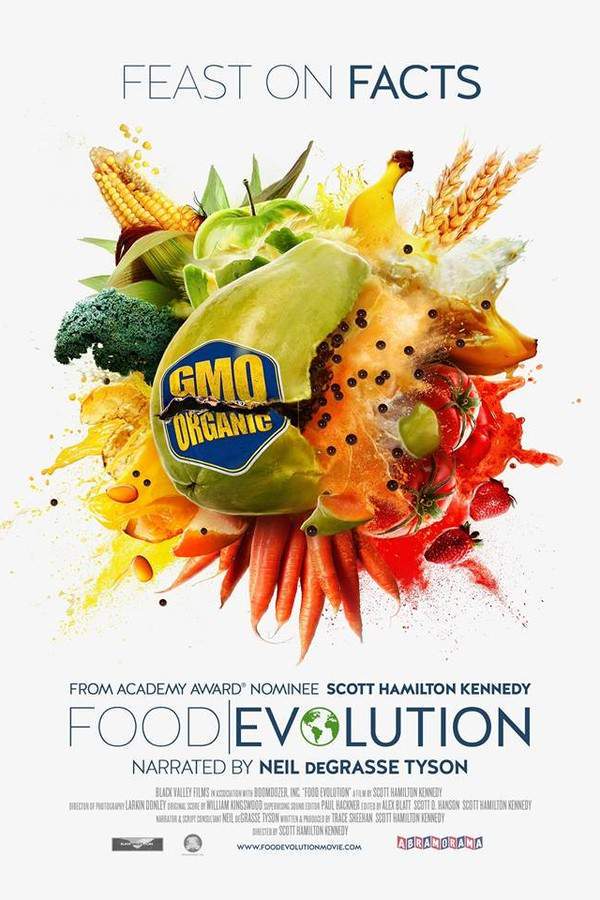
Food Evolution (2017) movie poster

Plot Summary

Food Evolution (2017) Plot Summary Explained

Release, runtime and language
2017 · 92 min · English
Echo score 72
Loading streaming availability…
Directed by
Scott Hamilton Kennedy
Starring
Bill Nye, Michael Pollan, Charles Benbrook, Emma Naluyima Mugerwa, Karl Haro von Mogel, Kavin Senapathy
Budget
$250K

Embarking on a global journey, this documentary explores the complexities of the food crisis and the passionate debate surrounding it. The film examines the emotional and scientific dimensions of food production, featuring perspectives from experts, farmers, scientists, and advocates. It investigates the need for safe, nutritious, and sustainable food sources while considering the challenges and differing viewpoints within this critical issue.

On this page (6)
  1. 1 Where to watch
  2. 2 What happens: full plot
  3. 3 Plot questions answered
  4. 4 Movie threads
  5. 5 Movies like Food Evolution
  6. 6 Every angle
Loading streaming availability…

Full plot summary · contains spoilers

What Happens in Food Evolution: Full Plot Summary

The whole story of Food Evolution (2017) explained, from the opening scene to the final frame: every key event, every twist and what it all adds up to. Read it as a quick recap before the sequel, to check a scene you missed, or to finally understand what really happened.

Food Evolution is a detailed documentary that delves into the intense and ongoing controversy surrounding Genetically Modified Organisms (GMOs) and the global food supply. The film takes viewers on an expansive journey across the globe, traveling from the lush papaya groves of Hawaii to the essential banana farms in Uganda and the vast, golden cornfields of Iowa. By visiting these diverse locations, the production examines the complex intersection of human emotion and scientific reality regarding how our food is produced and consumed.

The narrative focuses on specific case studies involving local legislation within both the United States and various nations across Africa. A primary theme of the film is the exploration of how misinformation and deep-seated fear can often overshadow and overwhelm objective, evidence-based analysis. To provide a comprehensive overview, the film tackles a wide array of critical topics, including:

The reality of food safety* and its impact on the consumer.

The necessity of environmental protection*.

The growing pressure of global population demand*.

The efficacy and risks associated with pesticide use*.

The general health implications* surrounding the use of GMOs.

Throughout the exploration of these subjects, the film meticulously analyzes the specific data, evidence, and sources that are utilized by different parties to argue their respective positions.

The documentary features a wide range of perspectives from experts and activists. Those appearing in the film include Margaret Wille, Jeffrey Smith, Charles Benbrook, Dennis Gonsalves, Alison Van Eenennaam, Pamela Ronald, Nathanael Johnson, Emma Naluyima Mugerwa, Mark Lynas, Zen Honeycut, and Raoul Adamchak. Additionally, the film provides deep insights through interviews with prominent figures such as Michael Pollan, Andrew Kimbrell, Vandana Shiva, Robert Fraley, Marion Nestle, and Bill Nye, alongside various farmers and scientists working on the front lines of agricultural science around the world.

Last updated: October 15, 2026 at 23:42

Was this helpful?

Plot questions answered

Food Evolution Plot Explained: Your Questions Answered

The questions people ask most about Food Evolution (2017): what happens in the confusing scenes, why the characters do what they do, the twists, hidden details and what the ending means. Each answer contains spoilers.

Q1

Why did Mark Lynas change his position on GMOs?

Mark Lynas reversed his anti-GMO stance in Food Evolution after studying the scientific evidence behind genetic engineering. As a former prominent activist who helped spread early fears about GMOs, he publicly acknowledged that misinformation had initially shaped his views. Reviewing the actual data, particularly agricultural studies and crop science, convinced him that his earlier opposition was not grounded in evidence. His reversal serves as one of the documentary's key examples of how encountering real research can reshape long-held beliefs.

Foreshadowing: Earlier in the film, Lynas is presented as a well-known anti-GMO voice before his transformation is revealed.

  • mark lynas
  • anti-gmo activist
  • reversal
  • misinformation
  • food evolution
Q2

What is the Rainbow papaya and how did it save Hawaii's industry?

The Rainbow papaya is a genetically engineered variety developed by scientist Dennis Gonsalves to resist the papaya ringspot virus, which was wiping out Hawaii's papaya groves. By inserting a gene from the virus itself into the papaya, Gonsalves created a plant that could survive the disease and revive the collapsing industry. Food Evolution uses this case as one of its central examples of how genetic engineering can solve real agricultural crises. The success of the Rainbow papaya remains one of the clearest documented wins for GMO technology.

Foreshadowing: The opening crisis in Hawaii's orchards is set up before Gonsalves' solution is introduced.

  • rainbow papaya
  • dennis gonsalves
  • papaya ringspot virus
  • hawaii
  • gmo success
Q3

Why is Uganda exploring genetically modified bananas?

Uganda is considering GMO bananas because banana bacterial wilt is devastating plantations and threatening a crop that is central to the country's food security and economy. Scientists in the region are developing genetically engineered varieties resistant to the disease as a potential lifeline for struggling farmers. Food Evolution frames this case to show how the GMO debate plays out very differently in developing nations facing immediate food shortages. The situation raises questions about who gets to decide which agricultural technologies are available to farmers who need them most.

Foreshadowing: The earlier segments about food security and global population pressure foreshadow the urgency seen in Uganda.

  • uganda
  • banana bacterial wilt
  • gmo bananas
  • food security
  • african agriculture
Q4

Does Food Evolution take a side in the GMO debate?

Food Evolution deliberately avoids declaring a definitive winner in the GMO debate and instead presents a wide spectrum of perspectives from scientists, activists, farmers, and industry figures. Its stated goal is to examine the actual data and evidence behind arguments rather than advocate for a particular conclusion. The documentary repeatedly highlights how fear and misinformation can override objective analysis on both sides of the issue. By comparing cases in Hawaii, Uganda, and Iowa, the film encourages viewers to weigh evidence themselves rather than rely on emotional appeals.

Foreshadowing: The opening framing about emotion versus science signals the film's balanced approach.

  • food evolution
  • gmo controversy
  • balanced perspective
  • documentary
  • evidence-based
Q5

How does misinformation influence public opinion on GMOs?

Food Evolution argues that misinformation and fear-driven messaging often overpower objective scientific analysis in the GMO conversation. The documentary scrutinizes claims made by activists like Jeffrey Smith and traces them to sources that lack rigorous evidence. Public hearings in Hawaii County are shown as moments where emotional testimony sways policy more than peer-reviewed data. The film repeatedly returns to the theme that evaluating the actual sources behind a claim is essential before accepting its conclusions.

Foreshadowing: The contrast between Gonsalves' clear scientific data and Smith's untested claims sets up this tension early.

  • misinformation
  • gmo debate
  • jeffrey smith
  • public opinion
  • fear-based messaging
Q6

How does the documentary evaluate GMO food safety claims?

Food Evolution leans heavily on scientist Alison Van Eenennaam, who walks viewers through extensive animal feeding studies and large-scale data sets on GMO safety. Her analysis demonstrates how regulators and researchers assess claims about whether genetically modified foods are safe to eat. The film contrasts this evidence-based approach with activist claims that often cite anecdotes or preliminary research. By laying out the methodology behind safety assessments, the documentary empowers viewers to judge the credibility of competing sources.

Foreshadowing: Van Eenennaam's appearance is foreshadowed by the film's earlier emphasis on data over emotion.

  • gmo food safety
  • alison van eenennaam
  • animal feeding studies
  • scientific evidence
Q7

Why does the film focus on local legislation in Hawaii County?

Food Evolution follows councilwoman Margaret Wille as she proposes local laws restricting GMO farming in Hawaii County, using the debate to show how local politics and public sentiment often collide with agricultural science. The hearings feature passionate testimony from both farmers and activists, illustrating how emotionally charged issues can drive policy outcomes. The case demonstrates that even when scientific evidence supports a technology, community fears can override it at the legislative level. This local conflict becomes a microcosm of the global GMO debate.

Foreshadowing: The broader national debate introduced at the start narrows to this local showdown.

  • hawaii county
  • margaret wille
  • gmo legislation
  • local politics
  • public hearings
Q8

Why is the GMO debate different in Africa compared to wealthy nations?

Food Evolution highlights a sharp contrast between wealthy countries debating GMO labels and African nations facing immediate crop collapse and hunger. In Uganda, where banana bacterial wilt threatens a staple food, the stakes are survival rather than consumer preference. Farmers like Emma Naluyima illustrate the real-world cost of restricting technologies that could protect harvests. The documentary suggests that banning GMOs in countries with food surpluses has very different consequences than blocking them where communities are losing their primary food source.

Foreshadowing: The film's earlier emphasis on global population pressure sets up this contrast.

  • africa gmo debate
  • food security
  • emma naluyima
  • developing nations
  • banana wilt
Q9

What does the documentary reveal about pesticide use on GMO crops?

Food Evolution engages scientist Charles Benbrook to examine the legitimate concerns surrounding herbicide use on genetically engineered crops, particularly glyphosate. His analysis acknowledges that pesticide use patterns have shifted with the rise of GMO farming and that these changes deserve scrutiny. The film uses Benbrook's perspective to show that credible scientific critique exists even within the pro-science community. By including this nuance, the documentary avoids presenting GMOs as entirely without trade-offs.

Foreshadowing: Benbrook's inclusion is foreshadowed by the film's commitment to including scientists across the spectrum.

  • pesticide use
  • charles benbrook
  • herbicide
  • glyphosate
  • gmo crops
Q10

Why does Food Evolution include voices like Vandana Shiva and Michael Pollan?

The documentary includes prominent critics like Vandana Shiva, Andrew Kimbrell, and Michael Pollan alongside industry figures such as Robert Fraley and science communicators like Bill Nye to present the full landscape of the debate. By interviewing people who genuinely disagree, Food Evolution can examine the actual evidence behind each perspective rather than rely on caricatures. This range of voices also lets viewers see how the same technology can be viewed as a threat or a solution depending on values, geography, and access to data. The contrast underscores the film's central argument that polarization often blocks constructive discussion.

Foreshadowing: The film's opening promise to examine arguments from both sides prepares viewers for these contrasting interviews.

  • vandana shiva
  • michael pollan
  • bill nye
  • robert fraley
  • gmo debate voices
Q11

What role does fear play in anti-GMO activism according to the film?

Food Evolution repeatedly shows that fear-based messaging is often more powerful in shaping public opinion than scientific evidence on GMOs. Activists like Jeffrey Smith use emotionally charged claims about health dangers to mobilize communities, as seen in the heated Hawaii County hearings. The film argues these messages spread faster than nuanced data because they offer simple villains and clear threats. By tracing these claims back to their sources, the documentary reveals how fear can override rigorous science in public discourse.

Foreshadowing: The contrast between Margaret Wille's emotional hearings and Van Eenennaam's data-heavy presentation sets up this pattern.

  • fear-based activism
  • anti-gmo messaging
  • jeffrey smith
  • emotional appeals
  • public discourse
Q12

Why does the documentary compare Hawaii, Uganda, and Iowa?

Food Evolution uses its three geographic case studies to show how the same GMO debate plays out very differently depending on local conditions. Hawaii offers a story of crop rescue through genetic engineering, Uganda highlights food security crises in developing nations, and Iowa represents large-scale industrial agriculture in the American heartland. Comparing these locations reveals that questions about GMOs cannot be answered universally because the stakes, cultures, and economies differ widely. This structure reinforces the film's message that thoughtful, context-specific discussions are needed rather than blanket bans or approvals.

Foreshadowing: The film's opening promise of a global journey prepares viewers for these varied case studies.

  • hawaii
  • uganda
  • iowa
  • case studies
  • global gmo debate
Q13

What conclusions does Food Evolution reach about GMOs?

Food Evolution closes by encouraging viewers to demand transparent, evidence-based discussions about food production rather than fear-driven ones. It emphasizes that the real dangers to the food supply include crop disease, environmental pressure, and population growth, and that scientific tools should be evaluated on their merits. The documentary does not declare GMOs universally safe or unsafe but argues that decisions must be grounded in data rather than misinformation. Its ultimate message is a call for more constructive conversation about how to feed a growing global population responsibly.

Foreshadowing: The recurring theme of evidence versus emotion throughout the film converges in this conclusion.

  • food evolution conclusion
  • evidence-based discussion
  • global food supply
  • gmo evaluation
Q14

How does Food Evolution distinguish between evidence and emotion when discussing GMOs?

Throughout the documentary, Food Evolution contrasts claims backed by peer-reviewed studies with those relying on emotional appeals or anecdotal evidence. Scientific segments featuring Gonsalves, Van Eenennaam, and other researchers emphasize data, methodology, and reproducibility, while activist segments rely on personal stories and fear-based warnings. The film does not dismiss feelings about food as unimportant, but it argues they should not replace rigorous analysis when shaping policy. This recurring comparison is the structural backbone of the documentary's argument for evidence-based decision making.

Foreshadowing: The opening thesis that emotions often overwhelm scientific analysis is reinforced by every subsequent segment.

  • evidence vs emotion
  • scientific methodology
  • peer review
  • gmo policy
  • food evolution

Movie threads

More Movies Like Food Evolution, by Mood & Story

Curated lists built around what makes Food Evolution tick: the same mood, the same kind of story or the same emotional payoff. Each list explains why these movies belong together.

Science vs. fear documentaries like Food Evolution

Contested truths where data, emotion, and misinformation collide in the public square. Explore documentaries like Food Evolution that investigate controversial science, public skepticism, and the emotional battles behind food safety, GMOs, and environmental debates. These investigative films balance expert insight with passionate dissent, perfect for viewers seeking thought-provoking science documentaries that challenge assumptions and reveal how misinformation spreads.

  • investigative
  • thought-provoking
  • scientific
  • analytical
  • contemplative
  • debate-driven
  • Tone: contemplative, analytical, serious
  • Pacing: steady, methodical
Why these movies?

The story pattern: Films in this thread typically open with a deceptively simple question—Is this safe? Should we trust this?—and then expand outward into a global investigation. Interviews with scientists are juxtaposed with passionate skeptics, and the narrative gradually reveals how misinformation spreads, how emotional reasoning competes with data, and how policy gets shaped by forces beyond the lab. The arc rarely resolves into a tidy answer; instead, viewers are left holding competing truths and asked to weigh them themselves.

Why they belong together: These films share a commitment to intellectual honesty in the face of emotionally charged topics. They tend to balance technical expertise with human stories, move at a measured pace that lets arguments breathe, and resist the urge to villainize any single side. Viewers come away thinking rather than cheering.

Balanced multi-viewpoint documentaries like Food Evolution

Films that lay out every side of a debate and trust you to decide. Discover documentaries like Food Evolution that deliberately present every side of a heated debate without choosing a winner. These balanced investigative films weave together farmers, scientists, activists, and critics, offering intellectual viewing for audiences who want to weigh complex issues, from food policy to climate change, for themselves.

  • balanced
  • investigative
  • journalistic
  • thought-provoking
  • neutral
  • informative
  • Tone: neutral, balanced, contemplative
  • Pacing: steady, reflective
Why these movies?

The story pattern: Stories here move through a series of perspectives, geographies, and case studies rather than following a single protagonist. The narrative structure resembles a mosaic: each chapter introduces a new angle, a new community, a new argument, and the whole picture only emerges by the final frame. The arc is deliberately unresolved, less about reaching a destination than about expanding the viewer's map of the issue.

Why they belong together: These films share a journalistic ethos of fairness and an educational ambition to inform without persuading. They reward patient viewers who appreciate complexity, prefer nuance to slogans, and want to understand how an issue looks from inside different camps before forming their own view.

If you liked this

Movies Like Food Evolution

Similar movies to Food Evolution: the same genre, themes or kind of story. Each one comes with its own plot summary, timeline and ending explained.

Browse all movie summaries

Every angle

Food Evolution (2017) Explained: Plot, Timeline & Characters

Everything about Food Evolution in one place: what happens in the plot summary, the timeline in chronological order, the characters and meaning and a spoiler-free summary. What's After the Movie adds the cast, box office and post-credit scenes.

Coming soon on iOS and Android

The Plot Explained Movie Summary App

Plot summaries, endings explained and timelines on your phone. Catch up on any movie in minutes, save your favorites and never miss a twist again.

Be the first to know when we launch. Your email stays private, always.

Learn more about the app