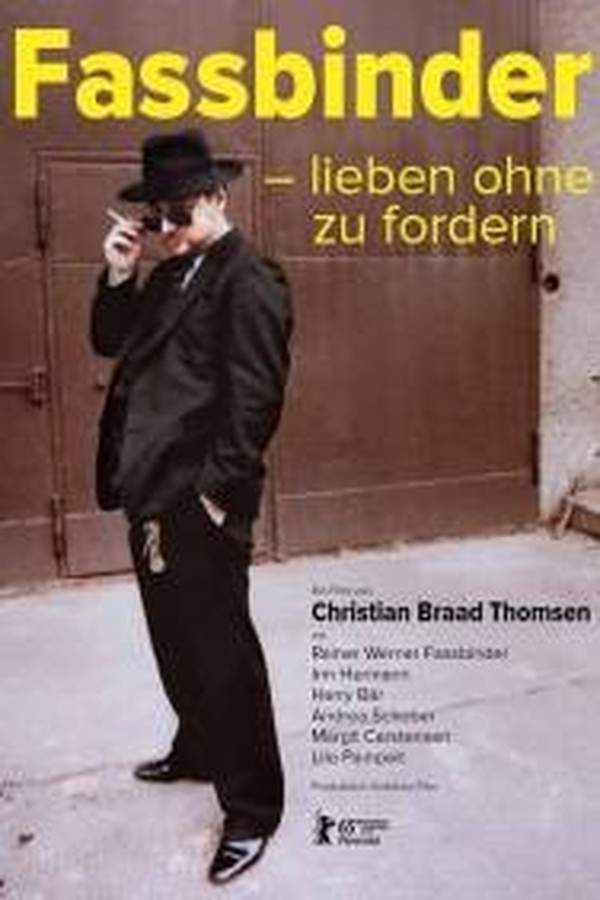
Year: 2016
Runtime: 109 min
Director: Christian Braad Thomsen
This documentary explores the life and work of filmmaker Rainer Werner Fassbinder through interviews filmed by Braad Thomsen in the 1970s. Viewers gain a unique insight into Fassbinder’s creative process and his perspectives on love, filmmaking techniques, and the challenges of living a full and expressive life. The film reveals the complexities of his artistic vision and personal philosophies.
Get a spoiler-free look at Fassbinder: To Love Without Demands (2016) with a clear plot overview that covers the setting, main characters, and story premise—without revealing key twists or the ending. Perfect for deciding if this film is your next watch.
In a quiet, dimly lit studio that feels more like a living room than a formal set, the film opens a door onto the restless world of post‑war German cinema. Through a series of candid conversations recorded in the 1970s, the documentary invites viewers into the same spaces where a young auteur once rehearsed his visions—cinema‑filled rooms, cramped apartments, and the smoky cafés of a city still echoing with the ghosts of its recent past. The tone is intimate and reverent, a blend of personal memoir and cultural portrait that lets the audience sense the restless energy of an era where history and desire collide on celluloid.
At its heart is Rainer Werner Fassbinder, a charismatic yet enigmatic figure whose prodigious output—sixty films in barely fifteen years—made him a legend of both avant‑garde and mainstream cinema. In the interviews he speaks with a mix of irony, vulnerability, and fierce conviction about love, Hollywood fantasies, psychoanalytic musings, and the relentless drive to double himself creatively. Guiding the conversation is Christian Braad Thomsen, a Danish director whose friendship with Fassbinder provides a unique lens; his presence feels less like an interrogator and more like a confidant, allowing the filmmaker’s thoughts to unfurl with startling honesty.
The documentary is enriched by the voices of those who knew him most intimately. Irm Hermann, an actress who first recognized his talent, offers reflections on his early aspirations and the fragile hope that propelled his ambition. Harry Bär, actor and producer, shares the lingering echo of a final conversation that hinted at new artistic horizons. Andrea Schober, who appeared as a child in his early works, speaks of a shared yearning for parental connection, while a moving audio recording of his mother, Lilo Pempeit, adds a quiet, poignant counterpoint to his public persona. Each testimony weaves into a tapestry that reveals not only the man behind the camera but the network of relationships that shaped his art.
The film’s style mirrors the subject’s own aesthetic—sharp, lyrical, and unflinching in its honesty—while maintaining a gentle melancholy that underscores the title’s promise: love persisting beyond mortality. By interlacing Thomsen’s personal recollections with archival footage, the documentary creates a reflective mood that encourages curiosity about the contradictions that defined Fassbinder’s life. It offers a compelling glimpse into a world where personal history, artistic obsession, and the lingering shadows of a nation’s past intertwine, inviting viewers to contemplate how love, ambition, and memory can forge a legacy that endures long after the camera stops rolling.
Last Updated: August 10, 2025 at 03:58
Discover curated groups of movies connected by mood, themes, and story style. Browse collections built around emotion, atmosphere, and narrative focus to easily find films that match what you feel like watching right now.
Reflective films that explore the triumphs and tragedies of a creator's life.If you were captivated by the reflective and melancholic portrait of Rainer Werner Fassbinder, you'll find similar stories in this collection. These movies explore the lives of complex artists, filmmakers, and writers, using interviews and archival footage to build an intimate, bittersweet look at creative genius and its personal toll.
These stories typically unfold through a non-linear or reflective structure, weaving together personal accounts, creative works, and historical context. The narrative often centers on the contradictions within the artist—their brilliance alongside their flaws—and the impact of their work and life on those around them, culminating in a reflection on their enduring legacy.
Movies are grouped here for their shared focus on biographical exploration, their melancholic and reflective tone, and their intimate pacing that allows for a deep character study. They all grapple with themes of creation, legacy, and the personal sacrifices often tied to great artistic achievement.
Stories that look back on a life, balancing loss with the enduring impact left behind.Fans of the bittersweet reflection on Fassbinder's life and legacy will appreciate these movies. They similarly explore themes of grief, friendship, and the lasting impact a person leaves behind, often using personal memories and interviews to build a poignant narrative that is both sad and celebratory.
The narrative structure is often built from memories and testimonies, piecing together a life from fragments of the past. The journey is one of reconciliation for the audience and the subjects, moving from a sense of loss toward an acceptance and celebration of an enduring influence, resulting in a emotionally complex, bittersweet conclusion.
These films are connected by their central theme of examining a legacy after a death or significant ending. They share a specific emotional mix of sadness and hope, a reflective and often slow pacing, and a focus on how personal relationships and creative output can transcend a life cut short.
Don't stop at just watching — explore Fassbinder: To Love Without Demands in full detail. From the complete plot summary and scene-by-scene timeline to character breakdowns, thematic analysis, and a deep dive into the ending — every page helps you truly understand what Fassbinder: To Love Without Demands is all about. Plus, discover what's next after the movie.
Read a complete plot summary of Fassbinder: To Love Without Demands, including all key story points, character arcs, and turning points. This in-depth recap is ideal for understanding the narrative structure or reviewing what happened in the movie.
Track the full timeline of Fassbinder: To Love Without Demands with every major event arranged chronologically. Perfect for decoding non-linear storytelling, flashbacks, or parallel narratives with a clear scene-by-scene breakdown.
Discover the characters, locations, and core themes that shape Fassbinder: To Love Without Demands. Get insights into symbolic elements, setting significance, and deeper narrative meaning — ideal for thematic analysis and movie breakdowns.
Visit What's After the Movie to explore more about Fassbinder: To Love Without Demands: box office results, cast and crew info, production details, post-credit scenes, and external links — all in one place for movie fans and researchers.
Discover movies like Fassbinder: To Love Without Demands that share similar genres, themes, and storytelling elements. Whether you’re drawn to the atmosphere, character arcs, or plot structure, these curated recommendations will help you explore more films you’ll love.
Fassbinder: To Love Without Demands (2016) Scene-by-Scene Movie Timeline
Fassbinder: To Love Without Demands (2016) Movie Characters, Themes & Settings
Fassbinder: To Love Without Demands (2016) Spoiler-Free Summary & Key Flow
Movies Like Fassbinder: To Love Without Demands – Similar Titles You’ll Enjoy
Fassbinder’s Women (2000) Complete Plot Breakdown
Rainer Werner Fassbinder, 1977 (2005) Story Summary & Characters
Notes on the Making of ‘Berlin Alexanderplatz’ (1980) Full Summary & Key Details
Rainer Werner Fassbinder: Last Works (1982) Full Movie Breakdown
The Wizard of Babylon (1982) Detailed Story Recap
The Making of Fanny and Alexander (1984) Plot Summary & Ending Explained
Portrait: Werner Herzog (1986) Spoiler-Packed Plot Recap
Wim Wenders, Desperado (2020) Spoiler-Packed Plot Recap
End of the Commune? (1970) Story Summary & Characters
The Desire to See a Film of Rainer Werner Fassbinder (1993) Movie Recap & Themes
The Film in the Film (1924) Ending Explained & Film Insights
François Truffaut: The Man Who Loved Cinema - Love & Death (1996) Spoiler-Packed Plot Recap
Tranceformer: A Portrait of Lars von Trier (1997) Ending Explained & Film Insights
Life, Love & Celluloid (1998) Detailed Story Recap
I Don’t Just Want You to Love Me (1992) Complete Plot Breakdown