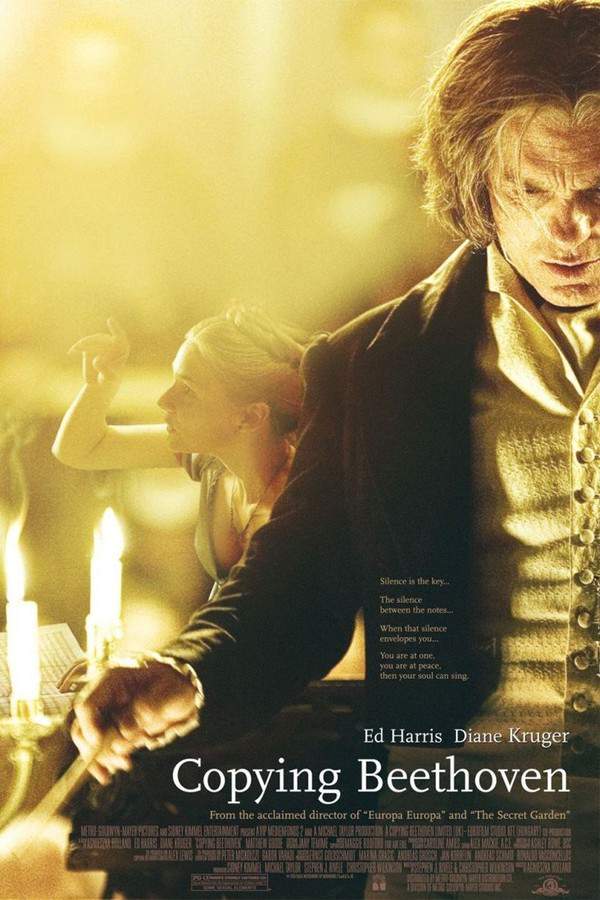
Copying Beethoven

Copying Beethoven

Year: 2006

Runtime: 104 min

Language: English

Director: Agnieszka Holland

DramaHistoryMusic

In 19th century Vienna, Anna Holtz, a talented and devoted music student, becomes involved with the renowned composer Ludwig van Beethoven. As their lives intersect, Beethoven's difficult personality begins to mellow, and an unexpected friendship develops between them. However, their connection faces challenges when Anna's engagement to another man looms, creating a complex emotional situation for all involved.

Warning: spoilers below!

Haven’t seen Copying Beethoven yet? This summary contains major spoilers. Bookmark the page, watch the movie, and come back for the full breakdown. If you're ready, scroll on and relive the story!

Copying Beethoven (2006) – Full Plot Summary & Ending Explained

Read the complete plot breakdown of Copying Beethoven (2006), including all key story events, major twists, and the ending explained in detail. Discover what really happened, and what it all means.

Copying Beethoven is a compelling period drama that delves into the final year of Ludwig van Beethoven, portrayed by Ed Harris. The film opens with a poignant scene featuring a frail Beethoven, while Anna Holz, played by Diane Kruger, witnesses this profound moment, establishing an emotional connection between them right from the start.

The narrative transports us back to the time when Wenzel Schlemmer, Beethoven's publisher, desperately searches for a talented copyist to assist in completing the score for his Ninth Symphony ahead of its much-anticipated debut. Anna Holz, a fictional character likely inspired by a close friend of Beethoven named Karl Holz, steps forward as the best available copyist. Initially taken aback by the prospect of working with a woman, Beethoven soon finds that their collaboration flourishes, leading to Anna aiding in the magnificent premiere of his final symphony.

As the story unfolds, we also meet Martin Bauer, portrayed by Matthew Goode, who is Anna's love interest and engrossed in designing a novel bridge. While Martin engages his intellect for his engineering projects, Beethoven is deeply connected to the emotional and spiritual aspects of life. Caught in a difficult position, Anna feels the weight of choosing between the two men.

The tension escalates when Beethoven, exhibiting his unfiltered temperament, shatters Martin's bridge model and makes harsh remarks about one of Anna's compositions, prompting her to leave him. When Martin realizes his mistake, he pleads for forgiveness, and Anna ultimately yields, understanding that both art and love transcend mere logic.

The duo continues to collaborate on Beethoven's works, as well as Anna's own compositions, until the maestro's passing. Interwoven within this narrative is a subplot that reveals Beethoven's tumultuous relationship with his nephew, Karl van Beethoven. The young man, portrayed by Joe Anderson, struggles with his uncle’s expectations and feels inadequate as he battles his gambling debts while avoiding Beethoven's hopeful aspirations for a worthy successor.

This intricate tapestry of relationships underscores the struggles of artistry, emotion, and familial obligation, making Copying Beethoven a heartfelt examination of the human experience against the backdrop of genius.

Last updated: November 03, 2024 at 13:44

Was this helpful?

Copying Beethoven (2006) Plot Questions Answered – Summary FAQ

Explore frequently asked questions about Copying Beethoven (2006) with spoiler-rich answers covering the full plot summary, major story beats, character motivations, hidden details, and ending meaning. This movie summary FAQ helps explain confusing scenes, plot twists, and narrative decisions in clear, searchable detail.

Q1

Why does Beethoven destroy Martin's bridge model?

A.

Beethoven destroys Martin's bridge model in a fit of temper when he feels threatened by the engineer's rational, logical approach to art. When Martin criticizes Beethoven's composition method and dismisses the emotional depth of music as merely mathematical, Beethoven snaps and smashes the model. This incident represents the clash between Martin's engineering mindset and Beethoven's belief that true art comes from passion and feeling, not calculation.

Earlier scenes establish Beethoven's volatile temperament and his disdain for anything he perceives as dismissive of artistic emotion.

beethoven temperbridge modelmartin bauerartistic conflictemotional art vs logic
Q2

Why does Anna forgive Beethoven after he criticizes her composition?

A.

Anna forgives Beethoven because she realizes that his harsh criticism, while painful, came from a place of genuine artistic insight rather than malice. When Beethoven destroys Martin's bridge model and then apologizes to Anna, she understands that his harshness stems from his deep commitment to artistic truth. She recognizes that both art and love require emotional vulnerability, and that Beethoven's passion, though difficult, is authentic.

The film establishes early on that Anna is deeply devoted to music and understands the sacrifices required for artistic excellence.

anna holzbeethovenforgivenessartistic growthmentorship
Q3

What is the nature of Anna and Beethoven's relationship?

A.

Anna and Beethoven develop a deep professional and emotional bond that transcends a typical working relationship. As his copyist, Anna helps Beethoven complete his Ninth Symphony, but their connection grows into something resembling a mentorship or even a father-daughter dynamic. Beethoven comes to see Anna not just as a skilled assistant but as someone who truly understands his art, while she gains invaluable insight into composition and artistic vision from the master himself.

The opening scene where Anna witnesses Beethoven's frailty establishes an immediate emotional connection between them.

anna holzbeethovencopyistmentorshipartistic collaboration
Q4

Why is Anna's role as copyist historically significant?

A.

In 1827 Vienna, women were largely excluded from professional music work, making Anna's position as Beethoven's copyist remarkable. She was likely inspired by Karl Holz, a real friend of Beethoven who assisted him. The role required not just musical notation skills but the ability to interpret Beethoven's often illegible handwriting and understand his compositional intentions. Her success in this role challenges the gender norms of the time and demonstrates her exceptional musical knowledge.

The narrative mentions initial hesitation from Beethoven about working with a woman, setting up the significance of her proving herself.

anna holzcopyistninth symphonyhistorical contextfemale musicians
Q5

What happens to Karl van Beethoven in the film?

A.

Karl van Beethoven, the composer's nephew, struggles throughout the film with gambling debts and the overwhelming pressure of his uncle's expectations. Beethoven hopes Karl will become his worthy successor in music, but Karl feels inadequate and resentful of this burden. The film shows Karl avoiding his uncle while dealing with his financial problems, representing Beethoven's personal failure to pass on his legacy through family. The film does not show Karl's ultimate fate, but it highlights the emotional toll this relationship takes on the aging composer.

Beethoven's concern for his legacy is established early, making his disappointment with Karl a recurring source of melancholy.

karl van beethovennephewgambling debtsfamily conflictbeethoven legacy
Q6

Why is the Ninth Symphony premiere so important?

A.

The premiere of Beethoven's Ninth Symphony represents both the culmination of his life's work and a farewell to the musical world. By 1827, Beethoven was completely deaf and seriously ill, knowing this would likely be his final major work. The symphony's famous 'Ode to Joy' theme represents universal brotherhood and joy despite suffering. The premiere is a monumental historical event that would cement Beethoven's legacy and prove that even completely deaf, a composer could create transcendent music.

The opening scene establishes Beethoven's frailty and declining health, making the upcoming premiere feel like a race against time.

ninth symphonypremiereode to joybeethoven deafmusical history
Q7

Why is Beethoven so difficult to work with?

A.

Beethoven's difficult personality stems from his growing deafness, isolation, and perfectionism combined with his genius. By 1827, he could barely hear and was increasingly isolated from society, which made him irritable and demanding. His temper flares often reflect his frustration with his failing body and his inability to communicate his musical vision as he once could. However, the film shows that beneath this gruff exterior lies a deeply passionate artist who cares deeply about artistic truth and eventually warms to those who prove themselves worthy.

The film opens with Beethoven's frailty and emotional vulnerability, hinting at the personal struggles behind his difficult behavior.

beethoven personalitydeafnessartistic perfectionismisolationtemper
Q8

How does Anna's relationship with Martin Bauer resolve?

A.

After Martin destroys his own bridge model in a moment of clarity and pleads for forgiveness, Anna chooses to remain with him. Martin demonstrates that he has learned to value emotion and art over pure logic, which was the core of his conflict with Beethoven. The film suggests their relationship continues, with Anna balancing her personal life with her artistic work. Martin's growth shows that he eventually understands the importance of passion in both love and art.

The contrast between Martin's engineering logic and Beethoven's emotional artistry is established from his introduction.

anna holzmartin bauerromancebridge modelreconciliation
Q9

What legacy does Beethoven leave behind?

A.

Beethoven leaves behind a transformative musical legacy that would influence generations of composers. His Ninth Symphony, completed with Anna's help, becomes one of the most celebrated works in classical music. Beyond the music, his relationship with Anna shows that his influence extends through mentorship and the transmission of artistic passion. Anna vows to carry forward his artistic vision, suggesting that his true legacy lives on through those he inspired.

Throughout the film, characters discuss Beethoven's place in music history and his concern for his posthumous reputation.

beethoven legacyninth symphonyartistic mentorshipmusical historyanna composer
Q10

Why does the opening scene show Anna witnessing Beethoven's frailty?

A.

The opening scene where Anna witnesses Beethoven's frail state establishes the emotional foundation of their entire relationship. This moment creates an immediate connection between them, showing Anna's compassion and setting up the caregiver-mentor dynamic that develops. It also establishes the film's melancholic tone and the knowledge that this is Beethoven's final year, creating dramatic irony as viewers watch their relationship develop knowing its inevitable end.

This scene directly parallels Beethoven's death at the film's conclusion, creating a circular narrative structure.

anna holzbeethoven frailtyopening sceneemotional connectiondramatic irony
Mobile App Preview

Coming soon on iOS and Android

The Plot Explained Mobile App

From blockbusters to hidden gems - dive into movie stories anytime, anywhere. Save your favorites, discover plots faster, and never miss a twist again.

Sign up to be the first to know when we launch. Your email stays private, always.

Explore Movie Threads

Discover curated groups of movies connected by mood, themes, and story style. Browse collections built around emotion, atmosphere, and narrative focus to easily find films that match what you feel like watching right now.

Bittersweet Artistic Biographies like Copying Beethoven

Intimate portraits of famous artists and composers, blending creative passion with personal struggle.If you enjoyed the intimate portrayal of Ludwig van Beethoven in 'Copying Beethoven,' explore more movies like it. This collection features biographical dramas about famous artists and composers, focusing on their creative genius, personal struggles, and the bittersweet nature of their legacies. Discover similar period stories that blend music, history, and deep emotion.

biographicalmelancholicinspirationalreflectiveperiod settingcreative passionemotionalserious

Narrative Summary

These narratives typically follow a celebrated artist during a crucial, often difficult, period of their life. The plot centers on their creative process and the personal sacrifices made for their art, frequently involving a pivotal relationship that influences their work. The story arc culminates in a legacy that is celebrated, but shadowed by personal loss or tragedy.

Why These Movies?

Movies are grouped here for their shared focus on real-life artistic figures, a melancholic and reflective tone, and a narrative that prioritizes emotional truth over dramatic action. They connect through a similar pacing that allows for immersion in the creative world and a consistent bittersweet emotional payoff.

Movies about Artistic Mentorship like Copying Beethoven

Stories of difficult but transformative relationships between a master and a protégé.For viewers who liked the teacher-student dynamic in 'Copying Beethoven,' this section finds similar movies about mentorship and creative collaboration. These films explore the intense, transformative relationships between masters and their apprentices in fields like music, art, or writing. Discover stories where difficult personalities foster incredible growth and bittersweet connections.

mentorshipcreative struggleteacher studenttransformativeserioustenderatmosphericcomplex relationships

Narrative Summary

The narrative follows the development of a relationship between an established, often difficult expert and a dedicated novice. Initial conflict and struggle give way to mutual respect and deep influence. The central conflict often involves the protégé forging their own identity separate from the master, leading to an emotionally complex resolution that affirms the value of their shared journey.

Why These Movies?

These films are linked by their core focus on a mentorship arc, a serious and sometimes tense atmosphere, and a pacing that allows the relationship to develop authentically. They share a thematic interest in the sacrifices of art, the burden of genius, and the bittersweet nature of influential relationships.

Unlock the Full Story of Copying Beethoven

Don't stop at just watching - explore Copying Beethoven in full detail. From the complete plot summary and scene-by-scene timeline to character breakdowns, thematic analysis, and a deep dive into the ending - every page helps you truly understand what Copying Beethoven is all about. Plus, discover what's next after the movie.

Copying Beethoven Timeline

Track the full timeline of Copying Beethoven with every major event arranged chronologically. Perfect for decoding non-linear storytelling, flashbacks, or parallel narratives with a clear scene-by-scene breakdown.

Copying Beethoven Timeline

Characters, Settings & Themes in Copying Beethoven

Discover the characters, locations, and core themes that shape Copying Beethoven. Get insights into symbolic elements, setting significance, and deeper narrative meaning - ideal for thematic analysis and movie breakdowns.

Characters, Settings & Themes in Copying Beethoven

Copying Beethoven Spoiler-Free Summary

Get a quick, spoiler-free overview of Copying Beethoven that covers the main plot points and key details without revealing any major twists or spoilers. Perfect for those who want to know what to expect before diving in.

Copying Beethoven Spoiler-Free Summary

More About Copying Beethoven

Visit What's After the Movie to explore more about Copying Beethoven: box office results, cast and crew info, production details, post-credit scenes, and external links - all in one place for movie fans and researchers.

More About Copying Beethoven

Similar Movies to Copying Beethoven

Discover movies like Copying Beethoven that share similar genres, themes, and storytelling elements. Whether you’re drawn to the atmosphere, character arcs, or plot structure, these curated recommendations will help you explore more films you’ll love.